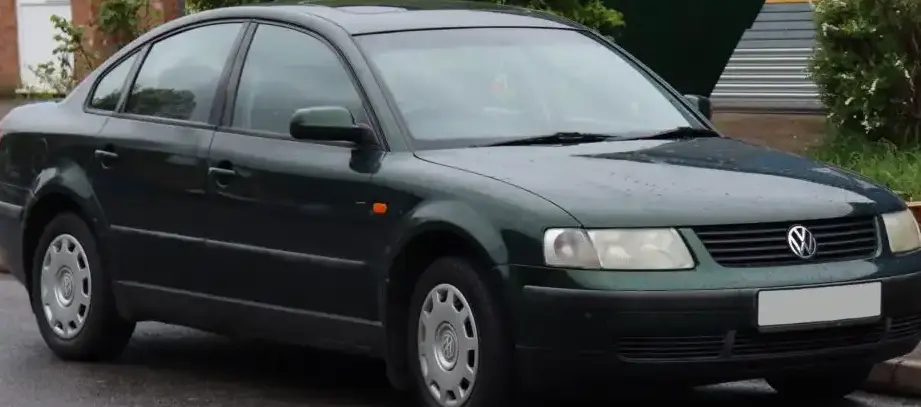
The Volkswagen Passat B5 1.8 20V Automatic, produced between 1996 and 2000, represented a significant step forward for Volkswagen’s mid-size offering. Positioned as a comfortable and practical family sedan, this variant occupied a middle ground in the B5 Passat lineup, offering a balance between affordability and refinement. It was a key model in Europe and other international markets, aiming to provide a more accessible entry point into the Passat range compared to the more powerful and expensive VR6 models. This version utilized the 1HX0/A3 platform, shared with other Volkswagen Group vehicles like the Audi A4 and Skoda Superb.
Technical Specifications
| Brand | Volkswagen |
| Model | Passat |
| Generation | Passat (B5) |
| Type (Engine) | 1.8 20V (125 Hp) Automatic |
| Start of production | 1996 |
| End of production | 2000 |
| Powertrain Architecture | Internal Combustion engine |
| Body type | Sedan |
| Seats | 5 |
| Doors | 4 |
| Fuel consumption (urban) | 12.3 l/100 km (19.1 US mpg, 23 UK mpg, 8.1 km/l) |
| Fuel consumption (extra urban) | 7 l/100 km (33.6 US mpg, 40.4 UK mpg, 14.3 km/l) |
| Fuel consumption (combined) | 8.5 l/100 km (27.7 US mpg, 33.2 UK mpg, 11.8 km/l) |
| Fuel Type | Petrol (Gasoline) |
| Acceleration 0 – 100 km/h | 12.7 sec |
| Acceleration 0 – 62 mph | 12.7 sec |
| Acceleration 0 – 60 mph | 12.1 sec |
| Maximum speed | 201 km/h (124.9 mph) |
| Weight-to-power ratio | 10.5 kg/Hp, 95.6 Hp/tonne |
| Weight-to-torque ratio | 7.8 kg/Nm, 128.4 Nm/tonne |
| Power | 125 Hp @ 5800 rpm |
| Power per litre | 70.2 Hp/l |
| Torque | 168 Nm @ 3500 rpm (123.91 lb.-ft. @ 3500 rpm) |
| Engine layout | Front, Longitudinal |
| Engine Model/Code | ADR, APT, ARG |
| Engine displacement | 1781 cm3 (108.68 cu. in.) |
| Number of cylinders | 4 |
| Engine configuration | Inline |
| Cylinder Bore | 81 mm (3.19 in.) |
| Piston Stroke | 86.4 mm (3.4 in.) |
| Compression ratio | 10.3:1 |
| Number of valves per cylinder | 5 |
| Fuel injection system | Multi-port manifold injection |
| Engine aspiration | Naturally aspirated engine |
| Valvetrain | DOHC |
| Engine oil capacity | 3.5 l (3.7 US qt | 3.08 UK qt) |
| Coolant | 7 l (7.4 US qt | 6.16 UK qt) |
| Kerb Weight | 1308 kg (2883.65 lbs.) |
| Max. weight | 1825 kg (4023.44 lbs.) |
| Max load | 517 kg (1139.79 lbs.) |
| Trunk (boot) space – minimum | 475 l (16.77 cu. ft.) |
| Trunk (boot) space – maximum | 745 l (26.31 cu. ft.) |
| Fuel tank capacity | 62 l (16.38 US gal | 13.64 UK gal) |
| Length | 4670 mm (183.86 in.) |
| Width | 1740 mm (68.5 in.) |
| Height | 1460 mm (57.48 in.) |
| Wheelbase | 2700 mm (106.3 in.) |
| Front track | 1498 mm (58.98 in.) |
| Rear (Back) track | 1500 mm (59.06 in.) |
| Drivetrain Architecture | The Internal combustion engine (ICE) drives the front wheels of the vehicle. |
| Drive wheel | Front wheel drive |
| Number of gears and type of gearbox | 4 gears, automatic transmission |
| Front suspension | Coil spring |
| Rear suspension | Coil spring |
| Front brakes | Ventilated discs |
| Rear brakes | Disc |
| Assisting systems | ABS (Anti-lock braking system) |
| Steering type | Steering rack and pinion |
| Power steering | Hydraulic Steering |
| Tires size | 195/65 R15 |
| Wheel rims size | 6J x 15 |
Powertrain & Engine Architecture
The heart of the Passat B5 1.8 20V Automatic is the 1.8-liter, inline-four cylinder engine. Engine codes commonly found in this variant include ADR, APT, and ARG, with minor variations depending on the specific market and year. This engine featured a dual overhead camshaft (DOHC) valvetrain with five valves per cylinder (20 valves total), contributing to improved breathing and higher-end power. Fuel delivery was handled by a multi-port fuel injection system, providing precise fuel metering for optimal combustion. The 1.8L engine was known for its relatively smooth operation and decent power output for its size. The automatic transmission used was typically a four-speed unit, designed for comfortable and convenient driving. While not known for its sportiness, it provided smooth shifts and adequate performance for everyday use.
Driving Characteristics
The 1.8 20V Automatic Passat offered a comfortable and predictable driving experience. Acceleration from 0-60 mph took around 12.1 seconds, and top speed was approximately 125 mph. Compared to the manual transmission version, the automatic resulted in a slight performance decrease due to the inherent power loss in the torque converter. However, the automatic transmission provided a more relaxed driving experience, particularly in city traffic. The gear ratios were tuned for fuel efficiency and smooth cruising, rather than outright performance. Compared to the more powerful VR6 models, the 1.8L automatic felt noticeably less responsive, especially during overtaking maneuvers. However, it offered a significant fuel economy advantage.
Equipment & Trim Levels
The 1.8 20V Automatic Passat typically came standard with features like power windows, power locks, air conditioning, and an AM/FM radio. Higher trim levels, often denoted by designations like “Comfort” or “Trendline,” added features such as alloy wheels, upgraded upholstery, a sunroof, and a more sophisticated audio system. Interior upholstery was usually cloth, with leather options available as an upgrade. Dashboard configurations were generally straightforward and functional, prioritizing ease of use. Optional extras included features like heated seats, automatic climate control, and a CD changer.
Chassis & Braking
The Passat B5 featured an independent suspension setup with coil springs at all four corners. The front suspension utilized MacPherson struts, while the rear employed a multi-link setup. This configuration provided a good balance between ride comfort and handling. Braking duties were handled by ventilated discs at the front and solid discs at the rear. Anti-lock Braking System (ABS) was standard, enhancing safety and control during emergency braking situations. Stabilizer bars were fitted to both the front and rear axles to reduce body roll during cornering.
Market Reception & Comparison
The Passat B5 1.8 20V Automatic was generally well-received by automotive critics as a practical and comfortable family sedan. It was praised for its spacious interior, comfortable ride, and reasonable fuel economy. However, some critics noted that the engine lacked the punch of the VR6 models and that the automatic transmission could feel somewhat sluggish. Compared to other trims in the lineup, the 1.8L automatic offered the best fuel economy, making it an attractive option for drivers prioritizing efficiency. Reliability was generally good, although some owners reported issues with the automatic transmission over the long term.
Legacy
The Volkswagen Passat B5 1.8 20V Automatic remains a popular choice in the used car market today, particularly for those seeking an affordable and reliable family sedan. The 1.8L engine and four-speed automatic transmission are generally considered durable, although regular maintenance is essential to ensure longevity. Parts availability is good, and repair costs are relatively reasonable. While not a performance icon, the B5 1.8 Automatic Passat represents a solid and dependable option for everyday transportation, offering a blend of comfort, practicality, and affordability.