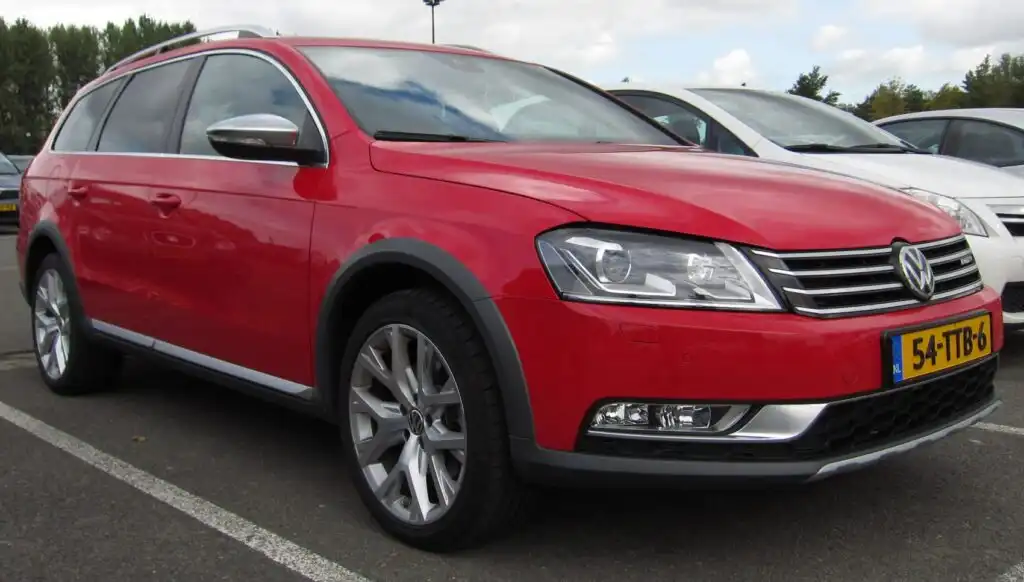
The Volkswagen Passat B5 2.5 TDI Syncro, produced between 1998 and 2000, represents a compelling blend of performance, practicality, and all-weather capability within the broader B5 Passat range. Positioned as a premium offering, it catered to drivers seeking a more robust and capable sedan. Built on the Volkswagen Group’s PL45 (also known as the 1HX0) platform, shared with the Audi A4 and A6 of the same era, the 2.5 TDI Syncro distinguished itself through its sophisticated all-wheel-drive system and powerful diesel engine. This variant was primarily marketed in Europe, where demand for diesel engines and all-wheel-drive vehicles was significantly higher than in North America.
Technical Specifications
| Brand | Volkswagen |
| Model | Passat |
| Generation | Passat (B5) |
| Type (Engine) | 2.5 TDI (150 Hp) Syncro |
| Start of production | 1998 |
| End of production | 2000 |
| Powertrain Architecture | Internal Combustion engine |
| Body type | Sedan |
| Seats | 5 |
| Doors | 4 |
| Fuel consumption (urban) | 11.2 l/100 km (21 US mpg, 25.2 UK mpg, 8.9 km/l) |
| Fuel consumption (extra urban) | 6 l/100 km (39.2 US mpg, 47.1 UK mpg, 16.7 km/l) |
| Fuel Type | Diesel |
| Acceleration 0 – 100 km/h | 10 sec |
| Acceleration 0 – 62 mph | 10 sec |
| Acceleration 0 – 60 mph | 9.5 sec |
| Maximum speed | 216 km/h (134.22 mph) |
| Weight-to-power ratio | 9.8 kg/Hp, 101.7 Hp/tonne |
| Weight-to-torque ratio | 4.8 kg/Nm, 210.2 Nm/tonne |
| Power | 150 Hp @ 4000 rpm |
| Power per litre | 60.1 Hp/l |
| Torque | 310 Nm @ 1500 rpm (228.64 lb.-ft. @ 1500 rpm) |
| Engine layout | Front, Longitudinal |
| Engine Model/Code | AKN, AFB |
| Engine displacement | 2496 cm3 (152.32 cu. in.) |
| Number of cylinders | 6 |
| Engine configuration | V-engine |
| Cylinder Bore | 78.3 mm (3.08 in.) |
| Piston Stroke | 86.4 mm (3.4 in.) |
| Compression ratio | 19.5:1 |
| Number of valves per cylinder | 4 |
| Fuel injection system | Direct injection |
| Engine aspiration | Turbocharger, Intercooler |
| Valvetrain | DOHC |
| Engine oil capacity | 5.4 l (5.71 US qt, 4.75 UK qt) |
| Coolant | 10 l (10.57 US qt, 8.8 UK qt) |
| Kerb Weight | 1475 kg (3251.82 lbs.) |
| Max. weight | 2030 kg (4475.38 lbs.) |
| Max load | 555 kg (1223.57 lbs.) |
| Trunk (boot) space – minimum | 400 l (14.13 cu. ft.) |
| Trunk (boot) space – maximum | 745 l (26.31 cu. ft.) |
| Fuel tank capacity | 62 l (16.38 US gal, 13.64 UK gal) |
| Length | 4670 mm (183.86 in.) |
| Width | 1740 mm (68.5 in.) |
| Height | 1460 mm (57.48 in.) |
| Wheelbase | 2700 mm (106.3 in.) |
| Front track | 1498 mm (58.98 in.) |
| Rear (Back) track | 1500 mm (59.06 in.) |
| Drive wheel | All wheel drive (4×4) |
| Number of gears and type of gearbox | 6 gears, manual transmission |
| Front suspension | Coil spring |
| Rear suspension | Coil spring |
| Front brakes | Ventilated discs |
| Rear brakes | Disc |
| Assisting systems | ABS (Anti-lock braking system) |
| Steering type | Steering rack and pinion |
| Power steering | Hydraulic Steering |
| Tires size | 205/55 R16 |
| Wheel rims size | 7J x 16 |
Powertrain & Engine Architecture
The heart of the Passat B5 2.5 TDI Syncro is the 2.5-liter inline-six cylinder diesel engine, designated either AKN or AFB depending on minor variations and production date. This engine is a significant departure from the more common four-cylinder diesel options available in the Passat lineup. It features direct injection technology, utilizing high-pressure fuel injectors to deliver fuel directly into the combustion chamber. This system, coupled with a turbocharger and intercooler, allows for increased power output and improved fuel efficiency. The engine employs a double overhead camshaft (DOHC) valvetrain, optimizing airflow for enhanced performance. The Syncro models were exclusively offered with a six-speed manual transmission, chosen to handle the increased torque output and provide a more engaging driving experience. The engine’s longitudinal mounting, typical of front-engine, rear-wheel-drive based all-wheel-drive systems, contributes to the car’s balanced handling characteristics.
Driving Characteristics
The 2.5 TDI Syncro offers a distinctly different driving experience compared to its lower-powered siblings. The 150 horsepower and 310 Nm (228.64 lb-ft) of torque provide ample power for confident acceleration and effortless cruising. The six-speed manual transmission allows drivers to keep the engine in its optimal power band, resulting in responsive performance. While not a sports car, the Syncro delivers a smooth and refined ride, enhanced by the all-wheel-drive system’s ability to maintain traction in various weather conditions. Compared to the 1.8L gasoline or 1.9 TDI variants, the 2.5 TDI offers significantly more torque, making it particularly well-suited for towing or carrying heavy loads. The all-wheel-drive system adds a layer of stability and control, especially on slippery surfaces, that is absent in front-wheel-drive Passat models.
Equipment & Trim Levels
The 2.5 TDI Syncro typically came well-equipped, reflecting its position as a premium trim level. Standard features often included automatic climate control, power windows and mirrors, central locking, and an upgraded audio system. Interior upholstery was typically cloth or leather, with wood trim accents available as an option. Optional extras could include a sunroof, heated seats, and a navigation system. The Syncro models also benefited from specific instrumentation related to the all-wheel-drive system. The dashboard layout was consistent with other B5 Passat models, offering a functional and ergonomic design.
Chassis & Braking
The Passat B5 2.5 TDI Syncro utilizes a fully independent suspension system, with coil springs and shock absorbers at all four corners. The all-wheel-drive system necessitates a more robust chassis and suspension setup to handle the increased weight and torque. Braking duties are handled by ventilated discs at the front and solid discs at the rear, with ABS (Anti-lock Braking System) as standard. The Syncro models often featured slightly thicker stabilizer bars compared to front-wheel-drive variants, further enhancing handling stability. The all-wheel-drive system itself employs a Torsen differential, which automatically distributes torque between the front and rear axles based on traction conditions.
Market Reception & Comparison
The Passat B5 2.5 TDI Syncro was generally well-received by automotive critics, who praised its powerful engine, refined ride, and all-weather capability. However, its higher price point compared to other Passat models limited its appeal to a niche market. Compared to the 1.8L gasoline engine, the 2.5 TDI offered significantly more torque and better fuel economy, but at the expense of some refinement. The 1.9 TDI, while offering comparable fuel economy, lacked the 2.5 TDI’s six-cylinder smoothness and power. Reliability was generally good, although the complex fuel injection system and turbocharger could require occasional maintenance.
Legacy
Today, the Volkswagen Passat B5 2.5 TDI Syncro is considered a desirable classic among enthusiasts. The engine, while capable of high mileage, is known for its durability when properly maintained. Finding well-preserved examples can be challenging, as many have accumulated significant mileage. The Syncro models, in particular, are sought after for their rarity and all-wheel-drive capability. Parts availability is generally good, although some specific components may be becoming increasingly difficult to source. The Passat B5 2.5 TDI Syncro represents a high point in Volkswagen’s engineering prowess, offering a compelling combination of performance, practicality, and refinement.