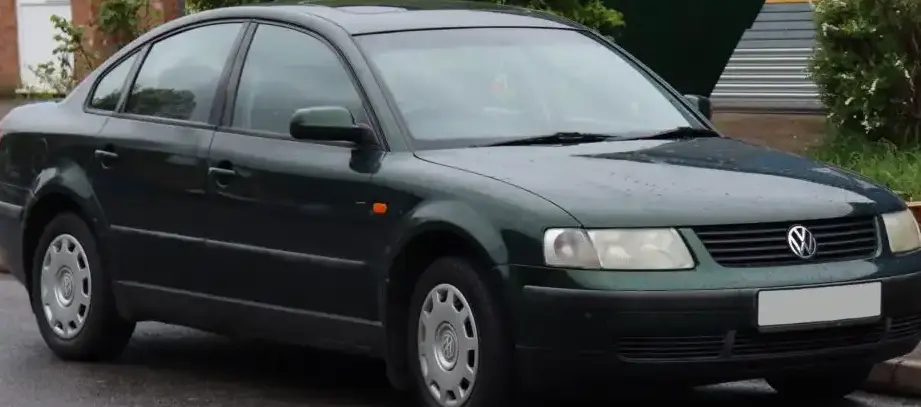
The Volkswagen Passat B5 2.8 V6 30V Automatic, produced between 1996 and 1998, represents a significant evolution in Volkswagen’s mid-size sedan offering. Positioned as a premium trim within the B5 Passat range (which spanned 1996-2000), this variant aimed to deliver a blend of performance, comfort, and refinement. It was a key model in Volkswagen’s push to establish itself as a more upscale brand in the North American market, and built upon the success of the earlier B4 generation. The B5 platform, internally designated as the 1HX0, brought a new level of sophistication to the Passat, with improved build quality, updated styling, and more powerful engine options.
Technical Specifications
| Brand | Volkswagen |
| Model | Passat |
| Generation | Passat (B5) |
| Type (Engine) | 2.8 V6 30V (193 Hp) Automatic |
| Start of production | 1996 |
| End of production | 1998 |
| Powertrain Architecture | Internal Combustion engine |
| Body type | Sedan |
| Seats | 5 |
| Doors | 4 |
| Fuel consumption (urban) | 16.5 l/100 km (14.3 US mpg, 17.1 UK mpg, 6.1 km/l) |
| Fuel consumption (extra urban) | 8 l/100 km (29.4 US mpg, 35.3 UK mpg, 12.5 km/l) |
| Fuel Type | Petrol (Gasoline) |
| Acceleration 0 – 100 km/h | 10 sec |
| Acceleration 0 – 62 mph | 10 sec |
| Acceleration 0 – 60 mph | 9.5 sec |
| Maximum speed | 233 km/h (144.78 mph) |
| Weight-to-power ratio | 7.5 kg/Hp, 133.1 Hp/tonne |
| Weight-to-torque ratio | 5.2 kg/Nm, 193.1 Nm/tonne |
| Power | 193 Hp @ 6000 rpm |
| Power per litre | 69.6 Hp/l |
| Torque | 280 Nm @ 3200 rpm (206.52 lb.-ft. @ 3200 rpm) |
| Engine layout | Front, Longitudinal |
| Engine Model/Code | AMX, ATQ |
| Engine displacement | 2771 cm3 (169.1 cu. in.) |
| Number of cylinders | 6 |
| Engine configuration | V-engine |
| Cylinder Bore | 82.5 mm (3.25 in.) |
| Piston Stroke | 86.4 mm (3.4 in.) |
| Compression ratio | 10.6:1 |
| Number of valves per cylinder | 5 |
| Fuel injection system | Multi-port manifold injection |
| Engine aspiration | Naturally aspirated engine |
| Valvetrain | DOHC |
| Engine oil capacity | 5.5 l (5.81 US qt | 4.84 UK qt) |
| Coolant | 8 l (8.45 US qt | 7.04 UK qt) |
| Kerb Weight | 1450 kg (3196.7 lbs.) |
| Max. weight | 2000 kg (4409.25 lbs.) |
| Max load | 550 kg (1212.54 lbs.) |
| Trunk (boot) space – minimum | 475 l (16.77 cu. ft.) |
| Trunk (boot) space – maximum | 745 l (26.31 cu. ft.) |
| Fuel tank capacity | 62 l (16.38 US gal | 13.64 UK gal) |
| Length | 4670 mm (183.86 in.) |
| Width | 1740 mm (68.5 in.) |
| Height | 1460 mm (57.48 in.) |
| Wheelbase | 2700 mm (106.3 in.) |
| Front track | 1498 mm (58.98 in.) |
| Rear (Back) track | 1500 mm (59.06 in.) |
| Drivetrain Architecture | The Internal combustion engine (ICE) drives the front wheels of the vehicle. |
| Drive wheel | Front wheel drive |
| Number of gears and type of gearbox | 5 gears, automatic transmission |
| Front suspension | Coil spring |
| Rear suspension | Coil spring |
| Front brakes | Ventilated discs |
| Rear brakes | Disc |
| Assisting systems | ABS (Anti-lock braking system) |
| Steering type | Steering rack and pinion |
| Power steering | Hydraulic Steering |
| Tires size | 205/55 R16 |
| Wheel rims size | 7J x 16 |
Powertrain & Engine Architecture
The heart of the Passat B5 2.8 V6 was the AMX or ATQ engine code, a 2.8-liter naturally aspirated V6. This engine featured a 60-degree V-angle, contributing to a smoother running character. The “30V” designation indicates the engine utilized five valves per cylinder (three intake, two exhaust), a design intended to improve both volumetric efficiency and power output. Fuel delivery was handled by a multi-port fuel injection system, providing precise fuel metering for optimal combustion. The engine’s double overhead camshafts (DOHC) further enhanced valve control and contributed to its relatively high 6000 rpm horsepower peak. Paired with this engine was a 5-speed automatic transmission, designed to provide smooth and comfortable shifts. This transmission was a conventional torque converter automatic, prioritizing ease of use over outright performance.
Driving Characteristics
The 2.8 V6 Automatic Passat offered a noticeable step up in performance compared to the base 1.8L four-cylinder models. While not a sports sedan, the 193 horsepower and 206 lb-ft of torque provided adequate acceleration for highway merging and passing maneuvers. The 0-60 mph time of around 9.5 seconds was respectable for the era. The automatic transmission, while smooth, did result in some power loss compared to the available 5-speed manual. Gear ratios were tuned for comfort and fuel economy, rather than aggressive acceleration. The engine delivered a broad torque curve, making it relatively easy to drive in everyday situations. However, drivers seeking a more engaging experience often preferred the manual transmission for its more direct feel and quicker response.
Equipment & Trim Levels
The 2.8 V6 Automatic typically came well-equipped, representing a mid-to-upper trim level in the Passat B5 lineup. Standard features generally included air conditioning, power windows and locks, a CD player, and alloy wheels. Interior upholstery was typically cloth, with leather options available as an upgrade. Higher-spec models could be equipped with features like a sunroof, heated seats, and upgraded audio systems. The dashboard layout was functional and ergonomically designed, with a clear instrument cluster and easy-to-use controls. Optional extras often included automatic climate control, traction control, and a premium sound system.
Chassis & Braking
The Passat B5 featured an independent suspension setup at all four wheels, utilizing coil springs and shock absorbers. The front suspension employed MacPherson struts, while the rear utilized a multi-link design. This configuration provided a good balance of ride comfort and handling. Braking duties were handled by ventilated discs at the front and solid discs at the rear, providing adequate stopping power for the vehicle’s weight and performance. Anti-lock braking system (ABS) was standard, enhancing safety and control during emergency braking situations. Stabilizer bars were fitted to both the front and rear axles to reduce body roll during cornering.
Market Reception & Comparison
The Passat B5 2.8 V6 Automatic was generally well-received by automotive critics. It was praised for its comfortable ride, spacious interior, and refined engine. However, some reviewers noted that the automatic transmission could feel somewhat sluggish, and that the handling wasn’t as sporty as some of its competitors. Compared to the 1.8T models, the 2.8 V6 offered more power but at the cost of slightly lower fuel economy. The 2.8 V6 was also more expensive to maintain due to the increased complexity of the V6 engine and its associated components. Against rivals like the Honda Accord and Toyota Camry, the Passat offered a more European driving experience and a more upscale interior, but often at a slightly higher price point.
Legacy
The Passat B5 2.8 V6 Automatic has proven to be a relatively reliable vehicle, although age and mileage inevitably lead to wear and tear. The V6 engine is generally durable, but can be prone to oil leaks and timing belt failures (requiring replacement at specified intervals). The automatic transmission is also generally reliable, but may require servicing or rebuilding after high mileage. Today, these Passats are increasingly sought after by enthusiasts who appreciate their classic styling, comfortable ride, and relatively affordable price. Parts availability is generally good, although some specific components may be becoming harder to find. Well-maintained examples continue to provide reliable transportation and a taste of European motoring from the late 1990s.