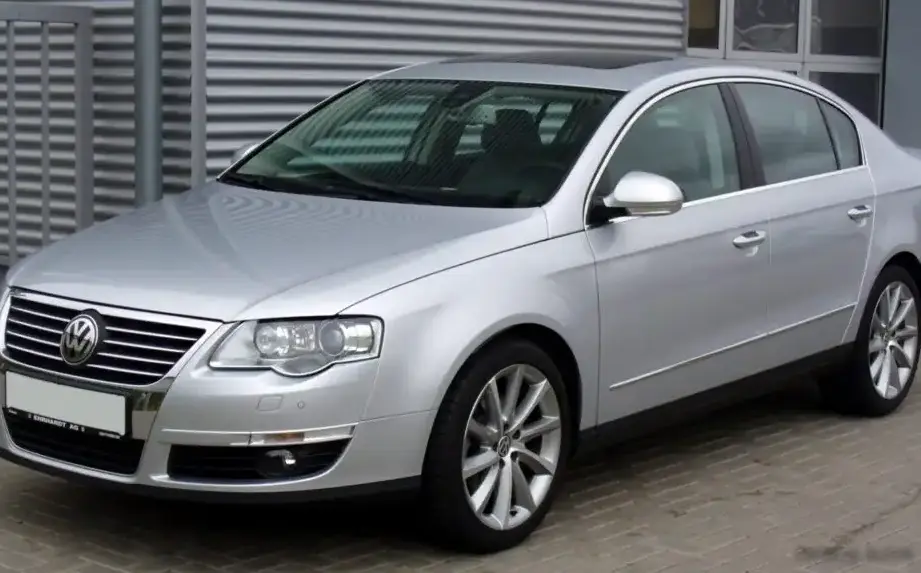
The Volkswagen Passat (B6) 1.4 TSI 122 hp with the Direct-Shift Gearbox (DSG) represents a significant iteration of Volkswagen’s popular mid-size sedan, produced from October 2007 to July 2010. Positioned as an entry-level to mid-range offering within the B6 Passat lineup, this variant aimed to balance fuel efficiency with acceptable performance, appealing to buyers seeking a comfortable and practical family car. It was a key model in the European market, where fuel economy and refinement were highly valued, and offered a more accessible price point compared to the more powerful engine options. The B6 generation, built on the Volkswagen Group’s B6 platform (shared with models like the Audi A4 and Škoda Superb), aimed to elevate the Passat’s image with improved build quality and a more sophisticated driving experience.
Technical Specifications
| Brand | Volkswagen |
| Model | Passat |
| Generation | Passat (B6) |
| Type (Engine) | 1.4 TSI (122 Hp) DSG |
| Start of production | October, 2007 |
| End of production | July, 2010 |
| Powertrain Architecture | Internal Combustion engine |
| Body type | Sedan |
| Seats | 5 |
| Doors | 4 |
| Fuel consumption (urban) | 8.2 l/100 km (28.7 US mpg, 34.4 UK mpg, 12.2 km/l) |
| Fuel consumption (extra urban) | 5.4 l/100 km (43.6 US mpg, 52.3 UK mpg, 18.5 km/l) |
| Fuel consumption (combined) | 6.4 l/100 km (36.8 US mpg, 44.1 UK mpg, 15.6 km/l) |
| Fuel Type | Petrol (Gasoline) |
| Acceleration 0 – 100 km/h | 10.5 sec |
| Acceleration 0 – 62 mph | 10.5 sec |
| Acceleration 0 – 60 mph | 10 sec |
| Maximum speed | 201 km/h (124.9 mph) |
| Emission standard | Euro 4 |
| Weight-to-power ratio | 10.8 kg/Hp, 92.9 Hp/tonne |
| Weight-to-torque ratio | 6.6 kg/Nm, 152.3 Nm/tonne |
| Power | 122 Hp @ 5000 rpm |
| Power per litre | 87.8 Hp/l |
| Torque | 200 Nm @ 1500-4000 rpm (147.51 lb.-ft. @ 1500-4000 rpm) |
| Engine layout | Front, Transverse |
| Engine Model/Code | CAXA |
| Engine displacement | 1390 cm3 (84.82 cu. in.) |
| Number of cylinders | 4 |
| Engine configuration | Inline |
| Cylinder Bore | 76.5 mm (3.01 in.) |
| Piston Stroke | 75.6 mm (2.98 in.) |
| Compression ratio | 10:1 |
| Number of valves per cylinder | 4 |
| Fuel injection system | Direct injection |
| Engine aspiration | Turbocharger, Intercooler |
| Valvetrain | DOHC |
| Engine oil capacity | 3.6 l (3.8 US qt | 3.17 UK qt) |
| Coolant | 5.6 l (5.92 US qt | 4.93 UK qt) |
| Kerb Weight | 1313 kg (2894.67 lbs.) |
| Max. weight | 2000 kg (4409.25 lbs.) |
| Max load | 687 kg (1514.58 lbs.) |
| Trunk (boot) space – minimum | 565 l (19.95 cu. ft.) |
| Trunk (boot) space – maximum | 1091 l (38.53 cu. ft.) |
| Fuel tank capacity | 70 l (18.49 US gal | 15.4 UK gal) |
| Max. roof load | 100 kg (220.46 lbs.) |
| Permitted trailer load with brakes (8%) | 1600 kg (3527.4 lbs.) |
| Permitted trailer load with brakes (12%) | 1400 kg (3086.47 lbs.) |
| Permitted trailer load without brakes | 720 kg (1587.33 lbs.) |
| Permitted towbar download | 90 kg (198.42 lbs.) |
| Length | 4765 mm (187.6 in.) |
| Width | 1820 mm (71.65 in.) |
| Width including mirrors | 1991 mm (78.39 in.) |
| Height | 1472 mm (57.95 in.) |
| Wheelbase | 2709 mm (106.65 in.) |
| Front track | 1552 mm (61.1 in.) |
| Rear (Back) track | 1551 mm (61.06 in.) |
| Front overhang | 965 mm (37.99 in.) |
| Rear overhang | 1091 mm (42.95 in.) |
| Ride height (ground clearance) | 114 mm (4.49 in.) |
| Drag coefficient (Cd) | 0.281 |
| Minimum turning circle (turning diameter) | 11.4 m (37.4 ft.) |
| Approach angle | 14.4° |
| Departure angle | 12.6° |
| Ramp-over (brakeover) angle | 10.8° |
| Drivetrain Architecture | The Internal combustion engine (ICE) drives the front wheels of the vehicle. |
| Drive wheel | Front wheel drive |
| Number of gears and type of gearbox | 7 gears, automatic transmission |
| Front suspension | Spring Strut |
| Rear suspension | Coil spring |
| Front brakes | Ventilated discs |
| Rear brakes | Disc |
| Assisting systems | ABS (Anti-lock braking system) |
| Steering type | Steering rack and pinion |
| Power steering | Electric Steering |
| Tires size | 215/55 R16 |
| Wheel rims size | 6.5J x 16 |
Powertrain & Engine Architecture
The heart of this Passat variant is the 1.4-liter TSI (Turbocharged Stratified Injection) engine, specifically the CAXA engine code. This engine represents a significant advancement in Volkswagen’s engine technology, combining direct fuel injection with turbocharging to deliver a balance of power and efficiency. The TSI engine utilizes a Roots-type supercharger in conjunction with a turbocharger, providing instant boost at low engine speeds and sustained power throughout the rev range. This dual-charging system effectively eliminates turbo lag, a common issue in smaller turbocharged engines. The engine features a double overhead camshaft (DOHC) valvetrain with four valves per cylinder, optimizing gas flow for improved performance. The 122 hp output is achieved at 5000 rpm, while the peak torque of 200 Nm (147.51 lb-ft) is available from 1500 to 4000 rpm. This broad torque curve contributes to the engine’s usability in everyday driving situations. The engine is transversely mounted at the front of the vehicle. The engine is paired with a 7-speed DSG (Direct-Shift Gearbox), a dual-clutch transmission that offers quick and smooth gear changes. The DSG operates similarly to a manual transmission but with automated clutch operation and gear selection, providing both the efficiency of a manual and the convenience of an automatic.
Driving Characteristics
The 1.4 TSI 122 hp/DSG combination delivers a respectable, though not exhilarating, driving experience. Acceleration from 0 to 100 km/h (0-62 mph) takes approximately 10.5 seconds, making it competitive within its class but noticeably slower than Passats equipped with larger engines like the 2.0 TSI or VR6. The DSG transmission contributes to a responsive feel, with quick shifts and minimal power interruption. However, the relatively low horsepower and torque figures mean that overtaking maneuvers require careful planning, especially when fully loaded. The broad torque curve helps mitigate this somewhat, providing adequate pulling power in most situations. The DSG’s gear ratios are tuned for fuel efficiency, resulting in a slightly higher engine speed at highway cruising speeds compared to a traditional automatic transmission. Compared to the manual transmission version of the same engine, the DSG offers smoother shifts and greater convenience, but some drivers may prefer the more direct feel of a manual gearbox.
Equipment & Trim Levels
The 1.4 TSI DSG Passat typically came equipped with a reasonable level of standard features. These generally included air conditioning, power windows, central locking, an audio system with CD player, and alloy wheels. Safety features such as ABS, electronic stability control, and multiple airbags were also standard. Interior upholstery was typically cloth, with options for leather upgrades. Higher trim levels, available as optional packages, could add features like a sunroof, upgraded audio system, navigation system, and automatic climate control. The dashboard layout was functional and well-designed, with a focus on ergonomics.
Chassis & Braking
The B6 Passat’s chassis features a MacPherson strut front suspension and a multi-link rear suspension, providing a comfortable ride and good handling characteristics. The suspension tuning is geared towards comfort rather than outright sportiness. Braking duties are handled by ventilated discs at the front and solid discs at the rear. ABS (Anti-lock Braking System) is standard, enhancing braking performance and stability. The steering is rack and pinion with electric power assistance, offering a light and precise feel.
Market Reception & Comparison
The 1.4 TSI DSG Passat was generally well-received by critics as a practical and fuel-efficient option. It was praised for its comfortable ride, refined interior, and responsive DSG transmission. However, some reviewers noted that the engine lacked the outright power of its larger counterparts. Compared to the 2.0 TSI Passat, the 1.4 TSI offered significantly better fuel economy but at the expense of performance. The 1.4 TSI also proved to be more reliable than some of the earlier direct-injection engines, with fewer reports of carbon buildup issues. The 1.9 TDI diesel variant offered even better fuel economy but with a different driving experience and higher maintenance costs.
Legacy
The 1.4 TSI engine, particularly the CAXA code, has proven to be a relatively reliable powertrain when properly maintained. The DSG transmission, while more complex than a traditional automatic, is generally durable, although regular fluid changes are crucial for longevity. In the used car market, the 1.4 TSI DSG Passat represents a good value proposition for buyers seeking a comfortable, fuel-efficient, and well-equipped mid-size sedan. However, potential buyers should be aware of the importance of regular maintenance, particularly for the DSG transmission, and should inspect the vehicle thoroughly for any signs of wear or damage.