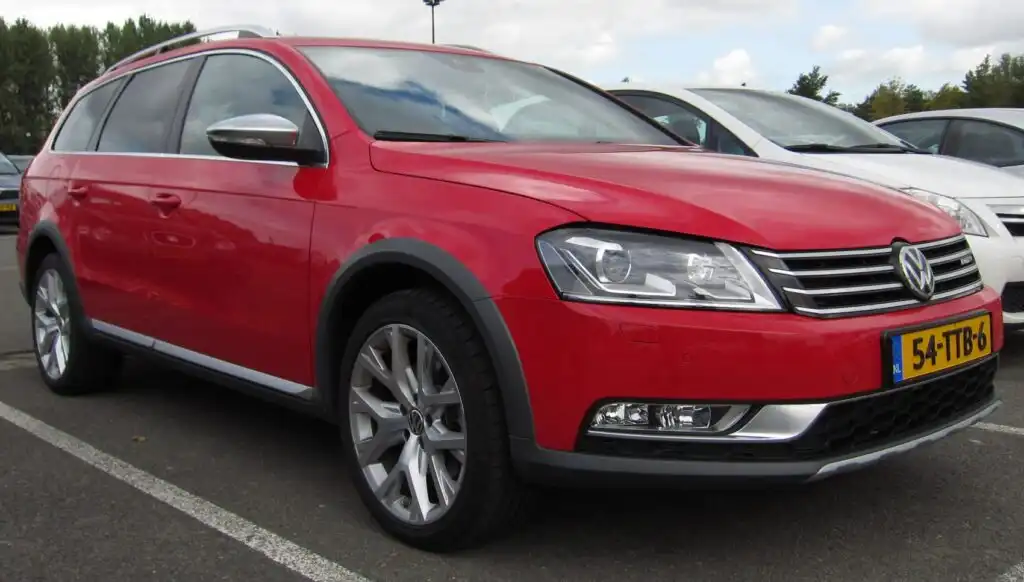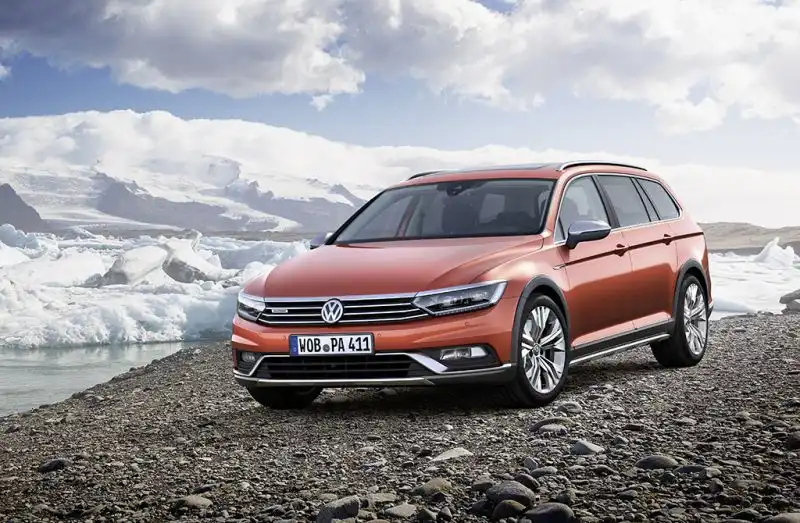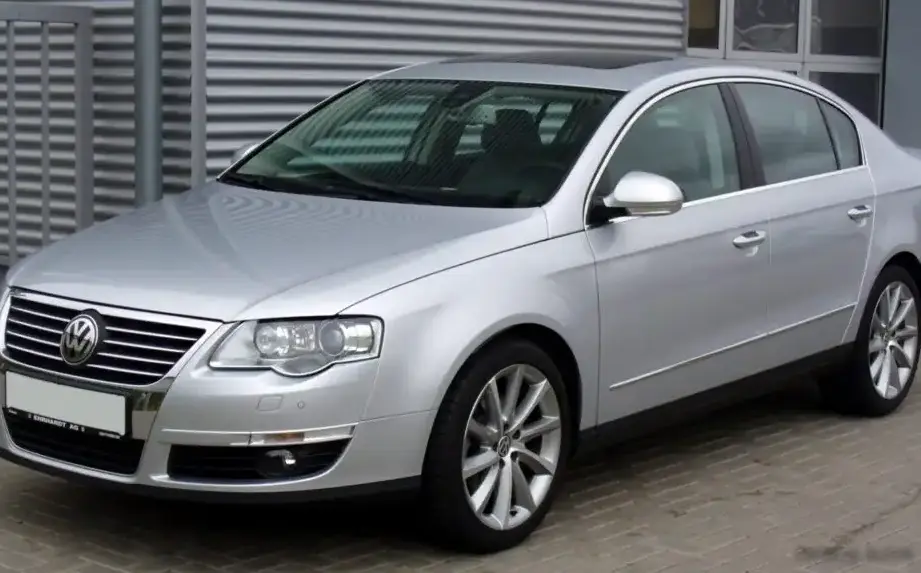
The Volkswagen Passat B6 1.9 TDI (105 hp) was a popular variant of the sixth-generation Passat, produced from 2005 to October 2008. Positioned as an efficient and practical option within the B6 range, it catered to drivers prioritizing fuel economy and everyday usability. This model played a significant role in the European market, where diesel engines were – and continue to be – highly favored. It was a key offering in a segment dominated by cars like the Ford Mondeo, Opel Vectra, and Peugeot 407.
Technical Specifications
| Brand | Volkswagen |
| Model | Passat |
| Generation | Passat (B6) |
| Type (Engine) | 1.9 TDI (105 Hp) |
| Start of production | 2005 |
| End of production | October, 2008 |
| Powertrain Architecture | Internal Combustion engine |
| Body type | Sedan |
| Seats | 5 |
| Doors | 4 |
| Fuel consumption (urban) | 7.2 l/100 km (32.7 US mpg, 39.2 UK mpg, 13.9 km/l) |
| Fuel consumption (extra urban) | 4.7 l/100 km (50 US mpg, 60.1 UK mpg, 21.3 km/l) |
| Fuel consumption (combined) | 5.6 l/100 km (42 US mpg, 50.4 UK mpg, 17.9 km/l) |
| Fuel Type | Diesel |
| Acceleration 0 – 100 km/h | 12.1 sec |
| Acceleration 0 – 62 mph | 12.1 sec |
| Acceleration 0 – 60 mph | 11.5 sec |
| Maximum speed | 188 km/h (116.82 mph) |
| Emission standard | Euro 4 |
| Weight-to-power ratio | 12.8 kg/Hp, 78 Hp/tonne |
| Weight-to-torque ratio | 5.4 kg/Nm, 185.6 Nm/tonne |
| Power | 105 Hp @ 4000 rpm |
| Power per litre | 55.4 Hp/l |
| Torque | 250 Nm @ 1900 rpm (184.39 lb.-ft. @ 1900 rpm) |
| Engine layout | Front, Transverse |
| Engine Model/Code | EA188 / BKC |
| Engine displacement | 1896 cm3 (115.7 cu. in.) |
| Number of cylinders | 4 |
| Engine configuration | Inline |
| Cylinder Bore | 79.5 mm (3.13 in.) |
| Piston Stroke | 95.5 mm (3.76 in.) |
| Compression ratio | 19:1 |
| Number of valves per cylinder | 2 |
| Fuel injection system | Pump-nozzle (Unit Injector) |
| Engine aspiration | Turbocharger, Intercooler |
| Valvetrain | SOHC |
| Engine oil capacity | 3.8 l (4.02 US qt | 3.34 UK qt) |
| Coolant | 8 l (8.45 US qt | 7.04 UK qt) |
| Kerb Weight | 1347 kg (2969.63 lbs.) |
| Max. weight | 2030 kg (4475.38 lbs.) |
| Max load | 683 kg (1505.76 lbs.) |
| Trunk (boot) space – minimum | 565 l (19.95 cu. ft.) |
| Trunk (boot) space – maximum | 1091 l (38.53 cu. ft.) |
| Fuel tank capacity | 70 l (18.49 US gal | 15.4 UK gal) |
| Max. roof load | 100 kg (220.46 lbs.) |
| Permitted trailer load with brakes (12%) | 1500 kg (3306.93 lbs.) |
| Permitted trailer load without brakes | 740 kg (1631.42 lbs.) |
| Permitted towbar download | 85 kg (187.39 lbs.) |
| Length | 4765 mm (187.6 in.) |
| Width | 1820 mm (71.65 in.) |
| Width including mirrors | 1991 mm (78.39 in.) |
| Height | 1472 mm (57.95 in.) |
| Wheelbase | 2709 mm (106.65 in.) |
| Front track | 1552 mm (61.1 in.) |
| Rear (Back) track | 1551 mm (61.06 in.) |
| Front overhang | 965 mm (37.99 in.) |
| Rear overhang | 1091 mm (42.95 in.) |
| Ride height (ground clearance) | 114 mm (4.49 in.) |
| Drag coefficient (Cd) | 0.281 |
| Minimum turning circle (turning diameter) | 11.4 m (37.4 ft.) |
| Approach angle | 14.4° |
| Departure angle | 12.6° |
| Ramp-over (brakeover) angle | 10.8° |
| Drivetrain Architecture | The Internal combustion engine (ICE) drives the front wheels of the vehicle. |
| Drive wheel | Front wheel drive |
| Number of gears and type of gearbox | 5 gears, manual transmission |
| Front suspension | Spring Strut |
| Rear suspension | Coil spring |
| Front brakes | Ventilated discs |
| Rear brakes | Disc |
| Assisting systems | ABS (Anti-lock braking system) |
| Steering type | Steering rack and pinion |
| Tires size | 215/55 R16 |
| Wheel rims size | 6.5J x 16 |
INTRODUCTION
The Volkswagen Passat B6, launched in 2005, represented a significant step forward for Volkswagen’s mid-size offering. The 1.9 TDI (105 hp) variant, powered by the EA188 BKC engine, was a mainstay of the lineup, particularly in Europe. It offered a balance between reasonable performance, excellent fuel economy, and a relatively affordable price point. This engine and power output were designed for drivers who prioritized efficiency and practicality over outright speed. It sat in the lower to mid-range of the B6 Passat offerings, below the more powerful 2.0 TDI and petrol variants.
Powertrain & Engine Architecture
The heart of the Passat B6 1.9 TDI was the EA188 BKC engine, a 1.9-liter inline-four cylinder diesel. This engine utilized pump-nozzle (unit injector) technology, a system known for its precise fuel delivery and efficiency. The engine featured a single overhead camshaft (SOHC) valvetrain and a turbocharger with an intercooler to boost power and torque. The turbocharger helped to mitigate turbo lag and provide a broader powerband. The engine produced 105 horsepower at 4000 rpm and 250 Nm (184 lb-ft) of torque at 1900 rpm. The engine’s transverse mounting and front-wheel-drive configuration were standard for the Passat B6. The 5-speed manual transmission was the most common pairing, although a 6-speed automatic transmission was also available, albeit less frequently chosen due to its impact on fuel economy.
Driving Characteristics
The 1.9 TDI 105 hp Passat B6 offered a comfortable and composed driving experience. Acceleration was adequate for everyday driving, with a 0-60 mph time of around 11.5 seconds. However, it wasn’t a particularly sporty car. The engine’s torque was readily available from low revs, making it easy to navigate city traffic and maintain highway speeds. The 5-speed manual transmission was well-matched to the engine, providing smooth gear changes. Compared to the more powerful 2.0 TDI or petrol variants, the 1.9 TDI felt noticeably slower, especially when fully loaded or climbing hills. The automatic transmission, while convenient, further dulled performance and increased fuel consumption.
Equipment & Trim Levels
The Passat B6 1.9 TDI typically came with a reasonable level of standard equipment. This included power windows, central locking, air conditioning, and an audio system. Higher trim levels, such as Trendline and Comfortline, added features like alloy wheels, upgraded upholstery, a multi-function steering wheel, and climate control. Optional extras included a sunroof, navigation system, and parking sensors. Interior upholstery was typically cloth, with leather options available on higher trims. The dashboard layout was functional and well-designed, with clear instrumentation and intuitive controls.
Chassis & Braking
The Passat B6 featured a MacPherson strut front suspension and a multi-link rear suspension, providing a comfortable ride and good handling. The suspension was tuned for comfort rather than outright sportiness. Braking duties were handled by ventilated discs at the front and solid discs at the rear. Anti-lock Braking System (ABS) was standard. The B6 Passat’s chassis was designed to provide a stable and predictable driving experience, even when fully loaded. Stabilizer bars were fitted to both the front and rear axles to reduce body roll during cornering.
Market Reception & Comparison
The Passat B6 1.9 TDI was well-received by critics and consumers alike. It was praised for its fuel efficiency, comfortable ride, and spacious interior. However, some critics noted that the engine could feel underpowered, especially when compared to its rivals. Compared to the 2.0 TDI Passat, the 1.9 TDI offered better fuel economy but significantly less power. The 1.9 TDI was also generally more reliable than the more complex 2.0 TDI, making it a popular choice for drivers seeking a dependable and economical car. Against competitors like the Ford Mondeo and Opel Vectra, the Passat B6 offered a more refined interior and a more comfortable ride.
Legacy
The Volkswagen Passat B6 1.9 TDI remains a popular choice in the used car market today. The EA188 BKC engine is known for its durability and reliability, provided it has been properly maintained. While older examples may require some maintenance, such as replacing the timing belt and checking the turbocharger, the 1.9 TDI is generally a robust and dependable powertrain. Its excellent fuel economy and practical nature continue to appeal to buyers looking for an affordable and efficient mid-size car. The B6 Passat, particularly this 1.9 TDI variant, has earned a reputation as a solid and dependable family vehicle.