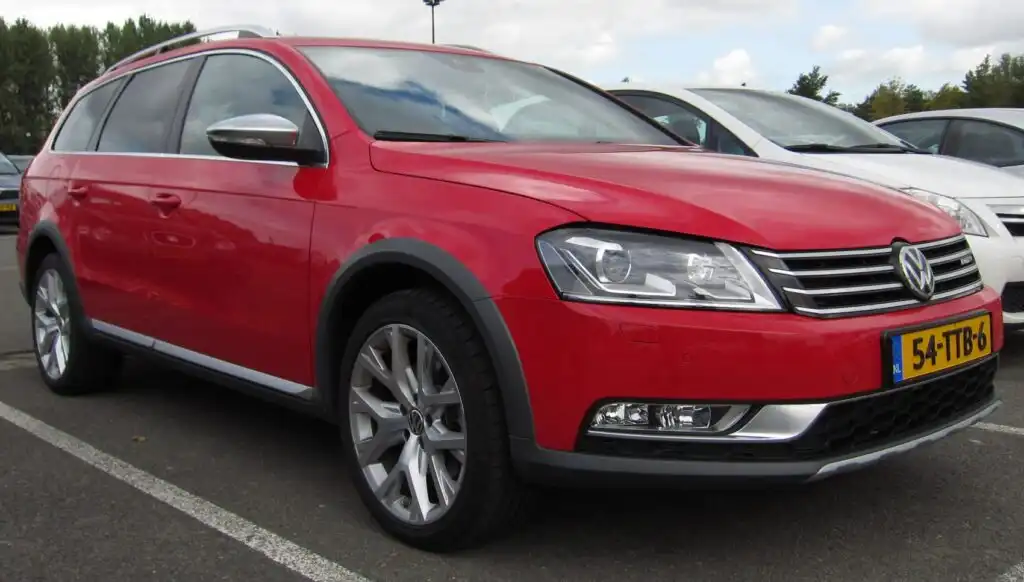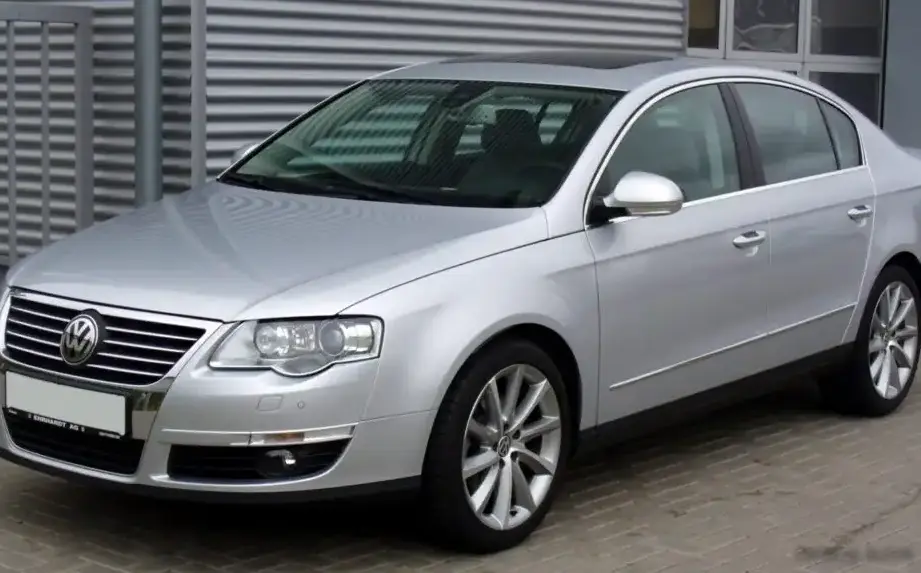
The Volkswagen Passat B6 2.0 TDI (140 hp) was a popular mid-size sedan produced from March 2008 to July 2010. Positioned as a mainstream offering within the B6 Passat range, it aimed to balance fuel efficiency with acceptable performance for everyday driving. This variant played a significant role in the European market, where diesel engines were – and continue to be – highly favored due to their economy and lower running costs. It represented a key part of Volkswagen’s strategy to offer a broad range of Passat models to cater to diverse customer needs.
Technical Specifications
| Brand | Volkswagen |
| Model | Passat |
| Generation | Passat (B6) |
| Type (Engine) | 2.0 TDI (140 Hp) |
| Start of production | March, 2008 |
| End of production | July, 2010 |
| Powertrain Architecture | Internal Combustion engine |
| Body type | Sedan |
| Seats | 5 |
| Doors | 4 |
| Fuel consumption (urban) | 8.7 l/100 km (27 US mpg, 32.5 UK mpg, 11.5 km/l) |
| Fuel consumption (extra urban) | 5.2 l/100 km (45.2 US mpg, 54.3 UK mpg, 19.2 km/l) |
| Fuel consumption (combined) | 6.4 l/100 km (36.8 US mpg, 44.1 UK mpg, 15.6 km/l) |
| Fuel Type | Diesel |
| Acceleration 0 – 100 km/h | 9.8 sec |
| Acceleration 0 – 62 mph | 9.8 sec |
| Acceleration 0 – 60 mph | 9.3 sec |
| Maximum speed | 209 km/h (129.87 mph) |
| Emission standard | Euro 5 |
| Weight-to-power ratio | 9.9 kg/Hp, 101.5 Hp/tonne |
| Weight-to-torque ratio | 4.3 kg/Nm, 232.1 Nm/tonne |
| Power | 140 Hp @ 4200 rpm |
| Power per litre | 71.1 Hp/l |
| Torque | 320 Nm @ 1750-2500 rpm (236.02 lb.-ft. @ 1750-2500 rpm) |
| Engine layout | Front, Transverse |
| Engine Model/Code | CBAB, CFFB |
| Engine displacement | 1968 cm3 (120.09 cu. in.) |
| Number of cylinders | 4 |
| Engine configuration | Inline |
| Cylinder Bore | 81 mm (3.19 in.) |
| Piston Stroke | 95.5 mm (3.76 in.) |
| Compression ratio | 18:1 |
| Number of valves per cylinder | 4 |
| Fuel injection system | Diesel Commonrail |
| Engine aspiration | Turbocharger, Intercooler |
| Valvetrain | DOHC |
| Engine oil capacity | 4 l (4.23 US qt | 3.52 UK qt) |
| Kerb Weight | 1379 kg (3040.17 lbs.) |
| Max. weight | 2060 kg (4541.52 lbs.) |
| Max load | 681 kg (1501.35 lbs.) |
| Trunk (boot) space – minimum | 565 l (19.95 cu. ft.) |
| Trunk (boot) space – maximum | 1091 l (38.53 cu. ft.) |
| Fuel tank capacity | 70 l (18.49 US gal | 15.4 UK gal) |
| Max. roof load | 100 kg (220.46 lbs.) |
| Permitted trailer load with brakes (8%) | 2000 kg (4409.25 lbs.) |
| Permitted trailer load with brakes (12%) | 1800 kg (3968.32 lbs.) |
| Permitted trailer load without brakes | 750 kg (1653.47 lbs.) |
| Permitted towbar download | 90 kg (198.42 lbs.) |
| Length | 4765 mm (187.6 in.) |
| Width | 1820 mm (71.65 in.) |
| Width including mirrors | 1991 mm (78.39 in.) |
| Height | 1472 mm (57.95 in.) |
| Wheelbase | 2709 mm (106.65 in.) |
| Front track | 1552 mm (61.1 in.) |
| Rear (Back) track | 1551 mm (61.06 in.) |
| Front overhang | 965 mm (37.99 in.) |
| Rear overhang | 1091 mm (42.95 in.) |
| Ride height (ground clearance) | 114 mm (4.49 in.) |
| Drag coefficient (Cd) | 0.281 |
| Minimum turning circle (turning diameter) | 11.4 m (37.4 ft.) |
| Approach angle | 14.4° |
| Departure angle | 12.6° |
| Ramp-over (brakeover) angle | 10.8° |
| Drivetrain Architecture | The Internal combustion engine (ICE) drives the front wheels of the vehicle. |
| Drive wheel | Front wheel drive |
| Number of gears and type of gearbox | 6 gears, manual transmission |
| Front suspension | Spring Strut |
| Rear suspension | Coil spring |
| Front brakes | Ventilated discs |
| Rear brakes | Disc |
| Assisting systems | ABS (Anti-lock braking system) |
| Steering type | Steering rack and pinion |
| Tires size | 215/55 R16 |
| Wheel rims size | 6.5J X 16 |
Powertrain & Engine Architecture
The heart of the Passat B6 2.0 TDI (140 hp) is the Volkswagen Group’s 2.0-liter inline-four diesel engine, typically identified by engine codes CBAB or CFFB. This engine is a turbocharged common rail direct injection diesel. The common rail system, operating at very high pressures, allowed for precise fuel metering and multiple injections per combustion cycle, improving efficiency and reducing noise. The turbocharger, coupled with an intercooler, boosted power output. The engine featured a Double Overhead Camshaft (DOHC) valvetrain with four valves per cylinder, optimizing gas flow. The 6-speed manual transmission was standard, providing a good balance between fuel economy and driver control. The engine’s transverse mounting within the engine bay contributed to a more compact front-end design.
Driving Characteristics
The 140 hp 2.0 TDI offered a respectable, if not exhilarating, driving experience. Acceleration from 0-60 mph took around 9.3 seconds, making it suitable for everyday commuting and highway cruising. The 320 Nm (236 lb-ft) of torque, available from 1750-2500 rpm, provided good in-gear acceleration and made overtaking relatively effortless. Compared to the more powerful 170 hp TDI variant, the 140 hp model felt less responsive, particularly at higher engine speeds. The manual transmission’s gear ratios were tuned for fuel efficiency, meaning the engine often needed to be revved to access its full potential. The front-wheel-drive configuration offered predictable handling, but lacked the all-weather capability of the 4Motion all-wheel-drive system available on other Passat models.
Equipment & Trim Levels
The 2.0 TDI (140 hp) typically came equipped with a reasonable level of standard features. These included air conditioning, power windows, central locking, and an integrated audio system. Interior upholstery was generally cloth, with options for leather upgrades. Trim levels varied by market, but commonly included ‘Trendline’ and ‘Comfortline’ designations. Optional extras included alloy wheels, a sunroof, parking sensors, and a more advanced infotainment system. Safety features such as ABS, traction control, and multiple airbags were standard across the range.
Chassis & Braking
The Passat B6 featured a MacPherson strut front suspension and a multi-link rear suspension, providing a comfortable ride and good handling characteristics. The suspension was tuned to prioritize comfort over outright sportiness. Braking duties were handled by ventilated discs at the front and solid discs at the rear. ABS (Anti-lock Braking System) was standard. The chassis was designed to provide a stable and predictable driving experience, even when fully loaded. Stabilizer bars were fitted front and rear to reduce body roll during cornering.
Market Reception & Comparison
The Passat B6 2.0 TDI (140 hp) was well-received in the European market as a practical and economical family car. Critics praised its fuel efficiency, comfortable ride, and spacious interior. However, some reviewers noted that the engine could feel strained when pushed hard, and the interior styling was somewhat conservative. Compared to the more powerful TDI variants, the 140 hp model offered a lower price point, making it accessible to a wider range of buyers. Against competitors like the Ford Mondeo and Opel/Vauxhall Insignia, the Passat offered a strong combination of quality, refinement, and fuel economy.
Legacy
The 2.0 TDI engine, in its various iterations, proved to be a durable and reliable powerplant. However, early versions of the common rail system were sometimes prone to injector failures. With proper maintenance, these engines can achieve high mileage. Today, the Passat B6 2.0 TDI (140 hp) represents a relatively affordable and practical used car option. Its fuel efficiency and comfortable ride continue to appeal to buyers looking for a dependable family sedan. The B6 Passat, in general, is considered a well-built and relatively trouble-free vehicle, making it a popular choice in the used car market.