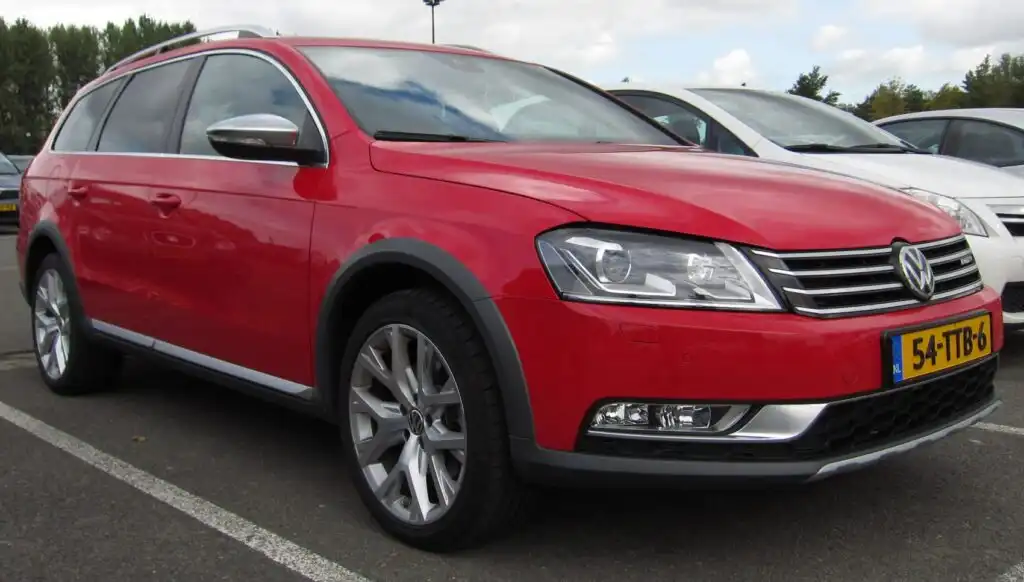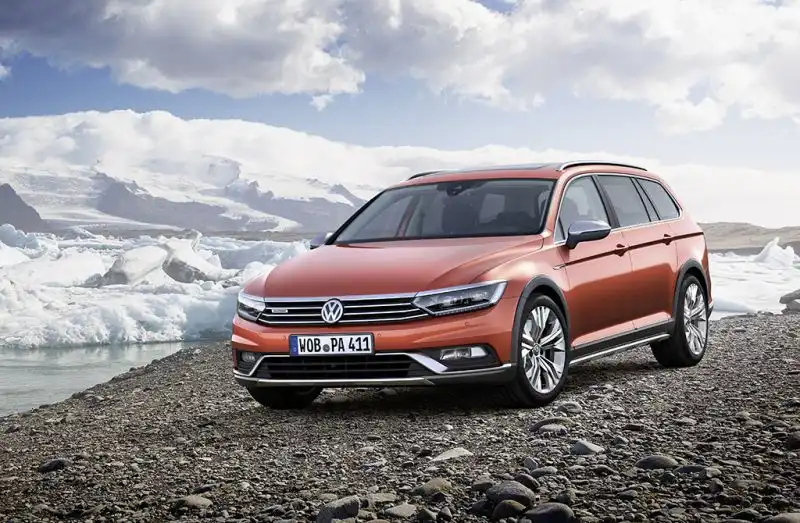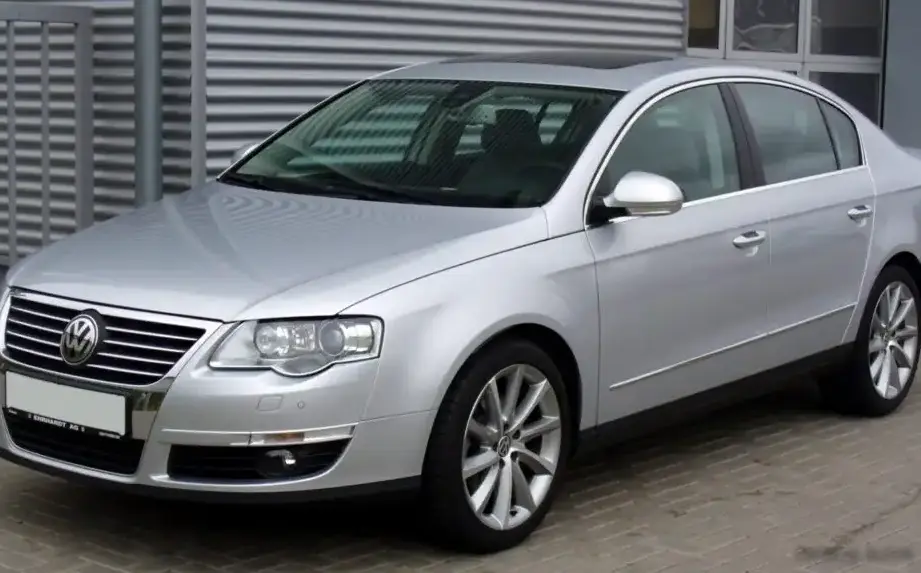
The Volkswagen Passat B6, produced between 2005 and 2010, marked a significant evolution for Volkswagen’s mid-size offering. The 2.0 TDI 16V (140 hp) PDE 4MOTION variant, manufactured from February 2005 to February 2008, was a crucial model within the B6 range, particularly in European markets. This version combined a fuel-efficient turbocharged diesel engine with Volkswagen’s 4MOTION all-wheel-drive system and a six-speed manual transmission, aiming to deliver a balance of performance, practicality, and all-weather capability. It occupied a mid-range position in the Passat B6 lineup, offering more performance and grip than the base models but remaining more accessible than the higher-powered variants like the 2.0 TDI 170 hp or the petrol-powered options.
Technical Specifications
| Brand | Volkswagen |
| Model | Passat |
| Generation | Passat (B6) |
| Type (Engine) | 2.0 TDI 16V (140 Hp) PDE 4MOTION |
| Start of production | February, 2005 |
| End of production | February, 2008 |
| Powertrain Architecture | Internal Combustion engine |
| Body type | Sedan |
| Seats | 5 |
| Doors | 4 |
| Fuel consumption (urban) | 8.7 l/100 km (27 US mpg, 32.5 UK mpg, 11.5 km/l) |
| Fuel consumption (extra urban) | 5.5 l/100 km (42.8 US mpg, 51.4 UK mpg, 18.2 km/l) |
| Fuel consumption (combined) | 6.6 l/100 km (35.6 US mpg, 42.8 UK mpg, 15.2 km/l) |
| CO2 emissions | 174 g/km |
| Fuel Type | Diesel |
| Acceleration 0 – 100 km/h | 10.2 sec |
| Acceleration 0 – 62 mph | 10.2 sec |
| Acceleration 0 – 60 mph | 9.7 sec |
| Maximum speed | 204 km/h (126.76 mph) |
| Emission standard | Euro 4 |
| Weight-to-power ratio | 10.6 kg/Hp, 94.7 Hp/tonne |
| Weight-to-torque ratio | 4.6 kg/Nm, 216.4 Nm/tonne |
| Power | 140 Hp @ 4000 rpm |
| Power per litre | 71.1 Hp/l |
| Torque | 320 Nm @ 1750 rpm (236.02 lb.-ft. @ 1750 rpm) |
| Engine layout | Front, Transverse |
| Engine Model/Code | EA188 / BKP |
| Engine displacement | 1968 cm3 (120.09 cu. in.) |
| Number of cylinders | 4 |
| Engine configuration | Inline |
| Cylinder Bore | 81 mm (3.19 in.) |
| Piston Stroke | 95.5 mm (3.76 in.) |
| Compression ratio | 18.5:1 |
| Number of valves per cylinder | 4 |
| Fuel injection system | Pump-nozzle (Unit Injector) |
| Engine aspiration | Turbocharger, Intercooler |
| Valvetrain | DOHC |
| Engine oil capacity | 4 l (4.23 US qt | 3.52 UK qt) |
| Coolant | 8 l (8.45 US qt | 7.04 UK qt) |
| Kerb Weight | 1479 kg (3260.64 lbs.) |
| Max. weight | 2160 kg (4761.98 lbs.) |
| Max load | 681 kg (1501.35 lbs.) |
| Trunk (boot) space – minimum | 541 l (19.11 cu. ft.) |
| Trunk (boot) space – maximum | 1067 l (37.68 cu. ft.) |
| Fuel tank capacity | 68 l (17.96 US gal | 14.96 UK gal) |
| Max. roof load | 100 kg (220.46 lbs.) |
| Permitted trailer load with brakes (12%) | 2000 kg (4409.25 lbs.) |
| Permitted trailer load without brakes | 750 kg (1653.47 lbs.) |
| Permitted towbar download | 85 kg (187.39 lbs.) |
| Length | 4765 mm (187.6 in.) |
| Width | 1820 mm (71.65 in.) |
| Width including mirrors | 1991 mm (78.39 in.) |
| Height | 1472 mm (57.95 in.) |
| Wheelbase | 2709 mm (106.65 in.) |
| Front track | 1552 mm (61.1 in.) |
| Rear (Back) track | 1551 mm (61.06 in.) |
| Front overhang | 965 mm (37.99 in.) |
| Rear overhang | 1091 mm (42.95 in.) |
| Ride height (ground clearance) | 114 mm (4.49 in.) |
| Drag coefficient (Cd) | 0.281 |
| Minimum turning circle (turning diameter) | 11.4 m (37.4 ft.) |
| Approach angle | 14.4° |
| Departure angle | 12.6° |
| Ramp-over (brakeover) angle | 10.8° |
| Drivetrain Architecture | The Internal combustion engine (ICE) drives the front wheels permanently, and the rear wheels are driven through an electrically or mechanically operated clutch if necessary. |
| Drive wheel | All wheel drive (4×4) |
| Number of gears and type of gearbox | 6 gears, manual transmission |
| Front suspension | Spring Strut |
| Rear suspension | Coil spring |
| Front brakes | Ventilated discs |
| Rear brakes | Disc |
| Assisting systems | ABS (Anti-lock braking system) |
| Steering type | Steering rack and pinion |
| Tires size | 215/55 R16 |
| Wheel rims size | 6.5J X 16 |
Powertrain & Engine Architecture
The core of this Passat variant is the EA188 series 2.0-liter inline-four diesel engine, specifically the BKP code. This engine employs a common-rail direct injection system with pump-nozzle technology (PDE), injecting fuel directly into the cylinders at extremely high pressure. The 16-valve DOHC (Double Overhead Camshaft) cylinder head optimizes volumetric efficiency. A turbocharger coupled with an intercooler boosts power and torque, delivering 140 horsepower at 4000 rpm and a substantial 320 Nm (236 lb-ft) of torque from as low as 1750 rpm. The standard transmission was a six-speed manual, offering well-spaced gear ratios for both fuel economy and responsive acceleration. The 4MOTION system is a permanent all-wheel-drive system utilizing a viscous coupling to distribute power between the front and rear axles as needed, enhancing traction in challenging conditions.
Driving Characteristics
The 2.0 TDI 16V 4MOTION provided a composed and capable driving experience. While not designed for outright performance, the engine’s robust low-end torque made it feel responsive in everyday driving. The six-speed manual transmission allowed drivers to maintain the engine within its optimal power band. Compared to the 1.9 TDI models, the 2.0 TDI offered increased power and refinement, though with a slight increase in fuel consumption. The 4MOTION system delivered noticeably improved grip, especially on wet or slippery surfaces, making it a more confident option for drivers in regions with adverse weather. Acceleration from 0-60 mph took approximately 9.7 seconds, which was respectable for a mid-size diesel sedan of that era.
Equipment & Trim Levels
The 2.0 TDI 16V 4MOTION typically included a reasonable array of standard features. These generally encompassed air conditioning, power windows, central locking, and an audio system. Higher trim levels, such as Sport or Highline, added features like alloy wheels, upgraded upholstery, a multi-function steering wheel, and parking sensors. Optional extras included a sunroof, leather seats, and a navigation system. The interior design was functional and well-constructed, reflecting Volkswagen’s reputation for build quality.
Chassis & Braking
The Passat B6 featured a MacPherson strut front suspension and a multi-link rear suspension, providing a comfortable ride and good handling. 4MOTION variants often had slightly stiffer suspension components to manage the added weight and enhanced grip. Braking was handled by ventilated discs at the front and solid discs at the rear, with ABS (Anti-lock Braking System) as standard equipment. The braking system was generally considered adequate for the vehicle’s performance capabilities.
Market Reception & Comparison
The 2.0 TDI 16V 4MOTION was well-received in European markets, where diesel engines and all-wheel-drive systems were highly valued. Reviewers praised its fuel efficiency, strong torque output, and all-weather capability. Compared to the gasoline-powered Passats, the TDI offered significantly better fuel economy. Against competitors like the Ford Mondeo and Opel Vectra, the Passat B6 was often perceived as offering a more refined and sophisticated driving experience. However, some critics pointed out the potential for long-term issues with the pump-nozzle injection system.
Legacy
The EA188 engine family, including the BKP code, proved to be generally reliable, although the pump-nozzle injectors could require maintenance or replacement over time. The Passat B6 2.0 TDI 4MOTION remains a popular choice in the used car market, particularly for buyers seeking a practical, fuel-efficient, and capable all-weather vehicle. Its robust construction and relatively straightforward mechanicals contribute to relatively affordable maintenance, although sourcing parts for the PDE injection system can sometimes be a challenge. The combination of diesel efficiency and all-wheel-drive capability continues to appeal to buyers today.