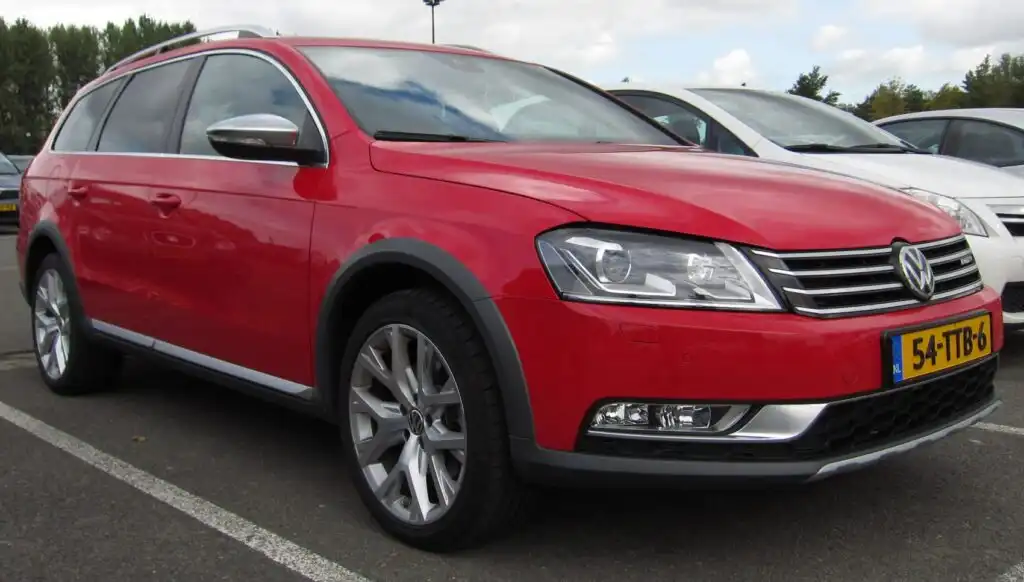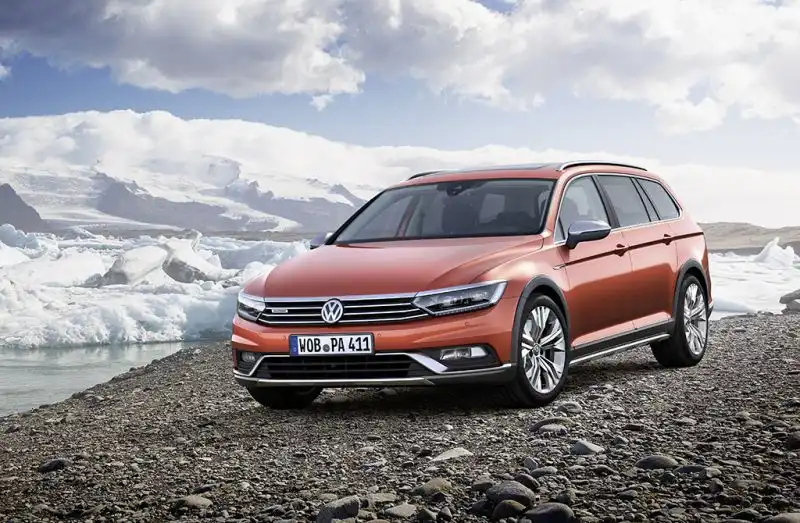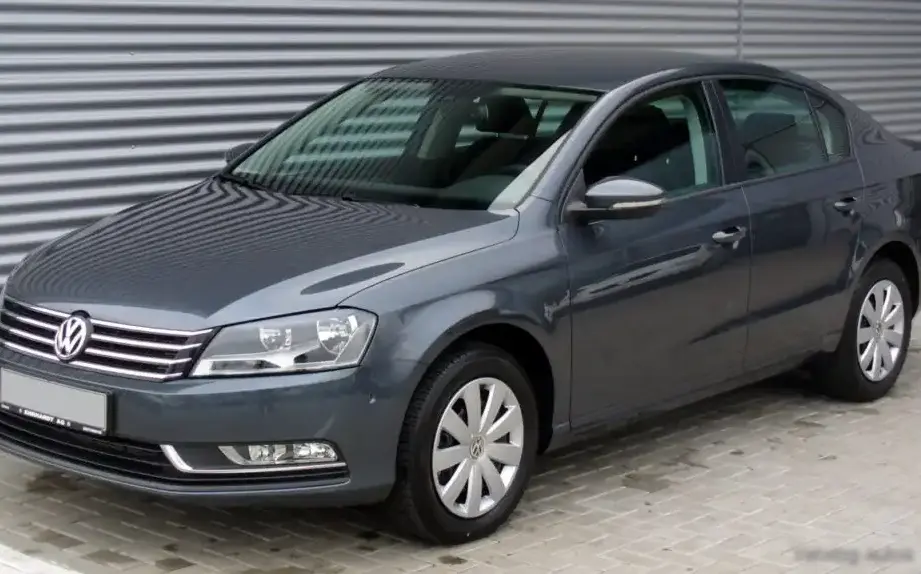
The Volkswagen Passat B7 1.6 TDI BlueMotion, produced from 2011 to 2014, represented a significant offering in the European D-segment market. Positioned as an entry-level diesel variant within the B7 Passat range, it focused on fuel efficiency and affordability without entirely sacrificing the Passat’s reputation for comfort and practicality. This model was primarily aimed at fleet buyers and private customers prioritizing low running costs, particularly in countries with high diesel fuel taxes and incentives. It sat below the more powerful 2.0 TDI models and the petrol-powered variants in the lineup, offering a more economical alternative.
Technical Specifications
| Brand | Volkswagen |
| Model | Passat |
| Generation | Passat (B7) |
| Type (Engine) | 1.6 TDI (105 Hp) BlueMotion |
| Start of production | 2011 |
| End of production | 2014 |
| Powertrain Architecture | Internal Combustion engine |
| Body type | Sedan |
| Seats | 5 |
| Doors | 4 |
| Fuel consumption (economy) – urban (NEDC) | 5.2 l/100 km (45.2 US mpg, 54.3 UK mpg, 19.2 km/l) |
| Fuel consumption (economy) – extra urban (NEDC) | 3.6 l/100 km (65.3 US mpg, 78.5 UK mpg, 27.8 km/l) |
| Fuel consumption (economy) – combined (NEDC) | 4.1 l/100 km (57.4 US mpg, 68.9 UK mpg, 24.4 km/l) |
| CO2 emissions (NEDC) | 109 g/km |
| Fuel Type | Diesel |
| Acceleration 0 – 100 km/h | 12.2 sec |
| Acceleration 0 – 62 mph | 12.2 sec |
| Acceleration 0 – 60 mph | 11.6 sec |
| Maximum speed | 198 km/h (123.03 mph) |
| Emission standard | Euro 5 |
| Weight-to-power ratio | 13.6 kg/Hp, 73.4 Hp/tonne |
| Weight-to-torque ratio | 5.7 kg/Nm, 174.8 Nm/tonne |
| Power | 105 Hp @ 4400 rpm |
| Power per litre | 65.7 Hp/l |
| Torque | 250 Nm @ 1500-2500 rpm (184.39 lb.-ft. @ 1500-2500 rpm) |
| Engine layout | Front, Transverse |
| Engine Model/Code | EA189 / CAYC |
| Engine displacement | 1598 cm3 (97.52 cu. in.) |
| Number of cylinders | 4 |
| Engine configuration | Inline |
| Cylinder Bore | 79.5 mm (3.13 in.) |
| Piston Stroke | 80.5 mm (3.17 in.) |
| Compression ratio | 16.5:1 |
| Number of valves per cylinder | 4 |
| Fuel injection system | Diesel Commonrail |
| Engine aspiration | Turbocharger, Intercooler |
| Valvetrain | DOHC |
| Engine oil capacity | 4.3 l (4.54 US qt | 3.78 UK qt) |
| Kerb Weight | 1430 kg (3152.61 lbs.) |
| Max. weight | 2010 kg (4431.29 lbs.) |
| Max load | 580 kg (1278.68 lbs.) |
| Trunk (boot) space – minimum | 565 l (19.95 cu. ft.) |
| Fuel tank capacity | 70 l (18.49 US gal | 15.4 UK gal) |
| Max. roof load | 100 kg (220.46 lbs.) |
| Permitted trailer load with brakes (8%) | 1400 kg (3086.47 lbs.) |
| Permitted trailer load with brakes (12%) | 1200 kg (2645.55 lbs.) |
| Permitted trailer load without brakes | 740 kg (1631.42 lbs.) |
| Permitted towbar download | 90 kg (198.42 lbs.) |
| Length | 4769 mm (187.76 in.) |
| Width | 1820 mm (71.65 in.) |
| Width including mirrors | 2062 mm (81.18 in.) |
| Height | 1462 mm (57.56 in.) |
| Wheelbase | 2712 mm (106.77 in.) |
| Front track | 1553 mm (61.14 in.) |
| Rear (Back) track | 1554 mm (61.18 in.) |
| Front overhang | 941 mm (37.05 in.) |
| Rear overhang | 1116 mm (43.94 in.) |
| Ride height (ground clearance) | 124 mm (4.88 in.) |
| Minimum turning circle (turning diameter) | 11.4 m (37.4 ft.) |
| Drivetrain Architecture | The Internal combustion engine (ICE) drives the front wheels of the vehicle. |
| Drive wheel | Front wheel drive |
| Number of gears and type of gearbox | 6 gears, manual transmission |
| Front suspension | Independent, type McPherson with coil spring and anti-roll bar |
| Rear suspension | Independent multi-link spring suspension with stabilizer |
| Front brakes | Ventilated discs, 312×25 mm |
| Rear brakes | Disc, 286×12 mm |
| Assisting systems | ABS (Anti-lock braking system) |
| Steering type | Steering rack and pinion |
| Power steering | Electric Steering |
| Tires size | 205/55 R16 |
| Wheel rims size | 6.5J x 16 |
Powertrain & Engine Architecture
The heart of the Passat B7 1.6 TDI BlueMotion is the EA189 series 1.6-liter inline-four diesel engine, specifically the CAYC code. This engine utilizes a common rail direct injection system, delivering fuel at extremely high pressures for optimized combustion. The engine features a turbocharger with an intercooler to boost power and efficiency. The valvetrain employs a dual overhead camshaft (DOHC) configuration with four valves per cylinder, enhancing breathing and overall performance. The engine’s 16.5:1 compression ratio is typical for a diesel engine, contributing to its thermal efficiency. The 1.6 TDI was paired with a 6-speed manual transmission as standard, although a 7-speed DSG dual-clutch transmission was available as an option. The BlueMotion technology package included start-stop functionality and optimized aerodynamics to further reduce fuel consumption and emissions.
Driving Characteristics
The 105 horsepower and 250 Nm (184 lb-ft) of torque produced by the 1.6 TDI engine provided adequate, but not exhilarating, performance. Acceleration from 0-100 km/h (0-62 mph) took around 12.2 seconds, and the top speed was 198 km/h (123 mph). In real-world driving, the engine felt most comfortable in the mid-range, offering sufficient power for everyday commuting and highway cruising. Compared to the more powerful 2.0 TDI variants, the 1.6 TDI felt noticeably slower, particularly when overtaking or climbing hills. The manual transmission’s gear ratios were tuned for fuel economy, meaning the engine often needed to be revved to maintain speed. The 6-speed gearbox was generally smooth and precise, but the long throws could feel a bit dated compared to more modern transmissions.
Equipment & Trim Levels
The 1.6 TDI BlueMotion typically came with a reasonable level of standard equipment. This included air conditioning, electric front windows, a basic audio system, and alloy wheels. Safety features such as ABS, ESP (Electronic Stability Program), and multiple airbags were also standard. Higher trim levels offered options like automatic climate control, a more advanced audio system with touchscreen display, parking sensors, and leather upholstery. The interior was generally well-built and functional, with a focus on practicality rather than luxury. The dashboard layout was typical of Volkswagen at the time, with a clear and easy-to-read instrument cluster.
Chassis & Braking
The Passat B7 featured an independent suspension setup, with McPherson struts at the front and a multi-link system at the rear. This provided a comfortable ride quality, absorbing bumps and imperfections in the road effectively. The front brakes were ventilated discs, while the rear brakes were solid discs. The steering was electrically assisted, providing a light and precise feel. The chassis was well-balanced, offering predictable handling characteristics. Stabilizer bars were fitted to both the front and rear axles to reduce body roll during cornering.
Market Reception & Comparison
The Passat B7 1.6 TDI BlueMotion was generally well-received by critics for its fuel efficiency and affordability. However, some reviewers criticized its lack of outright performance. Compared to the 2.0 TDI models, the 1.6 TDI offered significantly lower running costs but at the expense of driving enjoyment. The 1.6 TDI also proved to be more reliable than some of the earlier 2.0 TDI engines, which had been prone to DPF (Diesel Particulate Filter) issues. Fuel economy figures consistently hovered around 4.1 l/100 km (57.4 US mpg), making it one of the most economical cars in its class.
Legacy
The Volkswagen Passat B7 1.6 TDI BlueMotion remains a popular choice on the used car market, particularly for buyers seeking a reliable and economical family car. The EA189 engine, while not without its issues (notably related to the emissions scandal), has proven to be relatively durable when properly maintained. Regular servicing, including oil changes and DPF regeneration, is crucial for ensuring long-term reliability. Today, these Passats represent a good value proposition, offering a comfortable and practical driving experience at an affordable price point. The 1.6 TDI engine, while not a powerhouse, provides sufficient performance for most everyday driving needs and continues to deliver impressive fuel economy.