
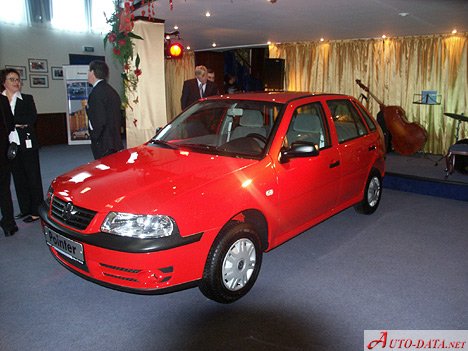
The Volkswagen Pointer 1.0 i (67 Hp): A Pragmatic Performer for Emerging Markets
The Volkswagen Pointer 1.0 i (67 Hp) represents a significant chapter in Volkswagen’s strategy for emerging markets, particularly in Latin America. Produced between 2003 and 2006, this compact five-door hatchback was not a global model but rather a rebadged and slightly restyled version of the popular Volkswagen Gol, tailored to specific regional demands. Positioned as an affordable, reliable, and economical vehicle, the Pointer 1.0 i (67 Hp) was designed to cater to a broad demographic seeking practical transportation for both urban environments and longer intercity journeys. Its straightforward design, robust mechanicals, and emphasis on low running costs made it a compelling choice in a highly competitive segment, embodying Volkswagen’s commitment to delivering accessible mobility solutions.
This generation of the Pointer, specifically the 1.0 i variant, was engineered with efficiency and durability at its core. It served as a workhorse for families and individuals alike, offering a blend of utility and the perceived quality associated with the Volkswagen brand. While not known for groundbreaking technology or luxurious appointments, its strength lay in its dependability and the widespread availability of parts and service, critical factors for success in its primary markets.
Engine and Performance Characteristics of the Volkswagen Pointer
Under the hood, the Volkswagen Pointer 1.0 i (67 Hp) was powered by a naturally aspirated 1.0-liter (999 cm3 or 60.96 cu. in.) inline-four gasoline engine. This compact powertrain was configured with two valves per cylinder and utilized a multi-port manifold injection system to deliver fuel efficiently. The engine layout was front, longitudinal, driving the front wheels, a common and effective setup for vehicles in this class.
The engine produced a modest but adequate 67 horsepower at 6000 rpm, translating to a power-per-liter output of 67.1 Hp/l. Torque figures stood at 89 Nm (65.64 lb.-ft.) delivered at 4500 rpm. While these figures might seem modest by modern standards, they were entirely appropriate for the vehicle’s intended purpose and market. The engine’s characteristics were tuned for urban drivability and fuel economy rather than outright speed.
Mated to a 5-speed manual transmission, the powertrain architecture ensured direct engagement and allowed drivers to maximize the available power. Performance metrics reflected this focus on practicality: the Pointer 1.0 i could accelerate from 0 to 60 mph in approximately 14.3 seconds, with a top speed of 97.56 mph (157 km/h). These numbers positioned it squarely within the expectations for an entry-level compact hatchback of its era, capable of handling daily commuting demands without excess.
Fuel efficiency was a key selling point for the Pointer 1.0 i. In urban driving conditions, it achieved an estimated 29.8 US mpg (7.9 L/100 km), while extra-urban cruising improved significantly to 39.9 US mpg (5.9 L/100 km). With a 13.47 US gallon (51 liter) fuel tank, the vehicle offered a commendable range, reducing the frequency of fill-ups and contributing to lower running costs, a crucial consideration for its target audience. The weight-to-power ratio of 14.5 kg/Hp (69.1 Hp/tonne) further underscores its lightweight construction and efficient use of its available power.
Design and Features: Practicality in Motion
The Volkswagen Pointer 1.0 i (67 Hp) adopted a practical and unpretentious design, typical of compact hatchbacks aimed at the value-conscious segment. Its five-door hatchback body type offered easy access for passengers and cargo, making it a versatile choice for small families or individuals. The exterior styling was clean and functional, with a focus on aerodynamics and efficient packaging rather than flashy aesthetics.
Dimensions played a critical role in its urban appeal. With an overall length of 154.17 inches (3916 mm), a width of 63.82 inches (1621 mm), and a height of 55.71 inches (1415 mm), the Pointer was compact enough to navigate congested city streets and fit into tight parking spaces with ease. The wheelbase of 97.17 inches (2468 mm) contributed to a stable ride while maintaining agility. The vehicle offered seating for five occupants, a standard configuration for its class.
Inside, the Pointer emphasized durability and straightforward ergonomics. While specific interior features varied by market and trim level, the core focus was on functionality. The trunk space, at 10.06 cu. ft. (285 liters), provided ample room for groceries or luggage, and the hatchback design allowed for greater flexibility in carrying larger items when the rear seats were folded down.
In terms of chassis and safety, the Pointer 1.0 i was equipped with a robust setup. The front suspension featured spring struts, a common and effective design for good handling and ride comfort, while the rear utilized coil springs. Braking duties were handled by disc brakes at the front and drum brakes at the rear, a conventional arrangement for this segment. A significant safety feature for a vehicle of its class and time was the inclusion of ABS (Anti-lock Braking System), enhancing stopping power and control, especially in adverse conditions. The steering system was a rack and pinion type, offering direct and responsive feedback. The vehicle rode on 175/70 R13 tires mounted on 5J x 13-inch wheel rims, a practical size for both cost and ride comfort.
Technical Specifications: Volkswagen Pointer 1.0 i (67 Hp)
| Category | Specification |
|---|---|
| Brand | Volkswagen |
| Model | Pointer |
| Generation | Pointer |
| Type (Engine) | 1.0 i (67 Hp) |
| Start of Production | 2003 year |
| End of Production | 2006 year |
| Powertrain Architecture | Internal Combustion engine |
| Body Type | Hatchback |
| Seats | 5 |
| Doors | 5 |
| Performance Specs | |
| Fuel Consumption (Urban) | 29.8 US mpg (7.9 l/100 km) |
| Fuel Consumption (Extra Urban) | 39.9 US mpg (5.9 l/100 km) |
| Fuel Type | Petrol (Gasoline) |
| Acceleration 0 – 60 mph | 14.3 sec |
| Maximum Speed | 97.56 mph (157 km/h) |
| Weight-to-Power Ratio | 14.5 kg/Hp |
| Weight-to-Torque Ratio | 10.9 kg/Nm |
| Engine Specs | |
| Power | 67 Hp @ 6000 rpm |
| Power per Liter | 67.1 Hp/l |
| Torque | 65.64 lb.-ft. (89 Nm) @ 4500 rpm |
| Engine Layout | Front, Longitudinal |
| Engine Displacement | 1.0 liters (999 cm3, 60.96 cu. in.) |
| Number of Cylinders | 4 |
| Engine Configuration | Inline |
| Cylinder Bore | 2.64 in. (67.1 mm) |
| Piston Stroke | 2.78 in. (70.6 mm) |
| Number of Valves per Cylinder | 2 |
| Fuel Injection System | Multi-port manifold injection |
| Engine Aspiration | Naturally aspirated engine |
| Space, Volume and Weights | |
| Kerb Weight | 2138.48 lbs. (970 kg) |
| Max. Weight | 2954.19 lbs. (1340 kg) |
| Max Load | 815.71 lbs. (370 kg) |
| Trunk (Boot) Space – Minimum | 10.06 cu. ft. (285 l) |
| Fuel Tank Capacity | 13.47 US gal (51 l) |
| Dimensions | |
| Length | 154.17 in. (3916 mm) |
| Width | 63.82 in. (1621 mm) |
| Height | 55.71 in. (1415 mm) |
| Wheelbase | 97.17 in. (2468 mm) |
| Front Track | 54.65 in. (1388 mm) |
| Rear (Back) Track | 54.49 in. (1384 mm) |
| Drivetrain, Brakes and Suspension Specs | |
| Drivetrain Architecture | Front wheel drive, Internal combustion engine |
| Drive Wheel | Front wheel drive |
| Number of Gears and Type of Gearbox | 5 gears, manual transmission |
| Front Suspension | Spring Strut |
| Rear Suspension | Coil spring |
| Front Brakes | Disc |
| Rear Brakes | Drum |
| Assisting Systems | ABS (Anti-lock braking system) |
| Steering Type | Steering rack and pinion |
| Tires Size | 175/70 R13 |
| Wheel Rims Size | 5J x 13 |
Legacy and Market Impact of the Volkswagen Pointer
The Volkswagen Pointer, especially in its 1.0 i (67 Hp) configuration, carved out a significant niche in the Latin American automotive landscape during its production run from 2003 to 2006. It was a testament to Volkswagen’s understanding of regional market needs, where affordability, fuel efficiency, and robust construction often trumped cutting-edge technology or high-performance capabilities. As a derivative of the highly successful Volkswagen Gol, the Pointer inherited a reputation for reliability and low maintenance costs, which were crucial attributes for buyers in countries like Brazil and Mexico.
In its primary markets, the Pointer faced stiff competition from other established players in the compact car segment. Key rivals included models such as the Fiat Palio, Chevrolet Corsa, and Ford Fiesta, all of which offered similar propositions of value and practicality. Despite this crowded field, the Pointer managed to maintain a steady sales volume, largely due to the strength of the Volkswagen brand and the vehicle’s proven track record. Its availability with a small, economical 1.0-liter engine was particularly appealing in regions where vehicle taxation and fuel prices favored smaller displacements.
The legacy of the Volkswagen Pointer is one of a dependable workhorse. It was widely adopted by individuals and fleets, serving as a reliable daily driver, a family car, and even a commercial vehicle for small businesses. Its simple mechanicals meant that repairs were generally straightforward and inexpensive, further cementing its appeal as a cost-effective ownership proposition. While it may not have achieved the iconic status of some of its European or North American counterparts, the Pointer played a vital role in mobilizing a significant portion of the population in its target markets.
Upon the cessation of its production in 2006, the Pointer’s role was largely absorbed by newer generations of the Gol and other compact models in Volkswagen’s regional lineup, which continued to evolve to meet changing consumer demands and stricter emissions standards. However, the Pointer’s contribution to Volkswagen’s market presence in Latin America remains notable, demonstrating how a well-adapted and pragmatically designed vehicle can achieve lasting success by focusing on the fundamental needs of its target audience. Its impact is still felt through the many examples that continue to ply the roads today, a testament to its enduring build quality and utilitarian design.
