Volkswagen Polo II (86C) 1.3 CAT (55 Hp): A European Compact Classic
The
Volkswagen Polo II (86C) 1.3 CAT (55 Hp)
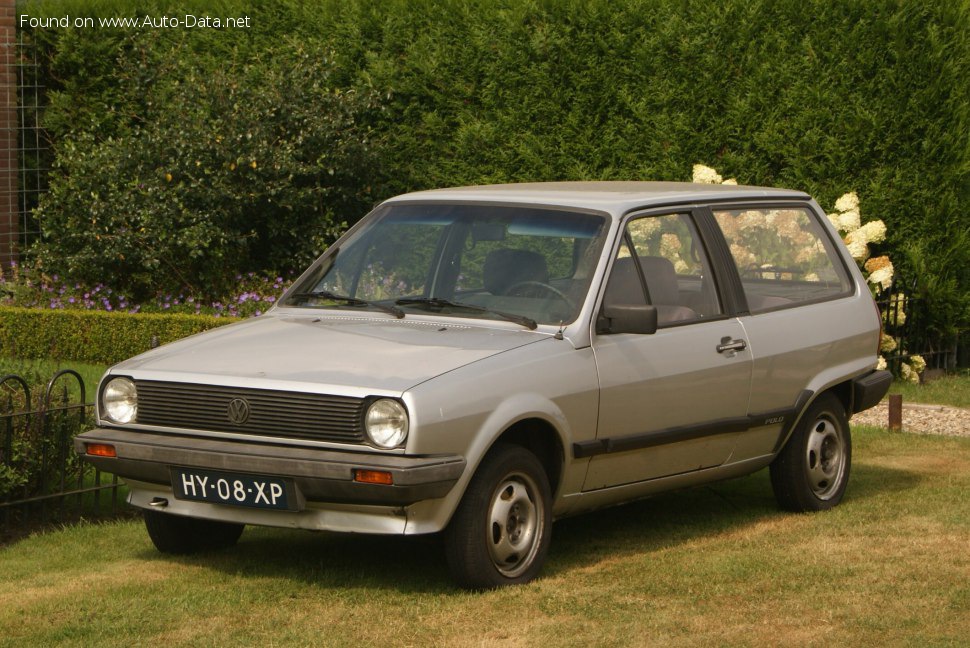
represents a pivotal era for Volkswagen’s popular supermini lineup, serving as a cornerstone of the brand’s presence in the European compact car segment. Launched in 1989 and produced until 1992, this specific variant, the 1.3 CAT (55 Hp), was a key offering within the second generation of the Polo. While never officially sold in the United States, the Polo has been a ubiquitous sight on European roads, embodying the practical, efficient, and well-engineered characteristics that Volkswagen is renowned for globally. The Polo II, internally designated as the 86C, built upon the success of its predecessor by offering improved aerodynamics, enhanced practicality, and a range of economical powertrains, making it a highly competitive choice in its class against rivals like the Ford Fiesta and Opel Corsa. Its introduction in the late 1980s saw a growing emphasis on environmental considerations, reflected in the “CAT” designation, indicating the inclusion of a catalytic converter—a significant feature for the time aimed at reducing exhaust emissions.
Engine & Performance: The Volkswagen Polo II (86C) 1.3 CAT (55 Hp) Powertrain
At the heart of the
Volkswagen Polo II (86C) 1.3 CAT (55 Hp)
lies a modest yet remarkably efficient 1.3-liter (1272 cm3 or 77.62 cubic inches) naturally aspirated inline-four engine. This powertrain, designated with the engine code ‘2G’, was configured for front, transverse mounting, a common and space-efficient layout for front-wheel-drive compacts. It delivered a peak power output of 55 horsepower at 5200 revolutions per minute (rpm), translating to a power-per-liter rating of 43.2 horsepower per liter. Torque figures stood at 97 Newton-meters (Nm) or 71.54 lb.-ft. of torque, achieved at a relatively low 3000 rpm, which contributed to its usable everyday performance, especially in urban driving conditions.
The engine featured a compression ratio of 9.5:1 and employed a multi-port manifold injection system, a step up from earlier carburetor setups, contributing to better fuel economy and cleaner emissions. With two valves per cylinder and a bore of 2.95 inches (75 mm) paired with a piston stroke of 2.83 inches (72 mm), the engine was designed for durability and smooth operation. Power was sent to the front wheels via a precise 5-speed manual transmission, offering drivers direct control and aiding in maximizing the available power.
In terms of raw performance, the Polo II (86C) 1.3 CAT (55 Hp) was not a speed demon, but it was perfectly adequate for its intended purpose. It could accelerate from 0 to 60 miles per hour in a calculated 14.7 seconds, and reach a top speed of 95.69 mph (154 km/h). These figures positioned it squarely within the expectations for an economical European supermini of its era. Fuel efficiency was a strong suit, with a combined fuel consumption rated at approximately 33.6 US miles per gallon (7 liters per 100 km). Urban driving yielded around 29.4 US mpg, while extra-urban cruising could achieve an impressive 46.1 US mpg, underscoring its economical nature. The inclusion of a catalytic converter was a significant environmental feature, aligning with emerging emission standards in Europe at the time and marking a commitment to cleaner automotive technology.
Design & Features: Practicality in a Compact Package
The
Volkswagen Polo II (86C) 1.3 CAT (55 Hp)
was offered in a practical 3-door hatchback body style, a popular configuration in Europe for its blend of compact dimensions and versatile cargo capacity. Its design was a clear evolution from the first-generation Polo, adopting a more aerodynamic and contemporary aesthetic that characterized Volkswagen’s design language of the late 1980s. The car measured 148.23 inches (3765 mm) in length, 61.81 inches (1570 mm) in width, and 53.15 inches (1350 mm) in height, with a wheelbase of 91.93 inches (2335 mm). These dimensions made it highly maneuverable and easy to park in congested European cities.
Inside, the Polo II offered seating for five occupants, though four would be more comfortable on longer journeys, typical for its class. The interior was characterized by its functional layout and durable materials, designed to withstand the rigors of daily use. While not luxurious, the cabin was ergonomically sound, with controls easily accessible to the driver. Practicality was further enhanced by a minimum trunk space of 8.48 cubic feet (240 liters), which could expand significantly to 36.37 cubic feet (1030 liters) with the rear seats folded down, making it surprisingly capable for hauling cargo despite its small footprint.
Underneath its unassuming exterior, the Polo II featured a robust chassis with coil spring suspension both front and rear, providing a comfortable ride quality for a car of its size. Braking duties were handled by disc brakes at the front and drum brakes at the rear, a standard setup for economical cars of this period. Steering was a rack and pinion system, offering direct feedback to the driver. The car rode on 155/70 R13 tires mounted on 4.5J x 13-inch wheel rims, a sensible choice that balanced grip with ride comfort and affordability.
Technical Specifications
| Category | Specification |
|---|---|
| General Information | |
| Brand | Volkswagen |
| Model | Polo |
| Generation | Polo II (86C) |
| Type (Engine) | 1.3 CAT (55 Hp) |
| Start of Production | 1989 year |
| End of Production | 1992 year |
| Powertrain Architecture | Internal Combustion engine |
| Body type | Hatchback |
| Seats | 5 |
| Doors | 3 |
| Performance Specs | |
| Fuel Consumption (economy) – urban | 29.4 US mpg (8 l/100 km) |
| Fuel Consumption (economy) – extra urban | 46.1 US mpg (5.1 l/100 km) |
| Fuel Consumption (economy) – combined | 33.6 US mpg (7 l/100 km) |
| Fuel Type | Petrol (Gasoline) |
| Acceleration 0 – 60 mph | 14.7 sec |
| Acceleration 0 – 100 km/h | 15.5 sec |
| Maximum speed | 95.69 mph (154 km/h) |
| Weight-to-power ratio | 14.2 kg/Hp, 70.5 Hp/tonne |
| Weight-to-torque ratio | 8 kg/Nm, 124.4 Nm/tonne |
| Engine Specs | |
| Power | 55 Hp @ 5200 rpm |
| Power per liter | 43.2 Hp/l |
| Torque | 71.54 lb.-ft. @ 3000 rpm (97 Nm) |
| Engine layout | Front, Transverse |
| Engine Model/Code | 2G |
| Engine displacement | 1.3 liters (1272 cm3 / 77.62 cu. in.) |
| Number of cylinders | 4 |
| Engine configuration | Inline |
| Cylinder Bore | 2.95 in. (75 mm) |
| Piston Stroke | 2.83 in. (72 mm) |
| Compression ratio | 9.5:1 |
| Number of valves per cylinder | 2 |
| Fuel injection system | Multi-port manifold injection |
| Engine aspiration | Naturally aspirated engine |
| Engine oil capacity | 3.7 US qt (3.5 l) |
| Coolant capacity | 5.92 US qt (5.6 l) |
| Space, Volume and Weights | |
| Kerb Weight | 1719.61 lbs (780 kg) |
| Max. weight | 2711.69 lbs (1230 kg) |
| Max load | 992.08 lbs (450 kg) |
| Trunk (boot) space – minimum | 8.48 cu. ft. (240 l) |
| Trunk (boot) space – maximum | 36.37 cu. ft. (1030 l) |
| Fuel tank capacity | 11.1 US gal (42 l) |
| Dimensions | |
| Length | 148.23 in. (3765 mm) |
| Width | 61.81 in. (1570 mm) |
| Height | 53.15 in. (1350 mm) |
| Wheelbase | 91.93 in. (2335 mm) |
| Front track | 51.97 in. (1320 mm) |
| Rear (Back) track | 52.95 in. (1345 mm) |
| Drivetrain, Brakes and Suspension Specs | |
| Drivetrain Architecture | The Internal combustion engine (ICE) drives the front wheels of the vehicle. |
| Drive wheel | Front wheel drive |
| Number of gears and type of gearbox | 5 gears, manual transmission |
| Front suspension | Coil spring |
| Rear suspension | Coil spring |
| Front brakes | Disc |
| Rear brakes | Drum |
| Steering type | Steering rack and pinion |
| Tires size | 155/70 R13 |
| Wheel rims size | 4.5J x 13 |
Legacy & Market Impact of the Volkswagen Polo II (86C)
The
Volkswagen Polo II (86C) 1.3 CAT (55 Hp)
, and indeed the entire Polo II generation, carved out a significant legacy for Volkswagen in the competitive European supermini segment. It was a car that epitomized reliability, economy, and robust German engineering, qualities that resonated strongly with a broad customer base seeking practical and affordable transportation. Its straightforward mechanicals and durable construction meant that many examples continued to serve faithfully for well over a decade, contributing to its reputation for longevity.
In its primary European markets, the Polo II faced stiff competition from a range of well-established rivals. These included the British-built Ford Fiesta, which offered a sportier driving experience; the Opel Corsa (known as the Vauxhall Nova in the UK), another strong contender for its value and practicality; and Italian entries like the Fiat Uno, celebrated for its innovative design and spacious interior. Despite this fierce competition, the Polo managed to hold its own, largely due to Volkswagen’s brand prestige, a perception of superior build quality, and its consistent performance as a daily driver.
The introduction of the catalytic converter in models like the 1.3 CAT (55 Hp) was a crucial step in the Polo’s evolution. It signaled Volkswagen’s commitment to meeting increasingly stringent environmental regulations in Europe, a trend that would only intensify in subsequent decades. This not only made the Polo a more environmentally responsible choice for consumers but also future-proofed it against potential legislative changes, enhancing its appeal during its production run.
The Polo II (86C) is remembered today as a classic example of a utilitarian European compact car. It was not flashy or groundbreaking, but it excelled at its core mission: providing dependable, efficient, and practical transportation. Its success laid the groundwork for future generations of the Polo, which have continued to evolve, incorporating more advanced technology and comfort features while retaining the fundamental values of the original. For many, the Polo II represents a nostalgic look back at a simpler era of motoring, where efficiency and durability were paramount, and it remains a testament to Volkswagen’s enduring ability to produce cars that genuinely meet the needs of their target market.