The Volkswagen Polo II (86C): A Quintessential European Supermini
The Volkswagen Polo II (86C) represents a significant chapter in the history of Volkswagen’s foray into the highly competitive European subcompact segment, known as the supermini class. Introduced in 1981 and produced until 1994, the second-generation Polo, internally designated 86C, built upon the success of its predecessor by offering enhanced practicality, robust engineering, and a broader range of body styles. While never officially sold in the United States, the Polo II became a ubiquitous sight on European roads, embodying Volkswagen’s commitment to delivering reliable, economical, and accessible transportation to a wide demographic. This particular variant, the 1.3 D (45 Hp) model, produced from 1985 to 1990, stands out as a testament to the era’s focus on fuel efficiency, especially through the increasing popularity of diesel powertrains in Europe.
The Polo II (86C) was a critical model for Volkswagen, establishing a strong foothold in a market segment dominated by rivals like the Ford Fiesta and Opel Corsa. Its design philosophy prioritized utility and durability, making it a favorite among first-time car buyers, urban commuters, and families seeking an affordable second vehicle. The 1.3 D model, with its modest but highly efficient diesel engine, perfectly encapsulated the pragmatic spirit of the Polo, offering impressive fuel economy at a time when fuel prices were a significant consideration for European motorists.
Engine and Performance of the Volkswagen Polo II (86C) 1.3 D (45 Hp)
Under the hood of the Volkswagen Polo II (86C) 1.3 D (45 Hp) resided a powertrain architecture built around a naturally aspirated internal combustion diesel engine. This 1.3-liter unit, identified by the engine code MN, was designed for maximum efficiency and longevity rather than outright speed. Producing a modest 45 horsepower, the engine’s output might seem low by modern standards, but it was entirely appropriate for its intended purpose and the vehicle class in the mid-1980s. In European markets, where city driving and economical long-distance travel were paramount, this diesel engine offered a compelling proposition.
The naturally aspirated design meant the engine delivered its power smoothly and predictably, without the complexity or added cost of a turbocharger. While acceleration was leisurely, the engine’s robust torque delivery at lower RPMs made it tractable in urban environments, allowing for easy maneuvering through traffic. The diesel engine’s inherent fuel efficiency was a major selling point, providing excellent mileage that significantly reduced running costs for owners. This characteristic was particularly valued in countries with higher fuel taxes and a culture of prioritizing economy over raw performance. The Polo 1.3 D was not about thrilling drives, but rather about dependable, cost-effective transportation, a role it fulfilled admirably.
Maintenance was another strong suit for this powertrain. With an engine oil capacity of 3.5 liters (3.7 US quarts) and a coolant capacity of 5.6 liters (5.92 US quarts), the engine was relatively straightforward to service, contributing to its overall low cost of ownership. The simplicity of the naturally aspirated diesel engine also meant fewer potential points of failure, enhancing its reputation for reliability – a hallmark of Volkswagen engineering during this period.
Design and Features of the Polo 86C Hatchback
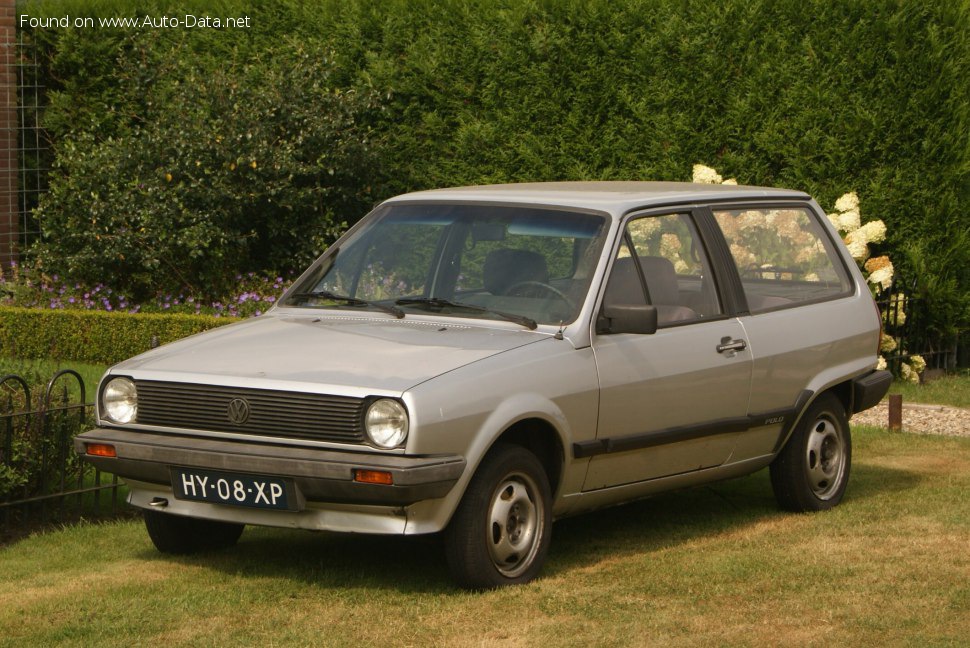
The design of the Volkswagen Polo II (86C) hatchback was a significant departure from its predecessor, adopting a more angular and upright aesthetic that maximized interior volume within its compact footprint. While the first-generation Polo was essentially a rebadged Audi 50, the 86C was a distinct Volkswagen design. The hatchback body style, in particular, was incredibly popular, offering a practical blend of passenger space and cargo versatility. Its boxy silhouette, often referred to as a “breadvan” style for the coupe variant, provided excellent headroom and a surprisingly spacious trunk for a car of its size.
From 1985 to 1990, the Polo II (86C) maintained a largely consistent design, emphasizing functionality over flamboyant styling. The exterior featured simple, clean lines, large glass areas for good visibility, and robust bumpers designed to withstand the rigors of city driving. The overall aesthetic was one of understated durability, reflecting Volkswagen’s Germanic engineering principles. Interior features, while basic by today’s standards, were thoughtfully laid out and built to last. The cabin prioritized ergonomics and ease of use, with straightforward controls and durable upholstery materials designed to withstand years of use. Depending on the trim level, features might have included a simple radio, manual window winders, and basic heating and ventilation systems. Safety features were rudimentary compared to modern vehicles, typically limited to seatbelts and a sturdy body structure, reflecting the standards of the mid-1980s.
The hatchback’s practicality was a key selling point. The rear seats could typically fold down, significantly expanding the cargo area, making the Polo a versatile choice for everything from grocery runs to weekend trips. Its compact dimensions made it exceptionally maneuverable and easy to park in congested European cities, further cementing its appeal as an urban workhorse. The design was, above all, honest and unpretentious, reflecting its role as an affordable and dependable means of transport.
Technical Specifications: Volkswagen Polo II (86C) 1.3 D (45 Hp)
| Category | Specification |
|---|---|
| Brand | Volkswagen |
| Model | Polo |
| Generation | Polo II (86C) |
| Type (Engine) | 1.3 D (45 Hp) |
| Start of Production | 1985 year |
| End of Production | 1990 year |
| Powertrain Architecture | Internal Combustion engine |
| Body type | Hatchback |
| Fuel Type | Diesel |
| Power | 45 Hp |
| Engine Model/Code | MN |
| Engine Aspiration | Naturally aspirated engine |
| Engine Oil Capacity | 3.5 l (3.7 US qt | 3.08 UK qt) |
| Coolant Capacity | 5.6 l (5.92 US qt | 4.93 UK qt) |
Legacy and Market Impact
The Volkswagen Polo II (86C), particularly its diesel variants like the 1.3 D (45 Hp), carved out a significant legacy in the European automotive landscape. Its reputation was built on a foundation of unwavering reliability, exceptional fuel economy, and practical utility. In an era where many manufacturers were still refining their small car offerings, the Polo II stood out for its solid build quality and the “feel” of a larger, more expensive car, attributes often associated with Volkswagen.
In its primary markets, the Polo II faced stiff competition from a host of well-established and emerging rivals. Key competitors included the popular Ford Fiesta, known for its driving dynamics; the Opel Corsa (marketed as the Vauxhall Nova in the UK), which offered a fresh, modern design; the innovative Renault 5, a French design icon; and the Fiat Uno, celebrated for its clever packaging and lively engines. Despite this intense rivalry, the Polo II managed to maintain strong sales figures, largely due to its perceived durability and the Volkswagen brand’s reputation for engineering integrity.
The 1.3 D model played a crucial role in popularizing diesel engines in the subcompact segment in Europe. Its remarkable fuel efficiency made it an attractive option during periods of rising fuel costs, proving that small diesel cars could be viable for everyday use. This particular model contributed to Volkswagen’s overall strategy of offering a diverse range of powertrains to meet varied consumer needs, from economical diesels to more performance-oriented gasoline engines.
Historically, the Polo II (86C) represents a pivotal moment for Volkswagen, solidifying its position in the small car market below the iconic Golf. It demonstrated the brand’s ability to produce highly competent and successful vehicles across different segments. Even decades after its production ceased, the Polo II is remembered fondly for its honest, no-frills approach to motoring and its remarkable longevity. Many examples continued to serve faithfully for well over two decades, a testament to their robust construction. Today, the Polo II is increasingly seen as a classic car, appreciated by enthusiasts for its simplicity, practicality, and its embodiment of 1980s European automotive design and engineering. It remains a symbol of accessible, reliable transportation that helped shape the motoring habits of a generation.