The Volkswagen Polo II Classic (86C) 1.0 (40 Hp): A European Compact Sedan Icon
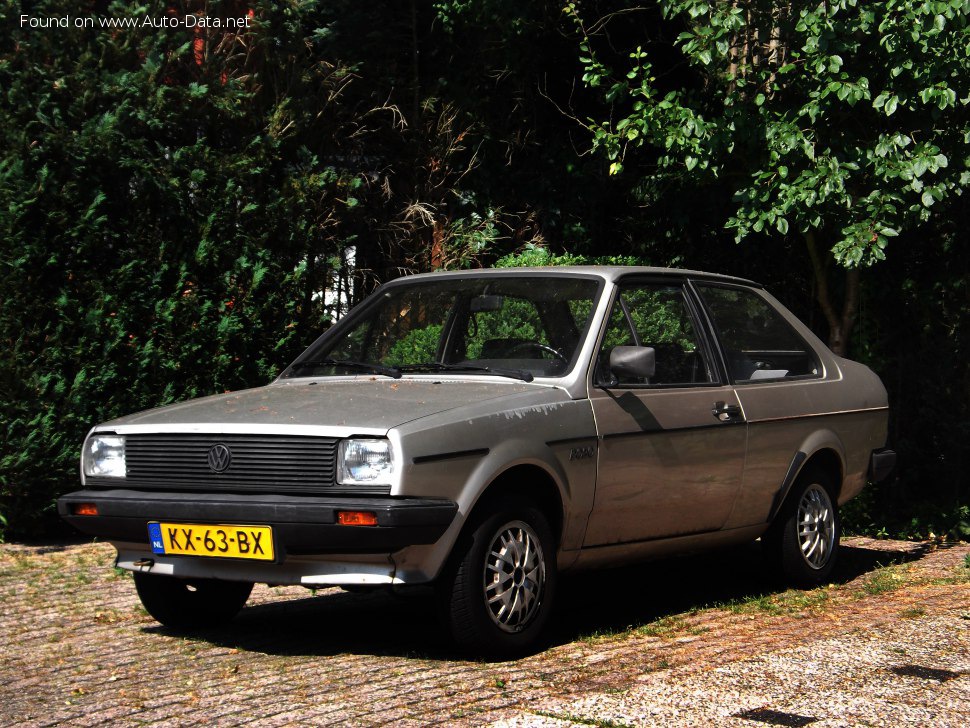
The Volkswagen Polo II Classic (86C) 1.0 (40 Hp) represents a significant chapter in the history of Volkswagen’s successful compact car lineage. Introduced in 1981, the second generation Polo, internally designated Type 86C, built upon the foundation laid by its predecessor, offering enhanced practicality, updated styling, and a range of efficient powertrains. While the Polo line primarily gained fame through its hatchback variants, the “Classic” designation denoted a two-door sedan bodystyle, offering a more conventional, trunked alternative to the popular hatchback. This particular variant, powered by a modest 1.0-liter engine delivering 40 horsepower, was positioned as an economical and reliable entry-level vehicle, particularly popular across various European markets where compact, fuel-efficient cars were (and remain) a staple of daily transportation. It was a testament to Volkswagen’s engineering philosophy of creating robust, no-nonsense vehicles designed for longevity and affordability, carving out a strong niche in the highly competitive supermini segment.
Engineering and Performance of the Volkswagen Polo II Classic (86C)
Powertrain and Driving Dynamics
At the heart of the Volkswagen Polo II Classic (86C) 1.0 (40 Hp) lay a straightforward yet dependable internal combustion engine, designed for efficiency and ease of maintenance rather than outright performance. This inline four-cylinder unit, with an engine displacement of 1043 cubic centimeters (approximately 63.65 cubic inches), produced a peak power output of 40 horsepower at 5300 RPM. Torque figures were equally modest, reaching 53.84 lb.-ft. (73 Nm) at a relatively low 2700 RPM, indicating a powertrain tuned for urban driving and reasonable tractability at lower speeds. This naturally aspirated engine relied on a carburettor fuel injection system, a common technology for mass-market vehicles of the early 1980s, prioritizing simplicity and cost-effectiveness.
The engine was configured in a front, transverse layout, driving the front wheels through a 4-speed manual transmission. This drivetrain architecture was typical for compact European cars of the era, offering efficient packaging and predictable handling characteristics. While the performance metrics might seem modest by today’s standards, they were entirely appropriate for the vehicle’s intended purpose. The Polo II Classic 1.0 could accelerate from 0 to 60 mph in a leisurely 18.1 seconds, with a maximum speed of approximately 85.75 mph (138 km/h). These figures underscored its role as an economical commuter and family car, adept at navigating city streets and capable of highway cruising, albeit without much urgency. Its light curb weight of 1686.54 lbs (765 kg) contributed to its nimble feel and commendable fuel economy, an important consideration for European buyers facing higher fuel prices.
Design and Features
Body Style and Interior Practicality
The Volkswagen Polo II Classic (86C) distinguished itself from its hatchback siblings with its two-door sedan body type. While two-door sedans are less common in modern automotive markets, they offered a distinct aesthetic and practical advantage in the 1980s for those who preferred a separate trunk for security and cargo organization over the more versatile but exposed cargo area of a hatchback. The Polo Classic’s design was characterized by clean, functional lines, reflecting Volkswagen’s pragmatic approach to vehicle aesthetics. Its compact dimensions – 146.65 inches in length, 61.81 inches in width, and 53.15 inches in height – made it highly maneuverable in congested European cities and easy to park.
Inside, the Polo II Classic offered seating for four occupants. The interior, though spartan by modern standards, was designed for durability and functionality. Materials were robust, and controls were intuitively placed, ensuring a straightforward user experience. Cargo capacity was a significant selling point for the “Classic” variant, with a minimum trunk space of 8.48 cubic feet (240 liters) that could expand to an impressive 32.31 cubic feet (915 liters) with the rear seats folded down, showcasing its surprising versatility for a compact sedan. This adaptability made it suitable for a range of uses, from daily commuting to weekend errands or even longer trips with light luggage. The emphasis was on practical utility and ease of use, qualities that resonated strongly with its target audience.
Technical Specifications
| General Information | |
|---|---|
| Brand | Volkswagen |
| Model | Polo |
| Generation | Polo II Classic (86C) |
| Type (Engine) | 1.0 (40 Hp) |
| Start of Production | 1981 year |
| End of Production | 1985 year |
| Powertrain Architecture | Internal Combustion engine |
| Body Type | Sedan |
| Seats | 4 |
| Doors | 2 |
| Performance Specs | |
| Fuel Type | Petrol (Gasoline) |
| Acceleration 0 – 60 mph | 18.1 sec |
| Acceleration 0 – 62 mph (0 – 100 km/h) | 19 sec |
| Maximum Speed | 85.75 mph (138 km/h) |
| Weight-to-Power Ratio | 19.1 kg/Hp, 52.3 Hp/tonne |
| Weight-to-Torque Ratio | 10.5 kg/Nm, 95.4 Nm/tonne |
| Engine Specs | |
| Power | 40 Hp @ 5300 rpm |
| Power per Liter | 38.4 Hp/l |
| Torque | 53.84 lb.-ft. (73 Nm) @ 2700 rpm |
| Engine Layout | Front, Transverse |
| Engine Model/Code | GL |
| Engine Displacement | 63.65 cu. in. (1043 cm3) |
| Number of Cylinders | 4 |
| Engine Configuration | Inline |
| Cylinder Bore | 2.95 in. (75 mm) |
| Piston Stroke | 2.32 in. (59 mm) |
| Number of Valves per Cylinder | 2 |
| Fuel Injection System | Carburettor |
| Engine Aspiration | Naturally aspirated engine |
| Engine Oil Capacity | 3.7 US qt (3.5 l) |
| Coolant Capacity | 6.87 US qt (6.5 l) |
| Space, Volume and Weights | |
| Kerb Weight | 1686.54 lbs (765 kg) |
| Max. Weight | 2711.69 lbs (1230 kg) |
| Max Load | 1025.15 lbs (465 kg) |
| Trunk (boot) Space – Minimum | 8.48 cu. ft. (240 l) |
| Trunk (boot) Space – Maximum | 32.31 cu. ft. (915 l) |
| Fuel Tank Capacity | 11.1 US gal (42 l) |
| Dimensions | |
| Length | 146.65 in. (3725 mm) |
| Width | 61.81 in. (1570 mm) |
| Height | 53.15 in. (1350 mm) |
| Wheelbase | 91.93 in. (2335 mm) |
| Front Track | 51.97 in. (1320 mm) |
| Rear (Back) Track | 52.95 in. (1345 mm) |
| Ride Height (Ground Clearance) | 4.13 in. (105 mm) |
| Drivetrain, Brakes and Suspension Specs | |
| Drivetrain Architecture | The Internal combustion engine (ICE) drives the front wheels of the vehicle. |
| Drive Wheel | Front wheel drive |
| Number of Gears and Type of Gearbox | 4 gears, manual transmission |
| Front Brakes | Disc |
| Rear Brakes | Drum |
| Tires Size | 155/70 R13 |
| Wheel Rims Size | 13 inches |
Legacy and Market Impact of the Volkswagen Polo II Classic (86C)
The Volkswagen Polo II Classic (86C) 1.0 (40 Hp) held a significant position in the European automotive landscape during its production run from 1981 to 1985. It was a core offering in the burgeoning supermini segment, a class of vehicles characterized by their compact size, fuel efficiency, and affordability. For many European families and individuals, particularly those seeking a reliable and economical mode of transport, the Polo Classic was an ideal choice. Its reputation for solid German engineering, even in an entry-level specification, meant it was often perceived as a more robust and enduring option compared to some of its competitors.
In its primary markets, the Polo II Classic faced stiff competition from a variety of domestic and international rivals. Key competitors included other European compacts such as the Ford Fiesta, Opel Corsa (Vauxhall Nova in the UK), Fiat Uno, and Renault 5. Each of these models vied for market share by offering their own blend of style, economy, and practicality. The Polo Classic differentiated itself with its perceived build quality, understated design, and the strong brand loyalty associated with Volkswagen. While it lacked the sporting pretensions of some rivals or the quirky charm of others, its no-nonsense approach resonated with a wide demographic.
The historical significance of the Polo II Classic lies in its contribution to Volkswagen’s dominance in the compact car segment. It helped solidify the Polo’s identity as a dependable and practical vehicle, a legacy that continues to this day across subsequent generations. Though never officially sold in the United States, its design and mechanical principles influenced global automotive trends, demonstrating the viability of a small, efficient sedan. The 1.0-liter variant, in particular, highlighted the importance of accessible and economical motoring, proving that a car didn’t need high horsepower to be highly effective and successful in its intended market. Today, these early Polo models are appreciated by enthusiasts for their classic simplicity, mechanical honesty, and their role in the evolution of the modern compact car.