The Volkswagen Polo II Classic (86C) 1.3 G40 (116 Hp): A Supercharged European Pocket Rocket
The Volkswagen Polo, a nameplate synonymous with compact European motoring, has a storied history of delivering practicality, efficiency, and occasionally, surprising performance. Among its various iterations, the second-generation Polo (internal designation 86C), produced from 1981 to 1994, stands out for its diverse range of body styles and powertrains. Within this generation, a particular variant carved out a niche for itself as a genuine performance contender: the Volkswagen Polo II Classic (86C) 1.3 G40 (116 Hp). Introduced in 1987 and produced until 1990, this model represented a high-performance, supercharged version of the Polo, offered in a less common two-door sedan “Classic” body style. While the Polo was never officially sold in the United States, its G40 variant became a cult classic in Europe, revered for its lightweight chassis, compact dimensions, and a punchy, supercharged engine that delivered an exhilarating driving experience far beyond its humble origins.
The G40 designation itself points to the heart of its performance: Volkswagen’s innovative G-Lader supercharger technology, specifically the G40 unit, named for the 40mm width of its spiral-shaped displacer. This engineering marvel allowed Volkswagen to extract significant power from small displacement engines, effectively creating a series of “hot hatches” and sedans that could rival larger, naturally aspirated competitors. The Polo G40, especially in its rare Classic sedan form, embodied a blend of understated style and potent performance, making it a highly desirable machine for enthusiasts seeking a nimble and engaging drive on European roads.
Engine & Performance: The G-Lader’s Roar in the Volkswagen Polo II Classic (86C)
At the core of the Polo II Classic G40’s appeal was its technologically advanced powertrain. Under the hood resided a 1.3-liter (1272 cm3 or 77.62 cu. in.) inline four-cylinder engine, designated by the code PY. What truly set this engine apart was the integration of Volkswagen’s G-Lader G40 supercharger, complemented by an intercooler. This forced induction system allowed the compact engine to produce a remarkable 116 horsepower at 6000 rpm and 109.16 lb.-ft. of torque at 3600 rpm. For an engine of its size and the era, these figures were exceptionally strong, yielding an impressive power per liter ratio of 91.2 Hp/l.
The engine featured a front, transverse layout and utilized a multi-port manifold injection fuel system. With a compression ratio of 8:1 and a SOHC (Single Overhead Camshaft) valvetrain with two valves per cylinder, the engine was designed for efficiency and robust power delivery under boost. The supercharger, unlike a turbocharger, provided instant throttle response with minimal lag, contributing to the car’s lively character. This meant that the Polo G40 delivered its power smoothly and progressively throughout the rev range, making it highly engaging to drive both in urban environments and on winding country roads.
Mated to a precise 5-speed manual transmission, the G40’s power was channeled to the front wheels, a common and effective drivetrain architecture for compact performance cars of the period. This setup, combined with a remarkably low curb weight of just 1686.54 lbs. (765 kg), resulted in an outstanding weight-to-power ratio of 6.6 kg/Hp (151.6 Hp/tonne). This allowed the Polo G40 Classic to achieve a top speed of 121.17 mph (195 km/h), a truly impressive figure for a small sedan in the late 1980s. The car’s dynamic capabilities were further enhanced by its independent McPherson strut front suspension with coil springs and an anti-roll bar, paired with a torsion beam rear suspension, providing a balanced and agile ride. Stopping power came from ventilated discs at the front and drum brakes at the rear, a typical configuration for performance cars in its class during that period.
Design & Features: The Understated Performance of the Polo Classic
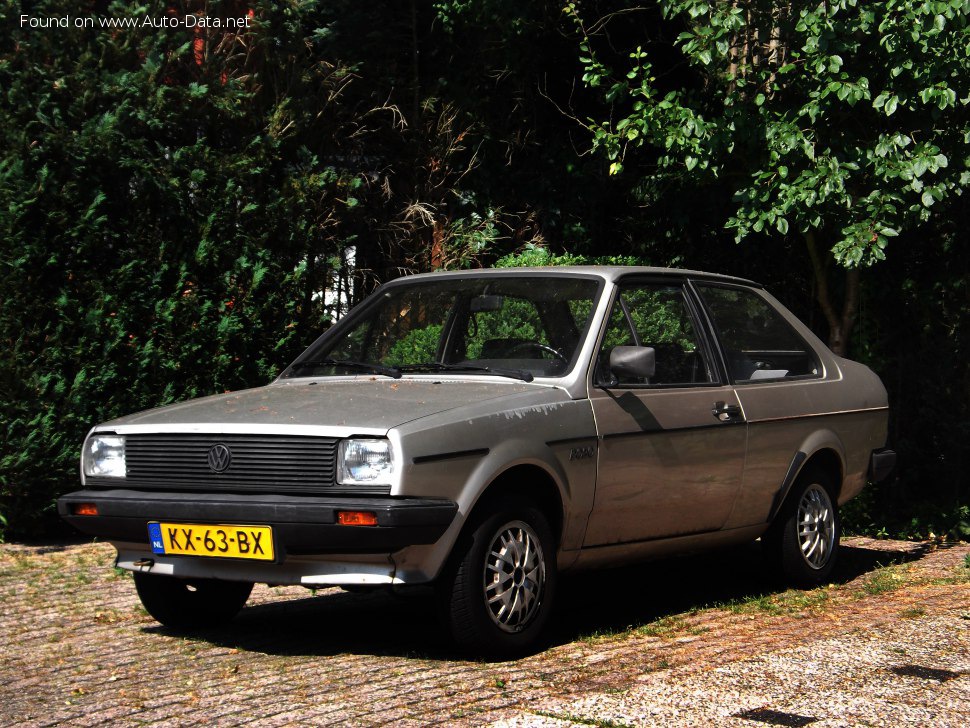
While the Polo G40 is most commonly associated with the hatchback body style, the “Classic” variant, as specified, refers to the two-door sedan. This body style offered a slightly more formal and less overtly sporty appearance than its hatchback sibling, yet still retained the compact dimensions characteristic of the Polo lineup. With a length of 146.65 inches (3725 mm), a width of 61.81 inches (1570 mm), and a height of 53.15 inches (1350 mm), the Polo Classic was an agile and maneuverable vehicle, perfect for navigating narrow European streets. Its 91.93-inch (2335 mm) wheelbase contributed to its stable yet nimble handling.
The design of the Polo II Classic (86C) was typical of late 1980s Volkswagen, featuring clean lines and a functional aesthetic. The sedan body offered a distinct profile, setting it apart from the more common hatchbacks. Despite its compact exterior, the interior was designed to comfortably seat four occupants, making it practical for small families or groups. The trunk space was respectable for its class, offering a minimum of 8.48 cu. ft. (240 liters) and expanding to 32.31 cu. ft. (915 liters) with the rear seats folded, demonstrating a surprising level of versatility.
Standard features for a performance car of its era would have included a sport-tuned suspension, specific badging to denote its G40 status, and potentially upgraded interior trim. The modest 13-inch wheels, shod with 155/70 R13 tires, might seem small by modern standards, but they were perfectly adequate for the car’s weight and power output, contributing to its responsive steering and direct road feel through its rack and pinion steering system. The overall design language emphasized function over overt flash, a characteristic often appreciated by Volkswagen enthusiasts.
Technical Specifications
| Category | Specification | US Equivalent / Notes |
|---|---|---|
| General Information | ||
| Brand | Volkswagen | |
| Model | Polo | |
| Generation | Polo II Classic (86C) | |
| Type (Engine) | 1.3 G40 (116 Hp) | |
| Start of Production | 1987 | |
| End of Production | 1990 | |
| Powertrain Architecture | Internal Combustion engine | |
| Body type | Sedan | 2 Doors |
| Seats | 4 | |
| Doors | 2 | |
| Performance Specs | ||
| Fuel Type | Petrol (Gasoline) | |
| Maximum Speed | 195 km/h | 121.17 mph |
| Weight-to-power ratio | 6.6 kg/Hp | 151.6 Hp/tonne |
| Weight-to-torque ratio | 5.2 kg/Nm | 193.5 Nm/tonne |
| Engine Specs | ||
| Power | 116 Hp @ 6000 rpm. | |
| Power per liter | 91.2 Hp/l | |
| Torque | 148 Nm @ 3600 rpm. | 109.16 lb.-ft. @ 3600 rpm. |
| Engine layout | Front, Transverse | |
| Engine Model/Code | PY | |
| Engine displacement | 1272 cm3 | 1.3 Liters / 77.62 cu. in. |
| Number of cylinders | 4 | |
| Engine configuration | Inline | |
| Cylinder Bore | 75 mm | 2.95 in. |
| Piston Stroke | 72 mm | 2.83 in. |
| Compression ratio | 8:1 | |
| Number of valves per cylinder | 2 | |
| Fuel injection system | Multi-port manifold injection | |
| Engine aspiration | Supercharger, Intercooler | |
| Valvetrain | SOHC | |
| Engine oil capacity | 3.5 l | 3.7 US qt |
| Coolant | 5.6 l | 5.92 US qt |
| Space, Volume and Weights | ||
| Kerb Weight | 765 kg | 1686.54 lbs. |
| Max. weight | 1230 kg | 2711.69 lbs. |
| Max load | 465 kg | 1025.15 lbs. |
| Trunk (boot) space – minimum | 240 l | 8.48 cu. ft. |
| Trunk (boot) space – maximum | 915 l | 32.31 cu. ft. |
| Fuel tank capacity | 42 l | 11.1 US gal |
| Dimensions | ||
| Length | 3725 mm | 146.65 in. |
| Width | 1570 mm | 61.81 in. |
| Height | 1350 mm | 53.15 in. |
| Wheelbase | 2335 mm | 91.93 in. |
| Front track | 1320 mm | 51.97 in. |
| Rear (Back) track | 1345 mm | 52.95 in. |
| Ride height (ground clearance) | 105 mm | 4.13 in. |
| Drivetrain, Brakes and Suspension Specs | ||
| Drivetrain Architecture | Front-wheel drive. Internal Combustion engine. | |
| Drive wheel | Front wheel drive | |
| Number of gears and type of gearbox | 5 gears, manual transmission | |
| Front suspension | Independent, type McPherson with coil spring and anti-roll bar | |
| Rear suspension | Torsion | |
| Front brakes | Ventilated discs | |
| Rear brakes | Drum | |
| Steering type | Steering rack and pinion | |
| Tires size | 155/70 R13 | |
| Wheel rims size | 13 inches |
Legacy & Market Impact: The Enduring Appeal of the G40
The Volkswagen Polo II Classic (86C) 1.3 G40 (116 Hp) holds a significant place in the history of European performance cars, especially within the “hot hatch” or “pocket rocket” segment, even in its less common sedan form. While the Polo was generally positioned as an economical and practical urban commuter, the G40 variant demonstrated Volkswagen’s capability to inject serious performance into its smallest platform. Its main competitors in the European market during its production years would have included other small, performance-oriented vehicles like the Ford Fiesta XR2, Peugeot 205 GTI (though the 205 GTI was a class above in terms of size and power), and potentially the Renault 5 GT Turbo. The Polo G40 stood out due to its unique supercharger technology, offering a different character of power delivery compared to its turbocharged or naturally aspirated rivals.
Its relatively short production run from 1987 to 1990, combined with the specialized G-Lader engine, made the G40 a somewhat rare sight, particularly the “Classic” sedan variant which was produced in lower numbers than the more popular hatchback. This rarity, coupled with its engaging driving dynamics and the distinctive whine of the G-Lader, has cemented its status as a highly sought-after classic among enthusiasts today. Its mechanical impact was significant, showcasing how forced induction could transform a modest engine into a high-performance unit without dramatically increasing displacement or weight. The G-Lader technology itself, while complex and requiring diligent maintenance, was a testament to Volkswagen’s engineering prowess in the late 20th century.
Today, the Polo G40 is celebrated for its purity of driving experience. Its lightweight construction, direct steering, and responsive supercharged engine offer a visceral connection to the road that is often missing in more modern vehicles. It represents a bygone era of compact performance, where mechanical ingenuity and lightweight design were paramount. For collectors and enthusiasts, a well-maintained Volkswagen Polo II Classic (86C) 1.3 G40 (116 Hp) is not just a car; it’s a piece of automotive history, a testament to what Volkswagen could achieve when pushing the boundaries of small-car performance. Its legacy continues to inspire a passionate community, ensuring its place as a revered classic within the Volkswagen family and the broader European performance car landscape.