The Volkswagen Polo II Coupe (86C): A European Subcompact Icon
The Volkswagen Polo II Coupe (86C) represents a significant chapter in the history of Volkswagen’s enduring subcompact line, the Polo. Launched in 1981, the second generation Polo, internally designated Type 86C, brought a more refined and versatile platform to the highly competitive European small car market. The Coupe variant, specifically produced from 1989 to 1994, offered a sportier, albeit still practical, two-door body style within the Polo II lineup. While never officially sold in the United States, the Polo II Coupe (86C) was a ubiquitous sight on European roads, prized for its compact dimensions, robust engineering, and economical operation, embodying the German automaker’s commitment to accessible, reliable transportation. This particular iteration, featuring the 1.0 CAT (45 Hp) engine, was designed to provide an entry-level option, balancing performance with exceptional fuel efficiency for urban and suburban environments.
Engine & Performance: The Volkswagen Polo II Coupe (86C) 1.0 CAT (45 Hp)
At the heart of this specific Volkswagen Polo II Coupe (86C) model was a modest yet highly effective 1.0-liter (999 cc, to be precise) naturally aspirated gasoline engine. Designated with engine codes such as AAK or AAU, this inline-four power plant delivered a peak output of 45 horsepower. In an era before widespread turbocharging in small cars, this naturally aspirated configuration was standard, emphasizing simplicity, reliability, and low maintenance costs. The “CAT” in its designation indicates the inclusion of a catalytic converter, a crucial emission control device that became increasingly common in the late 1980s and early 1990s as environmental regulations tightened across Europe.
While 45 horsepower might seem modest by modern standards, it was perfectly adequate for the Polo’s intended purpose as a nimble city car and an economical commuter. Paired typically with a manual transmission (though not specified in the data, it was the common setup), the lightweight nature of the Polo II Coupe ensured that the power-to-weight ratio allowed for sprightly performance around town and comfortable cruising on secondary roads. The engine’s design prioritized fuel efficiency and smooth operation, making it an ideal choice for drivers seeking minimal running costs. Its internal combustion architecture, driving the front wheels, was a well-established and proven layout for compact cars, offering predictable handling and maximizing interior space. The engine oil capacity of 3.5 liters (3.7 US quarts) and a coolant capacity of 5.6 liters (5.92 US quarts) further highlight the compact and straightforward nature of this powertrain, designed for ease of service and long-term durability.
Design & Features: The Compact Coupe Aesthetic
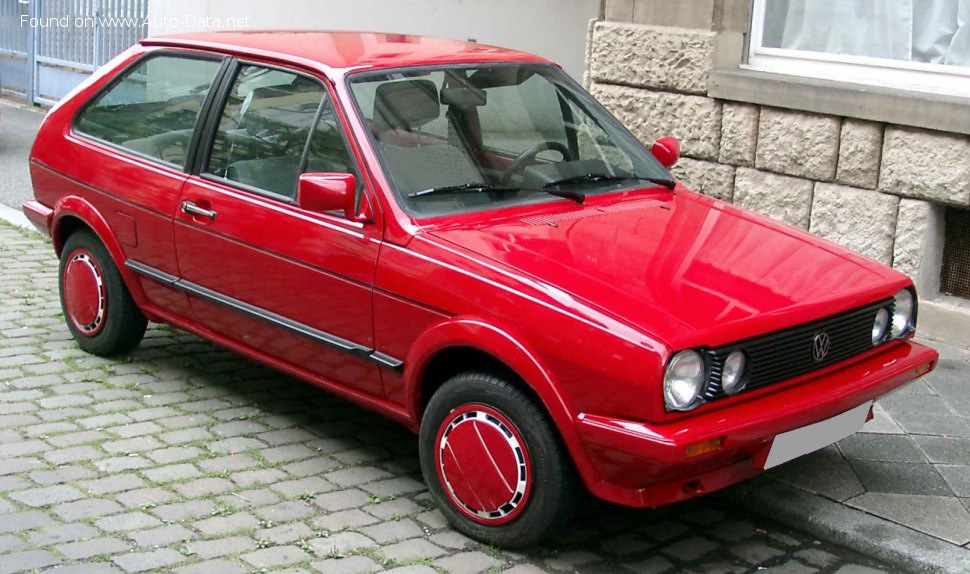
The Volkswagen Polo II Coupe (86C) adopted a distinctive two-door hatchback body style, which Volkswagen, like many European manufacturers, often marketed as a “coupe” for its sportier, more dynamic profile compared to the standard three-door or five-door hatchback. The 86C generation, in production from 1981, received a significant facelift in 1990, often referred to as the “Polo Mk2F” or “Polo II Facelift.” This particular 1989-1994 model falls within that refreshed period, featuring updated styling cues.
The design language of the Polo II Coupe was characterized by its clean lines, functional aesthetics, and a sturdy, almost boxy appearance that conveyed robustness. The front end typically featured square or rectangular headlights, integrated into a simple grille, reflecting the design trends of the late 1980s and early 1990s. The coupe’s roofline gently sloped towards the rear, terminating in a practical hatchback tailgate, providing surprising cargo versatility for a vehicle of its size. The compact dimensions made it exceptionally easy to maneuver and park in congested urban environments, a crucial attribute for its European target audience.
Inside, the Polo II Coupe (86C) was a testament to Volkswagen’s philosophy of practical and ergonomic design. The cabin, while not opulent, was built to last, featuring durable materials and straightforward controls. Standard features for an entry-level model in its class would have included basic heating and ventilation, a simple radio, and manual window winders. Safety features, by late 80s standards, were rudimentary compared to modern vehicles, relying primarily on the car’s structural integrity and seatbelts. However, the Polo’s reputation for solid build quality contributed to a sense of security. The two-door configuration emphasized the front occupants, though the rear bench could accommodate two additional passengers for shorter journeys, making it a versatile choice for young drivers or small families.
Technical Specifications: Volkswagen Polo II Coupe (86C) 1.0 CAT (45 Hp)
| General Information | |
|---|---|
| Brand | Volkswagen |
| Model | Polo |
| Generation | Polo II Coupe (86C) |
| Type (Engine) | 1.0 CAT (45 Hp) |
| Start of Production | 1989 year |
| End of Production | 1994 year |
| Powertrain Architecture | Internal Combustion engine |
| Body type | Coupe |
| Performance Specs | |
| Fuel Type | Petrol (Gasoline) |
| Power | 45 Hp |
| Engine Model/Code | AAK, AAU |
| Engine Aspiration | Naturally aspirated engine |
| Fluid Capacities | |
| Engine Oil Capacity | 3.5 l (3.7 US qt | 3.08 UK qt) |
| Coolant Capacity | 5.6 l (5.92 US qt | 4.93 UK qt) |
Legacy & Market Impact of the Volkswagen Polo II Coupe (86C)
The Volkswagen Polo II Coupe (86C) carved out a significant niche in the European automotive landscape. As a key player in the fiercely contested subcompact segment, it faced stiff competition from rivals such as the Ford Fiesta, Opel Corsa (Vauxhall Nova in the UK), Fiat Uno, Peugeot 205, and Renault Clio. Despite the strong competition, the Polo II maintained its position as a highly respected contender, particularly for its perceived German build quality, reliability, and robust engineering.
Its reputation for durability and low running costs made it an incredibly popular choice among a wide demographic, from first-time drivers and students to urban commuters and small families. The 1.0 CAT (45 Hp) variant, in particular, was emblematic of the accessible and economical motoring that defined this segment. It wasn’t about raw power or luxury; it was about dependable, no-nonsense transportation that could withstand the rigors of daily use. The inclusion of a catalytic converter in these later models also underscored Volkswagen’s commitment to meeting evolving environmental standards, an important aspect of its progressive image.
Historically, the Polo II (86C) is remembered as a workhorse, a car that simply got the job done. Its mechanical simplicity meant that it was relatively easy and inexpensive to maintain, further cementing its appeal in markets where affordability was a prime concern. While its absence from the North American market means it lacks direct recognition among many American enthusiasts, its impact on European motoring culture is undeniable. It paved the way for subsequent, more technologically advanced Polo generations and reinforced Volkswagen’s brand identity as a producer of dependable, well-engineered vehicles for the masses. Today, well-preserved examples of the Polo II Coupe are increasingly sought after by collectors and enthusiasts who appreciate its classic late-20th-century design, mechanical honesty, and its significant role in the evolution of the compact car. It remains a testament to Volkswagen’s ability to produce enduring vehicles that perfectly match the needs of their target markets.