The Volkswagen Polo III (6N/6KV) 1.0 (50 Hp): A European Mainstay
The Volkswagen Polo III, internally designated as the 6N/6KV generation, represents a significant chapter in the history of Volkswagen’s ubiquitous supermini. Produced from 1994 to 2002, the third-generation Polo built upon the success of its predecessors, evolving into a more refined and mature vehicle for the highly competitive European subcompact segment. While the Polo line has never been officially sold in the United States market, it has consistently been a cornerstone of Volkswagen’s offerings across Europe, Asia, and other international markets, celebrated for its practicality, robust engineering, and accessible pricing. This article specifically delves into the entry-level Volkswagen Polo III (6N/6KV) 1.0 (50 Hp) variant, manufactured between 1996 and 1999, which served as a crucial gateway into the Volkswagen brand for countless European drivers.
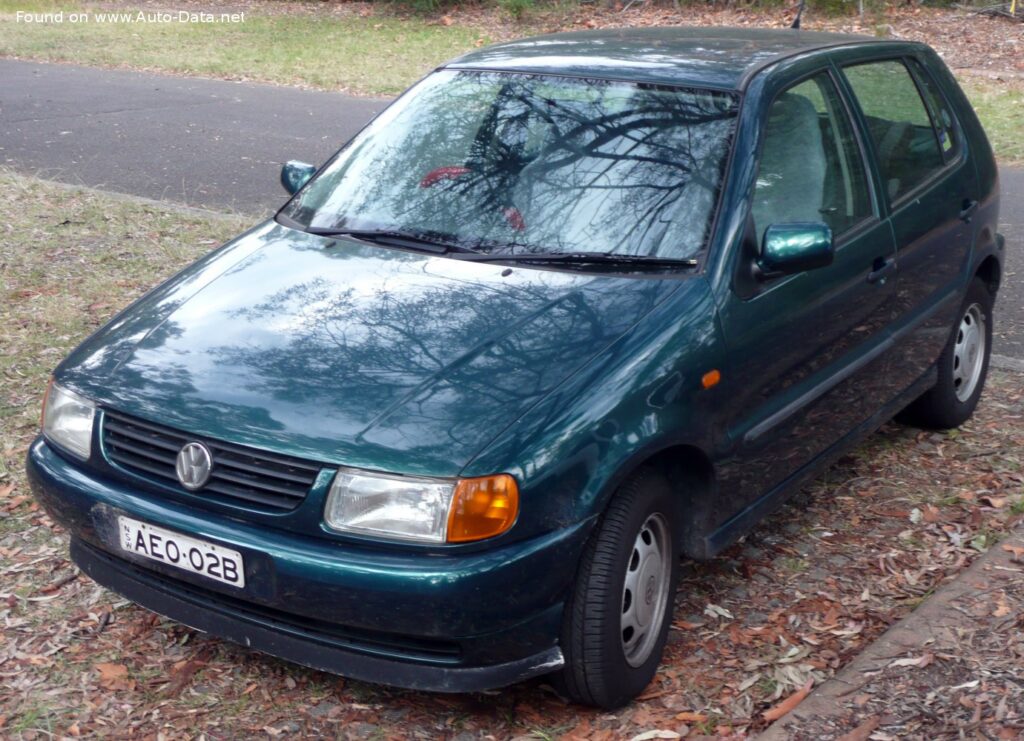
The 6N/6KV generation marked a departure from the more angular styling of the Polo II, adopting a softer, more rounded aesthetic that aligned with contemporary Volkswagen design language, seen also in the larger Golf IV. It shared its platform with the SEAT Ibiza and Cordoba of the same era, showcasing Volkswagen Group’s strategy of platform sharing to achieve economies of scale. The 1.0-liter variant was designed with urban environments and fuel efficiency in mind, offering a reliable and economical transportation solution for daily commutes and city driving, a core requirement for European consumers in this segment.
Engine and Performance: The Heart of the Volkswagen Polo III (6N/6KV)
At the core of the Volkswagen Polo III (6N/6KV) 1.0 (50 Hp) lies a modest yet efficient 1.0-liter (999 cm³ or 60.96 cubic inches) inline four-cylinder gasoline engine. Designated by engine codes such as ALL, ALD, or AER, this naturally aspirated unit was engineered for economy and durability rather than outright speed. It produced a peak power output of 50 horsepower at 5000 revolutions per minute (rpm), a figure that, while humble by American standards, was perfectly adequate for the car’s intended purpose as a city commuter and short-distance runabout in Europe.
Torque output stood at 86 Newton-meters (approximately 63.43 lb.-ft.) delivered at a relatively low 3000 rpm, providing decent pulling power for maneuvering in traffic and overcoming inclines. This engine featured a multi-port manifold injection system and two valves per cylinder, a common and reliable setup for the era. With a compression ratio of 10.5:1, it was designed to run on standard petrol (gasoline).
Power was sent to the front wheels via a standard five-speed manual transmission, a choice that underscored the vehicle’s focus on driver engagement and fuel efficiency. Performance figures reflect the engine’s economical nature: the Polo 1.0 (50 Hp) accelerated from 0 to 60 miles per hour in an estimated 17.6 seconds, with a top speed of 93.83 mph (151 km/h). While not a performer, these numbers were competitive within its segment.
Fuel economy was a strong suit for this variant. The combined cycle consumption was rated at 5.5 liters per 100 kilometers, translating to an impressive 42.8 US miles per gallon. In urban driving, it achieved 30.5 US mpg (7.7 l/100 km), and on the highway, it excelled with 48 US mpg (4.9 l/100 km), making it a highly cost-effective vehicle to operate. Its relatively light curb weight of 1940.07 lbs (880 kg) contributed significantly to both its agility and fuel efficiency.
Design and Features: Practicality and European Flair
The Volkswagen Polo III (6N/6KV) adopted a more contemporary and appealing design compared to its predecessors. As a hatchback, it was offered in both three-door and five-door configurations, catering to different customer needs for accessibility and sportiness. Its compact dimensions – 146.26 inches (3715 mm) in length, 65.16 inches (1655 mm) in width, and 55.91 inches (1420 mm) in height – made it highly maneuverable and easy to park in congested European cities. The wheelbase of 94.49 inches (2400 mm) provided a stable ride for its class.
Inside, the Polo III offered seating for five occupants, though the rear seats were naturally more suited for two adults on longer journeys or three children. Volkswagen’s reputation for solid build quality and ergonomic design was evident in the interior, which featured durable materials and a straightforward layout. While not luxurious, the cabin was functional and well-assembled, designed to withstand the rigors of daily use.
Practicality was further enhanced by the flexible cargo space. With the rear seats in place, the trunk offered a respectable 8.65 cubic feet (245 liters) of storage. Folding down the rear seats significantly expanded this capacity to a generous 34.43 cubic feet (975 liters), making the Polo surprisingly versatile for hauling groceries, luggage, or even larger items. The fuel tank capacity of 11.89 US gallons (45 liters) provided a good range, especially considering the car’s excellent fuel economy.
In terms of chassis and safety, the Polo III featured a well-tuned suspension system with coil springs at both the front and rear, providing a comfortable ride for its size. Braking was handled by ventilated discs at the front and drums at the rear, a common setup for subcompacts of the era. Importantly, the 1.0 (50 Hp) variant was equipped with ABS (Anti-lock Braking System) as an assisting system, a crucial safety feature that was becoming more prevalent in the late 1990s and significantly improved braking control in adverse conditions. Steering was a hydraulic rack and pinion system, offering direct and communicative feedback to the driver, a hallmark of German engineering. The car rolled on 155/70 R13 S tires mounted on 13-inch wheel rims, prioritizing comfort and efficiency over ultimate grip.
Technical Specifications: Volkswagen Polo III (6N/6KV) 1.0 (50 Hp)
| Category | Specification |
|---|---|
| General Information | |
| Brand | Volkswagen |
| Model | Polo |
| Generation | Polo III (6N/6KV) |
| Type (Engine) | 1.0 (50 Hp) |
| Production Start | 1996 |
| Production End | 1999 |
| Powertrain Architecture | Internal Combustion engine |
| Body Type | Hatchback |
| Seats | 5 |
| Doors | 3-5 |
| Performance Specs | |
| Fuel Consumption (Urban) | 7.7 l/100 km (30.5 US mpg) |
| Fuel Consumption (Extra Urban) | 4.9 l/100 km (48 US mpg) |
| Fuel Consumption (Combined) | 5.5 l/100 km (42.8 US mpg) |
| Fuel Type | Petrol (Gasoline) |
| Acceleration 0-60 mph | 17.6 sec |
| Maximum Speed | 93.83 mph (151 km/h) |
| Weight-to-Power Ratio | 17.6 kg/Hp, 56.8 Hp/tonne |
| Weight-to-Torque Ratio | 10.2 kg/Nm, 97.7 Nm/tonne |
| Engine Specs | |
| Power | 50 Hp @ 5000 rpm |
| Power per liter | 50.1 Hp/l |
| Torque | 86 Nm (63.43 lb.-ft.) @ 3000 rpm |
| Engine Layout | Front, Transverse |
| Engine Model/Code | ALL, ALD, AER |
| Engine Displacement | 999 cm³ (60.96 cu. in.) |
| Number of Cylinders | 4 |
| Engine Configuration | Inline |
| Cylinder Bore | 67.1 mm (2.64 in.) |
| Piston Stroke | 70.6 mm (2.78 in.) |
| Compression Ratio | 10.5:1 |
| Valves per Cylinder | 2 |
| Fuel Injection System | Multi-port manifold injection |
| Engine Aspiration | Naturally aspirated |
| Engine Oil Capacity | 3.2 l (3.38 US qt) |
| Engine Oil Specification | Not specified |
| Coolant Capacity | 5.6 l (5.92 US qt) |
| Space, Volume and Weights | |
| Kerb Weight | 880 kg (1940.07 lbs) |
| Max. Weight | 1375 kg (3031.36 lbs) |
| Max Load | 495 kg (1091.29 lbs) |
| Trunk (Boot) Space – Minimum | 245 l (8.65 cu. ft.) |
| Trunk (Boot) Space – Maximum | 975 l (34.43 cu. ft.) |
| Fuel Tank Capacity | 45 l (11.89 US gal) |
| Dimensions | |
| Length | 3715 mm (146.26 in.) |
| Width | 1655 mm (65.16 in.) |
| Height | 1420 mm (55.91 in.) |
| Wheelbase | 2400 mm (94.49 in.) |
| Front Track | 1367 mm (53.82 in.) |
| Rear (Back) Track | 1400 mm (55.12 in.) |
| Drivetrain, Brakes and Suspension Specs | |
| Drivetrain Architecture | Front-wheel drive, Internal Combustion engine |
| Drive Wheel | Front-wheel drive |
| Number of Gears/Gearbox Type | 5 gears, manual transmission |
| Front Suspension | Coil spring |
| Rear Suspension | Coil spring |
| Front Brakes | Ventilated discs |
| Rear Brakes | Drum |
| Assisting Systems | ABS (Anti-lock braking system) |
| Steering Type | Steering rack and pinion |
| Power Steering | Hydraulic Steering |
| Tires Size | 155/70 R13 S |
| Wheel Rims Size | 13 inches |
Legacy and Market Impact: The Enduring Charm of the Polo
The Volkswagen Polo III (6N/6KV) 1.0 (50 Hp) carved out a significant niche in the European automotive landscape during its production run. It competed fiercely in the supermini segment against formidable rivals such as the Ford Fiesta, Opel Corsa (Vauxhall Corsa in the UK), Renault Clio, and Fiat Punto. What set the Polo apart was its reputation for a more “premium” feel relative to its segment, inheriting Volkswagen’s brand values of solid build quality, understated design, and reliable engineering.
For many first-time car buyers, students, or those seeking an economical second car, the 1.0-liter Polo was an ideal choice. Its low running costs, excellent fuel efficiency, and compact size made it perfect for navigating narrow city streets and expensive parking. The availability of both three- and five-door configurations further broadened its appeal, catering to a diverse range of buyers from young singles to small families.
The introduction of safety features like ABS as standard or optional equipment in an entry-level subcompact during the late 1990s also contributed to its positive image and market acceptance. This commitment to safety and quality, even in its most basic form, helped solidify Volkswagen’s position as a brand that offered sensible, well-engineered vehicles across its range.
Today, the Polo III (6N/6KV) is remembered as a robust and dependable used car in many European markets. Its mechanical simplicity, particularly in the 1.0-liter variant, means that many examples are still on the road, a testament to Volkswagen’s engineering and durability. While it may not possess the iconic status of some classic cars, its widespread success and enduring presence on European roads underscore its historical significance as a practical, accessible, and reliable vehicle that played a crucial role in mobilizing a generation of drivers. The Volkswagen Polo III (6N/6KV) 1.0 (50 Hp), though never crossing the Atlantic, remains a quintessential example of a well-executed European supermini, balancing economy, practicality, and a touch of Volkswagen’s signature quality.