The Volkswagen Polo III Classic: A Practical European Workhorse
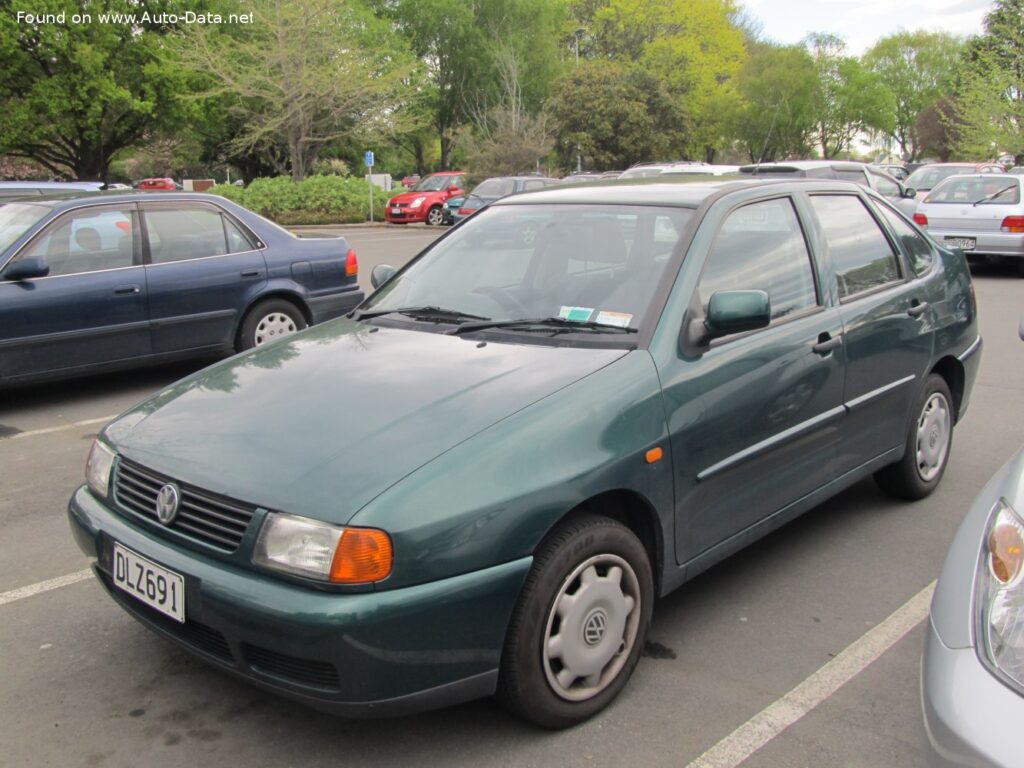
The Volkswagen Polo III Classic 1.6 (75 Hp) represents a significant variant within the third generation of Volkswagen’s popular Polo supermini range. Produced from 1994 to 2000, the Polo III (internally designated as the Type 6N for hatchbacks and 6KV for sedans/wagons) marked a substantial leap in design, safety, and refinement compared to its predecessors. While the Polo hatchback was a common sight across Europe, the “Classic” designation referred to the sedan body style, a less common but strategically important offering that broadened the Polo’s appeal in markets where a traditional three-box design was preferred, particularly in Southern and Eastern Europe, and some Asian markets. This particular variant, equipped with a 1.6-liter engine producing 75 horsepower, was positioned as a reliable, economical, and practical family car, emphasizing utility and Volkswagen’s renowned build quality rather than outright performance. It was never officially sold in the United States, remaining a European and international market staple.
Evolution and Market Positioning of the Volkswagen Polo III Classic
The third-generation Polo was a crucial model for Volkswagen, as it shared its platform with the contemporary SEAT Ibiza and Cordoba models, leveraging economies of scale within the Volkswagen Group. The Polo III Classic, specifically, served as a more affordable and compact alternative to the larger Jetta or Passat sedans, catering to a demographic that required more trunk space and a traditional sedan silhouette than the hatchback could offer. Its introduction was a testament to Volkswagen’s strategy of diversifying its most popular models to capture a wider customer base, offering versatility within a proven and well-regarded platform. The Classic variant aimed to blend the compact footprint of the Polo with the perceived prestige and practicality of a sedan, making it a compelling option for families and fleet buyers across its target regions.
Engine & Performance of the Volkswagen Polo III Classic
Under the hood, the Volkswagen Polo III Classic 1.6 (75 Hp) featured a robust and well-proven 1.6-liter (1598 cm³ or 97.52 cu. in.) naturally aspirated inline-four gasoline engine, internally designated as AEE. This powerplant delivered 75 horsepower at 5200 rpm, a respectable figure for its class and era, providing adequate motivation for daily commuting and light family duties. Torque output stood at 99.57 lb.-ft. (135 Nm) at a relatively low 2800 rpm, ensuring good low-end grunt and flexibility in city driving. The engine utilized a multi-port manifold injection system and an OHC (Overhead Camshaft) valvetrain with two valves per cylinder, a configuration known for its reliability and ease of maintenance.
Power was transmitted to the front wheels via a standard 5-speed manual transmission, a common and efficient setup for a vehicle of this segment. This drivetrain architecture was chosen for its simplicity, cost-effectiveness, and proven reliability. Performance figures for the 1.6-liter Polo III Classic were modest but entirely competitive for its time: it could accelerate from 0 to 60 mph in a calculated 12.6 seconds, with a top speed of 105.63 mph (170 km/h). These figures underscored its role as a practical rather than a performance-oriented vehicle.
Fuel economy was a strong point for the Polo III Classic 1.6. It achieved an estimated 23.8 US mpg in urban driving conditions and an impressive 39.2 US mpg on the extra-urban cycle, translating to a combined efficiency that made it an economical choice for budget-conscious buyers. The engine’s compression ratio of 9.8:1 was typical for naturally aspirated gasoline engines of the period, contributing to its balanced performance and efficiency. With an engine oil capacity of 3.7 US quarts and a coolant capacity of 5.81 US quarts, maintenance was straightforward and aligned with standard Volkswagen practices.
Design & Features: The Practicality of the Volkswagen Polo III Classic
The design of the Volkswagen Polo III Classic emphasized practicality and understated elegance, diverging from the more youthful hatchback with its traditional sedan silhouette. Measuring 163.94 inches (4164 mm) in length, 64.57 inches (1640 mm) in width, and 55.67 inches (1414 mm) in height, the Polo Classic was compact yet offered a surprisingly spacious interior for its class. The wheelbase of 96.1 inches (2441 mm) contributed to a stable ride and adequate legroom for five occupants across its four doors.
The exterior design was conservative, featuring clean lines and a functional aesthetic that aligned with Volkswagen’s brand identity of robust, no-nonsense vehicles. While not flashy, its design proved enduring and practical. The interior, designed for comfort and utility, provided seating for five. A key advantage of the Classic sedan over its hatchback sibling was its significantly larger trunk capacity, ranging from 16.07 cu. ft. (455 liters) with the rear seats up, expandable to 26.84 cu. ft. (760 liters) when the rear seats were folded down. This made it particularly appealing for families or individuals requiring substantial cargo space.
In terms of features, the Polo III Classic 1.6 (75 Hp) was equipped with technologies appropriate for its segment and era. It featured a rack and pinion steering system with hydraulic power steering, providing a direct and assisted feel. Safety, a growing concern in the 1990s, was addressed with front ventilated disc brakes and rear drum brakes, complemented by an Anti-lock Braking System (ABS) as an assisting system, which was a significant safety enhancement for a subcompact vehicle at the time. The car rode on 185/60 R14 tires mounted on 6J x 14 wheel rims, offering a comfortable balance between grip and ride quality. The suspension setup, featuring a wishbone front and a suspension with traction connecting levers (effectively a torsion beam setup) at the rear, provided a compliant ride suitable for varying road conditions found across Europe.
Technical Specifications
| Feature | Specification |
|---|---|
| Brand | Volkswagen |
| Model | Polo |
| Generation | Polo III Classic |
| Type (Engine) | 1.6 (75 Hp) |
| Production Start | 1994 |
| Production End | 2000 |
| Powertrain Architecture | Internal Combustion Engine |
| Body Type | Sedan |
| Seats | 5 |
| Doors | 4 |
| Fuel Consumption (Urban) | 9.9 l/100 km (23.8 US mpg) |
| Fuel Consumption (Extra Urban) | 6 l/100 km (39.2 US mpg) |
| Fuel Type | Petrol (Gasoline) |
| Acceleration 0-60 mph | 12.6 sec |
| Maximum Speed | 105.63 mph (170 km/h) |
| Weight-to-Power Ratio | 13.7 kg/Hp, 73.2 Hp/tonne |
| Weight-to-Torque Ratio | 7.6 kg/Nm, 131.7 Nm/tonne |
| Power | 75 Hp @ 5200 rpm |
| Power per Liter | 46.9 Hp/l |
| Torque | 99.57 lb.-ft. (135 Nm) @ 2800 rpm |
| Engine Layout | Front, Transverse |
| Engine Model/Code | AEE |
| Engine Displacement | 1.6 liters (1598 cm³, 97.52 cu. in.) |
| Number of Cylinders | 4 |
| Engine Configuration | Inline |
| Cylinder Bore | 3.01 in. (76.5 mm) |
| Piston Stroke | 3.42 in. (86.9 mm) |
| Compression Ratio | 9.8:1 |
| Valves per Cylinder | 2 |
| Fuel Injection System | Multi-port manifold injection |
| Engine Aspiration | Naturally aspirated |
| Valvetrain | OHC |
| Engine Oil Capacity | 3.7 US qt (3.5 l) |
| Coolant Capacity | 5.81 US qt (5.5 l) |
| Kerb Weight | 2259.74 lbs (1025 kg) |
| Max. Weight | 3273.86 lbs (1485 kg) |
| Max Load | 1014.13 lbs (460 kg) |
| Trunk Space (Minimum) | 16.07 cu. ft. (455 l) |
| Trunk Space (Maximum) | 26.84 cu. ft. (760 l) |
| Fuel Tank Capacity | 11.89 US gal (45 l) |
| Length | 163.94 in. (4164 mm) |
| Width | 64.57 in. (1640 mm) |
| Height | 55.67 in. (1414 mm) |
| Wheelbase | 96.1 in. (2441 mm) |
| Front Track | 56.26 in. (1429 mm) |
| Rear Track | 55.51 in. (1410 mm) |
| Drivetrain Architecture | Front-wheel drive |
| Drive Wheel | Front wheel drive |
| Gearbox Type | 5 gears, manual transmission |
| Front Suspension | Wishbone |
| Rear Suspension | Suspension with traction connecting levers |
| Front Brakes | Ventilated discs |
| Rear Brakes | Drum |
| Assisting Systems | ABS (Anti-lock braking system) |
| Steering Type | Steering rack and pinion |
| Power Steering | Hydraulic Steering |
| Tires Size | 185/60 R14 |
| Wheel Rims Size | 6J x 14 |
Legacy & Market Impact of the Volkswagen Polo III Classic
The Volkswagen Polo III Classic, particularly the 1.6 (75 Hp) variant, carved out a distinct niche in the European and select international markets during its production run. Its reputation was built on core Volkswagen values: reliability, robust build quality, and sensible engineering. While the Polo hatchback was synonymous with youthful urban mobility, the Classic sedan appealed to a more mature and family-oriented demographic seeking greater practicality and a more traditional aesthetic. It was often chosen by buyers who valued a secure, separate trunk compartment and a slightly more formal appearance over the hatchback’s versatility.
In its primary markets, the Polo III Classic competed with other subcompact sedans, though this body style was less prevalent in Western Europe compared to hatchbacks. Competitors included sedan versions of models like the Ford Fiesta (often marketed as the Fiesta Courier or similar in some regions), Opel Corsa, and various offerings from Fiat (like the Punto sedan) or Renault (like the Clio Symbol/Thalia). What set the Polo Classic apart was its strong brand cachet, perceived higher quality materials, and solid driving dynamics typical of Volkswagen products. It offered a step up in refinement and perceived durability compared to many of its rivals, albeit often at a slightly higher price point.
The Volkswagen Polo III Classic contributed significantly to the Polo’s overall success, demonstrating Volkswagen’s ability to adapt a successful platform to diverse market demands. It expanded the Polo family’s reach, offering a practical and economical solution for those who needed more than a hatchback but found larger sedans like the Jetta or Passat too expensive or cumbersome. Its mechanical simplicity, including the reliable OHC 1.6-liter engine and manual transmission, ensured low running costs and easy maintenance, making it a popular choice for both private owners and commercial fleets.
Today, the Polo III Classic is remembered as a dependable and unpretentious vehicle. While not a collector’s item in the same vein as some performance-oriented classics, it holds its own as a testament to Volkswagen’s engineering prowess in creating durable and functional vehicles. Many examples continue to serve reliably in its original markets, underscoring its enduring quality and impact as a practical, everyday workhorse that successfully bridged the gap between compact city cars and full-size family sedans for a generation of European drivers. Its legacy is one of quiet competence and widespread utility, cementing its place in the history of Volkswagen’s global product strategy.