<html>
<head>
<title>Volkswagen Polo III Classic 1.9 SDI (68 Hp)</title>
</head>
<body>
<h2>Volkswagen Polo III Classic 1.9 SDI (68 Hp)</h2>
<p>
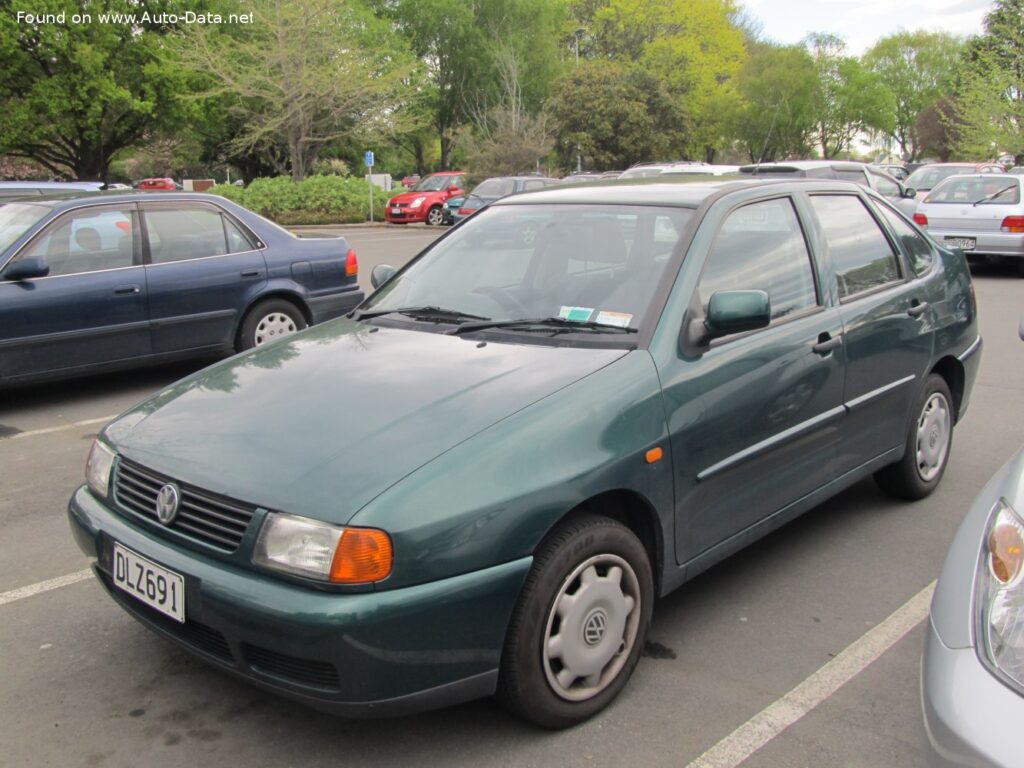
The <strong>Volkswagen Polo III Classic 1.9 SDI (68 Hp)</strong> represents a practical and economical offering within Volkswagen’s highly successful B-segment lineup during the late 1990s. Produced for a brief period between 1999 and 2000, this specific model was the sedan variant of the third-generation Polo (internal designation Typ 6N), marketed primarily in European and other global markets where a traditional three-box sedan body style was favored over the hatchback. While the Polo hatchback was a staple across Europe, the “Classic” sedan provided a more formal appearance and increased trunk capacity, appealing to families and fleet customers seeking a robust, reliable, and exceptionally fuel-efficient vehicle. Powered by a naturally aspirated 1.9-liter SDI diesel engine, it prioritized longevity and low running costs, embodying Volkswagen’s reputation for engineering solidity in an accessible package. This model was never officially sold in the United States, reflecting differing market preferences for compact vehicles.
</p>
<h2>Engine and Performance of the Volkswagen Polo III Classic</h2>
<p>
At the heart of the <strong>Volkswagen Polo III Classic 1.9 SDI (68 Hp)</strong> was its robust 1.9-liter (1896 cm³) naturally aspirated direct injection (SDI) diesel engine, bearing the engine codes AGP or AQM. This four-cylinder inline engine featured an OHC (Overhead Camshaft) valvetrain with two valves per cylinder and a high compression ratio of 19.5:1, typical for a diesel of its era. The engine was engineered for reliability and maximum fuel efficiency rather than outright speed. It produced a modest 68 horsepower at 4200 rpm and a respectable 98.1 lb.-ft. of torque at a low 2200 rpm. This torque delivery profile made the car feel tractable in urban driving despite its modest horsepower figure.
</p>
<p>
Power was sent to the front wheels via a smooth-shifting 5-speed manual transmission, a common and reliable setup for Volkswagen’s front-wheel-drive architecture. Performance figures reflected its utilitarian purpose: the Polo III Classic 1.9 SDI accelerated from 0 to 60 mph in a leisurely 16.6 seconds, with a top speed of 100.04 mph (161 km/h). While these numbers might seem modest by modern standards, they were perfectly adequate for the daily commuting and family transport roles it was designed for.
</p>
<p>
The true strength of this powertrain lay in its exceptional fuel economy. It boasted an urban fuel consumption of 34.1 US mpg and an impressive extra-urban figure of 56 US mpg. This efficiency, combined with a 11.89 US gallon fuel tank, provided a substantial cruising range, a significant advantage for European drivers facing higher fuel prices. The SDI engine was known for its mechanical simplicity and inherent durability, requiring less complex maintenance than its turbocharged TDI counterparts, which contributed to lower running costs over the vehicle’s lifespan.
</p>
<h3>Design and Features</h3>
<p>
The <strong>Volkswagen Polo III Classic</strong> adopted a conservative yet functional design, characteristic of Volkswagen vehicles. As a 4-door sedan, it offered seating for five occupants, making it a viable option for small families. Its dimensions—163.94 inches in length, 64.57 inches in width, and 55.67 inches in height, with a wheelbase of 96.1 inches—placed it firmly in the subcompact segment, offering maneuverability in crowded European cities while still providing a decent interior space.
</p>
<p>
The exterior design was understated, featuring clean lines and a conventional three-box profile that conveyed reliability rather than flash. The interior, though not luxurious, was ergonomically sound and built with durable materials, reflecting Volkswagen’s commitment to quality and longevity. Practicality was a strong suit, with a generous trunk capacity ranging from 16.07 cubic feet (455 liters) with the rear seats in place, expandable to 26.84 cubic feet (760 liters) when the rear seats were folded, offering ample space for luggage or groceries.
</p>
<p>
Underneath, the Polo III Classic featured a conventional suspension setup designed for a balance of comfort and predictable handling: a wishbone front suspension and a rear suspension with traction connecting levers. Braking was handled by front disc brakes and rear drum brakes, supplemented by an Anti-lock Braking System (ABS), a significant safety feature for its time and segment. The hydraulic rack and pinion steering provided direct feedback and ease of maneuverability. The car rode on 185/60 R14 tires mounted on 6J x 14 wheel rims, a common size that balanced grip, ride comfort, and replacement cost.
</p>
<h3>Technical Specifications</h3>
<table border=”1″ style=”width:100%; border-collapse: collapse;”>
<tr><th colspan=”2″ style=”background-color:#f2f2f2; padding:8px;”>General Information</th></tr>
<tr><td style=”padding:8px;”>Brand</td><td style=”padding:8px;”>Volkswagen</td></tr>
<tr><td style=”padding:8px;”>Model</td><td style=”padding:8px;”>Polo</td></tr>
<tr><td style=”padding:8px;”>Generation</td><td style=”padding:8px;”>Polo III Classic</td></tr>
<tr><td style=”padding:8px;”>Type (Engine)</td><td style=”padding:8px;”>1.9 SDI (68 Hp)</td></tr>
<tr><td style=”padding:8px;”>Start of Production</td><td style=”padding:8px;”>1999 year</td></tr>
<tr><td style=”padding:8px;”>End of Production</td><td style=”padding:8px;”>2000 year</td></tr>
<tr><td style=”padding:8px;”>Powertrain Architecture</td><td style=”padding:8px;”>Internal Combustion engine</td></tr>
<tr><td style=”padding:8px;”>Body Type</td><td style=”padding:8px;”>Sedan</td></tr>
<tr><td style=”padding:8px;”>Seats</td><td style=”padding:8px;”>5</td></tr>
<tr><td style=”padding:8px;”>Doors</td><td style=”padding:8px;”>4</td></tr>
<tr><th colspan=”2″ style=”background-color:#f2f2f2; padding:8px;”>Performance Specs</th></tr>
<tr><td style=”padding:8px;”>Fuel Consumption (Urban)</td><td style=”padding:8px;”>34.1 US mpg (6.9 l/100 km)</td></tr>
<tr><td style=”padding:8px;”>Fuel Consumption (Extra Urban)</td><td style=”padding:8px;”>56 US mpg (4.2 l/100 km)</td></tr>
<tr><td style=”padding:8px;”>Fuel Type</td><td style=”padding:8px;”>Diesel</td></tr>
<tr><td style=”padding:8px;”>Acceleration 0 – 60 mph</td><td style=”padding:8px;”>16.6 sec</td></tr>
<tr><td style=”padding:8px;”>Maximum Speed</td><td style=”padding:8px;”>100.04 mph (161 km/h)</td></tr>
<tr><td style=”padding:8px;”>Weight-to-Power Ratio</td><td style=”padding:8px;”>16.5 kg/Hp, 60.7 Hp/tonne</td></tr>
<tr><td style=”padding:8px;”>Weight-to-Torque Ratio</td><td style=”padding:8px;”>8.4 kg/Nm, 118.8 Nm/tonne</td></tr>
<tr><th colspan=”2″ style=”background-color:#f2f2f2; padding:8px;”>Engine Specs</th></tr>
<tr><td style=”padding:8px;”>Power</td><td style=”padding:8px;”>68 Hp @ 4200 rpm</td></tr>
<tr><td style=”padding:8px;”>Power per Liter</td><td style=”padding:8px;”>35.9 Hp/l</td></tr>
<tr><td style=”padding:8px;”>Torque</td><td style=”padding:8px;”>98.1 lb.-ft. (133 Nm) @ 2200 rpm</td></tr>
<tr><td style=”padding:8px;”>Engine Layout</td><td style=”padding:8px;”>Front, Transverse</td></tr>
<tr><td style=”padding:8px;”>Engine Model/Code</td><td style=”padding:8px;”>AGP, AQM</td></tr>
<tr><td style=”padding:8px;”>Engine Displacement</td><td style=”padding:8px;”>1.9 Liters (1896 cm³ / 115.7 cu. in.)</td></tr>
<tr><td style=”padding:8px;”>Number of Cylinders</td><td style=”padding:8px;”>4</td></tr>
<tr><td style=”padding:8px;”>Engine Configuration</td><td style=”padding:8px;”>Inline</td></tr>
<tr><td style=”padding:8px;”>Cylinder Bore</td><td style=”padding:8px;”>3.13 in. (79.5 mm)</td></tr>
<tr><td style=”padding:8px;”>Piston Stroke</td><td style=”padding:8px;”>3.76 in. (95.5 mm)</td></tr>
<tr><td style=”padding:8px;”>Compression Ratio</td><td style=”padding:8px;”>19.5:1</td></tr>
<tr><td style=”padding:8px;”>Number of Valves per Cylinder</td><td style=”padding:8px;”>2</td></tr>
<tr><td style=”padding:8px;”>Fuel Injection System</td><td style=”padding:8px;”>Direct injection</td></tr>
<tr><td style=”padding:8px;”>Engine Aspiration</td><td style=”padding:8px;”>Naturally aspirated engine</td></tr>
<tr><td style=”padding:8px;”>Valvetrain</td><td style=”padding:8px;”>OHC</td></tr>
<tr><td style=”padding:8px;”>Engine Oil Capacity</td><td style=”padding:8px;”>4.76 US qt (4.5 l)</td></tr>
<tr><td style=”padding:8px;”>Coolant Capacity</td><td style=”padding:8px;”>6.87 US qt (6.5 l)</td></tr>
<tr><th colspan=”2″ style=”background-color:#f2f2f2; padding:8px;”>Space, Volume and Weights</th></tr>
<tr><td style=”padding:8px;”>Kerb Weight</td><td style=”padding:8px;”>2469.18 lbs (1120 kg)</td></tr>
<tr><td style=”padding:8px;”>Max. Weight</td><td style=”padding:8px;”>3483.3 lbs (1580 kg)</td></tr>
<tr><td style=”padding:8px;”>Max Load</td><td style=”padding:8px;”>1014.13 lbs (460 kg)</td></tr>
<tr><td style=”padding:8px;”>Trunk (Boot) Space – Minimum</td><td style=”padding:8px;”>16.07 cu. ft. (455 l)</td></tr>
<tr><td style=”padding:8px;”>Trunk (Boot) Space – Maximum</td><td style=”padding:8px;”>26.84 cu. ft. (760 l)</td></tr>
<tr><td style=”padding:8px;”>Fuel Tank Capacity</td><td style=”padding:8px;”>11.89 US gal (45 l)</td></tr>
<tr><th colspan=”2″ style=”background-color:#f2f2f2; padding:8px;”>Dimensions</th></tr>
<tr><td style=”padding:8px;”>Length</td><td style=”padding:8px;”>163.94 in. (4164 mm)</td></tr>
<tr><td style=”padding:8px;”>Width</td><td style=”padding:8px;”>64.57 in. (1640 mm)</td></tr>
<tr><td style=”padding:8px;”>Height</td><td style=”padding:8px;”>55.67 in. (1414 mm)</td></tr>
<tr><td style=”padding:8px;”>Wheelbase</td><td style=”padding:8px;”>96.1 in. (2441 mm)</td></tr>
<tr><td style=”padding:8px;”>Front Track</td><td style=”padding:8px;”>56.26 in. (1429 mm)</td></tr>
<tr><td style=”padding:8px;”>Rear (Back) Track</td><td style=”padding:8px;”>55.51 in. (1410 mm)</td></tr>
<tr><th colspan=”2″ style=”background-color:#f2f2f2; padding:8px;”>Drivetrain, Brakes and Suspension Specs</th></tr>
<tr