Volkswagen Polo III Variant 1.4 16V (75 Hp): A Practical European Compact
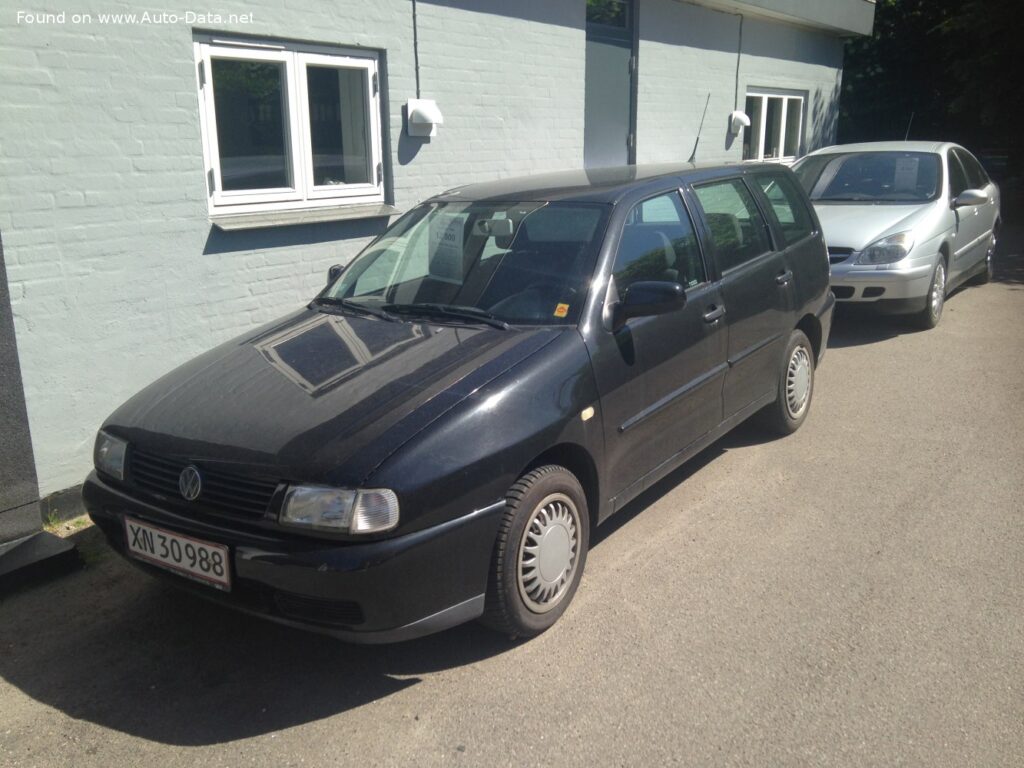
The Volkswagen Polo III Variant 1.4 16V (75 Hp) represents a crucial chapter in the history of Volkswagen’s ubiquitous compact car line, specifically addressing the need for increased utility within the popular Polo platform. Launched in 1999 as part of the third generation (Type 6N/6KV) Polo family, this station wagon variant, often referred to as an “estate” in European markets, offered a compelling blend of compact dimensions, renowned German engineering, and enhanced cargo capacity. While the Polo hatchback was a common sight across Europe, the Variant extended its appeal to families and individuals requiring more versatile space than its hatchback sibling could provide. Positioned in the competitive European B-segment, the Polo III Variant was a testament to Volkswagen’s strategy of diversifying its successful models to cater to a broader range of consumer needs, emphasizing practicality and efficiency over outright performance. It served as a more accessible alternative to larger, more expensive station wagons, making it a popular choice for budget-conscious buyers seeking reliable transportation with added functionality.
The Evolution of the Volkswagen Polo III Variant
Genesis of the Polo III Variant
The third generation Volkswagen Polo, internally designated Type 6N, debuted in 1994, marking a significant evolution from its predecessors. It shared its platform with the SEAT Ibiza and Cordoba, a strategic move by Volkswagen to leverage economies of scale within the Volkswagen Group. While the hatchback and sedan (Classic) models were the initial focus, Volkswagen recognized the demand for a more capacious body style. Thus, the Polo III Variant (Type 6KV) was introduced, bridging the gap between the compact Polo and the larger Golf Variant. Its production run for this specific 1.4 16V (75 Hp) engine variant spanned from 1999 to 2000, signifying its role as a late-model offering within the third generation before the Polo IV (Type 9N) arrived. This period was characterized by incremental refinements and the introduction of more efficient engines, with the 1.4-liter 16-valve unit being a prime example of Volkswagen’s commitment to modern powertrain technology for its compact offerings.
Engine & Performance: The 1.4 16V Powertrain
Under the hood, the Volkswagen Polo III Variant 1.4 16V (75 Hp) was equipped with a naturally aspirated 1.4-liter (1390 cm3 or 84.82 cu. in.) inline-four petrol engine. This multi-port manifold injected unit, identified by engine codes like AHW, AUA, or APE, was designed for a balance of efficiency and adequate daily performance. With a 16-valve cylinder head (four valves per cylinder) and an OHC (Overhead Camshaft) valvetrain, it produced a respectable 75 horsepower at 5000 revolutions per minute (rpm). Torque output stood at 92.93 lb.-ft. (126 Nm) delivered at 3800 rpm, providing sufficient pulling power for city driving and moderate highway speeds.
Mated to a 5-speed manual transmission, the front-wheel-drive powertrain architecture ensured direct and engaging control. The vehicle could accelerate from 0 to 60 mph in a calculated 12.7 seconds, with a top speed of 103.77 mph (167 km/h). While not a performance powerhouse, these figures were competitive for its segment and purpose, emphasizing reliability and fuel economy. The engine’s compression ratio of 10:1 further contributed to its efficiency. Fuel economy was a strong suit for this model, with urban consumption rated at 25 US mpg and extra-urban figures reaching an impressive 43.6 US mpg, making it an economical choice for European commuters. The 11.89 US gallon (45 liter) fuel tank provided a decent cruising range between fill-ups.
Design & Features: Practicality in a Compact Package
The design of the Volkswagen Polo III Variant was characterized by its functional and understated aesthetic, typical of Volkswagen’s design philosophy during that era. As a 5-door station wagon, it prioritized practicality and cargo versatility. Its dimensions – 162.87 inches in length, 64.57 inches in width, and 56.42 inches in height – made it maneuverable in urban environments while still offering significant interior space. The wheelbase of 96.22 inches contributed to a stable ride and maximized cabin volume.
Inside, the Polo III Variant comfortably accommodated five occupants. The real highlight, however, was its cargo capacity. With the rear seats in place, the trunk offered a generous 13.77 cu. ft. (390 liters) of space. Folding down the rear seats expanded this to a substantial 44.14 cu. ft. (1250 liters), transforming the compact wagon into a highly capable load-hauler, ideal for families, small businesses, or active lifestyles.
Safety features for its time included an Anti-lock Braking System (ABS), which was becoming standard on many European models, enhancing stopping control. The vehicle featured disc brakes at the front and drum brakes at the rear, a common setup for compact cars of this period. Steering was managed by a hydraulic rack and pinion system, providing direct feedback to the driver. The car rode on 185/60 R14 tires, mounted on 14-inch wheel rims, offering a comfortable and predictable ride quality. The suspension system utilized coil springs at the front and a trailing arm setup at the rear, a robust and space-efficient configuration suitable for a compact wagon.
Technical Specifications: Volkswagen Polo III Variant 1.4 16V (75 Hp)
| Category | Specification | US Equivalent (where applicable) |
|---|---|---|
| General Information | ||
| Brand | Volkswagen | |
| Model | Polo III Variant | |
| Type (Engine) | 1.4 16V (75 Hp) | |
| Production Start | 1999 | |
| Production End | 2000 | |
| Powertrain Architecture | Internal Combustion Engine (ICE) | |
| Body Type | Station wagon (estate), 5 Doors | |
| Seats | 5 | |
| Performance Specs | ||
| Fuel Type | Petrol (Gasoline) | |
| Fuel Consumption (Urban) | 9.4 l/100 km | 25 US mpg |
| Fuel Consumption (Extra Urban) | 5.4 l/100 km | 43.6 US mpg |