As an international automotive expert, I present a detailed analysis of the Volkswagen Polo III Variant 1.7 SDI (60 Hp), a key player in the European subcompact segment during the late 20th century. This article adheres to American English (US) terminology throughout.
Introduction: The Volkswagen Polo III Variant 1.7 SDI (60 Hp)
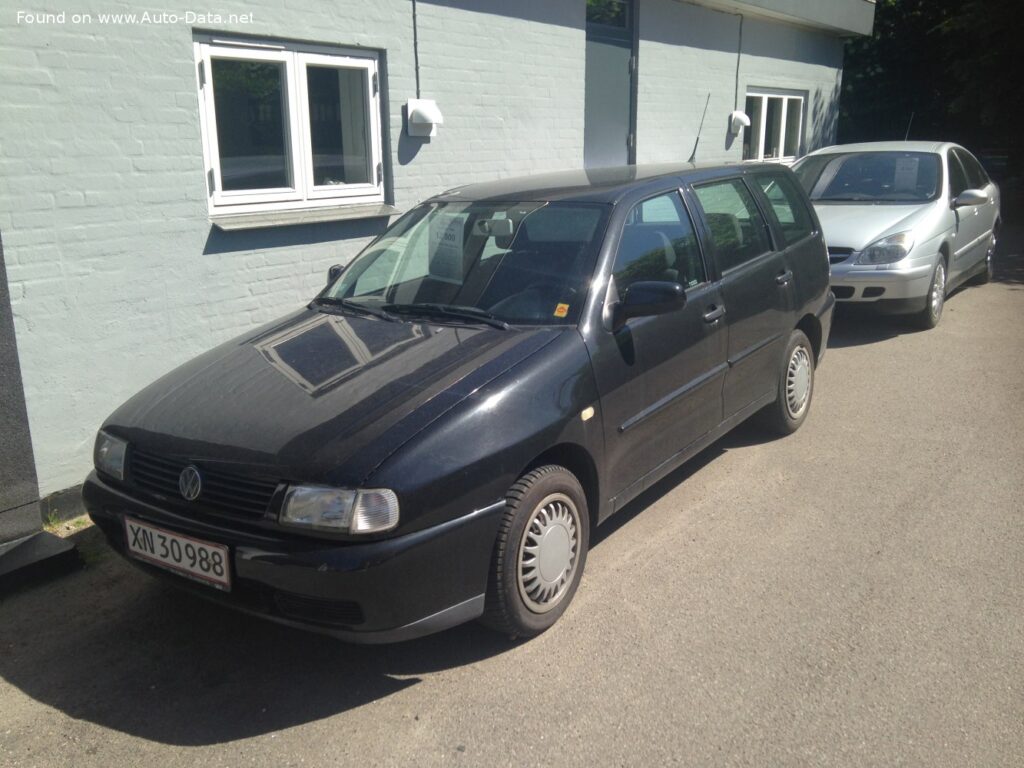
The Volkswagen Polo III Variant 1.7 SDI (60 Hp) represents a significant expansion of the popular Polo lineup, introducing a practical station wagon (also known as an estate) body style to the third generation of Volkswagen’s venerable supermini. Produced between 1994 and 2000, this particular variant, identified by its 1.7-liter naturally aspirated direct injection diesel engine, was not offered in the United States market. Instead, it carved out a niche in Europe and other international markets as an economical, robust, and surprisingly spacious small family car or light commercial vehicle. It built upon the Polo’s reputation for reliability and sensible engineering, offering enhanced utility in a compact footprint, making it a compelling choice for buyers prioritizing fuel efficiency and cargo capacity over outright performance.
Engine & Performance: The Economical Heart of the Volkswagen Polo III Variant 1.7 SDI (60 Hp)
At the core of the Volkswagen Polo III Variant 1.7 SDI (60 Hp) lies its distinctive 1.7-liter (1716 cm³ or 104.72 cubic inches) SDI diesel engine, internally designated AKU. This powerplant was a testament to Volkswagen’s early commitment to direct injection diesel technology, even in its naturally aspirated form, preceding the widespread adoption of turbocharged TDI units in smaller vehicles. The SDI, or “Suction Diesel Injection,” engine was designed for maximum fuel efficiency and reliability, delivering a modest but adequate 60 horsepower at 4200 revolutions per minute. Its torque output was 84.82 lb.-ft. (115 Nm) at a low 2200 rpm, which, coupled with its front-wheel-drive architecture and a standard 5-speed manual transmission, provided tractable urban performance and impressive highway economy.
Performance figures for the 1.7 SDI variant reflected its economy-focused mission. It could accelerate from 0 to 60 mph in a calculated 17.2 seconds (0-100 km/h in 18.1 seconds) and reach a top speed of 94.45 mph (152 km/h). While not a performance car, its real strength lay in its remarkable fuel economy. The extra-urban consumption was rated at an impressive 47 US mpg (5 liters per 100 km), making it an extremely cost-effective vehicle to run over long distances. The engine layout was a conventional front, transverse-mounted inline-four configuration, featuring two valves per cylinder and a high compression ratio of 19.5:1, typical for a direct injection diesel of its era. With an engine oil capacity of 4.97 US quarts and a coolant capacity of 6.87 US quarts, the powertrain was designed for straightforward maintenance and longevity.
Design & Features: Practicality in a Compact Package
The Volkswagen Polo III Variant 1.7 SDI (60 Hp) adopted a 5-door station wagon body type, a practical departure from the standard hatchback Polo. This “Variant” designation, common in Volkswagen’s European nomenclature, signified its enhanced cargo-carrying capabilities. Measuring 162.87 inches in length, 64.57 inches in width, and 56.42 inches in height, with a wheelbase of 96.22 inches, it was compact enough for city driving while offering significantly more utility than its hatchback sibling. The design was understated and functional, characteristic of Volkswagen vehicles of the period, emphasizing clean lines and robust construction.
Inside, the Polo III Variant offered seating for five occupants, designed with durability and ergonomics in mind for everyday use. The true highlight, however, was its cargo versatility. The trunk space started at a respectable 13.77 cubic feet (390 liters) with the rear seats up, expanding to a cavernous 44.14 cubic feet (1250 liters) when the rear seats were folded down. This transformation made it incredibly versatile for small families, individuals with hobbies requiring equipment transport, or small businesses needing a light-duty hauler. The vehicle’s kerb weight stood at 2403.04 lbs. (1090 kg), with a maximum permissible weight of 3417.17 lbs. (1550 kg), allowing for a maximum load of 1014.13 lbs. (460 kg).
For its time, the Polo III Variant was equipped with practical features. The suspension system comprised coil springs at the front and a wishbone setup at the rear, providing a comfortable yet stable ride. Braking duties were handled by disc brakes at the front and drum brakes at the rear, complemented by an Anti-lock Braking System (ABS) as an assisting system, which was a notable safety feature for a supermini in the mid-1990s. Steering was managed by a hydraulic rack and pinion system, offering a direct and communicative feel. The car rode on 185/60 R14 tires fitted to 14-inch wheel rims, a common and cost-effective size for easy replacement.
Technical Specifications
| Category | Specification |
|---|---|
| General Information | |
| Brand | Volkswagen |
| Model | Polo |
| Generation | Polo III Variant |
| Type (Engine) | 1.7 SDI (60 Hp) |
| Start of Production | 1994 year |
| End of Production | 2000 year |
| Powertrain Architecture | Internal Combustion engine |
| Body Type | Station wagon (estate) |
| Seats | 5 |
| Doors | 5 |
| Performance Specs | |
| Fuel Consumption (extra urban) | 47 US mpg (5 l/100 km) |
| Fuel Type | Diesel |
| Acceleration 0 – 60 mph | 17.2 sec |
| Acceleration 0 – 100 km/h | 18.1 sec |
| Maximum Speed | 94.45 mph (152 km/h) |
| Weight-to-power ratio | 18.2 kg/Hp, 55 Hp/tonne |
| Weight-to-torque ratio | 9.5 kg/Nm, 105.5 Nm/tonne |
| Engine Specs | |
| Power | 60 Hp @ 4200 rpm |
| Power per liter | 35 Hp/l |
| Torque | 84.82 lb.-ft. (115 Nm) @ 2200 rpm |
| Engine Layout | Front, Transverse |
| Engine Model/Code | AKU |
| Engine Displacement | 1.7 l (1716 cm³ / 104.72 cu. in.) |
| Number of Cylinders | 4 |
| Engine Configuration | Inline |
| Cylinder Bore | 3.13 in. (79.5 mm) |
| Piston Stroke | 3.4 in. (86.4 mm) |
| Compression Ratio | 19.5:1 |
| Number of Valves per Cylinder | 2 |
| Fuel Injection System | Direct injection |
| Engine Aspiration | Naturally aspirated engine |
| Engine Oil Capacity | 4.97 US qt (4.7 l) |
| Coolant Capacity | 6.87 US qt (6.5 l) |
| Space, Volume and Weights | |
| Kerb Weight | 2403.04 lbs. (1090 kg) |
| Max. Weight | 3417.17 lbs. (1550 kg) |
| Max Load | 1014.13 lbs. (460 kg) |
| Trunk (boot) Space – minimum | 13.77 cu. ft. (390 l) |
| Trunk (boot) Space – maximum | 44.14 cu. ft. (1250 l) |
| Fuel Tank Capacity | 11.89 US gal (45 l) |
| Dimensions | |
| Length | 162.87 in. (4137 mm) |
| Width | 64.57 in. (1640 mm) |
| Height | 56.42 in. (1433 mm) |
| Wheelbase | 96.22 in. (2444 mm) |
| Front Track | 56.26 in. (1429 mm) |
| Rear (Back) Track | 54.49 in. (1384 mm) |
| Drivetrain, Brakes and Suspension Specs | |
| Drivetrain Architecture | Front-wheel drive, Internal Combustion Engine (ICE) |
| Drive Wheel | Front wheel drive |
| Number of Gears and Type of Gearbox | 5 gears, manual transmission |
| Front Suspension | Coil spring |
| Rear Suspension | Wishbone |
| Front Brakes | Disc |
| Rear Brakes | Drum |
| Assisting Systems | ABS (Anti-lock braking system) |
| Steering Type | Steering rack and pinion |
| Power Steering | Hydraulic Steering |
| Tires Size | 185/60 R14 |
| Wheel Rims Size | 14 |
Legacy & Market Impact of the Volkswagen Polo III Variant 1.7 SDI (60 Hp)
The Volkswagen Polo III Variant 1.7 SDI (60 Hp) carved out a significant, albeit understated, legacy in its primary European markets. It was a testament to Volkswagen’s strategy of diversifying its popular models to cater to a broader range of customer needs, offering a subcompact car with the practicality typically found in larger segments. Its direct competitors in the station wagon subcompact segment were few, but it faced rivalry from more conventional hatchbacks like the Ford Fiesta, Opel Corsa, and Renault Clio, as well as its platform sibling, the SEAT Cordoba Vario, which shared much of its underpinnings.
The reputation of the Polo III Variant 1.7 SDI was built on its core strengths: exceptional fuel economy, Volkswagen’s characteristic build quality, and impressive practicality for its size. The SDI engine, while not powerful, was celebrated for its robustness and long-term reliability, often outlasting many of its gasoline counterparts. It appealed strongly to budget-conscious families, small businesses needing a versatile delivery vehicle, and individuals who appreciated low running costs and a no-frills approach to motoring. Its ability to swallow significant amounts of cargo made it a favorite for those who needed more than a typical hatchback could offer but didn’t want the expense or size of a larger compact or mid-size wagon.
Historically, the Polo III Variant 1.7 SDI demonstrated Volkswagen’s foresight in offering diesel powertrains across its range, even in smaller vehicles, long before diesel became a mainstream choice for economy and torque in many markets. It showcased the viability of naturally aspirated direct injection diesels as efficient, durable alternatives, paving the way for the more powerful and refined TDI engines that would come to dominate the European market. While it may not have been a glamorous vehicle, its impact on countless households and small enterprises across Europe was profound, providing dependable, economical transport that embodied the pragmatic spirit of Volkswagen engineering. Today, these vehicles are often remembered fondly for their steadfast reliability and remarkably low operating costs, solidifying their place as a pragmatic workhorse in automotive history.