The Volkswagen Polo III Variant 1.9 SDI (68 Hp): A European Workhorse
The Volkswagen Polo III Variant, specifically the 1.9 SDI (68 Hp) model, represents a significant chapter in the history of compact, practical motoring within the European market. Produced between 1999 and 2000, this generation of the Polo (internally designated as the Type 6N/6KV) expanded its appeal beyond the traditional hatchback with the introduction of the “Variant” or station wagon body style. While the Volkswagen Polo itself is a globally recognized nameplate, the Variant model, particularly with a naturally aspirated diesel engine, was primarily tailored for European consumers who prioritized fuel economy, cargo capacity, and robust reliability over outright performance. It carved out a niche in the highly competitive European subcompact (or supermini) segment, offering a more versatile alternative to its hatchback siblings and direct competitors.
Engine and Performance of the Volkswagen Polo III Variant 1.9 SDI (68 Hp)
At the heart of the Volkswagen Polo III Variant 1.9 SDI (68 Hp) was Volkswagen’s well-regarded 1.9-liter naturally aspirated diesel engine. This four-cylinder, inline powerplant, bearing engine codes AGP and AQM, was a testament to the brand’s commitment to diesel technology, even in its smaller vehicles. With an engine displacement of 1896 cubic centimeters (115.7 cubic inches), it delivered a modest but highly practical 68 horsepower at 4200 revolutions per minute. More crucially for its intended market and purpose, the engine produced a healthy 98.1 pound-feet of torque at a low 2200 rpm. This low-end torque was instrumental in providing adequate pulling power for everyday driving, especially when the vehicle was loaded with passengers or cargo.
The powertrain architecture featured a front, transverse-mounted engine driving the front wheels through a 5-speed manual transmission. This setup was typical for the segment, offering a balance of efficiency and cost-effectiveness. While performance figures might appear modest by modern standards, with a 0-60 mph acceleration time of 16.4 seconds and a top speed of 98.18 mph, the 1.9 SDI was not designed for spirited driving. Instead, its strengths lay in its exceptional fuel economy. Urban fuel consumption was rated at an impressive 34.1 US miles per gallon, while extra-urban driving could yield up to 56 US mpg. This made the Polo III Variant 1.9 SDI an incredibly economical choice for commuters and families, particularly in regions with high fuel prices. The naturally aspirated design, while lacking the punch of a turbocharger, contributed to its reputation for simplicity and long-term durability.
Design and Features: Practicality Personified
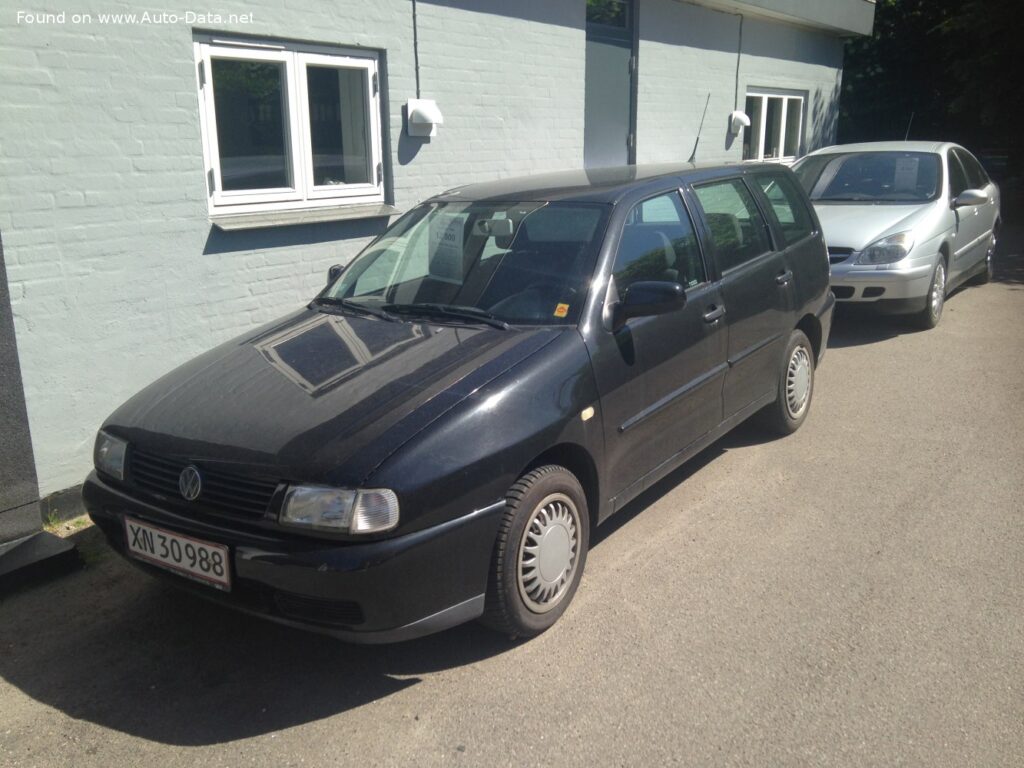
The design philosophy behind the Volkswagen Polo III Variant was rooted in maximizing utility within a compact footprint. As a 5-door station wagon (often referred to as an “estate” in Europe), it stood out in a segment largely dominated by hatchbacks. With a length of 162.87 inches, a width of 64.57 inches, and a height of 56.42 inches, it was designed to be maneuverable in urban environments while still offering substantial interior volume. The wheelbase of 96.22 inches provided a stable ride for its class.
The exterior styling was understated and functional, characteristic of Volkswagen’s design language of the late 1990s. Clean lines and a practical silhouette prioritized cargo space and ease of access. Inside, the Polo III Variant offered seating for five occupants, with an emphasis on durable materials and ergonomic controls. The true highlight of the Variant body style was its cargo capacity. With the rear seats in place, it boasted a respectable 13.77 cubic feet of trunk space, which could expand dramatically to 44.14 cubic feet with the rear seats folded down. This adaptability made it an ideal choice for small families, tradespeople, or anyone needing more versatility than a standard hatchback could offer.
In terms of features, the Polo III Variant 1.9 SDI was equipped with the essentials for its era. Safety systems included an Anti-lock Braking System (ABS), a significant feature for enhanced control during emergency braking. The steering system utilized a hydraulic rack and pinion setup, providing direct feedback to the driver. Suspension components consisted of a coil spring design at the front and a wishbone setup at the rear, aiming for a comfortable and predictable ride. The vehicle rode on 185/60 R14 tires mounted on 14-inch wheel rims, a common specification for efficiency and ride comfort in this class.
Technical Specifications
| Category | Specification |
|---|---|
| General Information | |
| Brand | Volkswagen |
| Model | Polo |
| Generation | Polo III Variant |
| Type (Engine) | 1.9 SDI (68 Hp) |
| Start of Production | 1999 year |
| End of Production | 2000 year |
| Powertrain Architecture | Internal Combustion Engine |
| Body Type | Station wagon (estate) |
| Seats | 5 |
| Doors | 5 |
| Performance Specifications | |
| Fuel Consumption (Urban) | 34.1 US mpg |
| Fuel Consumption (Extra Urban) | 56 US mpg |
| Fuel Type | Diesel |
| Acceleration 0-60 mph | 16.4 sec |
| Maximum Speed | 98.18 mph |
| Weight-to-Power Ratio | 17.1 kg/Hp (58.6 Hp/tonne) |
| Weight-to-Torque Ratio | 8.7 kg/Nm (114.7 Nm/tonne) |
| Engine Specifications | |
| Power | 68 Hp @ 4200 rpm |
| Power per Liter | 35.9 Hp/l |
| Torque | 98.1 lb.-ft. @ 2200 rpm |
| Engine Layout | Front, Transverse |
| Engine Model/Code | AGP, AQM |
| Engine Displacement | 1896 cm3 (115.7 cu. in.) |
| Number of Cylinders | 4 |
| Engine Configuration | Inline |
| Cylinder Bore | 3.13 in. (79.5 mm) |
| Piston Stroke | 3.76 in. (95.5 mm) |
| Compression Ratio | 19:1 |
| Number of Valves per Cylinder | 2 |
| Fuel Injection System | Direct injection |
| Engine Aspiration | Naturally aspirated engine |
| Valvetrain | OHC (Overhead Camshaft) |
| Engine Oil Capacity | 4.76 US qt (4.5 l) |
| Coolant Capacity | 6.87 US qt (6.5 l) |
| Space, Volume, and Weights | |
| Kerb Weight | 2557.36 lbs (1160 kg) |
| Max. Weight | 3571.49 lbs (1620 kg) |
| Max Load | 1014.13 lbs (460 kg) |
| Trunk (Boot) Space – Minimum | 13.77 cu. ft. (390 l) |
| Trunk (Boot) Space – Maximum | 44.14 cu. ft. (1250 l) |
| Fuel Tank Capacity | 11.89 US gal (45 l) |
| Dimensions | |
| Length | 162.87 in. (4137 mm) |
| Width | 64.57 in. (1640 mm) |
| Height | 56.42 in. (1433 mm) |
| Wheelbase | 96.22 in. (2444 mm) |
| Front Track | 56.26 in. (1429 mm) |
| Rear (Back) Track | 54.49 in. (1384 mm) |
| Drivetrain, Brakes, and Suspension | |
| Drivetrain Architecture | Front-wheel drive with Internal Combustion Engine |
| Drive Wheel | Front wheel drive |
| Number of Gears and Type of Gearbox | 5 gears, manual transmission |
| Front Suspension | Coil spring |
| Rear Suspension | Wishbone |
| Front Brakes | Disc |
| Rear Brakes | Drum |
| Assisting Systems | ABS (Anti-lock braking system) |
| Steering Type | Steering rack and pinion |
| Power Steering | Hydraulic Steering |
| Tires Size | 185/60 R14 |
| Wheel Rims Size | 14 inches |
Legacy and Market Impact in Europe
The Volkswagen Polo III Variant 1.9 SDI (68 Hp) played a crucial role in Volkswagen’s strategy for the European market during its production run. It stood as a testament to the enduring appeal of practical, fuel-efficient, and affordable transportation. In an era when compact station wagons were still a viable and popular choice for families and businesses across Europe, the Polo Variant offered a compelling package. Its reputation was built on Volkswagen’s hallmarks of solid build quality, reliability, and low running costs, especially amplified by the frugal SDI diesel engine.
Competitors in its segment included models like the Skoda Fabia Combi (which shared platforms with the Polo), the Opel Corsa B Combo (a panel van derived from the Corsa B, but often competed on utility), and various compact estates from other European manufacturers. What set the Polo Variant apart was its Volkswagen badge, which often implied a slightly more premium feel and better resale value compared to some rivals. The SDI engine, while not powerful, was celebrated for its mechanical robustness and remarkable fuel efficiency, making it a favorite for high-mileage drivers and those seeking to minimize fuel expenses.
The reason such a model was never officially imported to the United States is multi-faceted. At the turn of the millennium, the American automotive market had a strong preference for larger vehicles, particularly SUVs and pickup trucks, and a general disinterest in small station wagons, especially those powered by naturally aspirated diesel engines. Diesel technology in passenger cars was also viewed with skepticism by many American consumers, largely due to previous emissions issues and a lack of widespread diesel fuel availability compared to Europe. The compact dimensions and utilitarian focus of the Polo III Variant simply did not align with American consumer tastes or regulatory environment at the time.
Despite its absence from the North American market, the Volkswagen Polo III Variant 1.9 SDI (68 Hp) left a lasting legacy in Europe. It reinforced Volkswagen’s position as a leader in practical, everyday transportation, demonstrating how a small car could be transformed into a highly versatile and economical family hauler. It remains a classic example of European automotive engineering tailored to specific regional demands, embodying efficiency, durability, and intelligent design within the compact class.