Understanding the Volkswagen Polo III Variant 1.9 TDI (110 Hp)
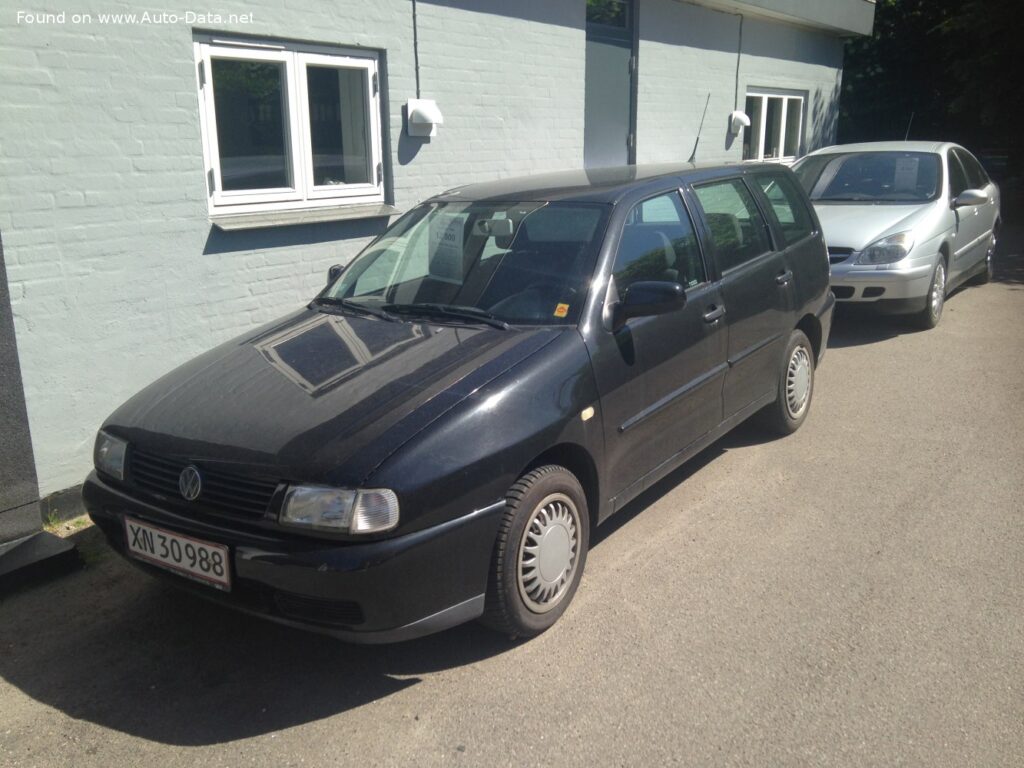
The Volkswagen Polo III Variant 1.9 TDI (110 Hp), produced between 1998 and 2000, represents a significant chapter in the history of Volkswagen’s compact car offerings, particularly within the European market. While the Polo nameplate is synonymous with a compact hatchback globally, the “Variant” designation in Europe signifies a station wagon (known as an “estate” in British English) body style. This specific iteration of the third-generation Polo combined the practicality of a small station wagon with the robust and highly efficient 1.9-liter Turbocharged Direct Injection (TDI) diesel engine, a powertrain that had become a hallmark of Volkswagen’s engineering prowess during the late 1990s. Positioned as a versatile alternative to the standard Polo hatchback, the Variant aimed to cater to buyers seeking enhanced cargo capacity without the larger footprint or higher cost of a Golf Variant or Passat Variant.
The Polo III Variant 1.9 TDI (110 Hp) was never officially imported to the United States, reflecting Volkswagen’s strategic market segmentation where the Golf and Jetta (Vento in some markets) typically served as the entry points for larger, more family-oriented vehicles. In its primary European markets, however, this model carved out a niche for itself, offering a compelling blend of economical operation, durable construction, and surprising utility for its compact dimensions. It showcased Volkswagen’s commitment to offering diverse body styles even within its smaller vehicle lines, providing a pragmatic solution for families and professionals alike.
Engine and Performance
At the heart of the Volkswagen Polo III Variant 1.9 TDI (110 Hp) was the acclaimed AFN code 1.9-liter (1896 cm3 or 115.7 cu. in.) inline-four diesel engine. This unit was a testament to the growing popularity and technological sophistication of diesel powertrains in Europe. Utilizing direct injection and equipped with both a turbocharger and an intercooler, the engine delivered a robust 110 horsepower at 4150 rpm. More impressively, it generated a substantial 173.33 lb.-ft. of torque at a low 1900 rpm, providing excellent low-end grunt and flexible driving characteristics, especially beneficial for a vehicle designed to carry cargo.
Power was channeled to the front wheels via a smooth-shifting 5-speed manual transmission, a common and reliable setup for vehicles in this class during the era. This powertrain combination allowed the Polo III Variant to achieve a respectable 0-60 mph acceleration time of 10.4 seconds, with a top speed of 118.06 mph (190 km/h). While not a performance car, these figures were more than adequate for everyday driving, including highway cruising with a full load.
However, the true strength of the 1.9 TDI engine lay in its remarkable fuel efficiency. The Polo III Variant 1.9 TDI posted an impressive urban fuel economy of 36.2 US mpg (6.5 l/100 km) and an even more outstanding extra-urban figure of 57.4 US mpg (4.1 l/100 km). These numbers were highly competitive for the late 1990s and significantly contributed to the vehicle’s appeal as an economical workhorse. The engine’s high compression ratio of 19.5:1, along with its overhead camshaft (OHC) valvetrain with two valves per cylinder, underscored its durable and efficient design, ensuring a long service life and reliable operation.
Design and Features
The Volkswagen Polo III Variant adopted a functional and understated design, characteristic of Volkswagen vehicles of its period. As a station wagon, its primary design objective was utility, extending the compact Polo hatchback’s body to create a more capacious rear cargo area. Measuring 162.87 inches (4137 mm) in length, 64.57 inches (1640 mm) in width, and 56.42 inches (1433 mm) in height, with a wheelbase of 96.22 inches (2444 mm), the Variant maintained a relatively small footprint, making it maneuverable in urban environments while still offering significant interior space.
The five-door, five-seat configuration made it a practical family vehicle. The real highlight, however, was its cargo capacity. With the rear seats in place, the trunk offered a substantial 13.77 cu. ft. (390 liters) of space. Folding down the rear seats expanded this to an impressive 45.56 cu. ft. (1290 liters), transforming the compact wagon into a versatile hauler capable of accommodating larger items. This flexibility was a key selling point for buyers who needed more utility than a standard hatchback but preferred the driving dynamics and fuel efficiency of a smaller car.
In terms of chassis and safety, the Polo III Variant featured a front-wheel-drive architecture. It was equipped with a coil spring front suspension, providing a comfortable and predictable ride. Braking duties were handled by disc brakes both front and rear, an important safety feature for a vehicle designed to carry varying loads. An Anti-lock Braking System (ABS) was also standard, enhancing driver control during emergency braking situations. Steering was managed by a rack and pinion system with hydraulic power steering, offering direct feedback and ease of maneuverability. The car rode on 185/60 R14 tires mounted on 14-inch wheel rims, a common setup for compact cars of its era, balancing grip with ride comfort and cost-effectiveness.
Technical Specifications
| Category | Specification | Value |
|---|---|---|
| Brand | Volkswagen | Polo |
| Generation | Polo III Variant | |
| Type (Engine) | 1.9 TDI (110 Hp) | |
| Start of Production | 1998 | |
| End of Production | 2000 | |
| Powertrain Architecture | Internal Combustion Engine | |
| Body Type | Station wagon (estate) | |
| Seats | 5 | |
| Doors | 5 | |
| Performance Specifications | ||
| Fuel Consumption (Urban) | 6.5 l/100 km | 36.2 US mpg |
| Fuel Consumption (Extra Urban) | 4.1 l/100 km | 57.4 US mpg |
| Fuel Type | Diesel | |
| Acceleration 0 – 60 mph | 10.4 sec | |
| Acceleration 0 – 100 km/h | 10.9 sec | |
| Maximum Speed | 190 km/h | 118.06 mph |
| Weight-to-Power Ratio | 10.8 kg/Hp | 92.4 Hp/tonne |
| Weight-to-Torque Ratio | 5.1 kg/Nm | 197.5 Nm/tonne |
| Engine Specifications | ||
| Power | 110 Hp | @ 4150 rpm |
| Power per liter | 58 Hp/l | |
| Torque | 235 Nm | 173.33 lb.-ft. @ 1900 rpm |
| Engine Layout | Front, Longitudinal | |
| Engine Model/Code | AFN | |
| Engine Displacement | 1896 cm3 | 1.9 l (115.7 cu. in.) |
| Number of Cylinders | 4 | |
| Engine Configuration | Inline | |
| Cylinder Bore | 79.5 mm | 3.13 in. |
| Piston Stroke | 95.5 mm | 3.76 in. |
| Compression Ratio | 19.5:1 | |
| Number of Valves per Cylinder | 2 | |
| Fuel Injection System | Direct Injection | |
| Engine Aspiration | Turbocharger, Intercooler | |
| Valvetrain | OHC | |
| Engine Oil Capacity | 4.3 l | 4.54 US qt |
| Coolant Capacity | 6 l | 6.34 US qt |
| Space, Volume and Weights | ||
| Kerb Weight | 1190 kg | 2623.5 lbs. |
| Max. Weight | 1650 kg | 3637.63 lbs. |
| Max Load | 460 kg | 1014.13 lbs. |
| Trunk (Boot) Space – Minimum | 390 l | 13.77 cu. ft. |
| Trunk (Boot) Space – Maximum | 1290 l | 45.56 cu. ft. |
| Fuel Tank Capacity | 45 l | 11.89 US gal |
| Dimensions | ||
| Length | 4137 mm | 162.87 in. |
| Width | 1640 mm | 64.57 in. |
| Height | 1433 mm | 56.42 in. |
| Wheelbase | 2444 mm | 96.22 in. |
| Front Track | 1429 mm | 56.26 in. |
| Rear (Back) Track | 1384 mm | 54.49 in. |
| Drivetrain, Brakes and Suspension Specifications | ||
| Drivetrain Architecture | Internal Combustion engine (ICE) drives the front wheels | |
| Drive Wheel | Front wheel drive | |
| Number of Gears and Type of Gearbox | 5 gears, manual transmission | |
| Front Suspension | Coil spring | |
| Front Brakes | Disc | |
| Rear Brakes | Disc | |
| Assisting Systems | ABS (Anti-lock braking system) | |
| Steering Type | Steering rack and pinion | |
| Power Steering | Hydraulic Steering | |
| Tires Size | 185/60 R14 | |
| Wheel Rims Size | 14 inch | |
Legacy and Market Impact
The Volkswagen Polo III Variant 1.9 TDI (110 Hp) played a distinct, albeit specialized, role in the European automotive landscape of the late 1990s. While the Polo hatchback was a mainstream bestseller, the Variant offered a practical extension of the brand’s compact car philosophy. Its reputation was built on the core Volkswagen values of reliability, solid build quality, and sensible engineering. For many European families and small businesses, it represented an ideal compromise: a car that was economical to run, easy to park, yet offered sufficient space for luggage, groceries, or work equipment.
In its segment, the Polo Variant faced competition from other compact wagons available in Europe, though direct rivals were somewhat limited. The Skoda Fabia Combi, which would succeed the Polo Variant in some markets, and smaller derivatives of the Opel Astra Caravan or Ford Focus Estate (from the C-segment) might have been considered alternatives by buyers needing space. However, the Polo Variant typically targeted a slightly more compact niche, bridging the gap between supermini hatchbacks and full-size compact wagons. Its closest conceptual competitors were perhaps vehicles like the Opel Corsa Caravan (a van-derived estate in some markets) or even some smaller MPVs that began to emerge around this time.
The enduring legacy of the Polo III Variant, particularly with the 1.9 TDI engine, lies in its contribution to Volkswagen’s reputation for diesel efficiency and durability. The TDI engine became a benchmark for fuel economy and torque delivery, influencing consumer perceptions of diesel cars across the continent. This particular model, with its robust engine and versatile body, became a popular choice in the used car market for its low running costs and sheer dependability. It was a no-frills, honest vehicle that delivered precisely what it promised: practical transportation with exceptional fuel economy.
Ultimately, the Volkswagen Polo III Variant 1.9 TDI (110 Hp) stands as a testament to an era when manufacturers prioritized utility and efficiency in compact packages. Though never destined for American shores, its impact in Europe was significant, cementing Volkswagen’s position as a leader in practical, well-engineered, and economical vehicles that genuinely served the diverse needs of its customers.