As an international automotive expert, I present a detailed analysis of the Volkswagen Polo IV (9N) 1.4 FSI (86 Hp), a significant model within the European subcompact segment.
The Volkswagen Polo IV (9N) 1.4 FSI (86 Hp): A European Mainstay
The Volkswagen Polo IV, known internally by its chassis code 9N, represented the fourth generation of Volkswagen’s popular subcompact car line. Launched in 2002, this iteration marked a notable evolution for the Polo, adopting a more mature and sophisticated design language that echoed its larger sibling, the Golf. Positioned as a practical and efficient urban companion, the Polo 9N quickly established itself as a strong contender in Europe’s highly competitive B-segment, offering a blend of Volkswagen’s renowned build quality, refined driving dynamics, and impressive fuel economy for its era.
The specific variant under examination, the Volkswagen Polo IV (9N) 1.4 FSI (86 Hp), produced between 2002 and 2005, was particularly noteworthy for its adoption of Fuel Stratified Injection (FSI) technology. This direct injection gasoline engine represented Volkswagen’s commitment to enhancing both performance and efficiency, a critical factor in the European market. While never officially sold in the United States, the Polo IV played a crucial role in Volkswagen’s global strategy, serving as a benchmark for small car engineering and design in its primary markets across Europe and other international regions.
Engine & Performance: The 1.4 FSI Advantage
At the heart of the Volkswagen Polo IV (9N) 1.4 FSI (86 Hp) was its innovative 1.4-liter (1390 cm3 or 84.82 cu. in.) FSI gasoline engine, designated with the code AXU. This inline four-cylinder, naturally aspirated powerplant was a testament to Volkswagen’s engineering prowess, particularly in the realm of fuel efficiency. Unlike conventional port-injected engines, the FSI system directly injected fuel into the combustion chamber, allowing for a leaner air-fuel mixture and more precise control over the combustion process. This technology was a significant step forward for gasoline engines in the early 2000s, promising better fuel economy without sacrificing responsiveness.
The engine produced a respectable 86 horsepower at 5000 revolutions per minute (rpm) and 95.88 lb.-ft. of torque at 3500 rpm. For a vehicle of its size and class, these figures provided adequate motivation for urban commuting and highway cruising. Power was transmitted to the front wheels via a smooth-shifting 5-speed manual transmission, a common and reliable setup for European subcompacts. This drivetrain architecture, combined with the engine’s characteristics, allowed the Polo IV 1.4 FSI to accelerate from 0 to 60 mph in a reasonable 11.5 seconds, reaching a top speed of 110.6 mph.
One of the most compelling aspects of this powertrain was its fuel efficiency. The FSI technology contributed to impressive figures, with an estimated urban fuel economy of 30.5 US mpg and an extra-urban (highway) economy of 50 US mpg. These numbers were highly competitive for the period, making the 1.4 FSI an economical choice for drivers concerned with running costs and environmental impact. The engine’s compression ratio of 12:1 further highlighted its advanced design, optimizing the combustion process for both power and efficiency. With a 3.6-liter (3.8 US qt) engine oil capacity and 5.6-liter (5.92 US qt) coolant capacity, maintenance was straightforward and typical for a Volkswagen.
Design & Features: Practicality Meets Sophistication
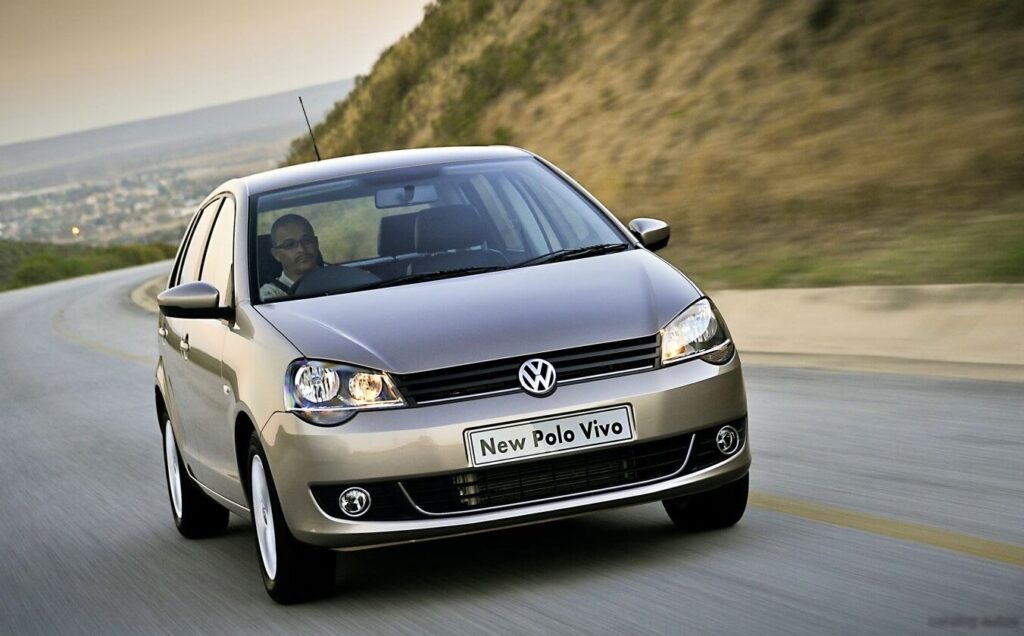
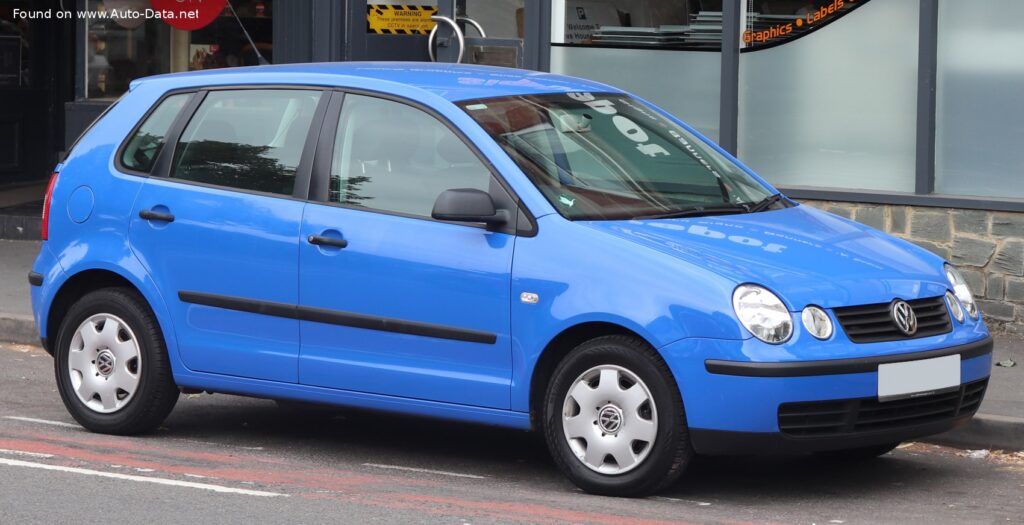
The Volkswagen Polo IV (9N) adopted a design philosophy that moved away from the softer, more rounded lines of its predecessor, the Polo 6N. The 9N featured a sharper, more angular aesthetic, aligning it closely with the design language seen in the contemporary Golf IV and Passat B5. This gave the Polo a more substantial and sophisticated appearance, belying its subcompact dimensions. The vehicle was offered in both practical 3-door and versatile 5-door hatchback configurations, catering to different customer needs from agile city driving to small family transport.
Measuring 153.43 inches in length, 64.96 inches in width, and 57.68 inches in height, with a wheelbase of 96.85 inches, the Polo IV was compact yet surprisingly spacious within. The interior design emphasized ergonomics and quality materials, which were a hallmark of Volkswagen products. The cabin was designed to comfortably accommodate five occupants, offering a functional and well-appointed environment. Key features included a rack and pinion steering system with hydraulic power steering, providing a direct and communicative feel for the driver. The suspension setup featured coil springs at the front and a trailing arm design at the rear, striking a good balance between ride comfort and handling agility.
In terms of safety, the Polo IV 1.4 FSI was equipped with an Anti-lock Braking System (ABS) as standard, enhancing control during emergency braking maneuvers. The braking system utilized ventilated discs at the front and disc brakes at the rear, providing reliable stopping power. Standard tire size was 185/60 R14 on 14-inch wheel rims, chosen to optimize ride comfort and fuel efficiency. The trunk space was practical, offering 9.53 cubic feet with the rear seats up, expandable to a generous 36.37 cubic feet when the rear seats were folded down, making it surprisingly versatile for its class. A 45-liter (11.89 US gal) fuel tank provided a decent cruising range, especially given the car’s excellent fuel economy.
Technical Specifications: Volkswagen Polo IV (9N) 1.4 FSI (86 Hp)
Below is a detailed table of technical specifications for the Volkswagen Polo IV (9N) 1.4 FSI (86 Hp):
| Category | Specification |
|---|---|
| General Information | |
| Brand | Volkswagen |
| Model | Polo |
| Generation | Polo IV (9N) |
| Type (Engine) | 1.4 FSI (86 Hp) |
| Start of Production | 2002 year |
| End of Production | 2005 year |
| Powertrain Architecture | Internal Combustion engine |
| Body Type | Hatchback |
| Seats | 5 |
| Doors | 3-5 |
| Performance Specs | |
| Fuel Consumption (Urban) | 7.7 l/100 km (30.5 US mpg) |
| Fuel Consumption (Extra Urban) | 4.7 l/100 km (50 US mpg) |
| Fuel Type | Petrol (Gasoline) |
| Acceleration 0 – 60 mph | 11.5 sec |
| Maximum Speed | 178 km/h (110.6 mph) |
| Weight-to-Power Ratio | 12.1 kg/Hp (82.7 Hp/tonne) |
| Weight-to-Torque Ratio | 8 kg/Nm (125 Nm/tonne) |
| Engine Specs | |
| Power | 86 Hp @ 5000 rpm |
| Power per Liter | 61.9 Hp/l |
| Torque | 130 Nm @ 3500 rpm (95.88 lb.-ft. @ 3500 rpm) |
| Engine Layout | Front, Transverse |
| Engine Model/Code | AXU |
| Engine Displacement | 1390 cm3 (1.4 Liters / 84.82 cu. in.) |
| Number of Cylinders | 4 |
| Engine Configuration | Inline |
| Cylinder Bore | 76.5 mm (3.01 in.) |
| Piston Stroke | 75.6 mm (2.98 in.) |
| Compression Ratio | 12:1 |
| Number of Valves per Cylinder | 4 |
| Fuel Injection System | Direct injection (FSI) |
| Engine Aspiration | Naturally aspirated engine |
| Engine Oil Capacity | 3.6 l (3.8 US qt) |
| Coolant Capacity | 5.6 l (5.92 US qt) |
| Space, Volume and Weights | |
| Kerb Weight | 1040 kg (2292.81 lbs.) |
| Max. Weight (GVWR) | 1580 kg (3483.3 lbs.) |
| Max Load | 540 kg (1190.5 lbs.) |
| Trunk (Boot) Space – Minimum | 270 l (9.53 cu. ft.) |
| Trunk (Boot) Space – Maximum | 1030 l (36.37 cu. ft.) |
| Fuel Tank Capacity | 45 l (11.89 US gal) |
| Dimensions | |
| Length | 3897 mm (153.43 in.) |
| Width | 1650 mm (64.96 in.) |
| Height | 1465 mm (57.68 in.) |
| Wheelbase | 2460 mm (96.85 in.) |
| Front Track | 1435 mm (56.5 in.) |
| Rear (Back) Track | 1425 mm (56.1 in.) |
| Drivetrain, Brakes and Suspension Specs | |
| Drivetrain Architecture | Front-wheel drive, Internal Combustion Engine |
| Drive Wheel | Front wheel drive |
| Number of Gears and Type of Gearbox | 5 gears, manual transmission |
| Front Suspension | Coil spring |
| Rear Suspension | Trailing arm |
| Front Brakes | Ventilated discs |
| Rear Brakes | Disc |
| Assisting Systems | ABS (Anti-lock braking system) |
| Steering Type | Steering rack and pinion |
| Power Steering | Hydraulic Steering |
| Tires Size | 185/60 R14 |
| Wheel Rims Size | 14 |
Legacy & Market Impact: A Premium Subcompact in Europe
The Volkswagen Polo IV (9N) 1.4 FSI (86 Hp) left a significant mark on the European subcompact market. Its reputation was built on Volkswagen’s core values: reliability, robust build quality, and a driving experience that felt more refined than many of its direct competitors. The introduction of the FSI engine in this segment was a bold move, positioning the Polo as a technological leader in terms of gasoline engine efficiency and performance. This helped solidify its standing as a more premium offering compared to rivals, even if it often commanded a slightly higher price tag.
In its primary markets, the Polo IV competed fiercely with other established players such as the Ford Fiesta, Opel Corsa, Peugeot 206, Renault Clio, and its platform-mate, the Skoda Fabia. While each competitor had its strengths, the Polo typically stood out for its perceived quality, solid driving dynamics, and the aspirational appeal of the Volkswagen badge. The 1.4 FSI variant, in particular, was lauded for its balanced performance and excellent fuel economy, making it a popular choice for both private buyers and fleet operators across Europe who valued low running costs and a pleasant driving experience.
Historically, the Polo IV played a crucial role in maintaining Volkswagen’s dominance in the highly competitive B-segment. It demonstrated how advanced engine technology, even in a naturally aspirated form, could deliver tangible benefits in efficiency and drivability. The 9N generation also contributed to the Polo’s evolving image, transforming it from a purely utilitarian small car into a more sophisticated and desirable vehicle that could hold its own against larger, more expensive options. Although the Volkswagen Polo IV (9N) 1.4 FSI (86 Hp) was never imported to the USA, its technological advancements and market success in Europe underscored Volkswagen’s commitment to innovation and engineering excellence on a global scale, influencing future generations of compact and subcompact vehicles worldwide.