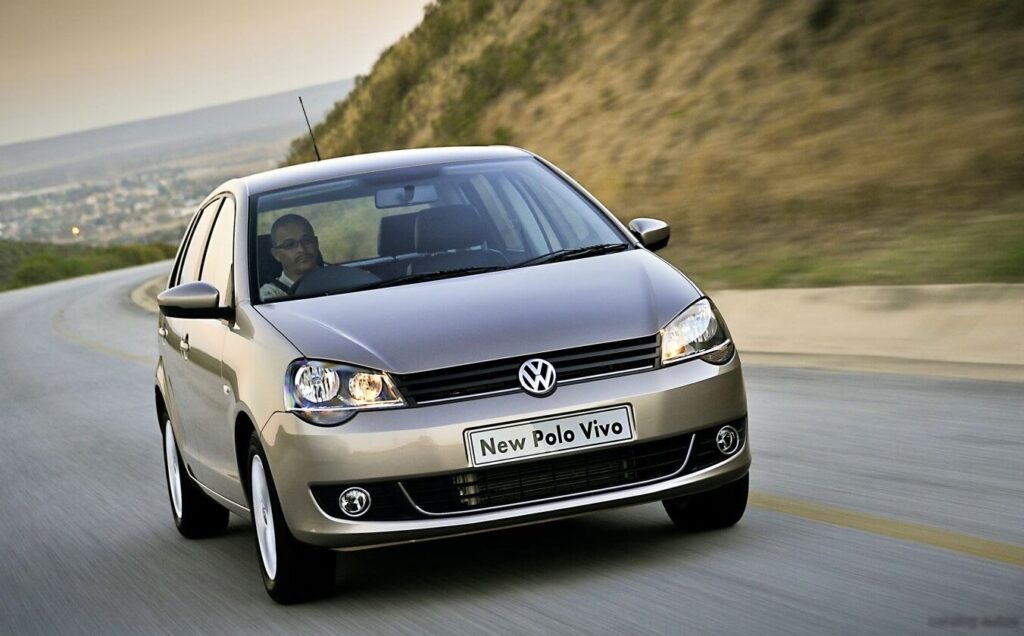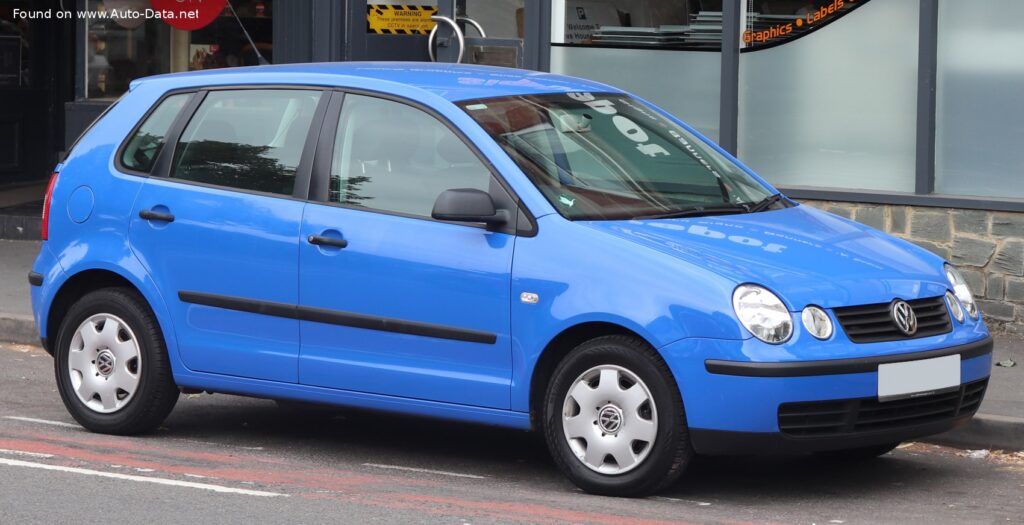
The Volkswagen Polo IV (9N) 1.9 SDI (64 Hp): A Pillar of European Economy and Durability
The Volkswagen Polo, a venerable nameplate in the global automotive landscape, represents Volkswagen’s enduring commitment to compact, efficient, and reliable personal transportation. The fourth generation of this highly successful model, known internally as the 9N, made its debut in 2001. Among its diverse powertrain offerings, the Volkswagen Polo IV (9N) 1.9 SDI (64 Hp) stood out as a particularly robust and fuel-efficient variant. Produced from 2001 to 2005, this specific model epitomized Volkswagen’s engineering ethos for its primary European market: delivering dependable motoring with an unwavering focus on economy and longevity, largely thanks to its naturally aspirated direct-injection diesel engine. While the Polo was never officially marketed in the United States, it played a pivotal role in Volkswagen’s international strategy, firmly establishing its position within the fiercely competitive European subcompact, or supermini, segment. It was a popular choice for a wide range of consumers seeking an affordable, user-friendly, and exceptionally frugal vehicle for daily commutes and extended journeys across the continent.
Engine and Performance Characteristics of the Volkswagen Polo IV (9N)
Powering the Volkswagen Polo IV (9N) 1.9 SDI (64 Hp) was a highly regarded 1.9-liter (1896 cm3 or 115.7 cu. in.) naturally aspirated direct-injection diesel engine, identified by its ASY engine code. This inline-four powerplant, configured with an Overhead Camshaft (OHC) valvetrain and two valves per cylinder, was celebrated for its mechanical simplicity and inherent resilience. Diverging from its more potent TDI (Turbocharged Direct Injection) counterparts, the SDI engine employed a simpler, non-turbocharged design. This strategic choice prioritized long-term durability and minimized running costs over outright acceleration or top-end power.
The engine generated a modest yet entirely sufficient 64 horsepower at 4200 revolutions per minute (rpm). More critically for its intended application, it delivered a robust 92.2 lb.-ft. of torque at a low 2200 rpm. This characteristic torque curve, inherent to diesel engines, provided ample low-end pulling power, ensuring the Polo felt adequately responsive in urban traffic scenarios despite its humble horsepower rating. The power output resulted in a weight-to-power ratio of 59.1 horsepower per ton, while the torque-to-weight ratio was an impressive 115.4 lb.-ft. per ton, highlighting its capability for hauling and everyday utility.
Performance metrics underscored the vehicle’s utilitarian design. The Volkswagen Polo IV (9N) 1.9 SDI (64 Hp) accelerated from 0 to 60 mph in a calculated 16.2 seconds, with a maximum speed of approximately 99.42 mph (160 km/h). These figures clearly indicate that the Polo SDI was engineered not for spirited driving thrills, but rather for steadfast, efficient, and reliable transportation. Power was efficiently transmitted to the front wheels through a precise and durable 5-speed manual transmission, a ubiquitous setup for economical European vehicles of its era.
The 1.9 SDI engine truly excelled in its fuel economy. Boasting an impressive estimated urban fuel consumption of 37.9 US miles per gallon and an even more remarkable extra-urban figure of 60.3 US miles per gallon, this Polo variant stood as a testament to efficiency. Its 11.89 US gallon fuel tank, combined with such stellar economy, provided an excellent cruising range, a significant advantage for drivers in European markets where fuel prices are often a primary concern. The engine’s high compression ratio of 19.5:1 was typical for a direct-injection diesel, ensuring highly efficient fuel combustion. Its robust internal architecture, featuring a cylinder bore of 3.13 inches and a piston stroke of 3.76 inches, contributed significantly to its legendary reputation for durability and longevity.
Design, Interior, and Features of the Polo IV (9N)
The Volkswagen Polo IV