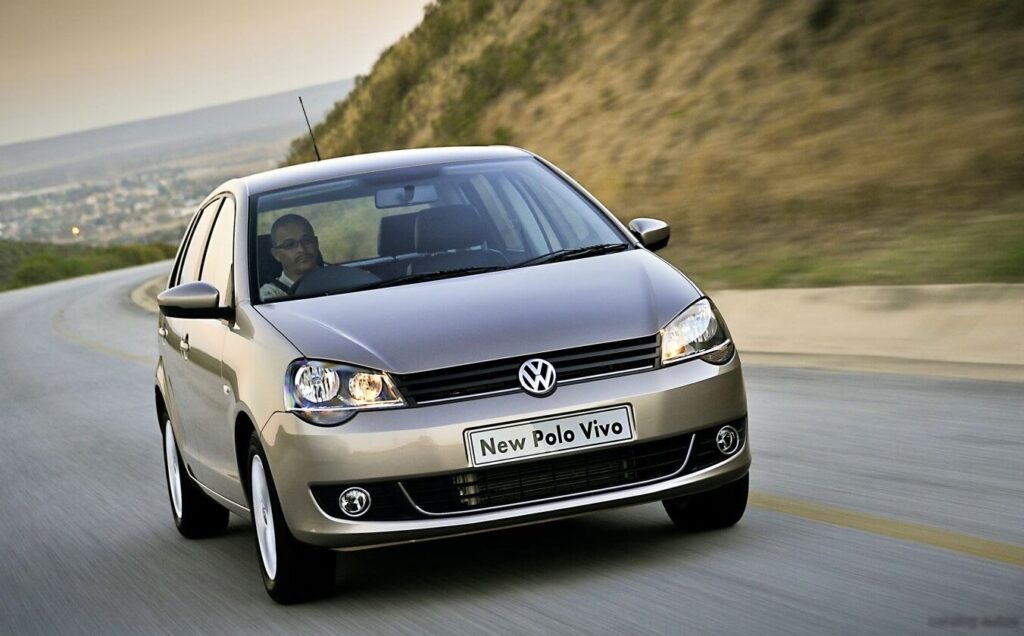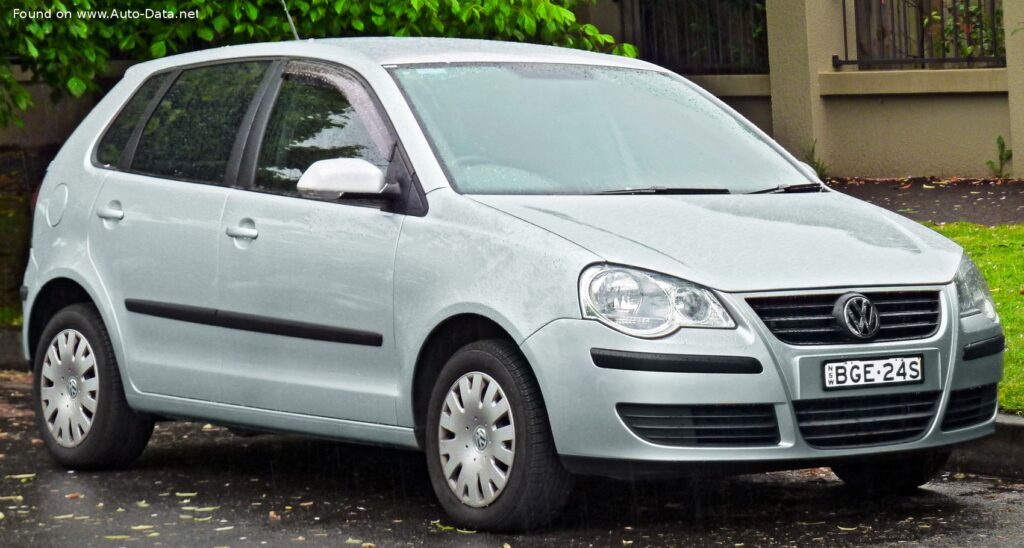
The Volkswagen Polo IV (9N, facelift 2005) 1.6 (105 Hp) 3-d represents a significant iteration of Volkswagen’s enduring supermini, a model primarily targeted at the highly competitive European market. Unveiled in 2005, this facelifted version of the fourth-generation Polo (internal code 9N) brought a refreshed aesthetic and refined mechanicals, positioning it as a sophisticated and practical choice in the compact segment. While never officially sold in the United States, the Polo has consistently been a cornerstone of Volkswagen’s global strategy, offering a blend of robust build quality, efficient powertrains, and a driving experience that often belied its small footprint. This particular variant, with its 1.6-liter engine producing 105 horsepower and a convenient 3-door hatchback body, aimed to strike a balance between everyday usability, spirited performance, and commendable fuel efficiency for the urban and extra-urban driver.
The Volkswagen Polo IV (9N, facelift 2005) 1.6 (105 Hp) 3-d: A Refined Subcompact Offering
The fourth generation of the Volkswagen Polo, designated 9N, originally debuted in 2001, sharing its platform with the SEAT Ibiza and Skoda Fabia of the same era. The 2005 facelift, often referred to as the 9N3, was a crucial update designed to keep the Polo competitive against a new wave of rivals. This refresh introduced a more contemporary look, aligning its styling cues with the larger Golf V, particularly evident in the redesigned front fascia with its distinctive headlamps and grille. Beyond aesthetics, the facelift also brought subtle improvements to the interior and a re-evaluation of its engine lineup, including the introduction of the 1.6-liter naturally aspirated petrol engine that powered this specific 3-door hatchback variant. The Polo’s role in its primary markets, such as Germany, the UK, and other European nations, was to offer a premium small car experience, characterized by Volkswagen’s reputation for engineering quality and thoughtful design.
Powertrain and Driving Dynamics
At the heart of the Volkswagen Polo IV (9N, facelift 2005) 1.6 (105 Hp) 3-d was a refined 1.6-liter (1598 cm³ or 97.52 cu. in.) naturally aspirated inline-four engine, designated with the code BTS. This engine was engineered for a balance of smooth power delivery and fuel economy, producing a respectable 105 horsepower at 5700 rpm and 109.16 lb.-ft. of torque at 4500 rpm. Its DOHC (Double Overhead Camshaft) valvetrain with four valves per cylinder and multi-port manifold injection system ensured efficient combustion and responsive throttle input. With a compression ratio of 11:1, the engine was designed to extract maximum energy from its petrol (gasoline) fuel.
Performance figures for this 1.6-liter Polo were quite competitive for its class. The vehicle could accelerate from 0 to 60 mph in a brisk 9.9 seconds, with a 0-100 km/h sprint completed in 10.4 seconds. Its top speed reached an impressive 119.3 mph (192 km/h), making it capable of comfortable highway cruising. Power was delivered to the front wheels via a smooth-shifting 6-speed automatic transmission, a notable feature for a car in this segment during its production years (2005-2009), offering both convenience and optimized gear ratios for varying driving conditions. The powertrain architecture, with the engine mounted front-transverse, was standard for front-wheel-drive vehicles of this type, ensuring efficient packaging and predictable handling.
Fuel economy was another strong suit for the 1.6-liter Polo. Volkswagen reported a combined fuel consumption of 6.7 liters per 100 km, which translates to an appealing 35.1 US mpg. Urban driving yielded approximately 24.8 US mpg, while extra-urban conditions saw consumption drop to an impressive 46.1 US mpg, highlighting its efficiency on longer journeys. The 45-liter (11.89 US gallon) fuel tank provided a practical range between fill-ups. The Polo’s chassis, featuring coil springs at the front and a trailing arm setup at the rear, provided a compliant yet engaging ride, characteristic of Volkswagen’s commitment to driving dynamics even in its smaller models. Stopping power was handled by ventilated discs at the front and solid discs at the rear, complemented by an Anti-lock Braking System (ABS) for enhanced safety and control.
Design Evolution and Interior Amenities
The 2005 facelift significantly modernized the exterior of the Polo IV. The most noticeable changes were at the front, where the new, Golf V-inspired headlamps and a revised grille gave the car a more assertive and contemporary presence. The bumpers were also redesigned, integrating the fog lights more seamlessly and contributing to a cleaner overall look. At the rear, new taillight clusters provided a fresh signature. The 3-door hatchback body style, a popular choice in Europe for its sporty appeal and practicality in urban environments, offered seating for five occupants. Its compact dimensions, measuring 153.43 inches in length, 64.96 inches in width, and 57.68 inches in height, made it highly maneuverable and easy to park.
Inside, the Polo maintained Volkswagen’s reputation for ergonomic design and solid build quality, even if the materials were appropriate for its subcompact class. The cabin was well-appointed with clear instrumentation and intuitive controls. Practicality was a key consideration, with the 3-door configuration offering a surprising amount of interior space for its size. The trunk (boot) space ranged from a respectable 9.53 cubic feet (270 liters) with the rear seats up, expanding to a generous 36.37 cubic feet (1030 liters) when the rear seats were folded down, making it versatile for shopping or weekend trips. Safety features, while not as extensive as modern vehicles, included standard ABS (Anti-lock Braking System) and a hydraulic power steering system (steering rack and pinion type) that offered good feedback and ease of use in city driving.
Technical Specifications
| Specification | Value |
|---|---|
| Brand | Volkswagen |
| Model | Polo |
| Generation | Polo IV (9N, facelift 2005) |
| Type (Engine) | 1.6 (105 Hp) 3-d |
| Start of production | 2005 year |
| End of production | 2009 year |
| Powertrain Architecture | Internal Combustion engine |
| Body type | Hatchback |
| Seats | 5 |
| Doors | 3 |
| Fuel consumption (economy) – urban | 9.5 l/100 km (24.8 US mpg) |
| Fuel consumption (economy) – extra urban | 5.1 l/100 km (46.1 US mpg) |
| Fuel consumption (economy) – combined | 6.7 l/100 km (35.1 US mpg) |
| Fuel Type | Petrol (Gasoline) |
| Acceleration 0 – 60 mph | 9.9 sec |
| Acceleration 0 – 100 km/h | 10.4 sec |
| Maximum speed | 192 km/h (119.3 mph) |
| Weight-to-power ratio | 10.4 kg/Hp (95.9 Hp/tonne) |
| Weight-to-torque ratio | 7.4 kg/Nm (135.2 Nm/tonne) |
| Power | 105 Hp @ 5700 rpm |
| Power per liter | 65.7 Hp/l |
| Torque | 148 Nm @ 4500 rpm (109.16 lb.-ft. @ 4500 rpm) |
| Engine layout | Front, Transverse |
| Engine Model/Code | BTS |
| Engine displacement | 1598 cm³ (97.52 cu. in.) |
| Number of cylinders | 4 |
| Engine configuration | Inline |
| Cylinder Bore | 76.5 mm (3.01 in.) |
| Piston Stroke | 86.9 mm (3.42 in.) |
| Compression ratio | 11:1 |
| Number of valves per cylinder | 4 |
| Fuel injection system | Multi-port manifold injection |
| Engine aspiration | Naturally aspirated engine |
| Valvetrain | DOHC |
| Engine oil capacity | 3.6 l (3.8 US qt) |
| Coolant | 6 l (6.34 US qt) |
| Kerb Weight | 1095 kg (2414.06 lbs.) |
| Max. weight | 1650 kg (3637.63 lbs.) |
| Max load | 555 kg (1223.57 lbs.) |
| Trunk (boot) space – minimum | 270 l (9.53 cu. ft.) |
| Trunk (boot) space – maximum | 1030 l (36.37 cu. ft.) |
| Fuel tank capacity | 45 l (11.89 US gal) |
| Length | 3897 mm (153.43 in.) |
| Width | 1650 mm (64.96 in.) |
| Height | 1465 mm (57.68 in.) |
| Wheelbase | 2460 mm (96.85 in.) |
| Front track | 1435 mm (56.5 in.) |
| Rear (Back) track | 1425 mm (56.1 in.) |
| Drivetrain Architecture | Front wheel drive (Internal Combustion engine drives the front wheels) |
| Drive wheel | Front wheel drive |
| Number of gears and type of gearbox | 6 gears, automatic transmission |
| Front suspension | Coil spring |
| Rear suspension | Trailing arm |
| Front brakes | Ventilated discs |
| Rear brakes | Disc |
| Assisting systems | ABS (Anti-lock braking system) |
| Steering type | Steering rack and pinion |
| Power steering | Hydraulic Steering |
| Tires size | 165/70 R14 |
| Wheel rims size | 14 |
Legacy and Market Impact
The Volkswagen Polo IV (9N, facelift 2005) 1.6 (105 Hp) 3-d cemented the Polo’s reputation as a top-tier contender in the demanding European supermini segment. Throughout its production run from 2005 to 2009, this model, and the broader 9N3 generation, faced stiff competition from formidable rivals such as the Ford Fiesta, Opel Corsa, Renault Clio, Peugeot 207, and Fiat Punto. Despite the intense rivalry, the Polo consistently stood out for its perceived quality, refined driving manners, and strong resale values. Volkswagen’s commitment to engineering excellence meant the Polo often felt like a miniature Golf, offering a level of solidity and sophistication that many competitors struggled to match.
Its appeal was broad, attracting a diverse range of buyers from young professionals and students seeking a stylish and economical first car, to small families and urban commuters who valued its compact footprint, practical interior, and reliable performance. The availability of a 1.6-liter engine with 105 horsepower provided a welcome boost in performance compared to the smaller engine options, making it a more engaging drive without sacrificing too much in terms of fuel economy. The option of a 6-speed automatic transmission further enhanced its appeal, especially in congested city driving, offering a smooth and effortless driving experience.
The 9N3 Polo’s legacy is one of steady evolution and consistent performance within its niche. It successfully carried the torch for the Polo nameplate, bridging the gap between its more spartan predecessors and the increasingly sophisticated models that would follow. While not a revolutionary vehicle, its comprehensive facelift and robust mechanicals ensured its continued relevance and popularity. It reinforced Volkswagen’s mastery of the small car segment, demonstrating that even a compact vehicle could offer a premium feel and a satisfying ownership experience, ultimately contributing to the Polo’s enduring status as one of Europe’s most beloved and successful automobiles.