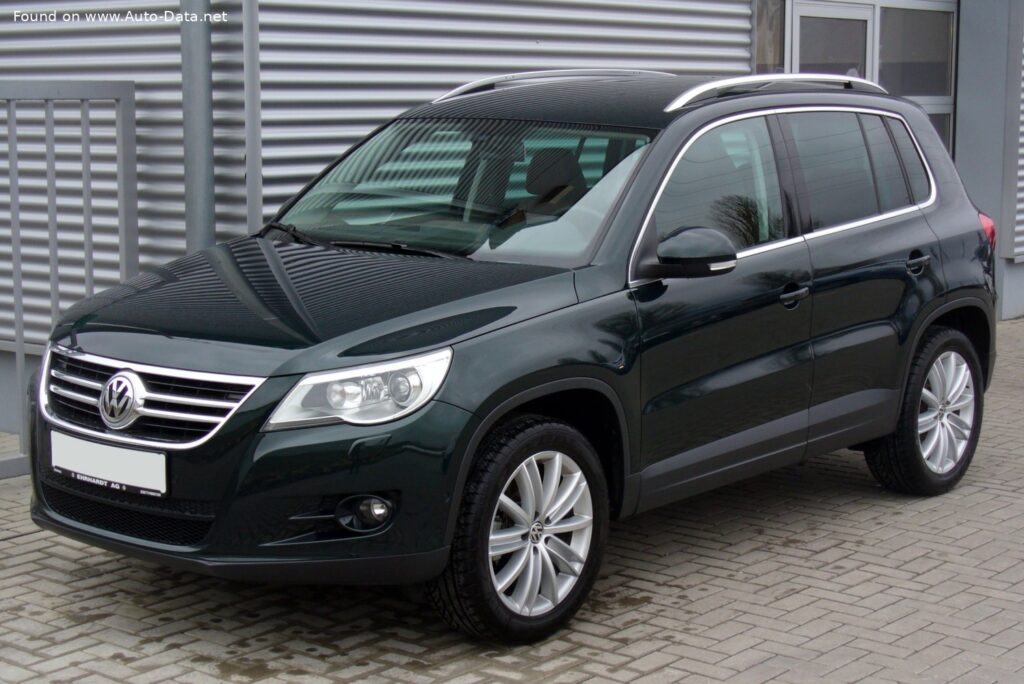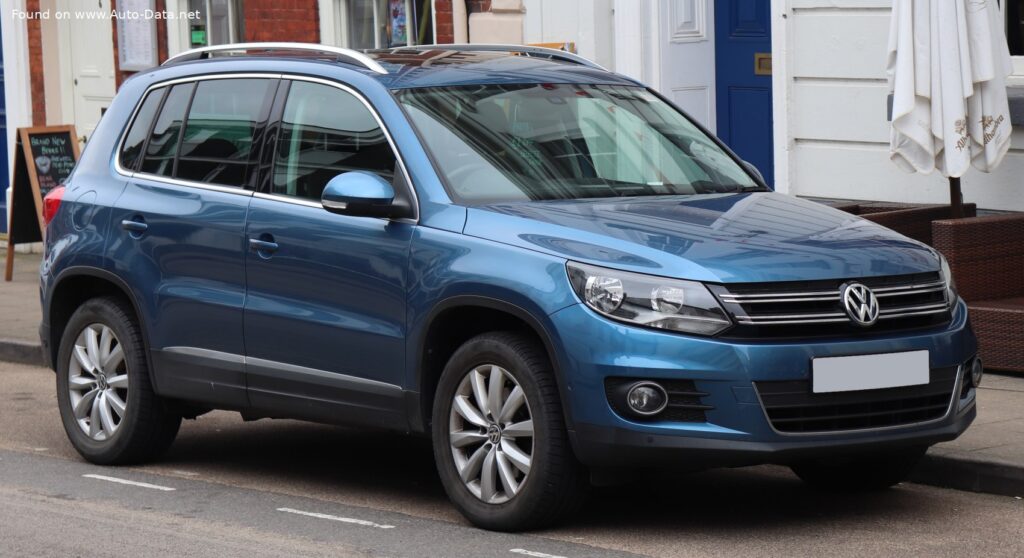
The Volkswagen Tiguan, a prominent player in the competitive compact SUV segment, received a significant refresh for its first generation in 2011. This particular variant, the Volkswagen Tiguan I (facelift 2011) 2.0 TDI BMT (140 Hp) 4MOTION DSG, represented a compelling blend of German engineering, diesel efficiency, and advanced drivetrain technology. Positioned as a versatile and premium compact crossover utility vehicle (CUV), the Tiguan aimed to cater to a global audience, though this specific 2.0 TDI BlueMotion Technology (BMT) powertrain with 4MOTION all-wheel drive and a DSG automatic transmission was particularly popular in European markets where diesel engines and advanced efficiency measures were highly valued. Produced from 2011 to 2015, this facelifted model brought subtle yet impactful enhancements, ensuring its relevance in a rapidly evolving automotive landscape. It offered a practical five-door, five-seat configuration, making it a suitable choice for families and individuals seeking a capable and economical daily driver with a touch of sophistication.
Engineering and Performance of the Volkswagen Tiguan I (facelift 2011)
At the heart of this particular Volkswagen Tiguan I (facelift 2011) model was a robust 2.0-liter TDI (Turbocharged Direct Injection) diesel engine, an exemplar of Volkswagen’s commitment to efficient and powerful diesel powertrains. Designated with engine codes such as EA189 / CBAB, CFFB, or CLJA, this inline four-cylinder unit was transversely mounted at the front. With a displacement of 1968 cubic centimeters (120.09 cubic inches), it delivered a respectable 140 horsepower at 4200 rpm, translating to a power-per-liter output of 71.1 horsepower. More notably, the engine produced a substantial 236.02 lb.-ft. of torque, available across a broad and usable range from 1750 to 2500 rpm. This low-end torque was crucial for the Tiguan’s perceived responsiveness and capability, especially when navigating city traffic or tackling light off-road conditions.
The powertrain benefited from a sophisticated fuel injection system, utilizing Commonrail diesel technology, coupled with a turbocharger and intercooler for optimal air intake and combustion efficiency. A DOHC (Double Overhead Camshaft) valvetrain with four valves per cylinder further enhanced performance and fuel economy. With a compression ratio of 16.5:1, the engine was designed for the specific characteristics of diesel combustion. This model also incorporated Volkswagen’s BlueMotion Technology (BMT), which included a Start & Stop System to reduce fuel consumption and emissions in urban environments, along with a particulate filter to meet stringent Euro 5 emission standards. The engine required 4 liters (4.23 US quarts) of