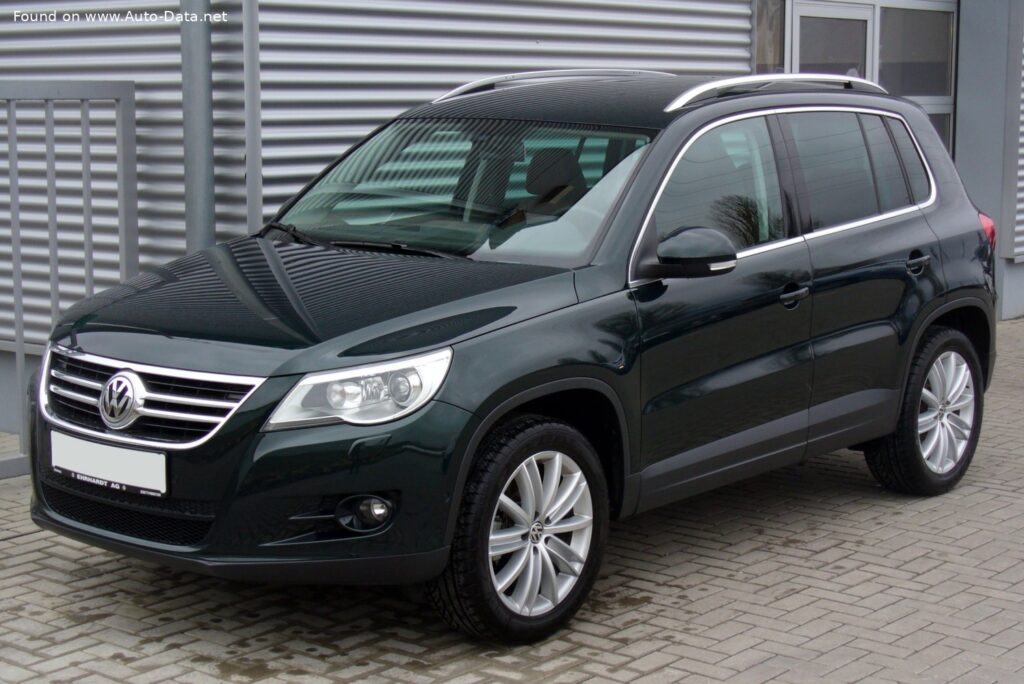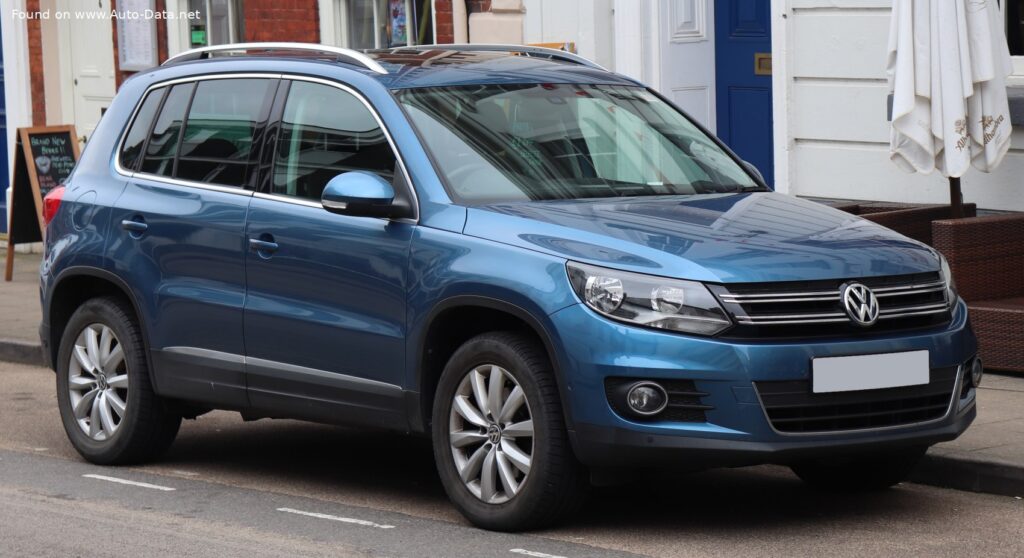
The Volkswagen Tiguan I (facelift 2011) 2.0 TDI BMT (150 Hp) 4MOTION represents a crucial iteration of Volkswagen’s compact SUV offering, particularly tailored for European markets where diesel powertrains and all-wheel-drive capabilities are highly valued. This specific model, produced in 2015, stood as a refined example of the first-generation Tiguan, showcasing Volkswagen’s commitment to efficiency, practicality, and robust engineering within the competitive SUV segment. While not officially sold with this diesel powertrain in the United States during its brief 2015 production run, its technical specifications offer insight into Volkswagen’s global strategy for compact utility vehicles, emphasizing advanced diesel technology and versatile all-wheel-drive systems for diverse driving conditions.
Engine & Performance: The Volkswagen Tiguan I (facelift 2011) 2.0 TDI BMT (150 Hp) 4MOTION Powertrain
At the heart of this particular Volkswagen Tiguan model lies a sophisticated 2.0-liter TDI (Turbocharged Direct Injection) diesel engine, designated with the internal code CUVC. This inline four-cylinder powerplant, featuring a DOHC (Double Overhead Camshaft) valvetrain with four valves per cylinder, is transversely mounted at the front of the vehicle. With a displacement of 1968 cm3 (approximately 120.09 cubic inches), the engine is engineered for both robust power delivery and impressive fuel economy, a hallmark of Volkswagen’s diesel offerings. It utilizes a common rail direct fuel injection system, paired with a turbocharger and intercooler, to optimize combustion and maximize efficiency.
The engine generates a respectable 150 horsepower (Hp), peaking between 3500 and 4000 revolutions per minute (rpm). More significantly for an SUV, it produces a substantial 250.77 lb.-ft. (340 Nm) of torque, available across a broad and usable range from 1750 to 3000 rpm. This ample torque at lower engine speeds is crucial for responsive acceleration, confident overtaking, and effective towing capabilities, making the Tiguan a capable performer both on and off paved roads. The power-to-weight ratio stands at 93.7 Hp per tonne, while the torque-to-weight ratio is an impressive 212.4 Nm per tonne, contributing to its agile feel.
Performance figures underscore the Tiguan’s balanced approach. It accelerates from 0 to 60 mph in an estimated 9.3 seconds, reaching 62 mph (100 km/h) in 9.8 seconds, which is competitive for a compact diesel SUV with all-wheel drive. The maximum speed is rated at 119.92 mph (193 km/h). Fuel efficiency is a key strength, thanks in part to Volkswagen’s BlueMotion Technology (BMT) which incorporates features like a Start & Stop System and a particulate filter. The combined NEDC (New European Driving Cycle) fuel consumption is an impressive 44.4 US mpg (5.3 l/100 km), with urban consumption at 37.9 US mpg (6.2 l/100 km) and extra-urban at 49 US mpg (4.8 l/100 km). These figures highlight the economic advantages of modern diesel engines. Furthermore, the Tiguan 2.0 TDI BMT complies with the stringent Euro 6 emission standard, emitting 140 g/km of CO2, reflecting its commitment to environmental performance.
Design & Features: Practicality Meets Refinement
The Volkswagen Tiguan I (facelift 2011) maintains the clean, understated design aesthetic characteristic of the brand, presenting as a highly functional and well-proportioned compact SUV. Its body type is a traditional 5-door SUV, offering seating for five occupants, a configuration that emphasizes practicality and versatility for families or active individuals. With a length of 174.25 inches (4426 mm), a width of 71.22 inches (1809 mm), and a height of 67.05 inches (1703 mm), the Tiguan strikes an excellent balance between interior spaciousness and urban maneuverability. The wheelbase of 102.52 inches (2604 mm) contributes to a stable ride and a surprisingly roomy cabin for its class.
The exterior design, refreshed in 2011, featured updated headlights, grille, and bumper designs that aligned it more closely with Volkswagen’s contemporary design language. Its stance is further enhanced by a ground clearance of 7.87 inches (200 mm), making it capable of handling light off-road trails or challenging urban obstacles with ease. The approach angle of 18°, departure angle of 25°, and ramp-over angle of 20° further underscore its capability as a mild off-roader, complementing the 4MOTION all-wheel-drive system.
Inside, the Tiguan prioritizes ergonomics and high-quality materials, typical of Volkswagen. The cargo capacity is generous, with a minimum trunk space of 16.6 cubic feet (470 liters), which expands significantly to 53.33 cubic feet (1510 liters) with the rear seats folded down. This flexibility allows for carrying a wide range of luggage, sports equipment, or larger items. Practical features extend to a robust roof load capacity of 165.35 lbs (75 kg) and impressive towing capabilities, rated at 4850.17 lbs (2200 kg) with brakes and 1653.47 lbs (750 kg) without, making it a highly versatile vehicle for various lifestyle needs. The fuel tank capacity of 16.91 US gallons (64 liters) ensures a substantial driving range, capitalizing on the engine’s efficiency.
Drivetrain, Suspension & Safety: Engineered for Confidence
The drivetrain architecture of the Volkswagen Tiguan I (facelift 2011) 2.0 TDI BMT (150 Hp) 4MOTION is a testament to its all-weather and all-terrain versatility. It features Volkswagen’s renowned 4MOTION all-wheel-drive system, which is an on-demand setup. The internal combustion engine primarily drives the front wheels, contributing to efficiency under normal driving conditions. However, when traction demands arise, an electrically or mechanically operated clutch seamlessly engages the rear wheels, distributing power to all four corners. This intelligent system provides enhanced stability, grip, and confidence, whether navigating slippery roads, light snow, or unpaved tracks.
Power is transmitted through a precise 6-speed manual transmission, offering drivers direct control over gear selection and contributing to the vehicle’s engaging driving dynamics and optimized fuel economy. The suspension system is designed to deliver a comfortable yet controlled ride. The front features an independent McPherson strut setup with a transverse stabilizer, known for its compact design and effective wheel control. The rear employs an independent multi-link suspension, also with a transverse stabilizer, which allows for better wheel articulation and enhanced ride comfort, especially on uneven surfaces, while maintaining stability during cornering.
Braking performance is assured by a robust system comprising ventilated discs at the front and solid discs at the rear, providing strong and consistent stopping power. An Anti-lock Braking System (ABS) is standard, preventing wheel lock-up during hard braking and allowing the driver to maintain steering control. The steering system utilizes a rack-and-pinion design with electric power steering. This electric assist not only provides light and responsive steering at low speeds for easy maneuvering but also offers greater feedback and stability at higher speeds, while also contributing to overall fuel efficiency compared to traditional hydraulic systems. The minimum turning circle of 39.37 feet (12 meters) further aids in urban agility. The vehicle rides on 215/65 R16 tires mounted on 6.5J x 16 wheel rims, a practical size that offers a good balance of comfort, grip, and durability.
Technical Specifications
| Brand | Volkswagen |
| Model | Tiguan |
| Generation | Tiguan I (facelift 2011) |
| Type (Engine) | 2.0 TDI BMT (150 Hp) 4MOTION |
| Start of production | 2015 year |
| End of production | 2015 year |
| Powertrain Architecture | Internal Combustion engine |
| Body type | SUV |
| Seats | 5 |
| Doors | 5 |
| Fuel consumption (economy) – urban (NEDC) | 6.2 l/100 km | 37.9 US mpg |
| Fuel consumption (economy) – extra urban (NEDC) | 4.8 l/100 km | 49 US mpg |
| Fuel consumption (economy) – combined (NEDC) | 5.3 l/100 km | 44.4 US mpg |
| CO2 emissions (NEDC) | 140 g/km |
| Fuel Type | Diesel |
| Acceleration 0 – 100 km/h | 9.8 sec |
| Acceleration 0 – 62 mph | 9.8 sec |
| Acceleration 0 – 60 mph (Calculated) | 9.3 sec |
| Maximum speed | 193 km/h | 119.92 mph |
| Emission standard | Euro 6 |
| Weight-to-power ratio | 10.7 kg/Hp | 93.7 Hp/tonne |
| Weight-to-torque ratio | 4.7 kg/Nm | 212.4 Nm/tonne |
| Power | 150 Hp @ 3500-4000 rpm |
| Power per litre | 76.2 Hp/l |
| Torque | 340 Nm @ 1750-3000 rpm | 250.77 lb.-ft. @ 1750-3000 rpm |
| Engine layout | Front, Transverse |
| Engine Model/Code | CUVC |
| Engine displacement | 1968 cm3 | 120.09 cu. in. |
| Number of cylinders | 4 |
| Engine configuration | Inline |
| Cylinder Bore | 81 mm | 3.19 in. |
| Piston Stroke | 95.5 mm | 3.76 in. |
| Number of valves per cylinder | 4 |
| Fuel injection system | Diesel Commonrail |
| Engine aspiration | Turbocharger, Intercooler |
| Valvetrain | DOHC |
| Engine oil capacity | 4.7 l | 4.97 US qt |
| Engine systems | Start & Stop System, Particulate filter |
| Kerb Weight | 1601 kg | 3529.6 lbs. |
| Max. weight | 2230 kg | 4916.31 lbs. |
| Max load | 629 kg | 1386.71 lbs. |
| Trunk (boot) space – minimum | 470 l | 16.6 cu. ft. |
| Trunk (boot) space – maximum | 1510 l | 53.33 cu. ft. |
| Fuel tank capacity | 64 l | 16.91 US gal |
| Max. roof load | 75 kg | 165.35 lbs. |
| Permitted trailer load with brakes (8%) | 2200 kg | 4850.17 lbs. |
| Permitted trailer load with brakes (12%) | 2200 kg | 4850.17 lbs. |
| Permitted trailer load without brakes | 750 kg | 1653.47 lbs. |
| Permitted towbar download | 100 kg | 220.46 lbs. |
| Length | 4426 mm | 174.25 in. |
| Width | 1809 mm | 71.22 in. |
| Width including mirrors | 2041 mm | 80.35 in. |
| Height | 1703 mm | 67.05 in. |
| Wheelbase | 2604 mm | 102.52 in. |
| Front track | 1569 mm | 61.77 in. |
| Rear (Back) track | 1571 mm | 61.85 in. |
| Ride height (ground clearance) | 200 mm | 7.87 in. |
| Minimum turning circle (turning diameter) | 12 m | 39.37 ft. |
| Approach angle | 18° |
| Departure angle | 25° |
| Ramp-over (brakeover) angle | 20° |
| Drivetrain Architecture | ICE drives front wheels permanently, rear wheels driven through clutch if necessary. |
| Drive wheel | All wheel drive (4×4) |
| Number of gears and type of gearbox | 6 gears, manual transmission |
| Front suspension | Independent type McPherson, Transverse stabilizer |
| Rear suspension | Independent multi-link suspension, Transverse stabilizer |
| Front brakes | Ventilated discs |
| Rear brakes | Disc |
| Assisting systems | ABS (Anti-lock braking system) |
| Steering type | Steering rack and pinion |
| Power steering | Electric Steering |
| Tires size | 215/65 R16 |
| Wheel rims size | 6.5J x 16 |