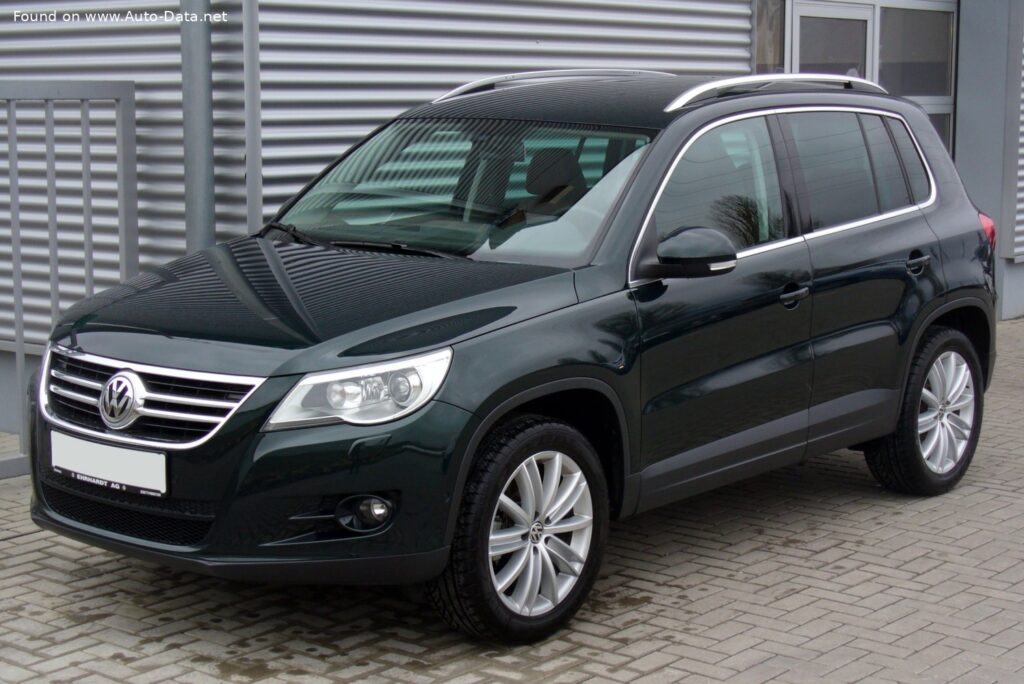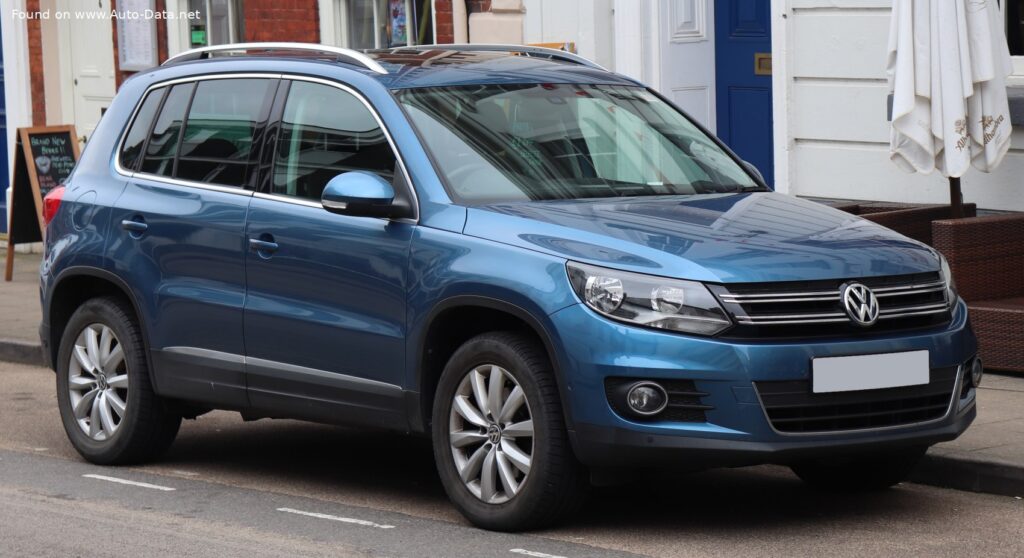
The Volkswagen Tiguan I, specifically the facelifted model introduced in 2011 and produced from 2012 to 2015, represented a significant offering in the highly competitive compact SUV segment. This particular variant, the Volkswagen Tiguan I (facelift 2011) 2.0 TDI BMT (177 Hp) 4MOTION, was a prime example of Volkswagen’s engineering prowess, blending robust diesel performance with advanced efficiency technologies and a capable all-wheel-drive system. While diesel powertrains of this nature are less common in the contemporary U.S. market for compact SUVs, this model was a cornerstone of Volkswagen’s strategy in Europe and other international markets, where diesel engines are highly valued for their fuel economy and torque characteristics. As a five-door, five-seat SUV, it aimed to provide a versatile and practical solution for families and individuals seeking a blend of urban maneuverability and light off-road or all-weather capability.
Engine & Performance: The Robust 2.0 TDI BMT (177 Hp) 4MOTION Powertrain
At the heart of this particular Tiguan model lies a highly efficient and potent 2.0-liter TDI (Turbocharged Direct Injection) engine. Designated with the internal code EA189 / CFGC, this inline four-cylinder diesel powerplant was engineered for both spirited performance and remarkable fuel efficiency. With a displacement of 1968 cubic centimeters (120.09 cubic inches), it delivered a robust 177 horsepower at 4200 rpm, translating to a power-per-liter output of 89.9 Hp/l. More notably, the engine produced a substantial 280.27 lb.-ft. of torque, available across a broad and accessible rev range from 1750 to 2500 rpm. This high torque figure is a hallmark of modern diesel engines, providing excellent responsiveness and pulling power, particularly beneficial for an SUV.
The engine’s advanced design incorporated a DOHC (Double Overhead Camshaft) valvetrain with four valves per cylinder, ensuring optimal airflow and combustion efficiency. Fuel delivery was managed by a sophisticated Diesel Commonrail injection system, which precisely controls fuel atomization for cleaner and more efficient burning. Further enhancing performance and efficiency, the engine featured a turbocharger coupled with an intercooler, which cools the compressed air before it enters the cylinders, resulting in denser air and thus more power. With a compression ratio of 16:1, this TDI unit was optimized for diesel fuel, adhering to the Euro 5 emission standard, a testament to its relatively low environmental impact for its era.
Performance figures for the Volkswagen Tiguan I (facelift 2011) 2.0 TDI BMT (177 Hp) 4MOTION were quite respectable for a compact SUV. It could accelerate from 0 to 60 mph in a swift 8.1 seconds, and its top speed reached 125.52 mph. These numbers underscore its capability for confident highway cruising and effortless overtaking. The “BMT” designation, or BlueMotion Technology, signifies Volkswagen’s commitment to efficiency. This variant incorporated a Start & Stop System, which automatically shuts off the engine when the vehicle is stationary and restarts it when the driver intends to move, thereby reducing fuel consumption and emissions in urban traffic. A particulate filter was also standard, further minimizing harmful exhaust emissions.
Power was channeled through a precise 6-speed manual transmission, offering drivers a direct and engaging connection to the powertrain. The 4MOTION all-wheel-drive architecture provided enhanced traction and stability. This system typically drove the front wheels permanently, with the rear wheels engaging automatically via an electrically or mechanically operated clutch when slippage was detected or when additional traction was required. This intelligent system provided peace of mind in adverse weather conditions and offered improved capability on unpaved roads, without significantly compromising fuel efficiency during normal driving. The combined fuel economy, according to NEDC standards, was an impressive 40.6 US mpg (5.8 l/100 km), with urban consumption at 35.1 US mpg and extra-urban at 45.2 US mpg, making it a very economical choice for long-distance travel.
Design & Features: Practicality and Refinement
The Volkswagen Tiguan I (facelift 2011) presented a refreshed and contemporary design that built upon the original model’s success. As a compact SUV, its body type featured five doors and seating for five occupants, striking a balance between a commanding road presence and practical dimensions for urban environments. The facelift brought subtle yet effective aesthetic updates, typically including revised headlights, grille, bumpers, and taillights, aligning its look more closely with Volkswagen’s then-current design language. The overall silhouette was clean and purposeful, embodying the brand’s reputation for understated elegance and functional design.
In terms of dimensions, the Tiguan measured 174.25 inches in length, 71.22 inches in width (80.35 inches including mirrors), and 67.05 inches in height. Its wheelbase of 102.52 inches contributed to a stable ride and a surprisingly spacious interior for its class. The 7.87-inch ground clearance, combined with respectable approach (18°), departure (25°), and ramp-over (20°) angles, gave the 4MOTION variant genuine capability for light off-road excursions or navigating challenging terrain, such as snowy roads or gravel paths. The minimum turning circle of 39.37 feet (12 meters) ensured good maneuverability in tight city spaces.
Inside, the Tiguan offered a well-appointed and ergonomic cabin, typical of Volkswagen. The focus was on high-quality materials, intuitive controls, and comfortable seating. Practicality was a key strength, with a minimum trunk (boot) space of 16.6 cubic feet (470 liters), which could expand significantly to 53.33 cubic feet (1510 liters) with the rear seats folded down, accommodating substantial cargo. The vehicle’s kerb weight stood at 3534.01 lbs (1603 kg), with a maximum permissible weight of 4938.35 lbs (2240 kg), allowing for a maximum payload of 1404.34 lbs (637 kg). Furthermore, it boasted a strong towing capacity, capable of pulling up to 4850.17 lbs (2200 kg) with braked trailers, and a roof load capacity of 220.46 lbs (100 kg), enhancing its utility for adventurers and families alike.
The driving experience was further refined by its robust chassis and suspension system. The front suspension featured an independent McPherson strut design with coil springs and an anti-roll bar, providing responsive handling and a comfortable ride. The rear utilized an independent multi-link spring suspension with a stabilizer, further contributing to ride comfort and stability, especially when cornering or carrying a load. Braking performance was confident, with ventilated discs at the front and solid discs at the rear, complemented by an Anti-lock Braking System (ABS) for enhanced safety. Steering was managed by an electric power-assisted rack and pinion system, offering precise control and ease of parking. The Tiguan was available with a range of tire sizes, from 215/60 R17 to 255/40 R19, mounted on various wheel rim sizes, allowing for customization of ride and handling characteristics.
Technical Specifications
| Brand | Volkswagen |
| Model | Tiguan |
| Generation | Tiguan I (facelift 2011) |
| Type (Engine) | 2.0 TDI BMT (177 Hp) 4MOTION |
| Start of production | 2012 year |
| End of production | 2015 year |
| Powertrain Architecture | Internal Combustion engine |
| Body type | SUV |
| Seats | 5 |
| Doors | 5 |
| Fuel consumption (economy) – urban (NEDC) | 6.7 l/100 km (35.1 US mpg) |
| Fuel consumption (economy) – extra urban (NEDC) | 5.2 l/100 km (45.2 US mpg) |
| Fuel consumption (economy) – combined (NEDC) | 5.8 l/100 km (40.6 US mpg) |
| CO2 emissions (NEDC) | 151 g/km |
| Fuel Type | Diesel |
| Acceleration 0 – 60 mph | 8.1 sec |
| Acceleration 0 – 100 km/h | 8.5 sec |
| Maximum speed | 202 km/h (125.52 mph) |
| Emission standard | Euro 5 |
| Weight-to-power ratio | 9.1 kg/Hp, 110.4 Hp/tonne |
| Weight-to-torque ratio | 4.2 kg/Nm, 237.1 Nm/tonne |
| Power | 177 Hp @ 4200 rpm. |
| Power per litre | 89.9 Hp/l |
| Torque | 380 Nm @ 1750-2500 rpm (280.27 lb.-ft.) |
| Engine layout | Front, Transverse |
| Engine Model/Code | EA189 / CFGC |
| Engine displacement | 1968 cm3 (120.09 cu. in.) |
| Number of cylinders | 4 |
| Engine configuration | Inline |
| Cylinder Bore | 81 mm (3.19 in.) |
| Piston Stroke | 95.5 mm (3.76 in.) |
| Compression ratio | 16:1 |
| Number of valves per cylinder | 4 |
| Fuel injection system | Diesel Commonrail |
| Engine aspiration | Turbocharger, Intercooler |
| Valvetrain | DOHC |
| Engine oil capacity | 4.3 l (4.54 US qt) |
| Coolant | 8 l (8.45 US qt) |
| Engine systems | Start & Stop System, Particulate filter |
| Kerb Weight | 1603 kg (3534.01 lbs.) |
| Max. weight | 2240 kg (4938.35 lbs.) |
| Max load | 637 kg (1404.34 lbs.) |
| Trunk (boot) space – minimum | 470 l (16.6 cu. ft.) |
| Trunk (boot) space – maximum | 1510 l (53.33 cu. ft.) |
| Fuel tank capacity | 64 l (16.91 US gal) |
| Max. roof load | 100 kg (220.46 lbs.) |
| Permitted trailer load with brakes (8%) | 2200 kg (4850.17 lbs.) |
| Permitted trailer load with brakes (12%) | 2200 kg (4850.17 lbs.) |
| Permitted trailer load without brakes | 750 kg (1653.47 lbs.) |
| Permitted towbar download | 100 kg (220.46 lbs.) |
| Length | 4426 mm (174.25 in.) |
| Width | 1809 mm (71.22 in.) |
| Width including mirrors | 2041 mm (80.35 in.) |
| Height | 1703 mm (67.05 in.) |
| Wheelbase | 2604 mm (102.52 in.) |
| Front track | 1569 mm (61.77 in.) |
| Rear (Back) track | 1571 mm (61.85 in.) |
| Ride height (ground clearance) | 200 mm (7.87 in.) |
| Minimum turning circle (turning diameter) | 12 m (39.37 ft.) |
| Approach angle | 18° |
| Departure angle | 25° |
| Ramp-over (brakeover) angle | 20° |
| Drivetrain Architecture | The Internal combustion engine (ICE) drives the front wheels permanently, and the rear wheels are driven through an electrically or mechanically operated clutch if necessary. |
| Drive wheel | All wheel drive (4×4) |
| Number of gears and type of gearbox | 6 gears, manual transmission |
| Front suspension | Independent, type McPherson with coil spring and anti-roll bar |
| Rear suspension | Independent multi-link spring suspension with stabilizer |
| Front brakes | Ventilated discs |
| Rear brakes | Disc |
| Assisting systems | ABS (Anti-lock braking system) |
| Steering type | Steering rack and pinion |
| Power steering | Electric Steering |
| Tires size | 215/60 R17; 235/55 R17; 235/50 R18; 255/40 R19 |
| Wheel rims size | 6.5J x 17; 7J x 17; 7J x 18; 8J x 18; 9J x 19 |