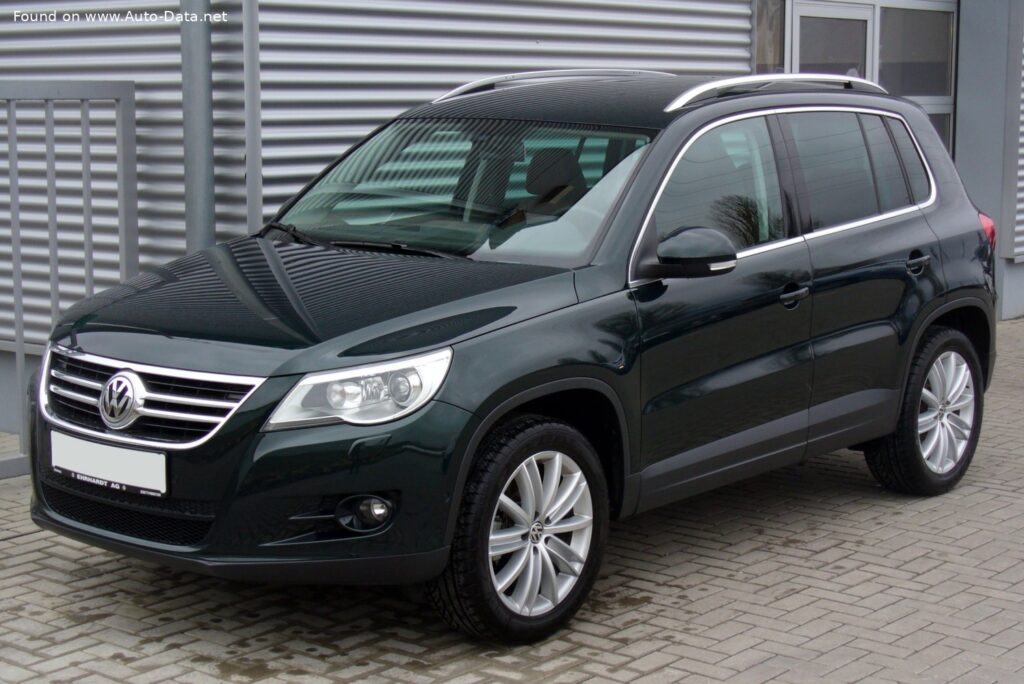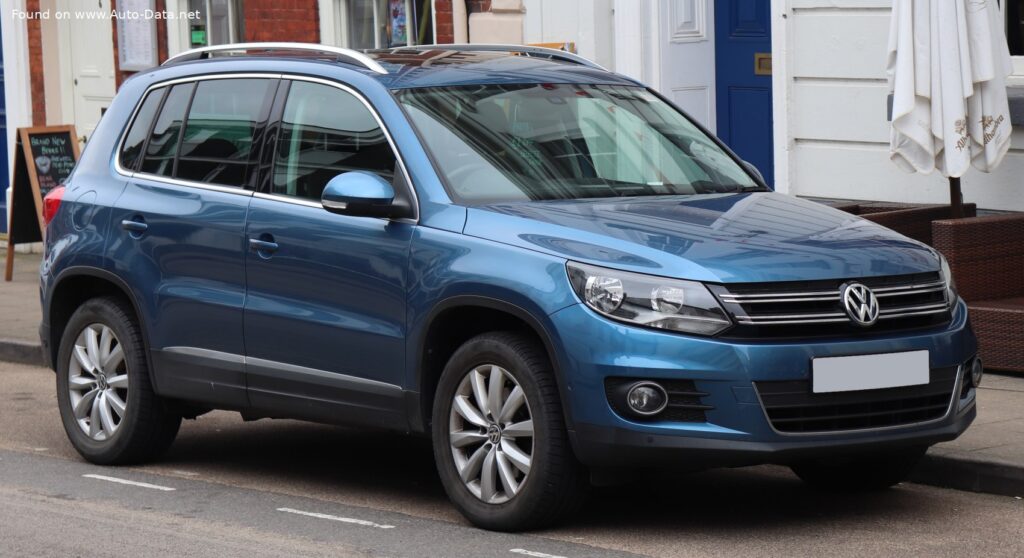
The Volkswagen Tiguan I, particularly its facelifted iteration from 2011, represented a pivotal moment for the German automaker in the burgeoning compact SUV segment. Known internally as the 5N generation, this updated model, featuring the potent Volkswagen Tiguan I (facelift 2011) 2.0 TSI (200 Hp) powertrain, solidified its reputation as a versatile and refined contender in a fiercely competitive market. Positioned as a more premium alternative to many of its rivals, the Tiguan offered a compelling blend of sophisticated engineering, practical utility, and dynamic driving characteristics. For the North American market, this generation of the Tiguan resonated with buyers seeking European driving dynamics combined with the utility of an SUV, bridging the gap between smaller crossovers and larger family haulers. The 2011 facelift introduced subtle yet effective design enhancements and technological updates, ensuring the Tiguan remained fresh and relevant against newer competitors, further cementing its appeal to those who valued German precision and build quality.
The Volkswagen Tiguan I (facelift 2011) 2.0 TSI (200 Hp): Engineering and Performance
At the heart of the Volkswagen Tiguan I (facelift 2011) 2.0 TSI (200 Hp) lies a highly acclaimed powertrain, the EA888 / CCTA engine. This 2.0-liter (1984 cm3 or 121.07 cu. in.) inline four-cylinder engine is a testament to Volkswagen’s commitment to advanced engine technology, blending power, efficiency, and responsiveness. With a robust output of 200 horsepower delivered at 5100 rpm, and an impressive 206.52 lb.-ft. of torque available across a broad range from 1700 to 5000 rpm, the Tiguan offered spirited acceleration and confident overtaking capabilities. The flat torque curve was particularly beneficial for everyday driving, providing accessible power without the need to constantly rev the engine.
The technical sophistication of this engine is noteworthy. It features a DOHC (Dual Overhead Camshaft) valvetrain with four valves per cylinder, optimizing airflow for enhanced combustion efficiency. The direct injection fuel system precisely meters fuel directly into the combustion chambers, contributing to both power output and fuel economy. Crucially, the engine is equipped with a turbocharger and intercooler, which force-feed air into the cylinders, dramatically increasing power density for its displacement. This combination allowed the Tiguan to achieve a power per liter figure of 100.8 Hp/l, remarkable for an SUV of its time. The compression ratio of 9.6:1 further optimized the turbocharger’s effectiveness.
Power is transmitted to the front wheels via a slick-shifting 6-speed manual transmission, offering an engaging driving experience for those who prefer more direct control over gear selection. While the data specifies front-wheel drive, it’s worth noting that many Tiguan models were also available with Volkswagen’s 4MOTION all-wheel-drive system, though this specific configuration highlights the FWD variant. The vehicle’s weight-to-power ratio of 7.7 kg/Hp (or 130 Hp/tonne) and a weight-to-torque ratio of 5.5 kg/Nm (or 181.9 Nm/tonne) underscore its agile performance for an SUV. This combination ensured a dynamic driving feel, characterized by responsive acceleration and a sense of command on the road.
Despite its performance credentials, the 2.0 TSI engine also demonstrated reasonable fuel efficiency for its class. According to EPA estimates, the urban fuel consumption stood at 13.1 l/100 km (18 US mpg), while extra-urban driving yielded 9 l/100 km (26.1 US mpg). These figures reflected a careful balance between power and economy, a hallmark of modern Volkswagen engineering. The 64-liter (16.91 US gal) fuel tank provided a decent cruising range, making the Tiguan a practical choice for both daily commutes and longer journeys.
Design and Practicality of the Volkswagen Tiguan I (facelift 2011)
The Volkswagen Tiguan I (facelift 2011) maintained its characteristic compact SUV body type, offering five doors and comfortable seating for five occupants. The facelift brought subtle but significant changes to the exterior, aligning its aesthetics more closely with Volkswagen’s contemporary design language seen in models like the Golf VI and Passat B7. This included redesigned headlights, a revised grille, and updated bumpers, giving it a sharper, more sophisticated appearance without altering its fundamental proportions. Its overall length of 4433 mm (174.53 in), width of 1809 mm (71.22 in, or 2041 mm / 80.35 in including mirrors), and height of 1703 mm (67.05 in) made it maneuverable in urban environments while still projecting a substantial road presence.
Inside, the Tiguan prioritized ergonomic design and high-quality materials, typical of Volkswagen. The cabin was thoughtfully laid out, with intuitive controls and comfortable seating. Practicality was a strong suit, exemplified by its versatile cargo area. The trunk offered a minimum capacity of 470 liters (16.6 cu. ft.), which could expand significantly to 1510 liters (53.33 cu. ft.) with the rear seats folded, providing ample space for luggage, groceries, or sports equipment. The maximum load capacity of 631 kg (1391.12 lbs) further underscored its utility.
Underpinning the Tiguan’s comfortable ride and confident handling was a well-engineered suspension system. The front utilized an independent McPherson strut setup with coil springs and an anti-roll bar, while the rear featured an independent multi-link spring suspension with a stabilizer. This combination provided a refined ride quality, soaking up road imperfections effectively, while also offering commendable stability and cornering prowess. The electric power steering system, a rack and pinion type, offered precise feedback and effortless maneuverability, particularly appreciated in city driving and parking scenarios with a minimum turning circle of 11.9 meters (39.04 ft).
Safety was a paramount consideration for Volkswagen, and the Tiguan was equipped with essential assisting systems, including ABS (Anti-lock Braking System) as standard. The braking system comprised ventilated discs measuring 312×25 mm at the front and solid discs measuring 286×12 mm at the rear, ensuring strong and consistent stopping power. The Tiguan’s ground clearance of 175 mm (6.89 in), along with respectable approach (28°), departure (25°), and ramp-over (21°) angles, provided a degree of off-road capability, making it suitable for light trails and challenging weather conditions. A permitted trailer load with brakes of 998 kg (2200.21 lbs) added to its versatility for those needing to tow.
The vehicle’s aesthetic was completed by a range of wheel and tire options, from 215/65 R16 to larger 255/40 R19 tires on 9J x 19 rims, allowing owners to customize their Tiguan’s stance and handling characteristics. With a drag coefficient (Cd) of 0.37, the Tiguan was designed with aerodynamic efficiency in mind, contributing to both fuel economy and reduced wind noise at higher speeds. The 2011 facelifted Tiguan, with its 2.0 TSI engine, therefore presented a compelling package: a practical and stylish compact SUV that delivered on performance, efficiency, and the renowned Volkswagen driving experience.
Technical Specifications: Volkswagen Tiguan I (facelift 2011) 2.0 TSI (200 Hp)
| Brand | Volkswagen |
| Model | Tiguan |
| Generation | Tiguan I (facelift 2011) |
| Type (Engine) | 2.0 TSI (200 Hp) |
| Production Start Year | 2011 |
| Production End Year | 2014 |
| Powertrain Architecture | Internal Combustion engine |
| Body Type | SUV |
| Seats | 5 |
| Doors | 5 |
| Fuel Consumption (Urban EPA) | 13.1 l/100 km (18 US mpg) |
| Fuel Consumption (Extra Urban EPA) | 9 l/100 km (26.1 US mpg) |
| Fuel Type | Petrol (Gasoline) |
| Weight-to-Power Ratio | 7.7 kg/Hp (130 Hp/tonne) |
| Weight-to-Torque Ratio | 5.5 kg/Nm (181.9 Nm/tonne) |
| Power | 200 Hp @ 5100 rpm |
| Power per Liter | 100.8 Hp/l |
| Torque | 280 Nm (206.52 lb.-ft.) @ 1700-5000 rpm |
| Engine Layout | Front, Transverse |
| Engine Model/Code | EA888 / CCTA |
| Engine Displacement | 1984 cm3 (121.07 cu. in.) |
| Number of Cylinders | 4 |
| Engine Configuration | Inline |
| Cylinder Bore | 82.5 mm (3.25 in.) |
| Piston Stroke | 92.8 mm (3.65 in.) |
| Compression Ratio | 9.6:1 |
| Number of Valves per Cylinder | 4 |
| Fuel Injection System | Direct injection |
| Engine Aspiration | Turbocharger, Intercooler |
| Valvetrain | DOHC |
| Engine Oil Capacity | 4.7 l (4.97 US qt) |
| Coolant Capacity | 8 l (8.45 US qt) |
| Kerb Weight | 1539 kg (3392.91 lbs.) |
| Max. Weight (GVWR) | 2170 kg (4784.03 lbs.) |
| Max Load | 631 kg (1391.12 lbs.) |
| Trunk (boot) Space – Minimum | 470 l (16.6 cu. ft.) |
| Trunk (boot) Space – Maximum | 1510 l (53.33 cu. ft.) |
| Fuel Tank Capacity | 64 l (16.91 US gal) |
| Permitted Trailer Load with Brakes (12%) | 998 kg (2200.21 lbs.) |
| Length | 4433 mm (174.53 in.) |
| Width | 1809 mm (71.22 in.) |
| Width Including Mirrors | 2041 mm (80.35 in.) |
| Height | 1703 mm (67.05 in.) |
| Wheelbase | 2604 mm (102.52 in.) |
| Front Track | 1569 mm (61.77 in.) |
| Rear Track | 1571 mm (61.85 in.) |
| Ride Height (Ground Clearance) | 175 mm (6.89 in.) |
| Drag Coefficient (Cd) | 0.37 |
| Minimum Turning Circle (Diameter) | 11.9 m (39.04 ft.) |
| Approach Angle | 28° |
| Departure Angle | 25° |
| Ramp-over (Brakeover) Angle | 21° |
| Drivetrain Architecture | Internal combustion engine drives front wheels |
| Drive Wheel | Front wheel drive |
| Number of Gears and Type of Gearbox | 6 gears, manual transmission |
| Front Suspension | Independent, McPherson with coil spring and anti-roll bar |
| Rear Suspension | Independent multi-link spring suspension with stabilizer |
| Front Brakes | Ventilated discs, 312×25 mm |
| Rear Brakes | Disc, 286×12 mm |
| Assisting Systems | ABS (Anti-lock braking system) |
| Steering Type | Steering rack and pinion |
| Power Steering | Electric Steering |
| Tires Size | 215/65 R16; 235/50 R18; 235/55 R18; 255/40 R19 |
| Wheel Rims Size | 6.5J x 16; 7J x 18; 9J x 19 |