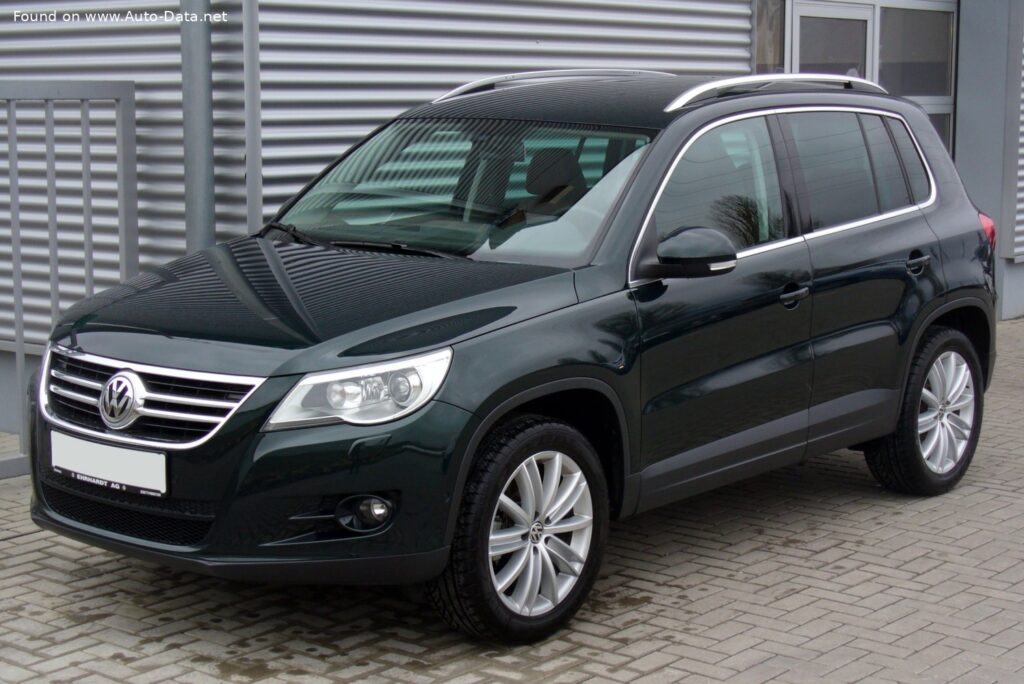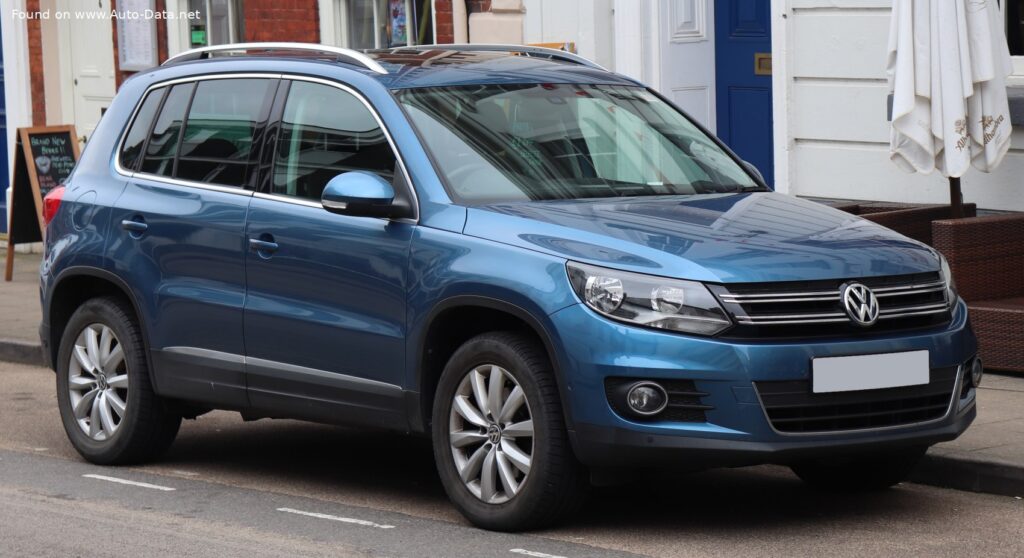
The Volkswagen Tiguan I (facelift 2011) 2.0 TSI (200 Hp) 4MOTION Tiptronic represents a significant refresh of Volkswagen’s inaugural compact crossover SUV, first introduced globally in 2007. This particular iteration, produced from 2011 to 2016, positioned itself as a versatile and upscale contender in the fiercely competitive compact SUV segment. Bridging the gap between smaller hatchbacks and larger SUVs, the Tiguan offered a compelling blend of practicality, sophisticated engineering, and premium features, characteristic of the Volkswagen brand. While globally recognized, the Tiguan found particular success in markets seeking a refined, all-wheel-drive capable vehicle with a relatively compact footprint, making it suitable for both urban environments and light off-road excursions. This facelifted model brought a sharper aesthetic and updated technological refinements, solidifying its appeal to a broad demographic of buyers looking for a capable and comfortable family vehicle.
Engine and Performance of the Volkswagen Tiguan I (facelift 2011) 2.0 TSI (200 Hp) 4MOTION Tiptronic
At the heart of the Volkswagen Tiguan I (facelift 2011) 2.0 TSI (200 Hp) 4MOTION Tiptronic lies a robust and highly regarded 2.0-liter turbocharged, direct-injection four-cylinder gasoline engine, identified by the EA888/CCTA code. This powerplant is a testament to Volkswagen’s engineering prowess, delivering a potent 200 horsepower at 5100 rpm. What truly sets this engine apart is its impressive torque delivery: a substantial 280 Nm (206.52 lb-ft) available across a remarkably broad range, from a low 1700 rpm all the way up to 5000 rpm. This wide torque band ensures strong, responsive acceleration from a standstill and confident passing power on the highway, making the Tiguan feel much more eager than its compact SUV classification might suggest.
The engine’s sophisticated design incorporates a DOHC (Double Overhead Camshaft) valvetrain with four valves per cylinder, optimizing airflow and combustion efficiency. Its direct injection fuel system precisely meters fuel directly into the combustion chambers, contributing to both power output and fuel economy. The turbocharger, coupled with an intercooler, significantly boosts the engine’s volumetric efficiency, allowing it to produce power figures typically associated with larger, naturally aspirated engines, while maintaining the efficiency benefits of a smaller displacement. With a compression ratio of 9.6:1 and a bore of 82.5 mm (3.25 in) and a stroke of 92.8 mm (3.65 in), the engine is engineered for both durability and dynamic performance.
Power is seamlessly managed by a 6-speed Tiptronic automatic transmission, which offers smooth shifts and the option for manual gear selection, giving the driver greater control. This transmission works in conjunction with Volkswagen’s renowned 4MOTION all-wheel-drive system. The drivetrain architecture is designed for efficiency and capability, primarily driving the front wheels. When conditions demand, such as wheel slip or increased traction needs, an electrically or mechanically operated clutch engages the rear wheels, distributing power to all four corners. This proactive system enhances stability, traction, and confidence in varying weather conditions and on different road surfaces, from paved roads to gravel paths.
Despite its spirited performance, the Tiguan 2.0 TSI (200 Hp) 4MOTION Tiptronic also demonstrates respectable fuel economy for an all-wheel-drive SUV of its era. According to EPA estimates, combined fuel consumption is rated at 10.2 liters per 100 kilometers, which translates to approximately 23.1 US miles per gallon. Urban driving yields about 11.8 l/100 km (19.9 US mpg), while extra-urban (highway) driving improves to 9 l/100 km (26.1 US mpg). With a fuel tank capacity of 64 liters (16.91 US gallons), the Tiguan offers a practical cruising range for daily commutes and longer journeys alike. The weight-to-power ratio of 8.1 kg/Hp (122.8 Hp/tonne) and a weight-to-torque ratio of 5.8 kg/Nm (171.9 Nm/tonne) further underscore its balanced performance characteristics, offering a dynamic yet composed driving experience.
Design and Features
The Volkswagen Tiguan I (facelift 2011) presents a refined and contemporary aesthetic, building upon the original model’s solid foundation with updated styling cues that align it with Volkswagen’s design language of the early 2010s. As a compact SUV, it features a practical 5-door body style, accommodating five occupants comfortably. The facelift introduced a sharper, more angular front fascia with redesigned headlights and a revised grille, giving it a more assertive and modern presence. The rear also received subtle updates, including new taillight clusters, contributing to a cohesive and upscale appearance.
Measuring 4433 mm (174.53 in) in length, 1809 mm (71.22 in) in width (2041 mm or 80.35 in including mirrors), and 1703 mm (67.05 in) in height, the Tiguan strikes an excellent balance between interior space and maneuverability. Its wheelbase of 2604 mm (102.52 in) contributes to a stable ride and generous cabin room. The interior design is characterized by Volkswagen’s typical ergonomic excellence and high-quality materials, offering a comfortable and intuitive driving environment. Standard features for the era would include air conditioning, power windows, and a comprehensive audio system, with higher trims offering more advanced infotainment, climate control, and connectivity options.
Practicality is a strong suit for the Tiguan. It offers a minimum trunk (boot) space of 470 liters (16.6 cu. ft.), which can be expanded significantly to 1510 liters (53.33 cu. ft.) by folding down the rear seats, providing ample cargo capacity for luggage, groceries, or sports equipment. The vehicle’s kerb weight stands at 1629 kg (3591.33 lbs), with a maximum permissible weight of 2250 kg (4960.4 lbs), allowing for a maximum load of 621 kg (1369.07 lbs). Furthermore, its towing capability is respectable, with a permitted trailer load of 998 kg (2200.21 lbs) with brakes, making it suitable for light utility tasks.
Underneath its stylish exterior, the Tiguan is engineered for a confident ride. The front suspension features an independent McPherson-type strut with coil springs and an anti-roll bar, while the rear utilizes an independent multi-link spring suspension with a stabilizer, ensuring a compliant ride and stable handling. Braking performance is handled by ventilated discs measuring 312×25 mm at the front and solid discs of 286×12 mm at the rear, complemented by an Anti-lock Braking System (ABS) for enhanced safety. The electric power steering system provides precise control and ease of maneuverability, particularly in urban settings, with a minimum turning circle of 11.9 meters (39.04 ft).
The Tiguan’s design also incorporates a degree of off-road readiness, highlighted by its 175 mm (6.89 in) ground clearance, an approach angle of 28°, a departure angle of 25°, and a ramp-over (brakeover) angle of 21°. These figures, combined with the 4MOTION all-wheel-drive system, allow the Tiguan to confidently tackle unpaved roads and moderate trails. A range of tire and wheel options were available, including 215/65 R16, 235/50 R18, 235/55 R18, and 255/40 R19 tires mounted on 6.5J x 16, 7J x 18, or 9J x 19 wheel rims, allowing owners to customize the vehicle’s stance and handling characteristics. The drag coefficient (Cd) of 0.37 indicates a reasonably aerodynamic profile for an SUV of its size and class, contributing to its overall efficiency and reduced wind noise at higher speeds.
Technical Specifications
| Brand | Volkswagen |
| Model | Tiguan |
| Generation | Tiguan I (facelift 2011) |
| Type (Engine) | 2.0 TSI (200 Hp) 4MOTION Tiptronic |
| Start of production | 2011 year |
| End of production | 2016 year |
| Powertrain Architecture | Internal Combustion engine |
| Body type | SUV |
| Seats | 5 |
| Doors | 5 |
| Fuel consumption (economy) – urban (EPA) | 11.8 l/100 km (19.9 US mpg) |
| Fuel consumption (economy) – extra urban (EPA) | 9 l/100 km (26.1 US mpg) |
| Fuel consumption (economy) – combined (EPA) | 10.2 l/100 km (23.1 US mpg) |
| Fuel Type | Petrol (Gasoline) |
| Weight-to-power ratio | 8.1 kg/Hp (122.8 Hp/tonne) |
| Weight-to-torque ratio | 5.8 kg/Nm (171.9 Nm/tonne) |
| Power | 200 Hp @ 5100 rpm |
| Power per liter | 100.8 Hp/l |
| Torque | 280 Nm @ 1700-5000 rpm (206.52 lb-ft) |
| Engine layout | Front, Transverse |
| Engine Model/Code | EA888 / CCTA |
| Engine displacement | 1984 cm3 (121.07 cu. in.) |
| Number of cylinders | 4 |
| Engine configuration | Inline |
| Cylinder Bore | 82.5 mm (3.25 in) |
| Piston Stroke | 92.8 mm (3.65 in) |
| Compression ratio | 9.6:1 |
| Number of valves per cylinder | 4 |
| Fuel injection system | Direct injection |
| Engine aspiration | Turbocharger, Intercooler |
| Valvetrain | DOHC |
| Engine oil capacity | 4.7 l (4.97 US qt) |
| Coolant | 8 l (8.45 US qt) |
| Kerb Weight | 1629 kg (3591.33 lbs) |
| Max. weight | 2250 kg (4960.4 lbs) |
| Max load | 621 kg (1369.07 lbs) |
| Trunk (boot) space – minimum | 470 l (16.6 cu. ft.) |
| Trunk (boot) space – maximum | 1510 l (53.33 cu. ft.) |
| Fuel tank capacity | 64 l (16.91 US gal) |
| Permitted trailer load with brakes (12%) | 998 kg (2200.21 lbs) |
| Length | 4433 mm (174.53 in) |
| Width | 1809 mm (71.22 in) |
| Width including mirrors | 2041 mm (80.35 in) |
| Height | 1703 mm (67.05 in) |
| Wheelbase | 2604 mm (102.52 in) |
| Front track | 1569 mm (61.77 in) |
| Rear (Back) track | 1571 mm (61.85 in) |
| Ride height (ground clearance) | 175 mm (6.89 in) |
| Drag coefficient (Cd) | 0.37 |
| Minimum turning circle (turning diameter) | 11.9 m (39.04 ft) |
| Approach angle | 28° |
| Departure angle | 25° |
| Ramp-over (brakeover) angle | 21° |
| Drivetrain Architecture | ICE drives front wheels permanently; rear wheels driven via clutch if needed. |
| Drive wheel | All wheel drive (4×4) |
| Number of gears and type of gearbox | 6 gears, automatic transmission Tiptronic |
| Front suspension | Independent, McPherson with coil spring and anti-roll bar |
| Rear suspension | Independent multi-link spring suspension with stabilizer |
| Front brakes | Ventilated discs, 312×25 mm |
| Rear brakes | Disc, 286×12 mm |
| Assisting systems | ABS (Anti-lock braking system) |
| Steering type | Steering rack and pinion |
| Power steering | Electric Steering |
| Tires size | 215/65 R16; 235/50 R18; 235/55 R18; 255/40 R19 |
| Wheel rims size | 6.5J x 16; 7J x 18; 9J x 19 |