The Volkswagen Tiguan II 1.4 TSI (150 Hp) ACT represents a significant evolution in the compact SUV segment, embodying Volkswagen’s commitment to efficiency, practicality, and sophisticated engineering. Launched in 2016 as the second generation of the highly successful Tiguan, this particular variant, produced until 2018, quickly established itself as a versatile and popular choice in its primary markets, particularly across Europe. Positioned as a family-friendly SUV, the Tiguan II offered a compelling blend of spaciousness, modern design, and advanced powertrain technology, making it a benchmark in its class. Its “ACT” designation, standing for Active Cylinder Technology, highlights a key innovation aimed at optimizing fuel economy without compromising performance, a characteristic that defined many of Volkswagen’s offerings during this era.
Engine and Performance: The Volkswagen Tiguan II 1.4 TSI (150 Hp) ACT Powertrain
At the heart of the Volkswagen Tiguan II 1.4 TSI (150 Hp) ACT lies a meticulously engineered 1.4-liter, four-cylinder inline engine, a testament to Volkswagen’s prowess in developing compact yet potent powertrains. This specific engine, identifiable by codes such as CZDA, CZEA, CHPB, or DJVA, utilizes direct fuel injection and is equipped with both a turbocharger and an intercooler. This forced induction system is crucial for extracting impressive power and torque from a relatively small displacement of 1395 cubic centimeters (85.13 cubic inches). The engine delivers a robust 150 horsepower, available across a broad rev range from 5000 to 6000 rpm, ensuring responsive acceleration and effortless highway cruising. More remarkably, it generates a substantial 250 Nm (184.39 lb.-ft.) of torque, which peaks early at just 1500 rpm and remains consistently available up to 3500 rpm. This wide torque band contributes significantly to the vehicle’s lively feel and strong mid-range acceleration, making it well-suited for both urban driving and longer journeys.
Performance figures for the Tiguan II 1.4 TSI (150 Hp) ACT underscore its balanced capabilities. The SUV can accelerate from 0 to 60 mph in a respectable 8.7 seconds, with a top speed reaching 125.52 mph (202 km/h). These numbers demonstrate that despite its focus on efficiency, the Tiguan doesn’t shy away from dynamic driving. Complementing its performance, the powertrain architecture is front-wheel drive, with the engine mounted transversely at the front, driving the front wheels through a precise 6-speed manual transmission. This setup provides a familiar and engaging driving experience, characteristic of Volkswagen vehicles.
A cornerstone of this variant’s engineering is its emphasis on fuel efficiency and reduced emissions. The “ACT” (Active Cylinder Technology) system, also known as cylinder deactivation, is a sophisticated feature that allows the engine to seamlessly switch from four-cylinder to two-cylinder operation under light to moderate loads. This innovative technology significantly reduces fuel consumption during cruising, contributing to the impressive combined fuel economy rating of 40.6 US mpg (5.8 l/100 km). Furthermore, the inclusion of a Start & Stop system further enhances efficiency by automatically shutting off the engine when the vehicle is stationary, such as at traffic lights, and restarting it instantly when the driver presses the clutch. These systems collectively contribute to a CO2 emission rating of 132 g/km, allowing the vehicle to meet the stringent Euro 6 emission standard, reflecting Volkswagen’s commitment to environmental responsibility.
The Tiguan II 1.4 TSI (150 Hp) ACT achieves an admirable weight-to-power ratio of 9.4 kg/Hp (106 Hp/tonne) and a weight-to-torque ratio of 5.7 kg/Nm (176.7 Nm/tonne). These figures highlight the efficient utilization of the engine’s output in relation to the vehicle’s curb weight, which ranges from 3119.54 to 3595.74 lbs (1415-1631 kg). The engine’s oil capacity is 4 liters (4.23 US quarts), aligning with typical maintenance requirements for a unit of this size and complexity.
Design and Features of the Volkswagen Tiguan II 1.4 TSI (150 Hp) ACT
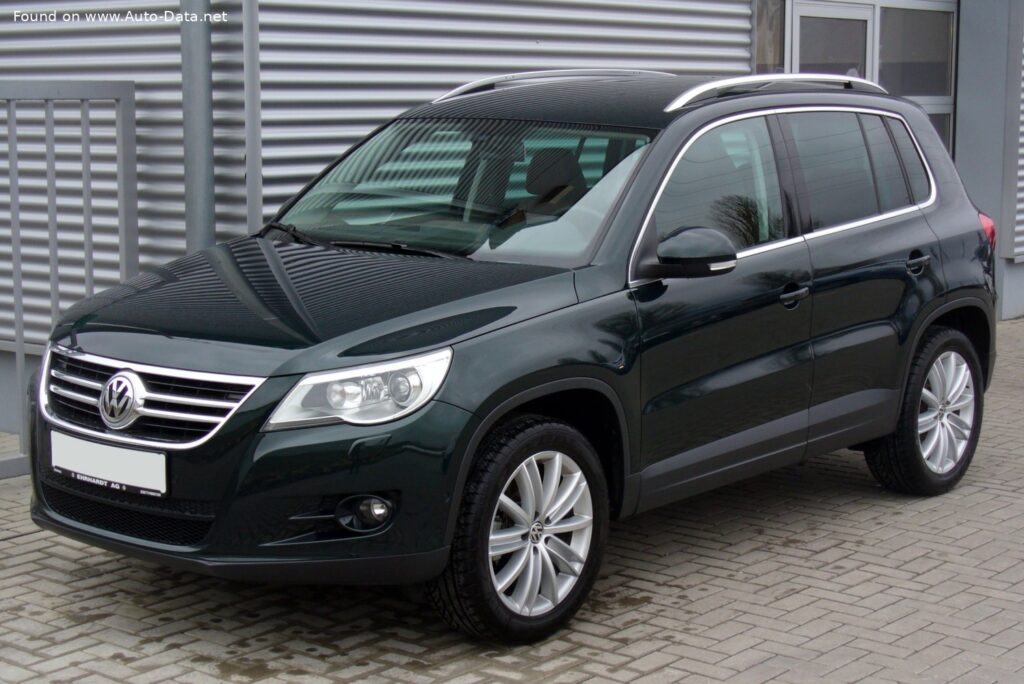
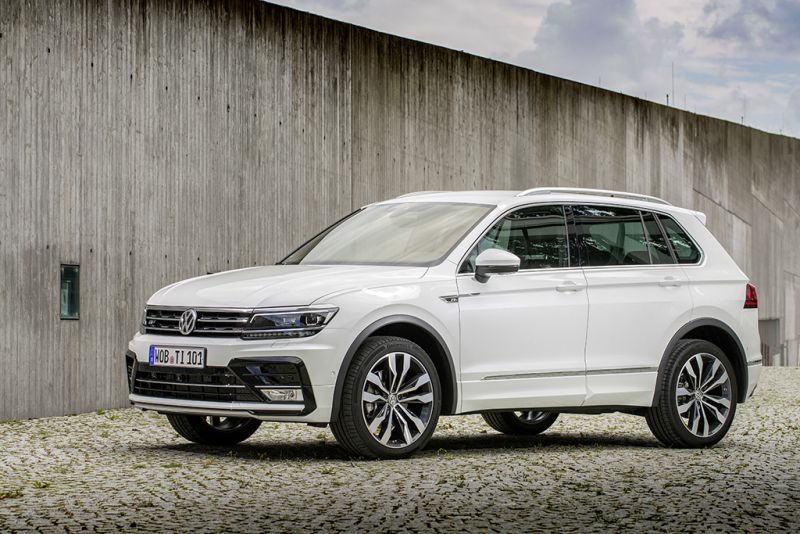
The second-generation Volkswagen Tiguan, including the 1.4 TSI (150 Hp) ACT variant, ushered in a more assertive and contemporary design language compared to its predecessor. With its SUV body type, five doors, and seating for five occupants, it perfectly balances rugged appeal with urban sophistication. The exterior design is characterized by sharper lines, a wider stance, and a more prominent grille that integrates seamlessly with the LED headlights, giving it a commanding road presence. The overall aesthetic is one of robust elegance, typical of Volkswagen’s modern design philosophy, appealing to a broad demographic seeking both style and utility.
Dimensionally, the Tiguan II 1.4 TSI (150 Hp) ACT measures 176.61 inches (4486 mm) in length, 72.4 inches (1839 mm) in width (extending to 82.64 inches or 2099 mm including mirrors), and stands 65.12 inches (1654 mm) tall. These proportions contribute to a spacious and comfortable cabin, while the generous wheelbase of 105.39 inches (2677 mm) further enhances ride quality and interior volume. A ground clearance of 7.52 inches (191 mm) provides adequate capability for light off-road excursions or navigating challenging urban environments, reinforcing its SUV credentials. The minimum turning circle of 37.73 feet (11.5 meters) ensures good maneuverability in tight spaces, a crucial attribute for city driving.
Inside, the Tiguan II prioritizes practicality and comfort. The cabin is thoughtfully designed with high-quality materials and an ergonomic layout. One of its standout features is its impressive cargo capacity. With the rear seats in place, the trunk offers a substantial 21.72 cubic feet (615 liters) of space. Folding down the rear seats expands this volume to a cavernous 58.45 cubic feet (1655 liters), making it exceptionally versatile for hauling luggage, sports equipment, or larger items. This flexibility, combined with a maximum load capacity ranging from 1078.06 to 1554.26 lbs (489-705 kg), underscores the Tiguan’s utility as a family vehicle.
Safety and driving dynamics are well-addressed in this Tiguan variant. The braking system features ventilated discs at the front and solid discs at the rear, complemented by an Anti-lock Braking System (ABS) for enhanced stopping power and control in emergency situations. The steering system employs a rack and pinion design with electric power steering, providing precise feedback and effortless maneuverability at various speeds. The vehicle rides on 215/65 R17 tires mounted on 7J x 17 wheel rims, a configuration that offers a good balance of comfort, grip, and durability. Furthermore, the Tiguan II 1.4 TSI (150 Hp) ACT is equipped for towing, boasting a permitted trailer load with brakes (12%) of 3968.32 lbs (1800 kg), and up to 4409.25 lbs (2000 kg) with brakes (8%), along with a permitted towbar download of 220.46 lbs (100 kg), adding another layer of utility for those needing to transport larger items or recreational vehicles.
Technical Specifications
| Brand | Volkswagen |
| Model | Tiguan |
| Generation | Tiguan II |
| Type (Engine) | 1.4 TSI (150 Hp) ACT |
| Start of production | 2016 year |
| End of production | 2018 year |
| Powertrain Architecture | Internal Combustion engine |
| Body type | SUV |
| Seats | 5 |
| Doors | 5 |
| Fuel consumption (economy) – urban | 7 l/100 km (33.6 US mpg) |
| Fuel consumption (economy) – extra urban | 5.1 l/100 km (46.1 US mpg) |
| Fuel consumption (economy) – combined | 5.8 l/100 km (40.6 US mpg) |
| CO2 emissions | 132 g/km |
| Fuel Type | Petrol (Gasoline) |
| Acceleration 0 – 60 mph | 8.7 sec |
| Maximum speed | 125.52 mph (202 km/h) |
| Emission standard | Euro 6 |
| Power | 150 Hp @ 5000-6000 rpm |
| Torque | 250 Nm (184.39 lb.-ft.) @ 1500-3500 rpm |
| Engine layout | Front, Transverse |
| Engine Model/Code | CZDA, CZEA, CHPB, DJVA |
| Engine displacement | 1395 cm3 (85.13 cu. in.) |
| Number of cylinders | 4 |
| Engine configuration | Inline |
| Number of valves per cylinder | 4 |
| Fuel injection system | Direct injection |
| Engine aspiration | Turbocharger, Intercooler |
| Engine oil capacity | 4 l (4.23 US qt) |
| Engine systems | Start & Stop System, Cylinder deactivation system |
| Kerb Weight | 1415-1631 kg (3119.54 – 3595.74 lbs) |
| Max. weight | 2120 kg (4673.8 lbs) |
| Max load | 489-705 kg (1078.06 – 1554.26 lbs) |
| Trunk (boot) space – minimum | 615 l (21.72 cu. ft.) |
| Trunk (boot) space – maximum | 1655 l (58.45 cu. ft.) |
| Fuel tank capacity | 58 l (15.32 US gal) |
| Max. roof load | 75 kg (165.35 lbs) |
| Permitted trailer load with brakes (8%) | 2000 kg (4409.25 lbs) |
| Permitted trailer load with brakes (12%) | 1800 kg (3968.32 lbs) |
| Permitted trailer load without brakes | 740 kg (1631.42 lbs) |
| Permitted towbar download | 100 kg (220.46 lbs) |
| Length | 4486 mm (176.61 in.) |
| Width | 1839 mm (72.4 in.) |
| Width including mirrors | 2099 mm (82.64 in.) |
| Height | 1654 mm (65.12 in.) |
| Wheelbase | 2677 mm (105.39 in.) |
| Front track | 1579-1589 mm (62.17 – 62.56 in.) |
| Rear (Back) track | 1570-1580 mm (61.81 – 62.2 in.) |
| Ride height (ground clearance) | 191 mm (7.52 in.) |
| Minimum turning circle (turning diameter) | 11.5 m (37.73 ft.) |
| Drivetrain Architecture | Internal combustion engine drives front wheels |
| Drive wheel | Front wheel drive |
| Number of gears and type of gearbox | 6 gears, manual transmission |
| Front brakes | Ventilated discs |
| Rear brakes | Disc |
| Assisting systems | ABS (Anti-lock braking system) |
| Steering type | Steering rack and pinion |
| Power steering | Electric Steering |
| Tires size | 215/65 R17 |
| Wheel rims size | 7J x 17 |