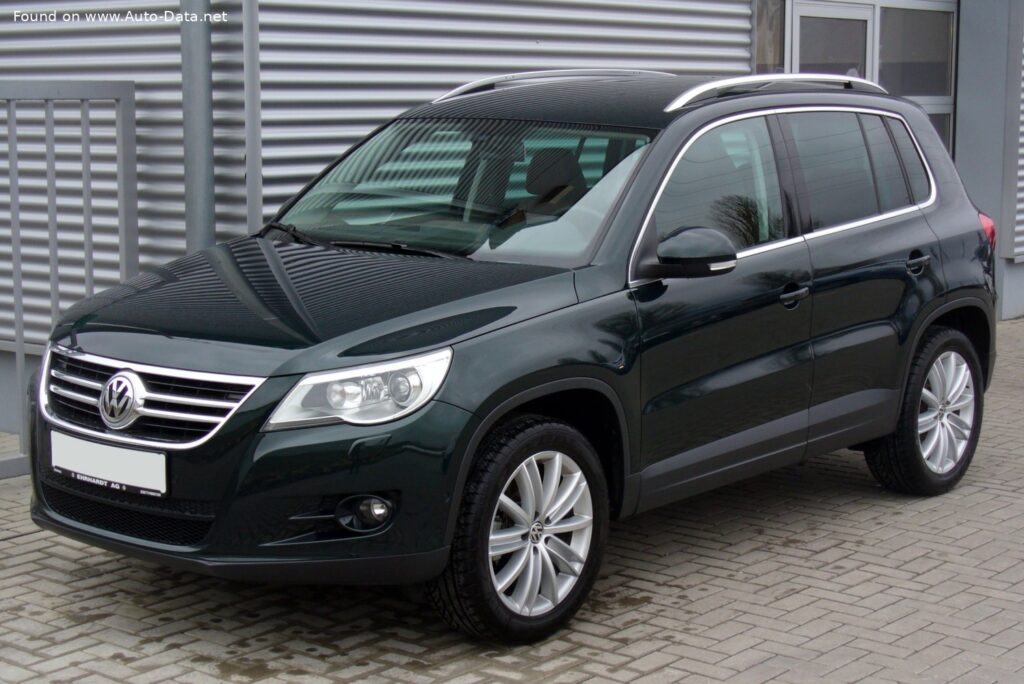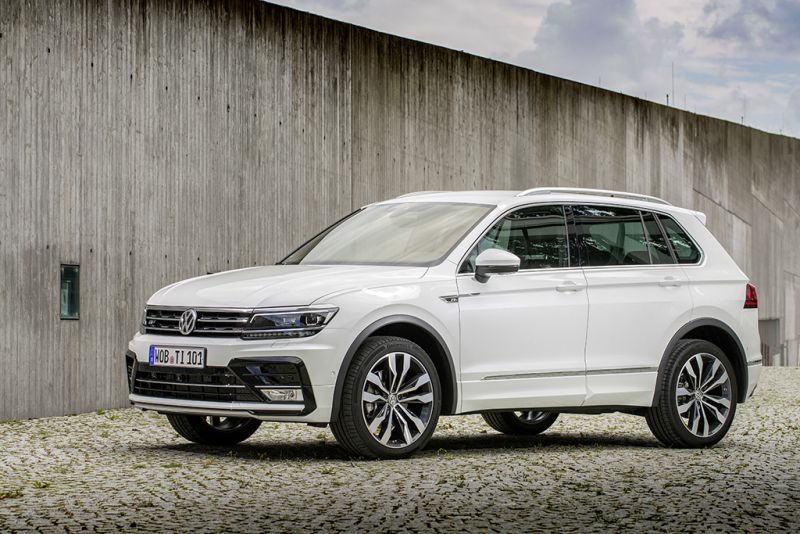
The Volkswagen Tiguan II 2.0 TDI (115 Hp) SCR represents a compelling iteration of Volkswagen’s highly successful compact SUV, specifically tailored for the discerning European market. Introduced in 2019, this particular variant of the second-generation Tiguan underscored Volkswagen’s commitment to efficiency and environmental compliance, even in the popular diesel segment. While the Tiguan nameplate is globally recognized, this specific powertrain configuration, with its emphasis on lower horsepower and advanced emissions control, was primarily aimed at regions with stringent emissions regulations and a strong preference for diesel power, such as Europe. The Tiguan II, built on the versatile MQB platform, quickly established itself as a benchmark in its class, offering a sophisticated blend of driving dynamics, interior refinement, and practical utility. This 2.0 TDI (115 Hp) SCR model, though modest in power output compared to some of its siblings, played a crucial role in providing an accessible entry point into the Tiguan lineup, balancing performance with exceptional fuel economy and reduced environmental impact.
Powertrain and Performance of the Volkswagen Tiguan II 2.0 TDI (115 Hp) SCR
At the heart of the Volkswagen Tiguan II 2.0 TDI (115 Hp) SCR lies a meticulously engineered 2.0-liter (1968 cm³ or 120.09 cu. in.) inline-four turbocharged diesel engine. Codenamed DFGC, this powerplant is a prime example of modern diesel technology, featuring a common rail fuel injection system and an intercooler to optimize combustion efficiency. It delivers a respectable 115 horsepower (Hp) across a broad rev range, peaking between 2750 and 4500 rpm. More significantly for an SUV, it produces a robust 236.02 lb.-ft. (320 Nm) of torque, available from a low 1700 rpm up to 2500 rpm. This substantial torque output at lower engine speeds is crucial for the Tiguan’s everyday drivability, providing strong acceleration from a standstill and effortless cruising, even when laden or tackling inclines. The engine’s architecture includes four valves per cylinder, further enhancing its breathing efficiency and overall performance.
Power is channeled to the front wheels via a precise and engaging 6-speed manual transmission, a choice that appeals to drivers who prefer direct control over gear changes and can contribute to maximizing fuel efficiency. This front-wheel-drive setup is typical for entry-level Tiguan models, offering a lighter curb weight and reduced mechanical complexity compared to all-wheel-drive variants. Performance figures for this model are geared towards practicality and economy rather than outright speed. The Tiguan II 2.0 TDI (115 Hp) SCR accelerates from 0 to 60 mph in a computed 10.4 seconds, with a 0-100 km/h time of 10.9 seconds. Its maximum speed reaches 114.95 mph (185 km/h), making it perfectly capable for highway travel across Europe. The vehicle’s weight-to-power ratio stands at 13.3 kg/Hp (75.4 Hp/tonne), while the weight-to-torque ratio is 4.8 kg/Nm (209.8 Nm/tonne), indicating a well-balanced power-to-weight distribution for its intended purpose.
A key highlight of this powertrain is its exceptional fuel economy and environmental credentials. The Tiguan II 2.0 TDI (115 Hp) SCR boasts an impressive combined fuel consumption of 4.7 liters per 100 kilometers, translating to an outstanding 50 US mpg. Urban driving yields 43.6-42.8 US mpg, while extra-urban cycles can achieve 56-54.7 US mpg, underscoring its efficiency on longer journeys. Compliance with the stringent Euro 6 emission standard is achieved through a suite of advanced technologies, including a Start & Stop System that conserves fuel in traffic, a Particulate Filter to trap harmful soot, and Selective Catalytic Reduction (SCR) technology, which utilizes a 12-liter AdBlue tank to reduce nitrogen oxide (NOx) emissions. These features result in CO2 emissions ranging from 122 to 124 g/km, positioning this Tiguan variant as an environmentally conscious choice in the SUV segment.
Design, Interior, and Features
The Volkswagen Tiguan II, including the 2.0 TDI (115 Hp) SCR variant, embodies a sophisticated and timeless design language that is both robust and elegant. As a compact SUV, it features a practical 5-door, 5-seat body type, making it an ideal family vehicle. Its exterior dimensions contribute to its commanding road presence while maintaining maneuverability. With a length of 176.61 inches (4486 mm), a width of 72.4 inches (1839 mm) (82.64 inches or 2099 mm including mirrors), and a height of 65.12 inches (1654 mm), the Tiguan strikes a balance between interior spaciousness and urban agility. The wheelbase measures 105.39 inches (2677 mm), providing a stable ride and generous cabin room. A ground clearance of 7.52 inches (191 mm) offers confidence on varied terrain, while a minimum turning circle of 37.73 feet (11.5 meters) ensures ease of parking and navigation in tight spaces.
Inside, the Tiguan II offers a meticulously crafted cabin characterized by high-quality materials, ergonomic design, and intuitive controls. The focus is on functionality and comfort, with supportive seating for five adults. Practicality is a strong suit, exemplified by the cavernous trunk space, which offers a minimum of 21.72 cubic feet (615 liters) with all seats in place. Folding down the rear seats expands this capacity significantly to a maximum of 58.45 cubic feet (1655 liters), accommodating large items or luggage for extended trips. Further enhancing its utility, the Tiguan boasts a substantial towing capacity, capable of pulling up to 4409.25 lbs. (2000 kg) with braked trailers (at 8% incline) or 3968.32 lbs. (1800 kg) (at 12% incline), and 1653.47 lbs. (750 kg) for unbraked trailers. A maximum roof load of 165.35 lbs. (75 kg) and a permitted towbar download of 220.46 lbs. (100 kg) add to its versatility.
For occupant safety and driving dynamics, the Tiguan II is equipped with a comprehensive suite of features. The braking system comprises ventilated discs at the front and solid discs at the rear, coupled with an Anti-lock Braking System (ABS) for optimal stopping power and stability. Steering is handled by an electric power steering system with a rack and pinion setup, providing precise feedback and effortless maneuverability at various speeds. The vehicle rides on 215/65 R17 tires mounted on 7J x 17 wheel rims, a combination that ensures a comfortable ride and confident grip. While specific infotainment and connectivity features are trim-dependent, the Tiguan II generation typically offered a range of modern amenities, including touchscreen displays, smartphone integration, and advanced driver-assistance systems, further cementing its appeal as a contemporary and well-rounded compact SUV in its segment.
Technical Specifications
| Brand | Volkswagen |
| Model | Tiguan |
| Generation | Tiguan II |
| Type (Engine) | 2.0 TDI (115 Hp) SCR |
| Start of production | 2019 year |
| End of production | 2019 year |
| Powertrain Architecture | Internal Combustion engine |
| Body type | SUV |
| Seats | 5 |
| Doors | 5 |
| Fuel consumption (economy) – urban | 5.4-5.5 l/100 km (43.6 – 42.8 US mpg) |
| Fuel consumption (economy) – extra urban | 4.2-4.3 l/100 km (56 – 54.7 US mpg) |
| Fuel consumption (economy) – combined | 4.7 l/100 km (50 US mpg) |
| CO2 emissions | 122-124 g/km |
| Fuel Type | Diesel |
| Acceleration 0 – 60 mph | 10.4 sec |
| Acceleration 0 – 100 km/h | 10.9 sec |
| Maximum speed | 114.95 mph (185 km/h) |
| Emission standard | Euro 6 |
| Weight-to-power ratio | 13.3 kg/Hp, 75.4 Hp/tonne |
| Weight-to-torque ratio | 4.8 kg/Nm, 209.8 Nm/tonne |
| Power | 115 Hp @ 2750-4500 rpm |
| Power per liter | 58.4 Hp/l |
| Torque | 236.02 lb.-ft. (320 Nm) @ 1700-2500 rpm |
| Engine layout | Front, Transverse |
| Engine Model/Code | DFGC |
| Engine displacement | 120.09 cu. in. (1968 cm³) |
| Number of cylinders | 4 |
| Engine configuration | Inline |
| Number of valves per cylinder | 4 |
| Fuel injection system | Diesel Commonrail |
| Engine aspiration | Turbocharger, Intercooler |
| Engine oil capacity | 4.97 US qt (4.7 l) |
| Engine systems | Start & Stop System, Particulate filter |
| Kerb Weight | 3362.05 lbs. (1525 kg) |
| Max. weight | 4519.48 lbs. (2050 kg) |
| Max load | 1157.43 lbs. (525 kg) |
| Trunk (boot) space – minimum | 21.72 cu. ft. (615 l) |
| Trunk (boot) space – maximum | 58.45 cu. ft. (1655 l) |
| Fuel tank capacity | 15.32 US gal (58 l) |
| AdBlue tank | 3.17 US gal (12 l) |
| Max. roof load | 165.35 lbs. (75 kg) |
| Permitted trailer load with brakes (8%) | 4409.25 lbs. (2000 kg) |
| Permitted trailer load with brakes (12%) | 3968.32 lbs. (1800 kg) |
| Permitted trailer load without brakes | 1653.47 lbs. (750 kg) |
| Permitted towbar download | 220.46 lbs. (100 kg) |
| Length | 176.61 in. (4486 mm) |
| Width | 72.4 in. (1839 mm) |
| Width including mirrors | 82.64 in. (2099 mm) |
| Height | 65.12 in. (1654 mm) |
| Wheelbase | 105.39 in. (2677 mm) |
| Front track | 62.17 – 62.56 in. (1579-1589 mm) |
| Rear (Back) track | 61.81 – 62.2 in. (1570-1580 mm) |
| Ride height (ground clearance) | 7.52 in. (191 mm) |
| Minimum turning circle (turning diameter) | 37.73 ft. (11.5 m) |
| Drivetrain Architecture | The Internal combustion engine (ICE) drives the front wheels of the vehicle. |
| Drive wheel | Front wheel drive |
| Number of gears and type of gearbox | 6 gears, manual transmission |
| Front brakes | Ventilated discs |
| Rear brakes | Disc |
| Assisting systems | ABS (Anti-lock braking system) |
| Steering type | Steering rack and pinion |
| Power steering | Electric Steering |
| Tires size | 215/65 R17 |
| Wheel rims size | 7J x 17 |