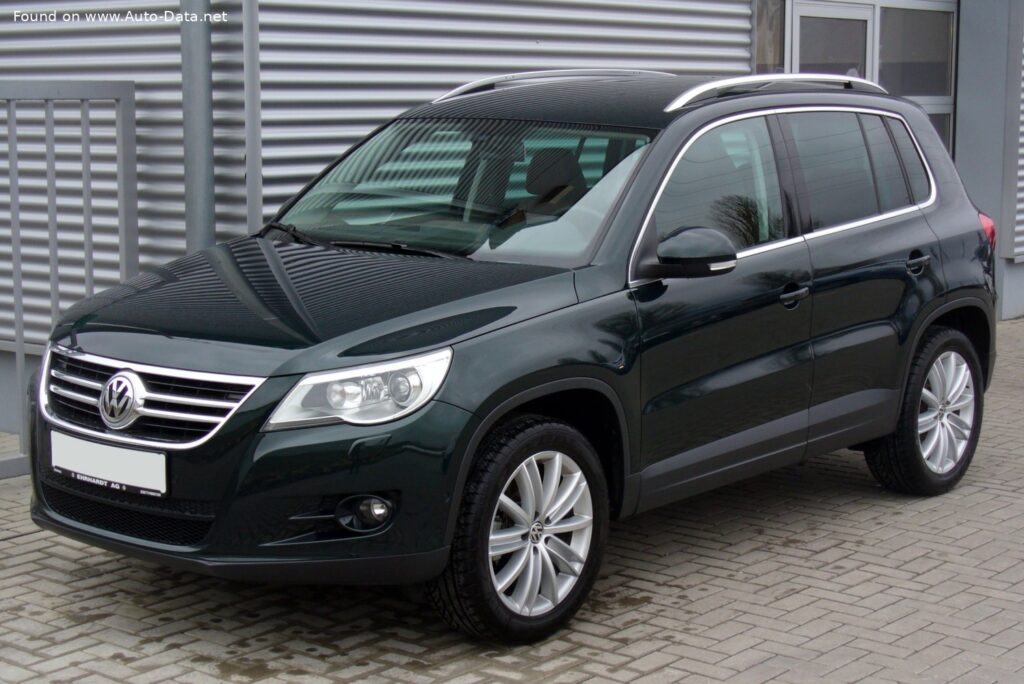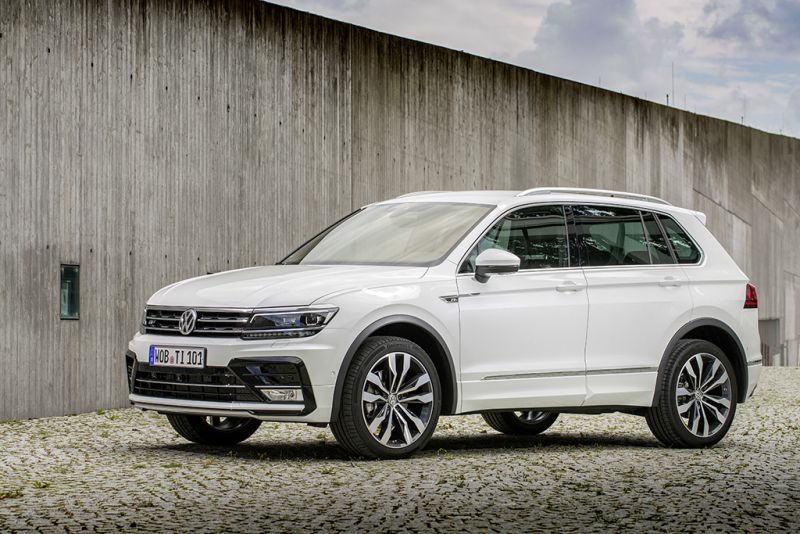
The Volkswagen Tiguan II 2.0 TDI (150 Hp) SCR represents a significant iteration in the German automaker’s highly successful compact SUV lineup. Launched in 2016 and produced through 2018, this second-generation Tiguan marked a notable evolution from its predecessor, adopting Volkswagen Group’s versatile MQB platform. While the Tiguan is a global phenomenon, this specific 2.0-liter turbocharged diesel (TDI) variant with Selective Catalytic Reduction (SCR) technology was particularly crucial for its performance and market appeal in Europe, where diesel engines historically commanded a substantial market share due to their efficiency and robust torque characteristics. Positioned as a practical yet sophisticated family vehicle, the Tiguan II aimed to blend SUV versatility with passenger car refinement, offering a compelling package of modern technology, efficient powertrains, and a spacious interior, all wrapped in a contemporary design.
Engine & Performance: The {Volkswagen Tiguan II 2.0 TDI (150 Hp) SCR} Powertrain
At the heart of this particular Tiguan II variant is a potent and highly efficient 2.0-liter, inline four-cylinder TDI engine. With a displacement of 1968 cm³ (approximately 120.09 cu. in.), this powerplant delivers a respectable 150 horsepower, achieved between 3500 and 4000 revolutions per minute (rpm). More impressively for an SUV, it generates a substantial 250.77 lb.-ft. (340 Nm) of torque, available across a broad and usable range from 1750 to 3000 rpm. This ample torque at lower engine speeds is a hallmark of diesel engines and contributes significantly to the Tiguan’s effortless acceleration and strong pulling power, whether navigating city streets or cruising on the highway.
The engine’s layout is front, transverse, driving the front wheels through a precise 6-speed manual transmission, a common and engaging setup for the European market. Key engine technologies include a common rail fuel injection system, ensuring precise fuel delivery, and a turbocharger with an intercooler, which boosts power and efficiency by compressing and cooling the intake air. The “TDI” designation signifies Volkswagen’s advanced Turbocharged Direct Injection system, renowned for its balance of power, economy, and durability. Furthermore, the “SCR” (Selective Catalytic Reduction) system is critical for meeting stringent European emissions standards, specifically Euro 6. This technology injects a urea-based additive (AdBlue) into the exhaust gases, converting harmful nitrogen oxides (NOx) into harmless nitrogen and water vapor, thereby significantly reducing the vehicle’s environmental footprint.
Performance figures for the Tiguan II 2.0 TDI (150 Hp) SCR underscore its capable nature. It accelerates from 0 to 60 mph in a brisk 8.8 seconds and can reach a maximum speed of 126.76 mph (204 km/h). These figures demonstrate that despite its focus on efficiency, the Tiguan doesn’t compromise on dynamic performance. Fuel economy is a strong suit for this diesel variant, with a combined rating of 49-50 US mpg (4.8-4.7 l/100 km), an impressive figure for a vehicle of its size and capability. Urban driving yields 40.6-41.3 US mpg, while extra-urban cruising can see figures as high as 56 US mpg. These efficiency metrics, combined with CO2 emissions of 125-123 g/km, highlight its economic and ecological advantages in its class. Further contributing to its efficiency are features like a Start & Stop System, which automatically shuts off the engine when the vehicle is stationary, and a Particulate Filter, which traps soot from the exhaust gases.
Design & Features: Practicality Meets Modern Aesthetics
The Volkswagen Tiguan II, in its 2.0 TDI (150 Hp) SCR configuration, embodies the contemporary design language of the brand, characterized by sharp lines, a wide stance, and a confident road presence. As a compact SUV, it offers a versatile and practical body type with 5 doors and comfortable seating for 5 occupants. The dimensions are well-proportioned for its segment, with a length of 176.61 inches (4486 mm), a width of 72.4 inches (1839 mm), and a height of 65.12 inches (1654 mm). The generous wheelbase of 105.39 inches (2677 mm) contributes to both interior space and ride comfort, while a ground clearance of 7.52 inches (191 mm) provides adequate capability for light off-road excursions or navigating challenging urban environments.
Inside, the Tiguan II prioritizes ergonomics and functionality, offering a well-appointed cabin with high-quality materials and intuitive controls. The trunk space is particularly impressive for its class, ranging from a minimum of 21.72 cubic feet (615 liters) with all seats up, expanding to a cavernous 58.45 cubic feet (1655 liters) when the rear seats are folded down. This flexibility makes the Tiguan an ideal choice for families and individuals requiring substantial cargo capacity for luggage, groceries, or sports equipment. Practical features extend to a maximum roof load of 165.35 lbs (75 kg) and robust towing capabilities, with a permitted trailer load of up to 4850.17 lbs (2200 kg) with brakes (8% gradient), highlighting its utility for adventurous lifestyles.
Underneath its stylish exterior, the Tiguan II is engineered for a composed and comfortable ride. It features an independent multi-link suspension at the front and an independent coil spring setup at the rear, providing a balanced blend of handling precision and ride comfort. Braking is handled by ventilated discs at the front and solid discs at the rear, complemented by an Anti-lock Braking System (ABS) for enhanced safety during emergency stops. The electric power steering system, a rack and pinion type, offers responsive and precise control, making the Tiguan agile in urban settings and stable at higher speeds. A minimum turning circle of 37.73 feet (11.5 meters) further aids maneuverability. The vehicle is equipped with a range of tire sizes from 215/65 R17 to 255/40 R20, mounted on wheel rims ranging from 7J x 17 to 8J x 20, allowing for various aesthetic and performance preferences.
Technical Specifications
| Brand | Volkswagen |
| Model | Tiguan |
| Generation | Tiguan II |
| Type (Engine) | 2.0 TDI (150 Hp) SCR |
| Start of production | 2016 year |
| End of production | 2018 year |
| Powertrain Architecture | Internal Combustion engine |
| Body type | SUV |
| Seats | 5 |
| Doors | 5 |
| Fuel consumption (economy) – urban | 5.8-5.7 l/100 km (40.6 – 41.3 US mpg) |
| Fuel consumption (economy) – extra urban | 4.2 l/100 km (56 US mpg) |
| Fuel consumption (economy) – combined | 4.8-4.7 l/100 km (49 – 50 US mpg) |
| CO2 emissions | 125-123 g/km |
| Fuel Type | Diesel |
| Acceleration 0 – 60 mph | 8.8 sec |
| Maximum speed | 126.76 mph (204 km/h) |
| Emission standard | Euro 6 |
| Weight-to-power ratio | 10 kg/Hp (100.5 Hp/tonne) |
| Weight-to-torque ratio | 4.4 kg/Nm (227.7 Nm/tonne) |
| Power | 150 Hp @ 3500-4000 rpm |
| Power per litre | 76.2 Hp/l |
| Torque | 250.77 lb.-ft. @ 1750-3000 rpm (340 Nm) |
| Engine layout | Front, Transverse |
| Engine Model/Code | DBGA, DBGC, DCYA, DFGA |
| Engine displacement | 120.09 cu. in. (1968 cm3) |
| Number of cylinders | 4 |
| Engine configuration | Inline |
| Number of valves per cylinder | 4 |
| Fuel injection system | Diesel Commonrail |
| Engine aspiration | Turbocharger, Intercooler |
| Engine oil capacity | 4.97 US qt (4.7 l) |
| Engine systems | Start & Stop System, Particulate filter |
| Kerb Weight | 3291.5 – 3820.61 lbs. (1493-1733 kg) |
| Max. weight | 4872.22 lbs. (2210 kg) |
| Max load | 1051.6 – 1580.71 lbs. (477-717 kg) |
| Trunk (boot) space – minimum | 21.72 cu. ft. (615 l) |
| Trunk (boot) space – maximum | 58.45 cu. ft. (1655 l) |
| Fuel tank capacity | 15.32 US gal (58 l) |
| Max. roof load | 165.35 lbs. (75 kg) |
| Permitted trailer load with brakes (8%) | 4850.17 lbs. (2200 kg) |
| Permitted trailer load with brakes (12%) | 4409.25 lbs. (2000 kg) |
| Permitted trailer load without brakes | 1653.47 lbs. (750 kg) |
| Permitted towbar download | 220.46 lbs. (100 kg) |
| Length | 176.61 in. (4486 mm) |
| Width | 72.4 in. (1839 mm) |
| Width including mirrors | 82.64 in. (2099 mm) |
| Height | 65.12 in. (1654 mm) |
| Wheelbase | 105.39 in. (2677 mm) |
| Front track | 62.17 – 62.56 in. (1579-1589 mm) |
| Rear (Back) track | 61.81 – 62.2 in. (1570-1580 mm) |
| Ride height (ground clearance) | 7.52 in. (191 mm) |
| Minimum turning circle (turning diameter) | 37.73 ft. (11.5 m) |
| Drivetrain Architecture | Internal combustion engine (ICE) drives the front wheels |
| Drive wheel | Front wheel drive |
| Number of gears and type of gearbox | 6 gears, manual transmission |
| Front suspension | Independent multi-link suspension |
| Rear suspension | Independent coil spring |
| Front brakes | Ventilated discs |
| Rear brakes | Disc |
| Assisting systems | ABS (Anti-lock braking system) |
| Steering type | Steering rack and pinion |
| Power steering | Electric Steering |
| Tires size | 215/65 R17; 235/55 R18; 235/50 R19; 255/45 R19; 235/45 R20; 255/40 R20 |
| Wheel rims size | 7J x 17; 7J x 18; 7J x 19; 8J x 20 |