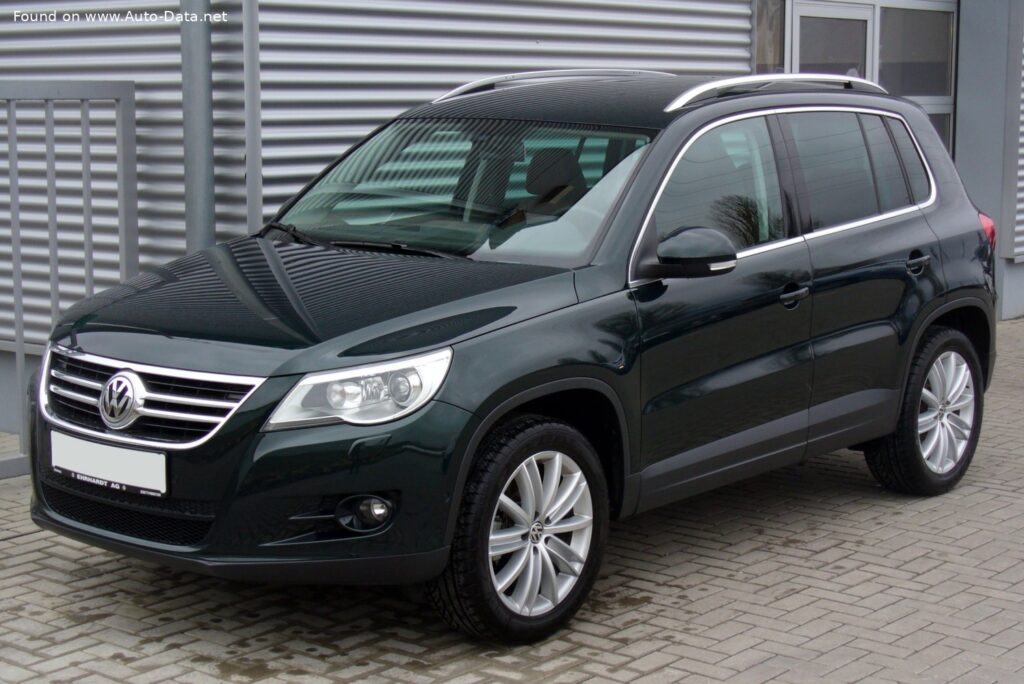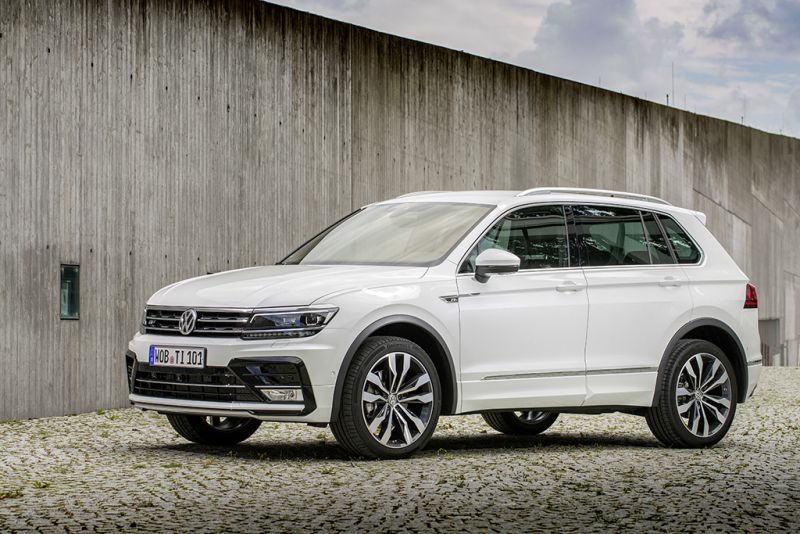
The Volkswagen Tiguan II 2.0 TDI (150 Hp) SCR represents a compelling iteration of the German automaker’s highly successful compact crossover SUV, specifically tailored for the European and international markets where diesel powertrains remain a popular and efficient choice. Launched in 2019, this particular variant of the second-generation Tiguan encapsulates Volkswagen’s commitment to combining practicality, refined driving dynamics, and environmental consciousness within a versatile family vehicle. While not directly offered with this specific diesel engine configuration in the United States, its technical prowess and design philosophy are emblematic of the global automotive landscape, showcasing advanced diesel technology that offers a blend of performance and remarkable fuel economy. The Tiguan II, built on the Volkswagen Group’s modular transverse matrix (MQB) platform, brought significant advancements over its predecessor, including a more spacious interior, sharper styling, and an array of sophisticated technologies, cementing its position as a segment leader in its primary markets.
Engine and Performance of the Volkswagen Tiguan II 2.0 TDI (150 Hp) SCR
At the heart of the Volkswagen Tiguan II 2.0 TDI (150 Hp) SCR lies a robust and efficient 2.0-liter (1968 cm3 or 120.09 cu. in.) turbocharged diesel engine, a cornerstone of Volkswagen’s powertrain offerings. This inline four-cylinder engine, identified by codes such as DBGA, DBGC, DCYA, or DFGA, delivers a potent 150 horsepower (Hp) at a versatile rev range of 3500-4000 rpm. Its impressive power output for its displacement translates to a power per liter figure of 76.2 Hp/l, indicative of its advanced engineering. Crucially for an SUV, the engine generates a substantial 340 Nm (250.77 lb.-ft.) of torque, available across a broad and usable band from 1750 to 3000 rpm. This ample torque ensures strong acceleration and effortless cruising, particularly beneficial for highway driving and when the vehicle is laden or towing. The engine’s layout is front, transverse, contributing to efficient packaging and interior space.
The powertrain architecture for this variant is an internal combustion engine driving the front wheels, paired with a precise 6-speed manual transmission. This combination provides an engaging driving experience, allowing the driver direct control over gear selection. Performance figures are respectable for a vehicle of its class and focus on efficiency. The Tiguan II 2.0 TDI can accelerate from 0 to 62 mph (0-100 km/h) in 9.3 seconds, with an estimated 0-60 mph sprint achieved in approximately 8.8 seconds. Its maximum speed reaches 126.76 mph (204 km/h), demonstrating its capability for sustained highway speeds. The engine incorporates a sophisticated Diesel Commonrail fuel injection system, augmented by a turbocharger and intercooler, to optimize combustion and efficiency. Furthermore, this variant is equipped with a Start & Stop System and a Particulate filter, alongside an AdBlue tank with a capacity of 3.17 US gallons (12 liters), ensuring compliance with stringent Euro 6 emission standards and contributing to its remarkably low CO2 emissions of 125-126 g/km.
Fuel efficiency is a significant highlight of the Volkswagen Tiguan II 2.0 TDI (150 Hp) SCR. The combined fuel consumption is rated at an impressive 4.8 l/100 km, which translates to approximately 49 US mpg or 58.9 UK mpg. For urban driving, it achieves 5.6 l/100 km (42 US mpg), while extra-urban conditions yield an outstanding 4.3 l/100 km (54.7 US mpg). These figures underscore the vehicle’s economical operation, making it an attractive option for long-distance commuters and families seeking reduced running costs. The engine oil capacity is 4.7 liters (4.97 US quarts), ensuring adequate lubrication for sustained performance and longevity.
Design and Features
The Volkswagen Tiguan II, with its SUV body type, embodies a contemporary and purposeful design language that is both elegant and robust. With 5 doors and seating for 5 occupants, it offers a practical and comfortable environment for families and individuals alike. The exterior styling is characterized by sharp lines, a distinctive grille, and a well-proportioned silhouette that projects a confident stance on the road. Its dimensions are optimized for maneuverability in urban settings while providing ample interior space. Measuring 176.61 inches (4486 mm) in length, 72.4 inches (1839 mm) in width (82.64 inches or 2099 mm including mirrors), and 65.12 inches (1654 mm) in height, the Tiguan II strikes an excellent balance between a compact footprint and a commanding presence.
The interior of the Tiguan II is designed with a focus on ergonomics, quality materials, and intuitive technology. While specific trim levels and features can vary, the core design emphasizes comfort and utility. Practicality is a strong suit, exemplified by its generous cargo capacity. The trunk (boot) space ranges from a substantial 21.72 cu. ft. (615 liters) with all seats in place, expanding to a cavernous 58.45 cu. ft. (1655 liters) when the rear seats are folded down. This flexibility makes the Tiguan II highly capable for carrying luggage, groceries, or larger items, catering to diverse lifestyle needs. The vehicle also boasts impressive towing capabilities, with a permitted trailer load of 4850.17 lbs (2200 kg) with brakes (8% gradient) or 4409.25 lbs (2000 kg) (12% gradient), and 1653.47 lbs (750 kg) without brakes, further enhancing its versatility.
Safety and driver assistance systems are integral to the Tiguan II’s appeal. This variant includes Anti-lock Braking System (ABS) as standard, providing crucial stability during emergency braking. The steering system features a responsive rack and pinion setup with electric power steering, offering precise control and ease of maneuverability, particularly in tight parking situations, as evidenced by its minimum turning circle of 37.73 ft (11.5 m). The vehicle’s ground clearance of 7.52 inches (191 mm) provides sufficient capability for light off-road excursions or navigating challenging urban terrain. Various tire and wheel options are available, ranging from 215/65 R17 to 255/40 R20, mounted on wheel rims from 7J x 17 to 8J x 20, allowing for customization of both aesthetics and driving dynamics.
Drivetrain, Chassis, and Suspension
The driving dynamics of the Volkswagen Tiguan II 2.0 TDI (150 Hp) SCR are underpinned by a well-engineered drivetrain and chassis. The vehicle employs a front-wheel-drive architecture, where the internal combustion engine directly powers the front wheels. This setup is common for compact SUVs, offering a good balance of traction, efficiency, and cost-effectiveness. The 6-speed manual transmission provides a direct and engaging connection between the driver and the powertrain, allowing for precise gear changes and optimizing the engine’s performance and fuel economy across various driving conditions.
For ride comfort and handling stability, the Tiguan II features an independent multi-link suspension at the front, designed to effectively absorb road imperfections and maintain tire contact. The rear suspension utilizes an independent coil spring setup, which further enhances comfort and ensures predictable handling characteristics, even when the vehicle is fully loaded. This independent suspension system on all four wheels contributes to the Tiguan’s refined ride quality, a hallmark of Volkswagen engineering.
Braking performance is managed by ventilated discs at the front and solid discs at the rear, providing strong and consistent stopping power. The inclusion of ABS (Anti-lock Braking System) as a standard assisting system enhances control during hard braking, preventing wheel lock-up and allowing the driver to maintain steering ability. The electric power steering system is speed-sensitive, providing lighter steering effort at low speeds for easier parking and a firmer, more controlled feel at higher speeds for enhanced stability. This comprehensive chassis and drivetrain package ensures that the Volkswagen Tiguan II 2.0 TDI (150 Hp) SCR delivers a confident, comfortable, and secure driving experience, whether navigating city streets or cruising on the open highway.
Dimensions, Weight, and Capacities
The Volkswagen Tiguan II 2.0 TDI (150 Hp) SCR is designed with practical considerations for everyday use, reflected in its carefully balanced dimensions, weight, and capacities. With a wheelbase of 105.39 inches (2677 mm), it provides a stable platform and contributes significantly to the spaciousness of the cabin. The front track measures between 62.17 and 62.56 inches (1579-1589 mm), while the rear track spans 61.81 to 62.2 inches (1570-1580 mm), ensuring a wide and stable footprint that enhances handling and road presence. The vehicle’s curb weight stands at 3373.07 lbs (1530 kg), a testament to its solid construction and safety engineering. When fully loaded, its maximum weight reaches 4872.22 lbs (2210 kg), allowing for a maximum payload of 1499.14 lbs (680 kg). This generous load capacity, combined with a maximum roof load of 165.35 lbs (75 kg), underlines its utility for various applications, from family trips to carrying sports equipment.
Fuel tank capacity is a practical 15.32 US gallons (58 liters), providing a substantial range given its excellent fuel economy figures. This allows for fewer stops at the pump during long journeys, enhancing convenience. The AdBlue tank, essential for its SCR (Selective Catalytic Reduction) system, holds 3.17 US gallons (12 liters), ensuring the vehicle maintains its low emission profile over extended periods before requiring a refill. These capacities, alongside the ample trunk space and robust towing capabilities, collectively establish the Volkswagen Tiguan II 2.0 TDI (150 Hp) SCR as a highly functional and versatile SUV, well-suited to the demands of modern European and global markets where efficiency, space, and capability are paramount.
Technical Specifications of the Volkswagen Tiguan II 2.0 TDI (150 Hp) SCR
| Brand | Volkswagen |
| Model | Tiguan |
| Generation | Tiguan II |
| Type (Engine) | 2.0 TDI (150 Hp) SCR |
| Start of production | 2019 year |
| End of production | 2019 year |
| Powertrain Architecture | Internal Combustion engine |
| Body type | SUV |
| Seats | 5 |
| Doors | 5 |
| Fuel consumption (economy) – urban | 5.6 l/100 km (42 US mpg) |
| Fuel consumption (economy) – extra urban | 4.3 l/100 km (54.7 US mpg) |
| Fuel consumption (economy) – combined | 4.8 l/100 km (49 US mpg) |
| CO2 emissions | 125-126 g/km |
| Fuel Type | Diesel |
| Acceleration 0 – 60 mph | 8.8 sec |
| Acceleration 0 – 100 km/h | 9.3 sec |
| Maximum speed | 126.76 mph (204 km/h) |
| Emission standard | Euro 6 |
| Weight-to-power ratio | 10.2 kg/Hp (98 Hp/tonne) |
| Weight-to-torque ratio | 4.5 kg/Nm (222.2 Nm/tonne) |
| Power | 150 Hp @ 3500-4000 rpm |
| Power per litre | 76.2 Hp/l |
| Torque | 340 Nm (250.77 lb.-ft.) @ 1750-3000 rpm |
| Engine layout | Front, Transverse |
| Engine Model/Code | DBGA, DBGC, DCYA, DFGA |
| Engine displacement | 1968 cm3 (120.09 cu. in.) |
| Number of cylinders | 4 |
| Engine configuration | Inline |
| Number of valves per cylinder | 4 |
| Fuel injection system | Diesel Commonrail |
| Engine aspiration | Turbocharger, Intercooler |
| Engine oil capacity | 4.7 l (4.97 US qt) |
| Engine systems | Start & Stop System, Particulate filter |
| Kerb Weight | 1530 kg (3373.07 lbs) |
| Max. weight | 2210 kg (4872.22 lbs) |
| Max load | 680 kg (1499.14 lbs) |
| Trunk (boot) space – minimum | 615 l (21.72 cu. ft.) |
| Trunk (boot) space – maximum | 1655 l (58.45 cu. ft.) |
| Fuel tank capacity | 58 l (15.32 US gal) |
| AdBlue tank | 12 l (3.17 US gal) |
| Max. roof load | 75 kg (165.35 lbs) |
| Permitted trailer load with brakes (8%) | 2200 kg (4850.17 lbs) |
| Permitted trailer load with brakes (12%) | 2000 kg (4409.25 lbs) |
| Permitted trailer load without brakes | 750 kg (1653.47 lbs) |
| Permitted towbar download | 100 kg (220.46 lbs) |
| Length | 4486 mm (176.61 in.) |
| Width | 1839 mm (72.4 in.) |
| Width including mirrors | 2099 mm (82.64 in.) |
| Height | 1654 mm (65.12 in.) |
| Wheelbase | 2677 mm (105.39 in.) |
| Front track | 1579-1589 mm (62.17 – 62.56 in.) |
| Rear (Back) track | 1570-1580 mm (61.81 – 62.2 in.) |
| Ride height (ground clearance) | 191 mm (7.52 in.) |
| Minimum turning circle (turning diameter) | 11.5 m (37.73 ft.) |
| Drivetrain Architecture | Front wheel drive (ICE drives front wheels) |
| Drive wheel | Front wheel drive |
| Number of gears and type of gearbox | 6 gears, manual transmission |
| Front suspension | Independent multi-link suspension |
| Rear suspension | Independent coil spring |
| Front brakes | Ventilated discs |
| Rear brakes | Disc |
| Assisting systems | ABS (Anti-lock braking system) |
| Steering type | Steering rack and pinion |
| Power steering | Electric Steering |
| Tires size | 215/65 R17; 235/55 R18; 235/50 R19; 255/45 R19; 235/45 R20; 255/40 R20 |
| Wheel rims size | 7J x 17; 7J x 18; 7J x 19; 8J x 20 |