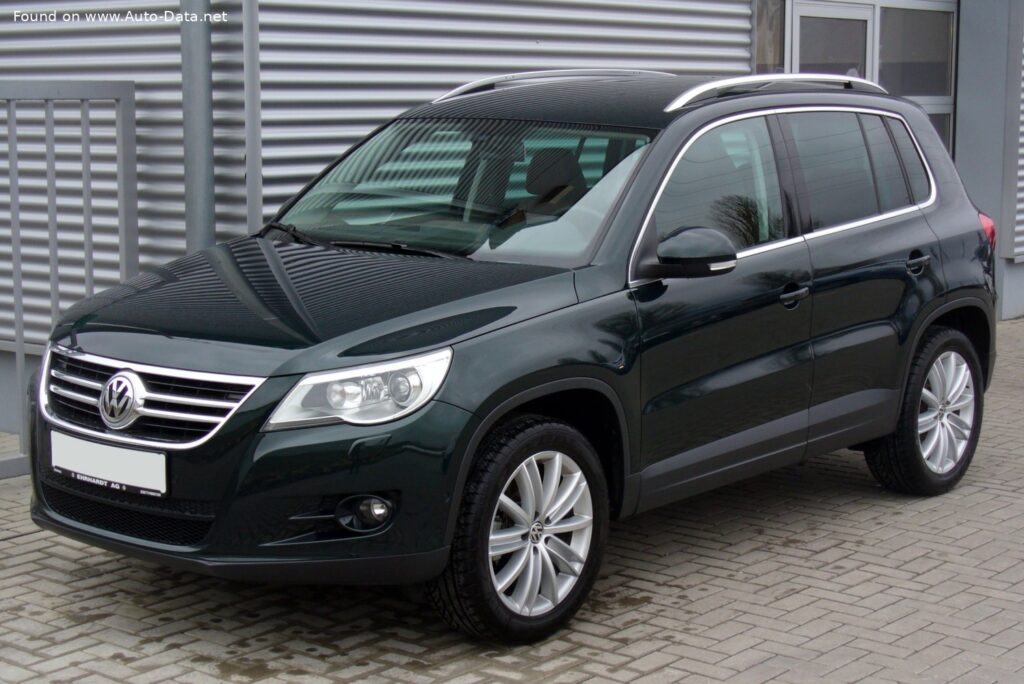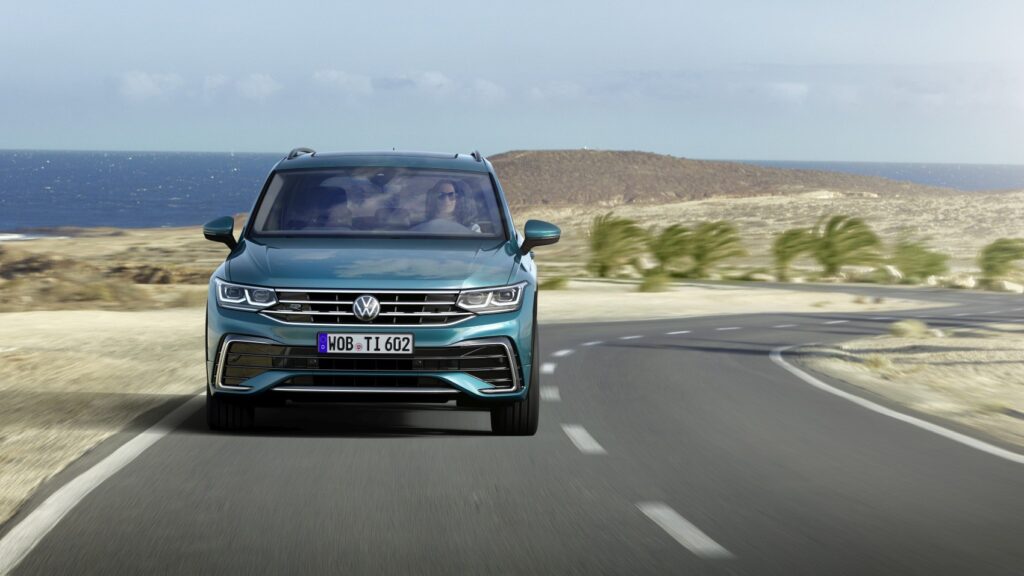
The Volkswagen Tiguan II, particularly the facelifted version released in 2020, represents a significant iteration of Volkswagen’s popular compact SUV. Positioned as a global model, the Tiguan caters to a broad market segment seeking a practical, comfortable, and technologically equipped vehicle. While the Tiguan enjoys widespread success in Europe and other international markets, it’s a key player in the competitive North American SUV landscape, offering a blend of German engineering and everyday usability. The 1.5 TSI (150 Hp) ACT variant, equipped with Active Cylinder Technology, was a prominent offering during the 2020-2023 production run, focusing on fuel efficiency without sacrificing performance.
Volkswagen Tiguan II (Facelift 2020) 1.5 TSI ACT: An Overview
The Tiguan II, launched initially in 2016, underwent a substantial facelift in 2020, bringing with it revised styling, updated technology, and refined engine options. The 1.5 TSI ACT model is characterized by its turbocharged, direct-injection gasoline engine, paired with a six-speed manual transmission in many markets. The “ACT” designation refers to Volkswagen’s Active Cylinder Technology, a system designed to enhance fuel economy by deactivating two cylinders under light load conditions. This feature, combined with other efficiency measures, positions the Tiguan as a relatively economical choice within its class. The facelift brought changes to the front and rear fascias, interior trim, and available driver-assistance systems, further solidifying the Tiguan’s appeal.
Engine & Performance
The heart of the Tiguan II 1.5 TSI ACT is a 1.5-liter inline-four cylinder gasoline engine, producing 150 horsepower (Hp) and 250 Newton-meters (184.39 lb.-ft.) of torque between 1500 and 3500 rpm. This engine utilizes direct fuel injection and a turbocharger with an intercooler to deliver a balance of power and efficiency. The Active Cylinder Technology (ACT) is a key component of its fuel-saving strategy. Under partial load, the system shuts down the second and third cylinders, effectively running the engine as a two-cylinder unit. This reduces pumping losses and improves fuel consumption. The engine’s power-to-liter ratio is a respectable 100.1 Hp/l. The front-wheel-drive configuration, coupled with the six-speed manual transmission, allows for a maximum speed of 203 km/h (126.14 mph). The weight-to-power ratio of 9.6 kg/Hp and weight-to-torque ratio of 5.7 kg/Nm contribute to a responsive driving experience.
Design & Features
The Tiguan II (facelift 2020) maintains the classic SUV silhouette, characterized by a raised ride height, five doors, and a spacious interior capable of accommodating five passengers. The facelift brought a more aggressive front grille, redesigned headlights, and a refreshed rear bumper. Inside, the Tiguan offers a comfortable and practical cabin with a focus on usability. Key features include a modern infotainment system, available with touchscreen display and smartphone integration, and a range of driver-assistance systems designed to enhance safety and convenience. The trunk space is a notable highlight, offering 615 liters (21.72 cu. ft.) with the rear seats up and expanding to 1655 liters (58.45 cu. ft.) when folded down. The vehicle’s dimensions – 4509 mm (177.52 in.) in length, 1839 mm (72.4 in.) in width, and 1675 mm (65.94 in.) in height – position it squarely within the compact SUV segment. A 58-liter (15.32 US gal) fuel tank provides a reasonable driving range.
Technical Specifications
| Brand | Volkswagen |
| Model | Tiguan |
| Generation | Tiguan II (facelift 2020) |
| Type (Engine) | 1.5 TSI (150 Hp) ACT |
| Start of production | September, 2020 |
| End of production | November, 2023 |
| Powertrain Architecture | Internal Combustion engine |
| Body type | SUV |
| Seats | 5 |
| Doors | 5 |
| Fuel consumption at Low speed (WLTP) | 8.1 l/100 km (29 US mpg, 34.9 UK mpg, 12.3 km/l) |
| Fuel consumption at Medium speed (WLTP) | 6.2 l/100 km (37.9 US mpg, 45.6 UK mpg, 16.1 km/l) |
| Fuel consumption at high speed (WLTP) | 5.6 l/100 km (42 US mpg, 50.4 UK mpg, 17.9 km/l) |
| Fuel consumption at very high speed (WLTP) | 7 l/100 km (33.6 US mpg, 40.4 UK mpg, 14.3 km/l) |
| Combined fuel consumption (WLTP) | 6.5 l/100 km (36.2 US mpg, 43.5 UK mpg, 15.4 km/l) |
| CO2 emissions (WLTP) | 148 g/km |
| Fuel Type | Petrol (Gasoline) |
| Maximum speed | 203 km/h (126.14 mph) |
| Emission standard | EURO 6d-ISC-FCM |
| Weight-to-power ratio | 9.6 kg/Hp |
| Weight-to-torque ratio | 5.7 kg/Nm |
| Power | 150 Hp |
| Torque | 250 Nm @ 1500-3500 rpm (184.39 lb.-ft. @ 1500-3500 rpm) |
| Engine displacement | 1498 cm3 (91.41 cu. in.) |
| Number of cylinders | 4 |
| Engine oil capacity | 4.3 l (4.54 US qt | 3.78 UK qt) |
| Kerb Weight | 1435 kg (3163.63 lbs.) |
| Max. weight | 1970 kg (4343.11 lbs.) |
| Max load | 535 kg (1179.47 lbs.) |
| Trunk (boot) space – minimum | 615 l (21.72 cu. ft.) |
| Trunk (boot) space – maximum | 1655 l (58.45 cu. ft.) |
| Fuel tank capacity | 58 l (15.32 US gal | 12.76 UK gal) |
| Length | 4509 mm (177.52 in.) |
| Width | 1839 mm (72.4 in.) |
| Height | 1675 mm (65.94 in.) |
| Wheelbase | 2678 mm (105.43 in.) |
| Number of gears and type of gearbox | 6 gears, manual transmission |
The Volkswagen Tiguan II (facelift 2020) 1.5 TSI ACT represents a well-rounded package in the compact SUV segment. Its combination of fuel efficiency, practical design, and available technology makes it a compelling choice for buyers seeking a versatile and reliable vehicle. The Active Cylinder Technology and refined engine contribute to a driving experience that balances performance with environmental consciousness.