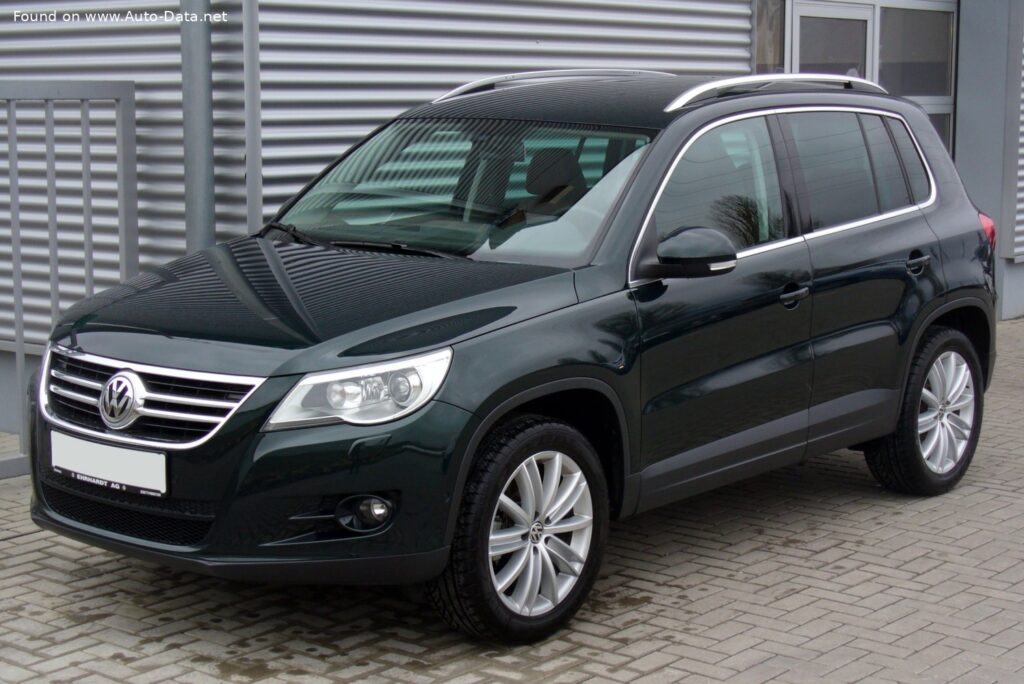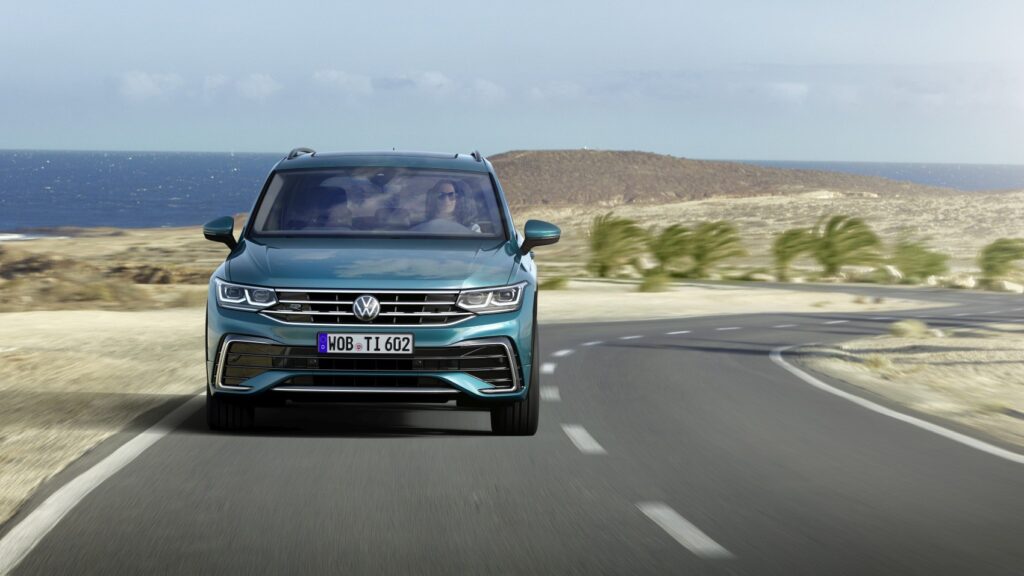
The Volkswagen Tiguan II (facelift 2020) 2.0 TDI (150 Hp) SCR DSG represents a mid-cycle refresh of the second-generation Tiguan, a compact crossover SUV produced by the German automaker Volkswagen. Introduced in September 2020 and continuing through November 2023, this variant was primarily aimed at the European market, where diesel engines remained popular due to fuel efficiency and tax incentives. The Tiguan occupies a crucial position in Volkswagen’s lineup, offering a practical and versatile vehicle for families and individuals seeking a blend of comfort, technology, and reasonable running costs. This specific configuration, powered by a 2.0-liter turbocharged diesel engine paired with a dual-clutch DSG transmission, was designed to balance performance with fuel economy and meet stringent European emission standards.
Volkswagen Tiguan II (Facelift 2020) 2.0 TDI: An Overview
The Tiguan II, launched initially in 2016, quickly became a sales success for Volkswagen, competing with rivals like the Nissan Qashqai, Hyundai Tucson, and Kia Sportage. The 2020 facelift brought updated styling, enhanced technology, and refined engine options. The 2.0 TDI SCR DSG model is characterized by its efficient diesel powertrain, which utilizes Selective Catalytic Reduction (SCR) technology to minimize nitrogen oxide (NOx) emissions. The DSG (Direct-Shift Gearbox) provides quick and smooth gear changes, contributing to a more engaging driving experience. While not officially sold in the United States, the Tiguan is available in North America, but typically with gasoline engine options.
Engine & Performance
At the heart of the Tiguan II (facelift 2020) 2.0 TDI SCR DSG lies a 1,968 cc (120.09 cu. in.) inline-four cylinder diesel engine. This engine produces 150 horsepower (Hp) and 360 Nm (265.52 lb.-ft.) of torque between 1600 and 2750 rpm. The turbocharger and intercooler work in tandem to optimize power delivery and efficiency. The engine is transversely mounted at the front of the vehicle and drives the front wheels through a sophisticated seven-speed dual-clutch DSG transmission. This combination allows for a 0-100 km/h (0-62 mph) acceleration time of 9.4 seconds and a top speed of 200 km/h (124.27 mph). Fuel consumption figures, measured using the WLTP cycle, range from 4.6 l/100 km (51.1 US mpg) at high speed to 7.3 l/100 km (32.2 US mpg) at low speed, with a combined figure of 5.5 l/100 km (42.8 US mpg). The inclusion of a Start & Stop system and a particulate filter further enhances fuel efficiency and reduces emissions.
Design & Features
The Tiguan II (facelift 2020) maintains the SUV’s practical and functional design. It’s a five-door, five-seater vehicle with a spacious interior and a generous cargo capacity of 615 liters (21.72 cu. ft.) with the rear seats up, expanding to 1655 liters (58.45 cu. ft.) when folded down. The facelift brought subtle styling updates, including a revised front grille, new LED headlights, and updated bumpers. Inside, the cabin features a modern dashboard layout with a central touchscreen infotainment system. Standard features typically include air conditioning, power windows, and a comprehensive suite of safety systems, including ABS, electronic stability control, and multiple airbags. The vehicle’s dimensions are 4509 mm (177.52 in.) in length, 1839 mm (72.4 in.) in width, and 1675 mm (65.94 in.) in height. The Tiguan’s design prioritizes practicality and comfort, making it a suitable choice for everyday use and family transportation.
Technical Specifications
| Brand | Volkswagen |
| Model | Tiguan |
| Generation | Tiguan II (facelift 2020) |
| Type (Engine) | 2.0 TDI (150 Hp) SCR DSG |
| Start of production | September, 2020 |
| End of production | November, 2023 |
| Powertrain Architecture | Internal Combustion engine |
| Body type | SUV |
| Seats | 5 |
| Doors | 5 |
| Fuel consumption at Low speed (WLTP) | 7.3 l/100 km (32.2 US mpg) |
| Fuel consumption at Medium speed (WLTP) | 5.3 l/100 km (44.4 US mpg) |
| Fuel consumption at high speed (WLTP) | 4.6 l/100 km (51.1 US mpg) |
| Fuel consumption at very high speed (WLTP) | 5.6 l/100 km (42 US mpg) |
| Combined fuel consumption (WLTP) | 5.5 l/100 km (42.8 US mpg) |
| CO2 emissions (WLTP) | 143 g/km |
| Fuel Type | Diesel |
| Acceleration 0 – 100 km/h | 9.4 sec |
| Acceleration 0 – 62 mph | 9.4 sec |
| Acceleration 0 – 60 mph | 8.9 sec |
| Maximum speed | 200 km/h (124.27 mph) |
| Emission standard | EURO 6d-ISC-FCM |
| Weight-to-power ratio | 10.4 kg/Hp |
| Power | 150 Hp |
| Torque | 360 Nm @ 1600-2750 rpm (265.52 lb.-ft. @ 1600-2750 rpm) |
| Engine displacement | 1968 cm3 (120.09 cu. in.) |
| Number of cylinders | 4 |
| Engine configuration | Inline |
| Kerb Weight | 1565 kg (3450.23 lbs.) |
| Max. weight | 2090 kg (4607.66 lbs.) |
| Trunk (boot) space – minimum | 615 l (21.72 cu. ft.) |
| Trunk (boot) space – maximum | 1655 l (58.45 cu. ft.) |
| Fuel tank capacity | 58 l (15.32 US gal) |
| Length | 4509 mm (177.52 in.) |
| Width | 1839 mm (72.4 in.) |
| Wheelbase | 2678 mm (105.43 in.) |
| Number of gears and type of gearbox | 7 gears, automatic transmission DSG |
The Volkswagen Tiguan II (facelift 2020) 2.0 TDI SCR DSG offered a compelling package for European buyers seeking a practical, efficient, and well-equipped compact SUV. Its blend of diesel power, DSG transmission, and modern features made it a popular choice in a competitive segment. While not available in the US market in this specific configuration, it represents a significant example of Volkswagen’s engineering prowess and commitment to fuel efficiency and reduced emissions.