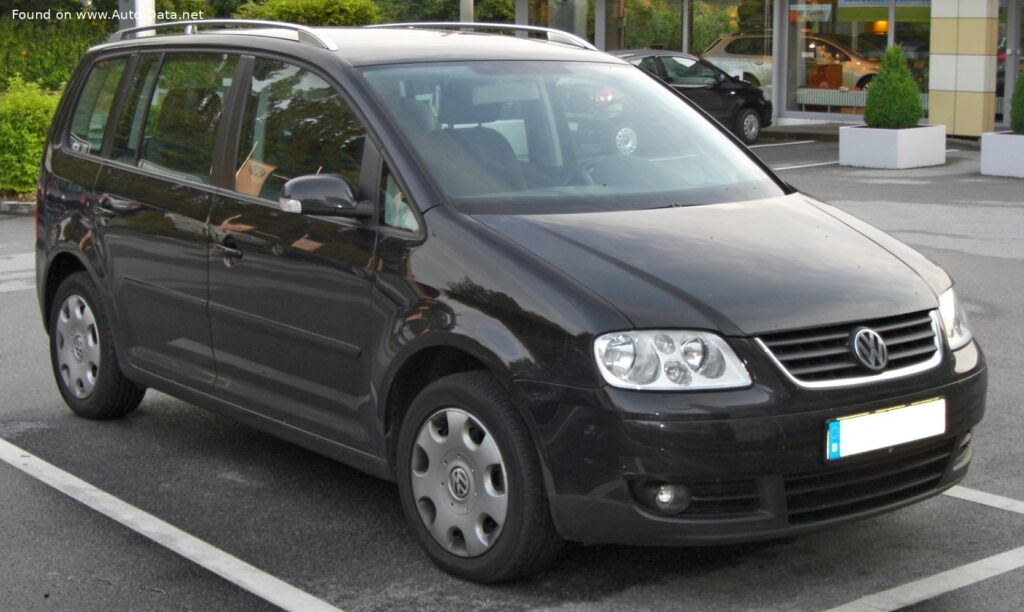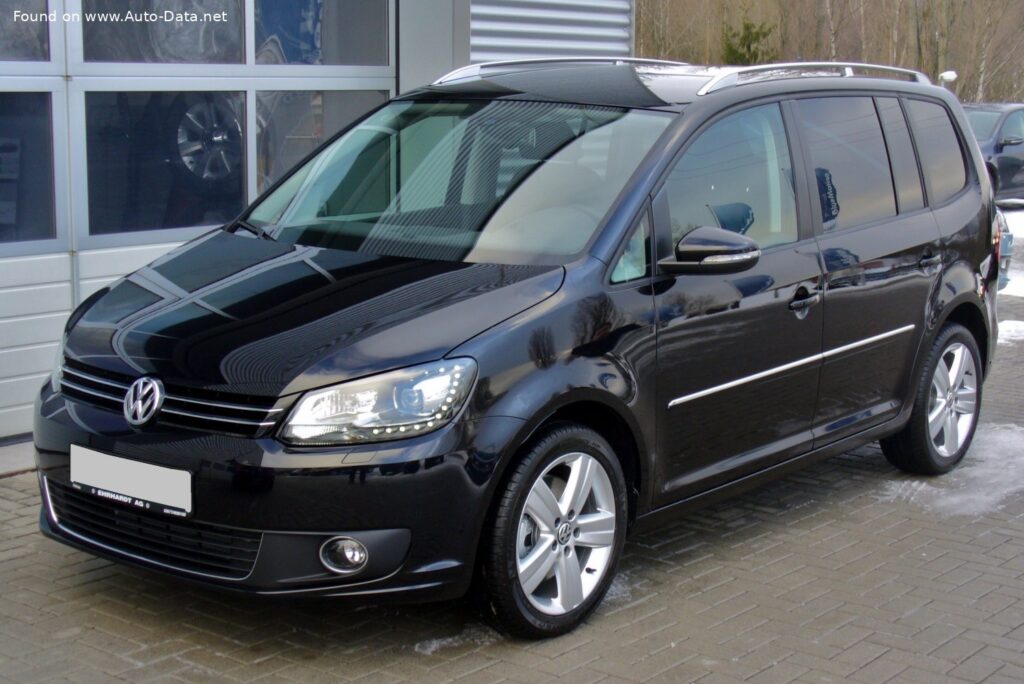
The Volkswagen Touran is a compact minivan, first introduced in 2003, designed to offer a practical and versatile family vehicle. The first generation Touran (1T1/1T2) underwent a significant facelift in 2010, and production continued until 2015. Among the various engine and transmission options available, the 2.0 TDI with 177 horsepower paired with a Direct-Shift Gearbox (DSG) represents a mid-to-upper trim level, offering a balance of performance, fuel efficiency, and modern convenience. This variant was produced from 2013 to 2015 and aimed at buyers needing a spacious, efficient, and relatively powerful family vehicle.
Volkswagen Touran I (Facelift 2010) 2.0 TDI 177 Hp DSG: An Overview
The 2013-2015 Volkswagen Touran I (facelift) 2.0 TDI 177 hp DSG model occupied a strong position within the Touran lineup. It wasn’t the entry-level option – that was typically reserved for lower-powered gasoline or diesel engines with manual transmissions. Instead, it catered to customers who prioritized performance and ease of driving, willing to pay a premium for the added refinement of the DSG transmission and the increased power output of the 2.0-liter TDI engine. This trim level was positioned below the very top-spec models which might have included more luxurious interior appointments or advanced driver-assistance systems.
Powertrain & Engine Architecture
At the heart of this Touran variant lies the CFJB engine code, a 2.0-liter four-cylinder turbocharged diesel engine. This engine is a common rail direct injection (CRDI) diesel, meaning fuel is delivered directly into the cylinders at extremely high pressure via a common rail system. This system allows for precise control of fuel injection timing and quantity, optimizing combustion for power and efficiency. The engine features four valves per cylinder (16 valves total) and is transversely mounted in the front of the vehicle. The turbocharger, coupled with an intercooler, forces more air into the engine, boosting power output. The engine produces 177 hp at 4200 rpm and 380 Nm (280.27 lb-ft) of torque between 1750 and 2500 rpm.
The engine is mated to a 6-speed DSG (Direct-Shift Gearbox) transmission. This is a dual-clutch transmission that offers the efficiency of a manual gearbox with the convenience of an automatic. It utilizes two separate clutches – one for the odd-numbered gears and one for the even-numbered gears. This allows for incredibly fast and smooth gear changes, as the next gear is pre-selected and ready to engage. The DSG transmission contributes significantly to the Touran’s driving experience, providing responsive acceleration and a more engaging feel compared to a traditional automatic transmission.
Driving Characteristics
The 2.0 TDI 177 hp DSG Touran delivers a noticeably more spirited driving experience than lower-powered variants. The 380 Nm of torque, available from relatively low engine speeds, provides strong acceleration in everyday driving situations. The 0-100 km/h (0-62 mph) sprint takes approximately 8.2 seconds, and 0-60 mph is achieved in around 7.8 seconds. While not a sports car, this performance is more than adequate for a family minivan. The DSG transmission enhances the driving experience by providing quick and seamless gear changes, keeping the engine in its optimal power band. Compared to a manual transmission, the DSG offers greater convenience, especially in stop-and-go traffic. Compared to the lower-powered 1.6 TDI models, the 2.0 TDI offers significantly more power and a more relaxed driving experience, particularly when fully loaded with passengers and luggage. The higher output engine doesn’t compromise fuel economy significantly, maintaining a combined fuel consumption of 5.7 l/100 km (41.3 US mpg).
Equipment & Trim Levels
The 2.0 TDI 177 hp DSG Touran typically came equipped with a good level of standard features. These generally included air conditioning, power windows, power mirrors, a multi-function steering wheel, and an audio system with CD player. Safety features such as ABS (Anti-lock Braking System), electronic stability control, and multiple airbags were standard. Higher trim levels, or those with optional packages, could include features like automatic climate control, a touchscreen infotainment system, navigation, parking sensors, alloy wheels, and upgraded interior upholstery. Interior upholstery was typically cloth, but leather options were available. The dashboard layout was functional and well-designed, with a focus on ergonomics and ease of use. The Touran’s modular seating system allowed for flexible configuration of the interior, accommodating up to seven passengers with the optional third-row seats.
Chassis & Braking
The Touran I (facelift) utilizes a MacPherson strut front suspension and a multi-link rear suspension. This setup provides a good balance of ride comfort and handling. The suspension is tuned to prioritize comfort, making it well-suited for long journeys. Stabilizer bars are fitted to both the front and rear axles to reduce body roll during cornering. The braking system consists of ventilated discs on the front wheels and discs on the rear wheels. ABS (Anti-lock Braking System) is standard, providing enhanced braking performance and stability in emergency situations. The steering is rack and pinion, offering precise and responsive steering feel. The Touran’s tires are typically 205/55 R16, providing a good compromise between comfort and grip.
Market Reception & Comparison
The Volkswagen Touran, and specifically the 2.0 TDI 177 hp DSG variant, received generally positive reviews from automotive critics. It was praised for its spacious interior, versatile seating configuration, comfortable ride, and efficient engine. The DSG transmission was also a highlight, offering smooth and responsive gear changes. Critics noted that the Touran was a practical and well-rounded family vehicle, offering a compelling alternative to other compact minivans. Compared to the lower-powered 1.6 TDI models, the 2.0 TDI offered a significant performance upgrade without a substantial penalty in fuel economy. The 2.0 TDI also offered better refinement and a more relaxed driving experience. While some competitors offered lower prices, the Touran’s build quality, features, and driving dynamics were generally considered to be superior.
Technical Specifications
| Brand | Volkswagen |
| Model | Touran |
| Generation | Touran I (facelift 2010) |
| Type (Engine) | 2.0 TDI (177 Hp) DSG |
| Start of production | 2013 year |
| End of production | 2015 year |
| Fuel consumption (urban) | 7 l/100 km (33.6 US mpg) |
| Fuel consumption (extra urban) | 5 l/100 km (47 US mpg) |
| Fuel consumption (combined) | 5.7 l/100 km (41.3 US mpg) |
| CO2 emissions | 150 g/km |
| Fuel Type | Diesel |
| Acceleration 0 – 100 km/h | 8.2 sec |
| Acceleration 0 – 62 mph | 8.2 sec |
| Acceleration 0 – 60 mph | 7.8 sec |
| Maximum speed | 214 km/h (132.97 mph) |
| Emission standard | Euro 5 |
| Power | 177 Hp @ 4200 rpm |
| Torque | 380 Nm @ 1750-2500 rpm (280.27 lb.-ft.) |
| Engine layout | Front, Transverse |
| Engine Model/Code | CFJB |
| Engine displacement | 1968 cm3 (120.09 cu. in.) |
| Number of cylinders | 4 |
| Fuel injection system | Diesel Commonrail |
| Engine oil capacity | 4.3 l (4.54 US qt | 3.78 UK qt) |
| Kerb Weight | 1598 kg (3522.99 lbs.) |
| Max. weight | 2220 kg (4894.26 lbs.) |
| Trunk (boot) space – minimum | 695 l (24.54 cu. ft.) |
| Trunk (boot) space – maximum | 1989 l (70.24 cu. ft.) |
| Fuel tank capacity | 60 l (15.85 US gal | 13.2 UK gal) |
| Length | 4397 mm (173.11 in.) |
| Width | 1794 mm (70.63 in.) |
| Height | 1674 mm (65.91 in.) |
| Wheelbase | 2678 mm (105.43 in.) |
| Number of gears and type of gearbox | 6 gears, automatic transmission DSG |
Legacy
The 2.0 TDI engine and DSG transmission combination proved to be a reliable and durable powertrain in the Touran. While diesel engines, in general, have faced increased scrutiny regarding emissions, the CFJB engine is generally considered to be relatively robust. Common issues, if any, typically relate to the diesel particulate filter (DPF) requiring regeneration, particularly on vehicles used primarily for short journeys. The DSG transmission, while sophisticated, can require more frequent servicing than a traditional automatic transmission. Today, used examples of the 2013-2015 Touran 2.0 TDI 177 hp DSG are readily available and represent a good value proposition for buyers seeking a practical and well-equipped family vehicle. Regular maintenance and adherence to recommended service intervals are crucial to ensure the long-term reliability of this powertrain.