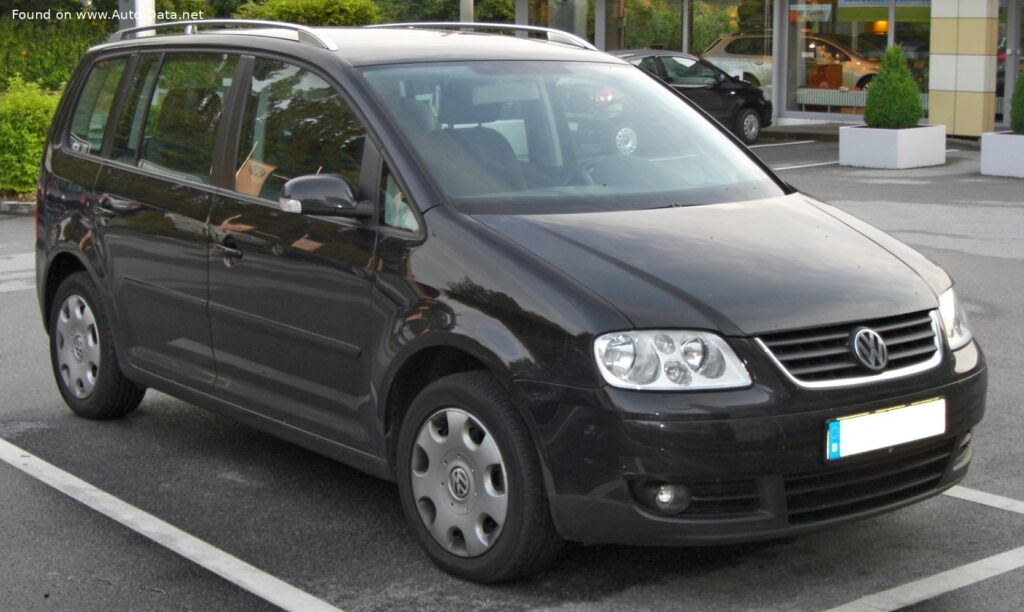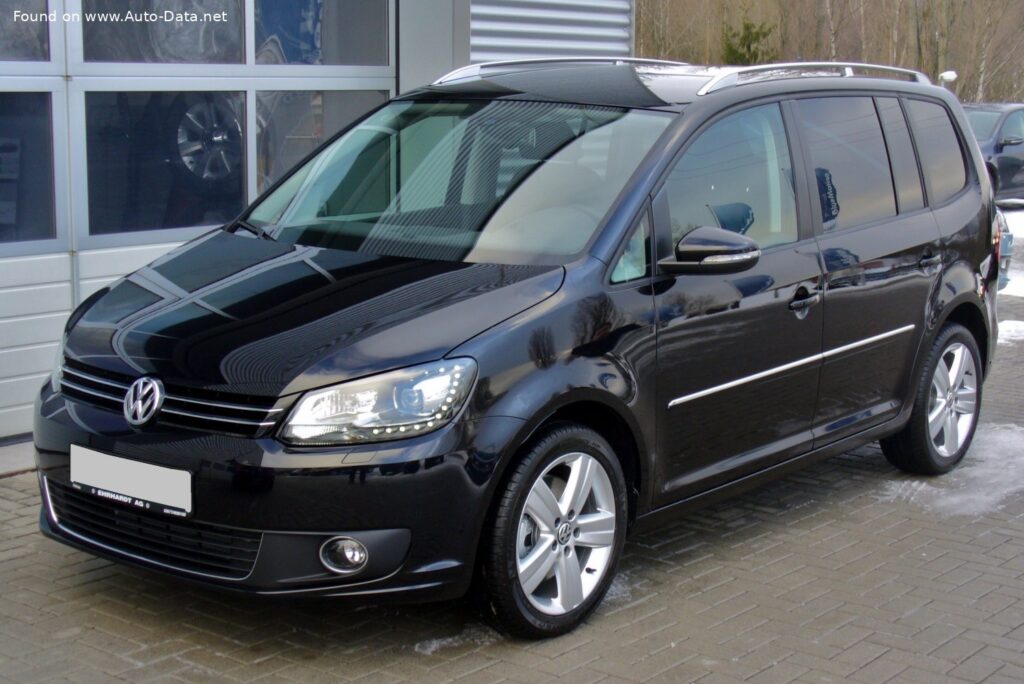
The Volkswagen Touran I (facelift, introduced in 2010) TGI 1.4 TSI (150 hp) BlueMotion represents a specific iteration of Volkswagen’s compact minivan, produced from 2010 to 2015. This variant occupied a mid-range position within the Touran lineup, offering a balance between fuel efficiency, performance, and practicality. It was part of the first-generation Touran (1HX0/A3 platform), which aimed to provide a versatile and family-oriented vehicle. The “TGI” designation signifies its capability to run on both gasoline and Compressed Natural Gas (CNG), while the “BlueMotion” label denotes Volkswagen’s fuel-saving and emissions-reducing technologies.
Powertrain & Engine Architecture
At the heart of the Touran I TGI 1.4 TSI BlueMotion lies the CDGA engine code, a 1.4-liter inline-four cylinder gasoline engine. This engine is notable for its sophisticated forced induction system, employing both a turbocharger and a supercharger – a configuration often referred to as “twincharged.” The supercharger provides immediate boost at low engine speeds, eliminating turbo lag, while the turbocharger takes over at higher RPMs for sustained power delivery. This combination results in a relatively flat torque curve and responsive acceleration. The engine utilizes direct fuel injection, enhancing combustion efficiency and power output. The 1390 cc engine produces 150 horsepower at 5500 rpm and 220 Nm (162.26 lb-ft) of torque between 1500 and 4500 rpm. The engine’s specific output is 107.9 hp per liter.
The Touran TGI 1.4 TSI BlueMotion was exclusively offered with a 6-speed manual transmission. This transmission was chosen to maximize fuel economy and provide drivers with greater control over the engine’s power delivery. The gear ratios were optimized to complement the engine’s torque characteristics, allowing for efficient cruising and responsive acceleration. Unlike some higher-performance Touran variants, an automatic transmission was not available with this engine configuration.
Fuel System & CNG Capability
A key feature of the TGI variant is its bi-fuel capability. The vehicle can operate on either gasoline or Compressed Natural Gas (CNG). A dedicated CNG tank, typically located under the floor of the vehicle, stores the CNG. The engine control unit (ECU) automatically switches between gasoline and CNG operation based on fuel availability and driver demand. Running on CNG significantly reduces emissions, particularly carbon dioxide, and can lower fuel costs depending on local CNG pricing. The fuel tank capacity for gasoline is 11 liters (2.91 US gallons), while the CNG tank capacity varies depending on the specific market and configuration.
Driving Characteristics
The 150 hp 1.4 TSI engine, coupled with the 6-speed manual transmission, provides a respectable driving experience for the Touran. Acceleration from 0 to 100 km/h (0-62 mph) takes approximately 10.2 seconds, and 0 to 60 mph is achieved in around 9.7 seconds. While not a particularly sporty vehicle, the Touran TGI offers sufficient power for everyday driving, including highway cruising and overtaking maneuvers. The twincharged engine delivers a noticeable surge of power, particularly in the mid-range, making it feel more responsive than its displacement might suggest. The manual transmission allows for precise gear selection and enhances driver engagement.
Compared to the more powerful 1.6 or 2.0-liter gasoline engines available in other Touran trims, the 1.4 TSI offers a more fuel-efficient and environmentally friendly option. However, it lacks the outright performance of those larger engines. Compared to the diesel variants (like the 1.9 TDI or 2.0 TDI), the 1.4 TSI provides a smoother and quieter driving experience, but typically delivers lower fuel economy and torque. The 1.4 TSI was aimed at buyers prioritizing fuel efficiency and lower emissions over outright performance.
Equipment & Trim Levels
The Touran I (facelift) TGI 1.4 TSI BlueMotion typically came equipped with a reasonable level of standard features. These included air conditioning, power windows, power mirrors, a CD/MP3 stereo system, and ABS brakes. Safety features such as front and side airbags were also standard. Interior upholstery was typically cloth, with options for upgraded materials available. The dashboard layout was functional and straightforward, with a focus on ergonomics.
Optional extras included features such as alloy wheels, a sunroof, parking sensors, a navigation system, and upgraded audio systems. Higher trim levels offered additional features like automatic climate control, leather upholstery, and heated seats. The availability of specific options varied depending on the market and model year.
Chassis & Braking
The Touran I TGI 1.4 TSI BlueMotion utilizes a front-wheel-drive chassis with a MacPherson strut suspension in the front and a multi-link suspension in the rear. This suspension setup provides a comfortable ride quality and good handling characteristics. The steering is rack and pinion, offering precise and responsive control. The front brakes are ventilated discs, providing ample stopping power. The rear brakes are typically drum brakes, although some higher-spec models may have been equipped with rear disc brakes. ABS (Anti-lock Braking System) is standard, enhancing braking safety. Stabilizer bars are fitted to both the front and rear axles to reduce body roll during cornering. Tire sizes typically ranged from 195/65 R15 to 205/55 R16, depending on the trim level and wheel size.
Market Reception & Comparison
The Touran I TGI 1.4 TSI BlueMotion was generally well-received by automotive critics as a practical and fuel-efficient family vehicle. Its bi-fuel capability was seen as a significant advantage, particularly in markets where CNG infrastructure was well-developed. Fuel economy figures were competitive, with combined fuel consumption averaging around 7.2 l/100 km (32.7 US mpg). However, some critics noted that the engine could feel strained when fully loaded or driving uphill.
Compared to other Touran trims, the 1.4 TSI offered a more affordable entry point into the model range. It was a popular choice for buyers who prioritized fuel efficiency and lower emissions over outright performance. The diesel variants offered superior fuel economy and torque, but were typically more expensive to purchase. The larger gasoline engines provided more power, but at the expense of fuel efficiency. The TGI variant carved a niche for itself as a versatile and environmentally conscious option.
Technical Specifications
| Engine Model/Code | CDGA |
| Engine Displacement | 1390 cm3 (84.82 cu. in.) |
| Number of Cylinders | 4, Inline |
| Fuel Injection System | Direct Injection |
| Engine Aspiration | Turbocharging and Supercharger, Intercooler |
| Maximum Power | 150 hp @ 5500 rpm |
| Maximum Torque | 220 Nm (162.26 lb-ft) @ 1500-4500 rpm |
| Compression Ratio | 10.0:1 |
| Fuel Type | Petrol / CNG |
| Fuel Consumption (Urban) | 9.5 l/100 km (24.8 US mpg) |
| Fuel Consumption (Extra Urban) | 5.8 l/100 km (40.6 US mpg) |
| Fuel Consumption (Combined) | 7.2 l/100 km (32.7 US mpg) |
| CO2 Emissions | 128 g/km |
| Acceleration 0-100 km/h | 10.2 sec |
| Maximum Speed | 204 km/h (126.76 mph) |
| Transmission | 6-speed Manual |
| Kerb Weight | 1697 kg (3741.24 lbs) |
| Max. Weight | 2220 kg (4894.26 lbs) |
| Fuel Tank Capacity (Gasoline) | 11 l (2.91 US gal) |
Legacy
The Volkswagen Touran I TGI 1.4 TSI BlueMotion powertrain has proven to be relatively reliable, although, like any turbocharged engine, it requires regular maintenance. The twincharged system can be susceptible to issues if not properly maintained, including supercharger clutch failure and turbocharger wear. The CNG system also requires periodic inspection and servicing. However, with proper care, the engine can provide many years of reliable service.
In the used car market, the Touran TGI 1.4 TSI BlueMotion remains a popular choice for buyers seeking a practical and fuel-efficient family vehicle. Its bi-fuel capability and relatively low running costs make it an attractive option, particularly in areas with well-developed CNG infrastructure. While it may not offer the performance of some other Touran trims, its versatility and affordability have ensured its continued relevance in the used car market.