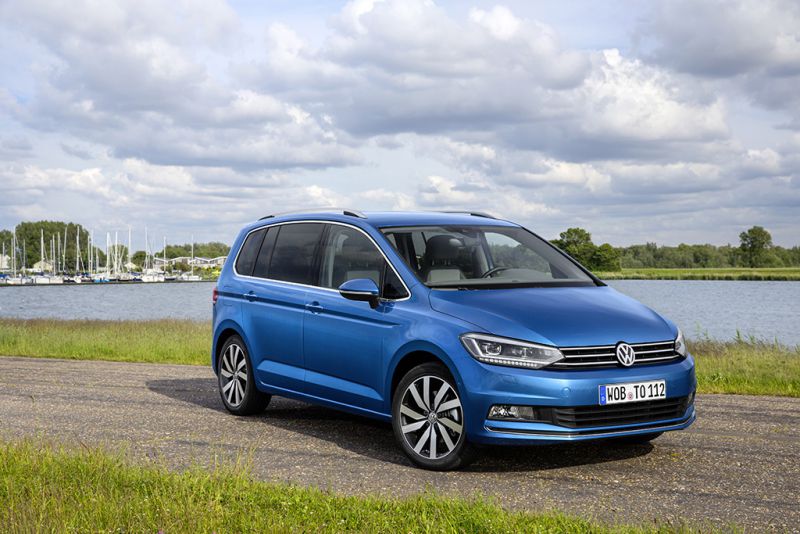
The Volkswagen Touran II 1.5 TSI ACT (150 hp) DSG represents a significant iteration within the second generation of the Touran compact minivan, produced between 2018 and 2020. Positioned as a mid-range offering in the Touran II lineup, it aimed to balance fuel efficiency, practicality, and a reasonable level of performance for family transport. This variant utilized Volkswagen’s advanced 1.5-liter turbocharged gasoline engine paired with a 7-speed dual-clutch transmission (DSG), incorporating Active Cylinder Technology (ACT) for improved economy. The Touran II itself is based on the Volkswagen Group’s MQB (Modular Transverse Matrix) platform, also known as the A3 platform, shared with models like the Volkswagen Golf, Audi A3, and Škoda Octavia.
Powertrain & Engine Architecture
At the heart of the Touran II 1.5 TSI ACT is the EA211evo engine family, specifically the DADA engine code. This 1.5-liter inline-four cylinder engine boasts a displacement of 1498 cm³ (91.41 cubic inches) and produces 150 horsepower (100.1 hp/liter). The engine employs direct fuel injection, delivering fuel directly into the combustion chamber for precise control and improved efficiency. A single turbocharger with an intercooler provides forced induction, boosting power and torque across the engine’s operating range. The engine features four valves per cylinder (16 valves total) and utilizes a timing chain for durability.
A key feature of this engine is its Active Cylinder Technology (ACT). Under light load conditions, ACT can deactivate the second and third cylinders, effectively turning the engine into a two-cylinder unit. This reduces pumping losses and significantly improves fuel economy. The transition between four and two cylinders is seamless and generally imperceptible to the driver. The 7-speed DSG transmission is a crucial component of this powertrain. It offers quick, smooth shifts and contributes to the overall efficiency of the vehicle. The DSG utilizes two separate clutches, allowing for pre-selection of the next gear, resulting in near-instantaneous gear changes. Gear ratios are tuned for a balance of acceleration and fuel economy, with a relatively tall final drive to aid in highway cruising.
Fuel Injection and Valvetrain
The EA211evo engine utilizes a sophisticated direct injection system operating at pressures up to 250 bar. This high-pressure injection ensures optimal fuel atomization, leading to more complete combustion and reduced emissions. The valvetrain employs variable valve timing on both the intake and exhaust camshafts, allowing the engine control unit (ECU) to optimize valve timing for different engine speeds and loads. This further enhances performance and efficiency.
Driving Characteristics
The Touran II 1.5 TSI ACT (150 hp) DSG delivers a comfortable and refined driving experience. While not overtly sporty, the engine provides adequate power for everyday driving situations, including highway merging and overtaking. Acceleration from 0 to 62 mph (0-100 km/h) takes approximately 8.9 seconds. The DSG transmission contributes to responsive acceleration, and the ACT system is largely unnoticeable during normal driving. Compared to the more powerful 1.8 TSI variants, the 1.5 TSI offers slightly less outright performance, but it compensates with improved fuel economy. Compared to diesel variants like the 1.6 TDI, the 1.5 TSI provides a smoother and quieter driving experience, albeit with potentially higher fuel costs depending on driving style and fuel prices. The relatively tall gear ratios in the DSG transmission prioritize fuel efficiency at cruising speeds, but may require more frequent downshifts when tackling steep inclines or when needing to accelerate quickly.
Equipment & Trim Levels
The 1.5 TSI ACT variant of the Touran II typically came equipped with a respectable level of standard features. These generally included air conditioning, a touchscreen infotainment system with Bluetooth connectivity, alloy wheels, and a suite of safety features such as ABS, electronic stability control, and multiple airbags. Interior upholstery was typically cloth, with options for leather or Alcantara available as upgrades. Dashboard configuration was consistent across the Touran II range, featuring a functional and ergonomic layout. Optional extras for this trim level included features like a panoramic sunroof, navigation system, parking sensors, adaptive cruise control, and upgraded sound systems. Higher trim levels, such as the Highline, offered even more luxurious features and customization options.
Chassis & Braking
The Touran II 1.5 TSI ACT utilizes a MacPherson strut front suspension and a multi-link rear suspension. This setup provides a good balance of ride comfort and handling. Stabilizer bars are fitted to both the front and rear axles to reduce body roll during cornering. Braking duties are handled by ventilated discs on the front wheels and solid discs on the rear. ABS (Anti-lock Braking System) is standard, along with electronic brake-force distribution (EBD) and brake assist. The steering system is an electric power steering (EPS) rack and pinion system, providing light and precise steering feel.
Market Reception & Comparison
The Touran II 1.5 TSI ACT was generally well-received by automotive critics. It was praised for its fuel efficiency, comfortable ride, and spacious interior. However, some reviewers noted that the engine could feel slightly underpowered when fully loaded with passengers and luggage. In terms of fuel economy, the 1.5 TSI ACT typically achieved combined fuel consumption figures of between 5.5 and 5.7 liters per 100 kilometers (42.8 – 41.3 US mpg). This was a significant improvement over the more powerful 1.8 TSI variants. Reliability has been generally good, with the EA211evo engine proving to be a robust and dependable unit. However, as with any modern vehicle, preventative maintenance is crucial to ensure long-term reliability. The DSG transmission requires regular fluid changes to prevent premature wear.
Technical Specifications
| Engine Model/Code | EA211evo / DADA |
| Engine Displacement | 1498 cm³ (91.41 cu. in.) |
| Number of Cylinders | 4, Inline |
| Fuel Injection System | Direct Injection |
| Engine Aspiration | Turbocharger, Intercooler |
| Maximum Power | 150 hp @ 5000-6000 rpm |
| Maximum Torque | 250 Nm (184.39 lb.-ft.) @ 1500-3500 rpm |
| Compression Ratio | 11.7:1 |
| Engine Oil Capacity | 4.3 l (4.54 US qt | 3.78 UK qt) |
| Transmission | 7-speed DSG |
| Drive Type | Front Wheel Drive |
| Kerb Weight | 1505 kg (3317.96 lbs.) |
| Maximum Weight | 2110 kg (4651.75 lbs.) |
| Fuel Tank Capacity | 58 l (15.32 US gal | 12.76 UK gal) |
| Acceleration 0-100 km/h | 8.9 sec |
| Maximum Speed | 209 km/h (129.87 mph) |
| CO2 Emissions | 126-130 g/km |
Legacy
The Volkswagen Touran II 1.5 TSI ACT (150 hp) DSG remains a popular choice in the used car market. Its combination of practicality, fuel efficiency, and relatively low running costs makes it an attractive option for families. The EA211evo engine has proven to be a reliable unit, and the DSG transmission, when properly maintained, can provide years of smooth and efficient operation. However, potential buyers should be aware of the importance of regular maintenance, particularly DSG fluid changes. The ACT system, while generally reliable, can occasionally experience issues with the solenoid valves that control cylinder deactivation. Overall, the Touran II 1.5 TSI ACT represents a well-rounded and capable compact minivan that continues to offer good value for money.