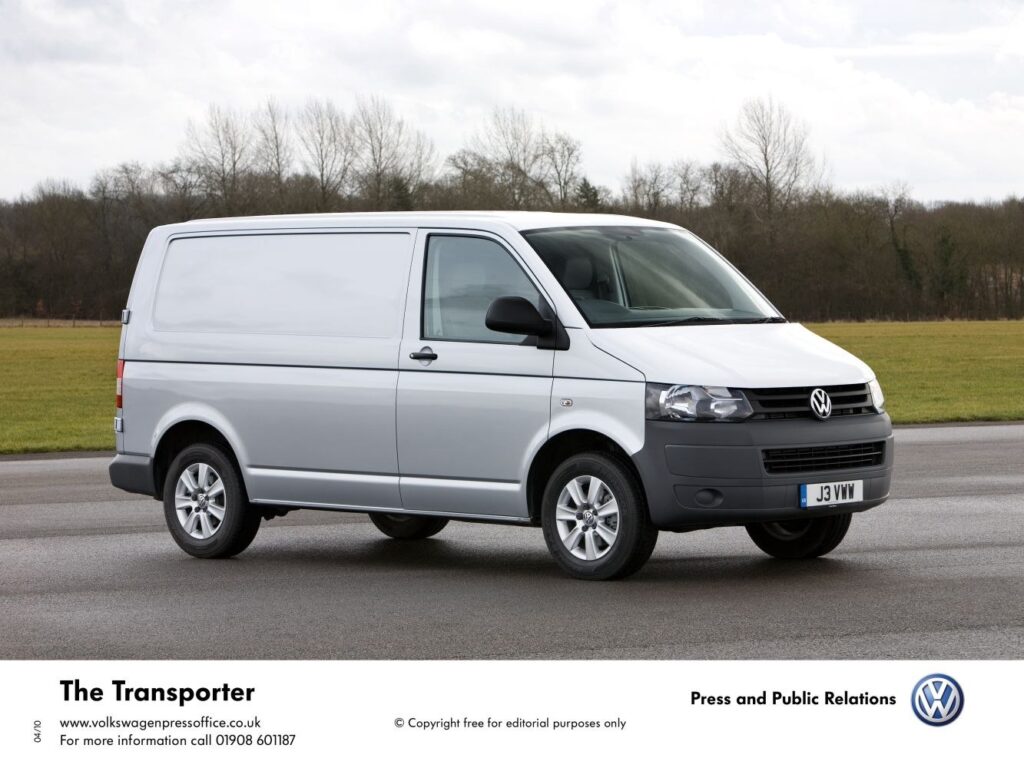
The Volkswagen Transporter (T5, facelift 2009) Panel Van: A European Workhorse Refined
The Volkswagen Transporter, a name synonymous with versatility and reliability in the light commercial vehicle segment, received a significant facelift for its fifth generation (T5) in 2009. This iteration, specifically the Volkswagen Transporter (T5, facelift 2009) Panel Van, represented a crucial evolution for the venerable lineage, enhancing both its aesthetic appeal and technical prowess. While not a mainstream offering in the United States market – where Volkswagen’s commercial vehicle presence is limited – the Transporter T5 facelift continued to dominate European and international markets as a benchmark for panel vans, passenger shuttles, and specialized conversions. This particular variant, equipped with the potent 2.0 TDI (180 Hp) engine and 4MOTION all-wheel drive in the L2H2 (long wheelbase, high roof) configuration, epitomized the T5’s capabilities as a robust, efficient, and highly adaptable work vehicle.
Produced from 2009 to 2015, the T5 facelift was designed to meet the evolving demands of businesses and tradespeople, offering improved ergonomics, enhanced safety features, and more efficient powertrains. Its enduring appeal lay in its car-like driving dynamics, robust build quality, and a vast array of configurations that allowed it to serve diverse professional needs, from urban delivery to demanding off-road applications, particularly with the integrated 4MOTION system.
Engine & Performance: Power and Efficiency for the Volkswagen Transporter (T5, facelift 2009) Panel Van
At the heart of this formidable panel van lies Volkswagen’s acclaimed 2.0-liter TDI (Turbocharged Direct Injection) engine, specifically the EA189 / CFCA code, delivering a substantial 180 horsepower at 4000 rpm. This powerplant is a testament to modern diesel engineering, featuring a BiTurbo setup and an intercooler to optimize combustion and maximize output. The result is not just impressive horsepower for a commercial vehicle, but also a robust torque figure of 295.02 lb.-ft., available across a broad and usable range from 1500 to 2000 rpm. This wide torque band is critical for a panel van, ensuring strong pulling power for heavy loads and effortless acceleration, even when fully laden.
The 1968 cm³ (120.09 cu. in.) inline four-cylinder engine utilizes a DOHC (Double Overhead Camshaft) valvetrain with four valves per cylinder and a common rail fuel injection system, contributing to its efficiency and smooth operation. With a compression ratio of 16.5:1, it adheres to the Euro 5 emission standard, incorporating a particulate filter to reduce environmental impact. Power is transferred to the wheels via a precise 6-speed manual transmission.
Performance figures for such a utilitarian vehicle are noteworthy: the Volkswagen Transporter (T5, facelift 2009) Panel Van can accelerate from 0 to 60 mph in approximately 10 seconds, reaching a maximum speed of 113.09 mph. This level of performance ensures that the Transporter can keep pace with highway traffic and execute overtakes confidently. Despite its power, fuel economy remains a strong suit for the diesel engine. The combined NEDC cycle rates it between 28-29 US mpg (8.1-8.4 l/100 km), demonstrating an excellent balance between capability and running costs for a commercial vehicle of its size and type.
A standout feature of this particular Transporter model is its 4MOTION all-wheel-drive system. This sophisticated drivetrain architecture ensures that the internal combustion engine permanently drives the front wheels, with the rear wheels engaging through an electrically or mechanically operated clutch when traction demands. This system provides enhanced grip and stability in adverse weather conditions, on challenging terrains, or when hauling heavy loads, making the L2H2 4MOTION an ideal choice for tradesmen operating in diverse environments.
Design & Features: Practicality and Versatility
The Volkswagen Transporter (T5, facelift 2009) Panel Van in its L2H2 configuration is designed first and foremost for maximum utility. The “L2” denotes a long wheelbase of 133.86 inches (3400 mm), providing a substantial platform for cargo, while “H2” signifies a high roof, dramatically increasing internal load volume. With an overall length of 208.35 inches (5292 mm), a width of 74.96 inches (1904 mm), and a towering height of 85.67 inches (2176 mm), this van offers an impressive maximum trunk (boot) space of 275.45 cubic feet (7800 liters).
The panel van body style, featuring 4-5 doors and seating for 2-3 occupants, prioritizes cargo capacity and ease of access. The design is robust and functional, characterized by clean lines and a purposeful stance. The facelift introduced subtle but effective styling updates, including revised headlights, grille, and bumper designs, bringing a more modern and cohesive look to the T5 range. Inside, the cabin is designed for durability and driver comfort, recognizing that the Transporter often serves as a mobile office for its users. Ergonomics are well-considered, with logically placed controls and ample storage solutions.
Safety and stability are paramount for a commercial vehicle. The T5 facelift is equipped with ventilated disc brakes on both the front (340×32.5 mm) and rear (294×22 mm) axles, complemented by an Anti-lock Braking System (ABS) for assured stopping power. The independent McPherson front suspension with coil springs and an anti-roll bar, combined with an independent coil spring rear suspension with a transverse stabilizer and trailing arm, ensures a comfortable ride and stable handling, even with varying loads. Hydraulic power steering, utilizing a rack and pinion system, provides precise control and feedback to the driver. The vehicle’s ground clearance of 7.91 inches (201 mm), along with respectable approach (21°), departure (17°), and ramp-over (12°) angles, further underscores its capability to traverse challenging terrain, especially with the 4MOTION system engaged.
The load-carrying credentials are substantial, with a kerb weight ranging from 4279.17 to 5198.5 lbs. (1941-2358 kg) and a maximum permissible weight of 6613.87 to 7054.79 lbs. (3000-3200 kg). This allows for a maximum payload of 1856.29 to 2334.7 lbs. (842-1059 kg). Furthermore, the Transporter is rated to tow a substantial 5511.56 lbs. (2500 kg) with brakes and 1653.47 lbs. (750 kg) without, with a permitted towbar download of 220.46 lbs. (100 kg), making it a versatile platform for various towing requirements.
Technical Specifications
| Category | Specification |
|---|---|
| General Information | |
| Brand | Volkswagen |
| Model | Transporter |
| Generation | Transporter (T5, facelift 2009) Panel Van |
| Type (Engine) | 2.0 TDI (180 Hp) 4MOTION L2H2 |
| Production Start | 2009 |
| Production End | 2015 |
| Powertrain Architecture | Internal Combustion Engine |
| Body Type | Van |
| Seats | 2-3 |
| Doors | 4-5 |
| Performance Specs | |
| Fuel Consumption (Urban, NEDC) | 23.1 – 22.4 US mpg (10.2-10.5 l/100 km) |
| Fuel Consumption (Extra Urban, NEDC) | 34.1 – 32.7 US mpg (6.9-7.2 l/100 km) |
| Fuel Consumption (Combined, NEDC) | 29 – 28 US mpg (8.1-8.4 l/100 km) |
| CO2 Emissions (NEDC) | 214-221 g/km |
| Fuel Type | Diesel |
| Acceleration 0-60 mph | 10 seconds |
| Maximum Speed | 113.09 mph (182 km/h) |
| Emission Standard | Euro 5 |
| Weight-to-Power Ratio | 10.8 kg/Hp, 92.7 Hp/tonne |
| Weight-to-Torque Ratio | 4.9 kg/Nm, 206.1 Nm/tonne |
| Engine Specs | |
| Power | 180 Hp @ 4000 rpm |
| Power per Liter | 91.5 Hp/l |
| Torque | 295.02 lb.-ft. (400 Nm) @ 1500-2000 rpm |
| Engine Layout | Front, Transverse |
| Engine Model/Code | EA189 / CFCA |
| Engine Displacement | 120.09 cu. in. (1968 cm³) |
| Number of Cylinders | 4 |
| Engine Configuration | Inline |
| Cylinder Bore | 3.19 in. (81 mm) |
| Piston Stroke | 3.76 in. (95.5 mm) |
| Compression Ratio | 16.5:1 |
| Valves per Cylinder | 4 |
| Fuel Injection System | Diesel Commonrail |
| Engine Aspiration | BiTurbo, Intercooler |
| Valvetrain | DOHC |
| Engine Oil Capacity | 7.4 US qt (7 l) |
| Coolant Capacity | 11.62 US qt (11 l) |
| Engine Systems | Particulate filter |
| Space, Volume and Weights | |
| Kerb Weight | 4279.17 – 5198.5 lbs. (1941-2358 kg) |
| Max. Weight (GVWR) | 6613.87 – 7054.79 lbs. (3000-3200 kg) |
| Max Load (Payload) | 1856.29 – 2334.7 lbs. (842-1059 kg) |
| Trunk (Boot) Space – Maximum | 275.45 cu. ft. (7800 l) |
| Fuel Tank Capacity | 21.13 US gal (80 l) |
| Permitted Trailer Load with Brakes (12%) | 5511.56 lbs. (2500 kg) |
| Permitted Trailer Load without Brakes | 1653.47 lbs. (750 kg) |
| Permitted Towbar Download | 220.46 lbs. (100 kg) |
| Dimensions | |
| Length | 208.35 in. (5292 mm) |
| Width | 74.96 in. (1904 mm) |
| Width Including Mirrors | 89.88 in. (2283 mm) |
| Height | 85.67 in. (2176 mm) |
| Wheelbase | 133.86 in. (3400 mm) |
| Front Overhang | 35.28 in. (896 mm) |
| Rear Overhang | 39.21 in. (996 mm) |
| Ride Height (Ground Clearance) | 7.91 in. (201 mm) |
| Minimum Turning Circle (Diameter) | 43.31 ft. (13.2 m) |
| Approach Angle | 21° |
| Departure Angle | 17° |
| Ramp-over (Brakeover) Angle | 12° |
| Drivetrain, Brakes and Suspension Specs | |
| Drivetrain Architecture | ICE drives front wheels permanently; rear wheels driven via electrically/mechanically operated clutch if necessary. |
| Drive Wheel | All-wheel drive (4×4) |
| Number of Gears and Type of Gearbox | 6 gears, manual transmission |
| Front Suspension | Independent, McPherson type with coil spring and anti-roll bar |
| Rear Suspension | Independent coil spring, Transverse stabilizer, Trailing arm |
| Front Brakes | Ventilated discs, 340×32.5 mm |
| Rear Brakes | Ventilated discs, 294×22 mm |
| Assisting Systems | ABS (Anti-lock braking system) |
| Steering Type | Steering rack and pinion |
| Power Steering | Hydraulic Steering |
| Tires Size | 215/60 R17; 235/55 R17; 255/45 R18 |
| Wheel Rims Size | 7J x 17; 8J x 18 |
Legacy & Market Impact
The Volkswagen Transporter T5, particularly its facelifted version from 2009, solidified its position as a dominant force in the global light commercial vehicle market, especially across Europe and Asia. Its reputation as a robust, reliable, and highly adaptable vehicle made it a favorite among small businesses, large fleet operators, and adventurous individuals converting them into camper vans. The Volkswagen Transporter (T5, facelift 2009) Panel Van, with its powerful 2.0 TDI (180 Hp) engine and 4MOTION all-wheel drive, was particularly esteemed for its ability to handle demanding tasks and challenging conditions that might overwhelm two-wheel-drive competitors.
In its primary markets, the T5 facelift competed fiercely with established rivals such as the Mercedes-Benz Vito, Ford Transit Custom, Renault Trafic, and Fiat Ducato. What set the Transporter apart was its blend of passenger car refinement and commercial vehicle ruggedness. Drivers appreciated its comfortable cabin, responsive handling, and sophisticated powertrain options, which made long journeys and daily operations less fatiguing. The 4MOTION system, in particular, gave it an edge in regions with inclement weather or where construction and utility work demanded access to unpaved sites.
Historically, the Transporter lineage, often referred to as the “Bus” or “Microbus” in earlier generations, has always been a cultural icon. While the T5 facelift was a thoroughly modern commercial tool, it carried this legacy of durability and versatility. It continued to be a symbol of German engineering prowess, known for its longevity and strong resale value. The emphasis on efficiency with the TDI engines, combined with practical design and advanced safety systems like ABS, ensured that the T5 remained relevant and competitive throughout its production run. Its impact is still felt today, as many T5s continue to serve faithfully worldwide, a testament to their enduring quality and design.