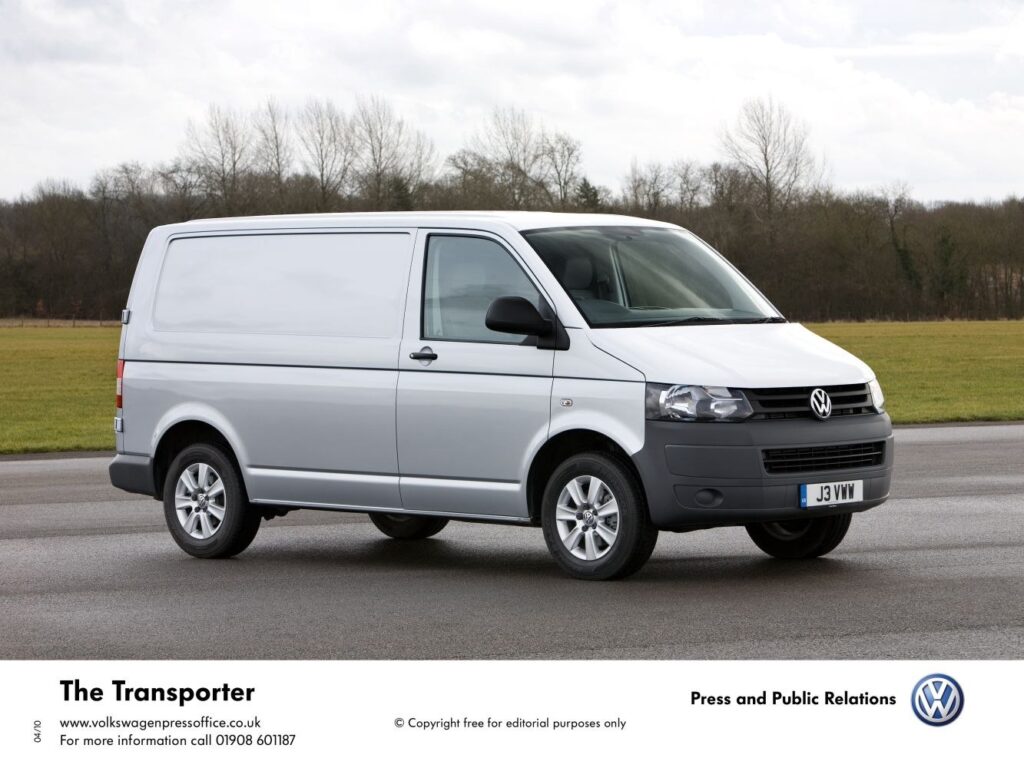
The Volkswagen Transporter (T5, facelift 2009) Panel Van: A European Commercial Icon
The Volkswagen Transporter, an automotive lineage synonymous with versatility and reliability, saw a significant evolution with its fifth generation, the T5. Introduced in 2003, the T5 received a substantial facelift in 2009, bringing a host of technological and aesthetic enhancements. This article focuses on a specific variant of this updated model: the Volkswagen Transporter (T5, facelift 2009) Panel Van 2.0 TDI (180 Hp) DSG L2H1. While not widely sold in the United States in its commercial van guise, the Transporter series, particularly in Europe and other international markets, has carved out a formidable reputation as the quintessential light commercial vehicle (LCV). This specific configuration, with its potent diesel engine, advanced automatic transmission, and practical L2H1 body style (Long wheelbase, standard roof height), exemplifies the blend of performance, efficiency, and utility that makes the Transporter a cornerstone for countless businesses and tradespeople across the globe.
Engine & Performance: Powering the Modern Workhorse
Under the hood, the Volkswagen Transporter (T5, facelift 2009) Panel Van featured a highly capable 2.0-liter TDI (Turbocharged Direct Injection) diesel engine, a testament to Volkswagen’s engineering prowess in diesel technology. This particular variant, designated with 180 horsepower, utilized an advanced BiTurbo setup, a key differentiator that allowed it to deliver impressive power output for its displacement. The inline four-cylinder engine, with its DOHC (Double Overhead Camshaft) valvetrain and Common Rail fuel injection system, produced a robust 180 HP at 4000 rpm. More critically for a commercial vehicle, it generated a substantial 295.02 lb.-ft. of torque, available across a broad and usable range from 1500 to 2000 rpm. This low-end torque was crucial for effortlessly hauling heavy loads and navigating challenging urban environments.
Power was delivered to the front wheels via a sophisticated 7-speed DSG (Direct Shift Gearbox) automatic transmission. This dual-clutch system was a significant upgrade, offering lightning-fast and smooth gear changes, contributing to both driving comfort and fuel efficiency – a critical factor for fleet operators. The combination of the BiTurbo diesel and DSG transmission allowed the Transporter to accelerate from 0 to 60 mph in a respectable 9.5 seconds, with a maximum speed of 118.68 mph. For a panel van designed primarily for utility, these figures underscored its ability to keep pace with highway traffic and maintain strong performance even when fully loaded.
Fuel economy, another vital consideration for commercial vehicles, was commendable for its class. The Transporter 2.0 TDI (180 Hp) DSG achieved an estimated combined fuel economy of 29-30.2 US mpg (7.8-8.1 l/100 km) under the NEDC cycle, with extra-urban figures reaching an impressive 34.1-35.6 US mpg (6.6-6.9 l/100 km). This efficiency, coupled with an 21.13 US gallon (80 liter) fuel tank, provided an excellent operating range, minimizing downtime for refueling. Emissions were managed to meet Euro 5 standards, thanks in part to a standard particulate filter, reflecting Volkswagen’s commitment to environmental responsibility even in its commercial offerings.
Design & Features: Form Follows Function
The T5 facelift maintained the Transporter’s timeless, functional design, characterized by its clean lines and purposeful stance. As a panel van, its primary focus was on maximizing cargo space and utility. This specific L2H1 variant indicated a long wheelbase (L2) and standard roof height (H1), striking an optimal balance between cavernous cargo capacity and practical maneuverability. With an overall length of 208.35 inches, a width of 74.96 inches (89.88 inches including mirrors), and a height of 78.35 inches, the Transporter offered substantial internal volume. The generous 133.86-inch wheelbase contributed to stable road manners, even with a full load.
The cargo area was truly capacious, boasting a maximum trunk space of 236.61 cubic feet (6700 liters). This vast volume, combined with a maximum payload capacity ranging from 2096.6 to 2134.07 lbs, made it an ideal choice for a wide array of commercial applications, from parcel delivery to artisan trades. The van also offered impressive towing capabilities, with a permitted trailer load of 5511.56 lbs with brakes, further extending its utility.
Underneath, the Transporter was engineered for durability and a comfortable ride, even when laden. It featured an independent McPherson strut front suspension with coil springs and an anti-roll bar, complemented by an independent coil spring rear suspension with a transverse stabilizer and trailing arms. This setup provided a car-like driving experience, minimizing fatigue for drivers on long routes. Braking performance was handled by large ventilated discs on both the front (340×32.5 mm) and rear (294×22 mm) axles, aided by ABS (Anti-lock Braking System) for confident stopping power. Steering was a hydraulic rack and pinion system, offering direct feedback and ease of control. The robust chassis and practical design elements ensured the Transporter could withstand the rigors of daily commercial use, making it a reliable partner for any business.
Technical Specifications
| Category | Specification |
|---|---|
| General Information | |
| Brand | Volkswagen |
| Model | Transporter (T5, facelift 2009) Panel Van |
| Type (Engine) | 2.0 TDI (180 Hp) DSG L2H1 |
| Production Years | 2009 – 2015 |
| Body Type | Van |
| Seats | 2-3 |
| Doors | 4-5 |
| Performance Specs | |
| Fuel Type | Diesel |
| Acceleration 0-60 mph | 9.5 sec |
| Maximum Speed | 118.68 mph (191 km/h) |
| Fuel Economy (Combined) | 29-30.2 US mpg (7.8-8.1 l/100 km) |
| Fuel Economy (Urban) | 23.1-23.8 US mpg (9.9-10.2 l/100 km) |
| Fuel Economy (Extra Urban) | 34.1-35.6 US mpg (6.6-6.9 l/100 km) |
| CO2 Emissions (NEDC) | 205-214 g/km |
| Emission Standard | Euro 5 |
| Engine Specs | |
| Power | 180 HP @ 4000 rpm |
| Torque | 295.02 lb.-ft. @ 1500-2000 rpm (400 Nm) |
| Engine Displacement | 120.09 cu. in. (1968 cm3 / 2.0 Liters) |
| Number of Cylinders | 4, Inline |
| Engine Layout | Front, Transverse |
| Fuel Injection System | Diesel Commonrail |
| Engine Aspiration | BiTurbo, Intercooler |
| Valvetrain | DOHC |
| Compression Ratio | 16.5:1 |
| Engine Oil Capacity | 7.4 US qt (7 l) |
| Coolant Capacity | 11.62 US qt (11 l) |
| Space, Volume & Weights | |
| Kerb Weight | 4038.87 – 4958.2 lbs (1832-2249 kg) |
| Max. Weight | 6172.94 – 7054.79 lbs (2800-3200 kg) |
| Max. Load | 2096.6 – 2134.07 lbs (951-968 kg) |
| Trunk (Boot) Space – Max | 236.61 cu. ft. (6700 l) |
| Fuel Tank Capacity | 21.13 US gal (80 l) |
| Permitted Trailer Load (with brakes) | 5511.56 lbs (2500 kg) |
| Permitted Trailer Load (without brakes) | 1653.47 lbs (750 kg) |
| Dimensions | |
| Length | 208.35 in (5292 mm) |
| Width | 74.96 in (1904 mm) |
| Width (incl. mirrors) | 89.88 in (2283 mm) |
| Height | 78.35 in (1990 mm) |
| Wheelbase | 133.86 in (3400 mm) |
| Ground Clearance | 7.91 in (201 mm) |
| Minimum Turning Circle | 43.31 ft (13.2 m) |
| Drivetrain, Brakes & Suspension | |
| Drivetrain Architecture | Front-wheel drive |
| Gearbox | 7 gears, automatic transmission DSG |
| Front Suspension | Independent, McPherson with coil spring and anti-roll bar |
| Rear Suspension | Independent coil spring, Transverse stabilizer, Trailing arm |
| Front Brakes | Ventilated discs, 13.39 x 1.28 in (340×32.5 mm) |
| Rear Brakes | Ventilated discs, 11.57 x 0.87 in (294×22 mm) |
| Assisting Systems | ABS (Anti-lock braking system) |
| Steering Type | Steering rack and pinion (Hydraulic Power Steering) |
| Tire Sizes | 215/60 R17; 235/55 R17; 255/45 R18 |
Legacy & Market Impact: The Enduring Transporter (T5, facelift 2009) Panel Van
The Volkswagen Transporter T5, particularly in its facelifted 2009 iteration, built upon a rich heritage dating back to the iconic T1 “Bus” of the 1950s. While the passenger-oriented Multivan and California camper versions garnered significant attention, the panel van remained the bedrock of the Transporter’s commercial success. In its primary markets, especially across Europe, the T5 facelift panel van was an undisputed leader in the light commercial vehicle segment. Its reputation was forged on a foundation of exceptional build quality, unwavering reliability, and remarkable versatility.
The T5 facelift’s introduction of the modern common-rail TDI engines, including the powerful 180 HP BiTurbo variant, and the efficient DSG transmission, marked a significant technological leap. These advancements not only improved performance and fuel economy but also enhanced the driving experience, making long hours behind the wheel more comfortable and less fatiguing for professional drivers. For businesses, the lower running costs due to improved fuel efficiency and Volkswagen’s renowned durability translated into a lower total cost of ownership, a critical metric for commercial fleets.
Competitors in the European market included established players like the Ford Transit Custom, Mercedes-Benz Vito, Renault Trafic, and Opel Vivaro. However, the Transporter consistently stood out for its premium feel, car-like driving dynamics, and often higher residual values. Its robust construction and adaptable cargo area made it suitable for a vast array of conversions, from refrigeration units and mobile workshops to emergency service vehicles, showcasing its unparalleled flexibility.
The T5 facelift’s impact was profound; it cemented the Transporter’s status as the benchmark for mid-sized commercial vans. It was not just a utilitarian vehicle; it was an integral part of the European economic landscape, enabling countless small businesses, large corporations, and public services to operate efficiently. Its blend of power, economy, practicality, and Volkswagen’s enduring brand appeal ensured its legacy as a true workhorse, setting high standards for the commercial vehicle segment for years to come. The T5 generation, particularly its facelifted models, remains a highly sought-after used vehicle, a testament to its enduring quality and design.