Introduction to the Volkswagen Transporter (T5, facelift 2009) Panel Van
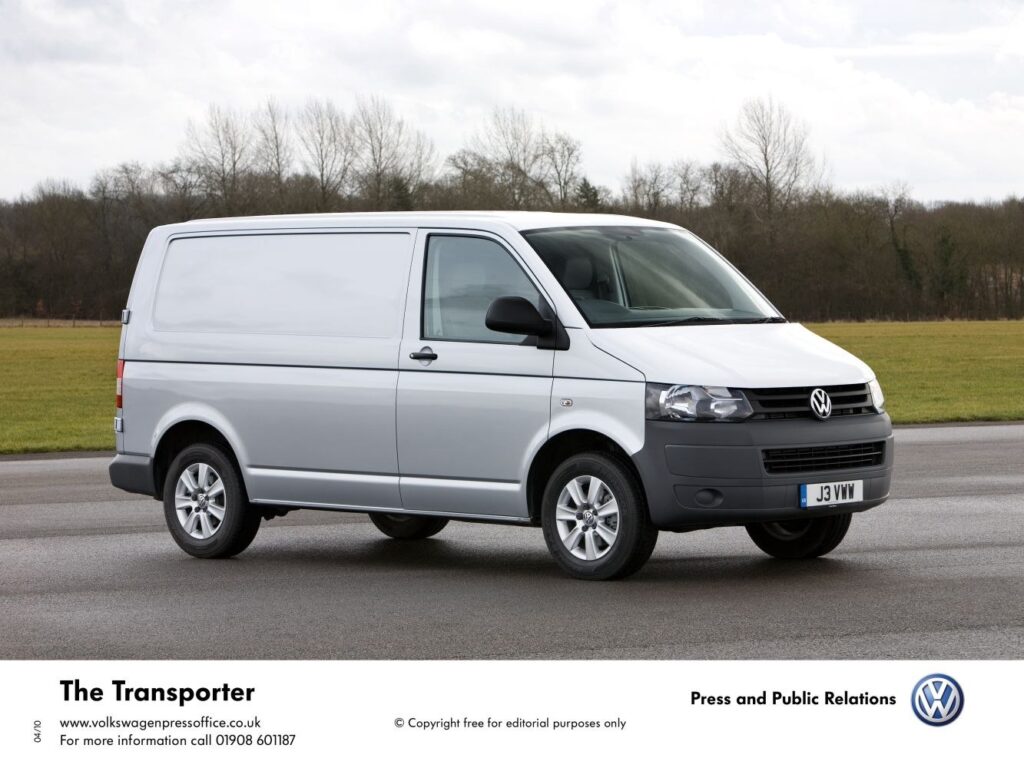
The Volkswagen Transporter, a lineage synonymous with versatility and reliability, saw its fifth generation (T5) receive a significant facelift in 2009. This iteration, specifically the Volkswagen Transporter (T5, facelift 2009) Panel Van 2.0 TDI (180 Hp) DSG L2H2, represented a sophisticated evolution of Volkswagen’s mid-size commercial vehicle. Primarily marketed and celebrated in Europe and other international markets, where it serves as a ubiquitous backbone for businesses, delivery services, and tradespeople, the T5 facelift brought a host of technological and design enhancements. While not a common sight on American roads, the Transporter series is globally recognized for its robust engineering and practical design. This particular variant, the L2H2, signifies a long-wheelbase and high-roof configuration, maximizing cargo capacity and utility. Produced from 2009 to 2015, this model combined a powerful diesel engine with an advanced automatic transmission, setting a high standard for efficiency and performance in its segment.
Engine and Performance of the Volkswagen Transporter (T5, facelift 2009) Panel Van
Powertrain Architecture and Output
Under the hood of the 2009 facelifted T5 Panel Van, Volkswagen introduced a refined and potent powertrain architecture. The heart of this particular model is its 2.0-liter (1968 cm3 or 120.09 cu. in.) inline four-cylinder TDI (Turbocharged Direct Injection) diesel engine. Codenamed EA189 / CFCA, this powerplant was engineered with a bi-turbo setup and an intercooler, a sophisticated arrangement designed to deliver strong performance across a broad RPM range while maintaining efficiency.
This highly capable engine generates an impressive 180 horsepower at 4000 rpm, translating to a power-per-liter output of 91.5 Hp/l. More critically for a commercial vehicle, it produces a substantial 295.02 lb.-ft. (400 Nm) of torque, available from a remarkably low 1500 rpm and sustained up to 2000 rpm. This broad torque band is crucial for effortless hauling of heavy loads and confident acceleration, even when fully laden. The engine features a DOHC (Double Overhead Camshaft) valvetrain, 4 valves per cylinder, and a common rail fuel injection system, all contributing to its smooth operation and fuel efficiency.
Transmission and Driving Dynamics
Power is channeled to the front wheels via a state-of-the-art 7-speed DSG (Direct Shift Gearbox) automatic transmission. This dual-clutch transmission is renowned for its rapid and seamless gear changes, enhancing both performance and fuel economy. The combination of the powerful diesel engine and the efficient DSG gearbox allows the T5 Panel Van to achieve a 0-60 mph acceleration time of approximately 9.6 seconds, with a top speed reaching 114.33 mph (184 km/h).
Efficiency and Emissions
Despite its performance capabilities, the 2.0 TDI (180 Hp) DSG L2H2 variant demonstrated commendable fuel economy for its class. Combined fuel consumption (NEDC) ranged from 30.2 to 29 US mpg (7.8-8.1 l/100 km), with extra-urban figures reaching 35.6 to 34.1 US mpg (6.6-6.9 l/100 km). CO2 emissions were rated between 205-214 g/km, meeting the Euro 5 emission standard of its era, further solidifying its position as an environmentally conscious option for businesses.
Design and Features of the Volkswagen Transporter (T5, facelift 2009) Panel Van
Exterior Design and Utility
The Volkswagen Transporter (T5, facelift 2009) Panel Van is characterized by its functional yet refined design, typical of Volkswagen’s understated aesthetic. The facelift introduced updated headlights, a revised grille, and a more modern front bumper, aligning its appearance with other contemporary Volkswagen passenger vehicles. As a Panel Van, its primary purpose is utility, reflected in its robust construction and spacious cargo area.
Interior Configuration and Dimensions
The L2H2 designation is key to understanding this specific model’s practicality. “L2” denotes a long wheelbase of 133.86 inches (3400 mm), providing enhanced stability and a significantly larger load bay. “H2” indicates a high roof, which dramatically increases the internal cargo volume, making it suitable for transporting taller items or allowing workers to stand upright within the cargo area. The vehicle measures 208.35 inches (5292 mm) in length, 74.96 inches (1904 mm) in width (89.88 inches or 2283 mm including mirrors), and stands 85.67 inches (2176 mm) tall. This generous sizing contributes to a maximum cargo volume of an impressive 275.45 cu. ft. (7800 liters).
Designed for commercial use, the Panel Van typically offers 2-3 seats in the cabin, prioritizing cargo space over passenger accommodation. Access to the cargo area is facilitated by 4-5 doors, usually including a large rear hatch or barn doors and at least one sliding side door, ensuring easy loading and unloading from various angles.
Chassis, Brakes, and Safety
Safety features for its time included ABS (Anti-lock Braking System), and the vehicle’s sturdy chassis and ventilated disc brakes (340×32.5 mm front, 294×22 mm rear) provided reliable stopping power, critical for a vehicle often operating with heavy loads. The independent McPherson strut front suspension with an anti-roll bar and independent coil spring rear suspension with a transverse stabilizer and trailing arm provided a comfortable ride and stable handling, even under demanding conditions. Hydraulic power steering ensured ease of maneuverability, particularly important in urban environments where the Transporter often operates.
Technical Specifications of the Volkswagen Transporter (T5, facelift 2009) Panel Van
| Specification | Value |
|---|---|
| General Information | |
| Brand | Volkswagen |
| Model | Transporter |
| Generation | Transporter (T5, facelift 2009) Panel Van |
| Type (Engine) | 2.0 TDI (180 Hp) DSG L2H2 |
| Start of Production | 2009 |
| End of Production | 2015 |
| Powertrain Architecture | Internal Combustion engine |
| Body Type | Van |
| Seats | 2-3 |
| Doors | 4-5 |
| Performance Specifications | |
| Fuel Consumption (Urban, NEDC) | 9.9-10.2 l/100 km (23.8 – 23.1 US mpg) |
| Fuel Consumption (Extra Urban, NEDC) | 6.6-6.9 l/100 km (35.6 – 34.1 US mpg) |
| Fuel Consumption (Combined, NEDC) | 7.8-8.1 l/100 km (30.2 – 29 US mpg) |
| CO2 Emissions (NEDC) | 205-214 g/km |
| Fuel Type | Diesel |
| Acceleration 0-60 mph | 9.6 seconds |
| Acceleration 0-62 mph (0-100 km/h) | 10.1 seconds |
| Maximum Speed | 114.33 mph (184 km/h) |
| Emission Standard | Euro 5 |
| Weight-to-Power Ratio | 10.2 kg/Hp (98.3 Hp/tonne) |
| Weight-to-Torque Ratio | 4.6 kg/Nm (218.3 Nm/tonne) |
| Engine Specifications | |
| Power | 180 Hp @ 4000 rpm |
| Power per liter | 91.5 Hp/l |
| Torque | 295.02 lb.-ft. (400 Nm) @ 1500-2000 rpm |
| Engine Layout | Front, Transverse |
| Engine Model/Code | EA189 / CFCA |
| Engine Displacement | 2.0 liters (1968 cm3 / 120.09 cu. in.) |
| Number of Cylinders | 4 |
| Engine Configuration | Inline |
| Cylinder Bore | 3.19 in. (81 mm) |
| Piston Stroke | 3.76 in. (95.5 mm) |
| Compression Ratio | 16.5:1 |
| Valves per Cylinder | 4 |
| Fuel Injection System | Diesel Commonrail |
| Engine Aspiration | BiTurbo, Intercooler |
| Valvetrain | DOHC |
| Engine Oil Capacity | 7 liters (7.4 US qt) |
| Coolant Capacity | 11 liters (11.62 US qt) |
| Engine Systems | Particulate filter |
| Dimensions, Volume, and Weights | |
| Kerb Weight | 4038.87 – 4958.2 lbs. (1832-2249 kg) |
| Max. Weight (GVWR) | 6172.94 – 7054.79 lbs. (2800-3200 kg) |
| Max Load | 2096.6 – 2134.07 lbs. (951-968 kg) |
| Trunk (Boot) Space – Maximum | 275.45 cu. ft. (7800 liters) |
| Fuel Tank Capacity | 21.13 US gal (80 liters) |
| Permitted Trailer Load with Brakes (12%) | 5511.56 lbs. (2500 kg) |
| Permitted Trailer Load without Brakes | 1653.47 lbs. (750 kg) |
| Permitted Towbar Download | 220.46 lbs. (100 kg) |
| Length | 208.35 in. (5292 mm) |
| Width | 74.96 in. (1904 mm) |
| Width Including Mirrors | 89.88 in. (2283 mm) |
| Height | 85.67 in. (2176 mm) |
| Wheelbase | 133.86 in. (3400 mm) |
| Front Overhang | 35.28 in. (896 mm) |
| Rear Overhang | 39.21 in. (996 mm) |
| Ride Height (Ground Clearance) | 7.91 in. (201 mm) |
| Minimum Turning Circle (Diameter) | 43.31 ft. (13.2 m) |
| Approach Angle | 21° |
| Departure Angle | 17° |
| Ramp-over (Brakeover) Angle | 12° |
| Drivetrain, Brakes, and Suspension | |
| Drivetrain Architecture | Front-wheel drive, Internal Combustion engine |
| Drive Wheel | Front wheel drive |
| Number of Gears and Type of Gearbox | 7 gears, automatic transmission DSG |
| Front Suspension | Independent, McPherson with coil spring and anti-roll bar |
| Rear Suspension | Independent coil spring, Transverse stabilizer, Trailing arm |
| Front Brakes | Ventilated discs, 340×32.5 mm |
| Rear Brakes | Ventilated discs, 294×22 mm |
| Assisting Systems | ABS (Anti-lock braking system) |
| Steering Type | Steering rack and pinion |
| Power Steering | Hydraulic Steering |
| Tires Size | 215/60 R17; 235/55 R17; 255/45 R18 |
| Wheel Rims Size | 7J x 17; 8J x 18 |
Legacy and Market Impact of the Volkswagen Transporter (T5, facelift 2009) Panel Van
Historical Context and European Dominance
The Volkswagen Transporter series has a long and storied history, dating back to the iconic T1 “Bus” of the 1950s. The T5 generation, and particularly its 2009 facelift, continued this legacy by adapting to modern demands for efficiency, performance, and comfort in a commercial package. In its primary markets, particularly across Europe, the Volkswagen Transporter (T5, facelift 2009) Panel Van was, and remains, a dominant force in the light commercial vehicle segment. Its reputation as a reliable, durable, and versatile workhorse made it a preferred choice for countless businesses, from small independent contractors to large fleet operators.
Technological Advancements and Competition
Competitors in its segment included formidable rivals such as the Mercedes-Benz Vito, Ford Transit Custom, Renault Trafic, and Opel Vivaro. However, the T5 Transporter consistently held its own, often lauded for its car-like driving dynamics, superior build quality, and the sophisticated powertrain options like the 2.0 TDI 180 Hp DSG. The availability of multiple body configurations, including the L2H2 Panel Van, further cemented its appeal by offering tailored solutions for diverse commercial needs.
The T5 facelift marked a significant step in the Transporter’s evolution, integrating more advanced technologies such as the common rail bi-turbo diesel engine and the DSG transmission, which were previously more common in passenger cars. This integration brought higher levels of refinement, fuel efficiency, and driver comfort to the commercial sector, blurring the lines between utilitarian vehicles and passenger cars.
Global Influence and Enduring Appeal
Its strong resale value and the extensive network of Volkswagen service centers also contributed to its enduring popularity. The T5’s impact extended beyond just commercial use; it also formed the basis for popular passenger variants like the Multivan and California camper van, showcasing the platform’s inherent adaptability. While the Transporter has never been officially sold in the United States in this form (the larger, Mercedes-Benz-derived Sprinter serves as VW’s primary large commercial van offering there), its global influence on vehicle design and commercial transport standards is undeniable. The T5 generation, particularly the robust and efficient 2.0 TDI 180 Hp DSG variant, stands as a testament to Volkswagen’s engineering prowess and its commitment to producing functional, high-quality vehicles for the working world.