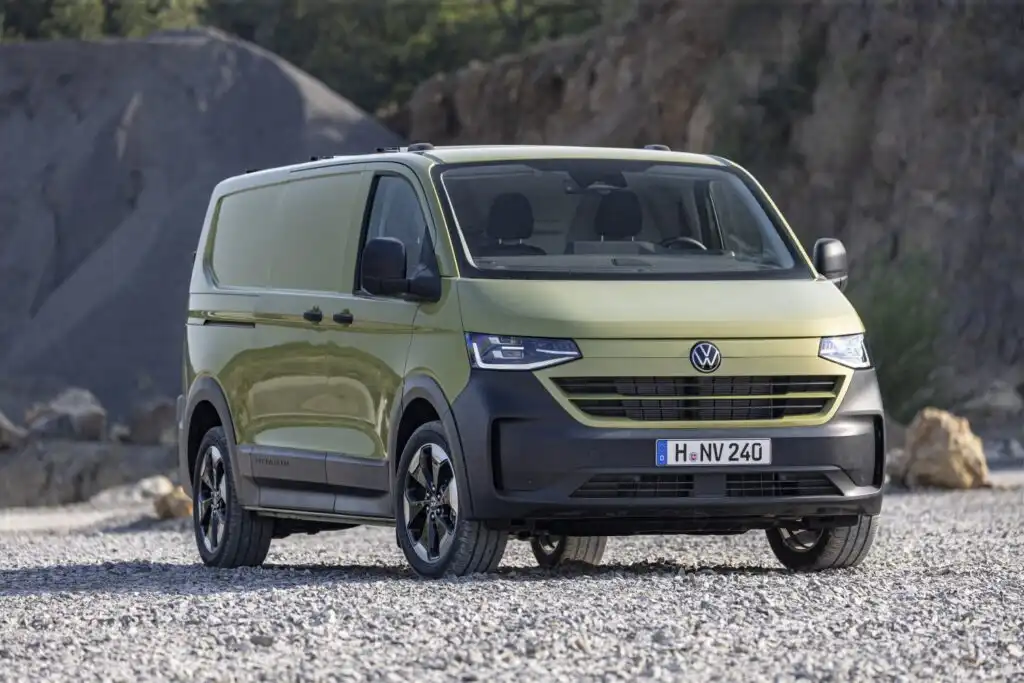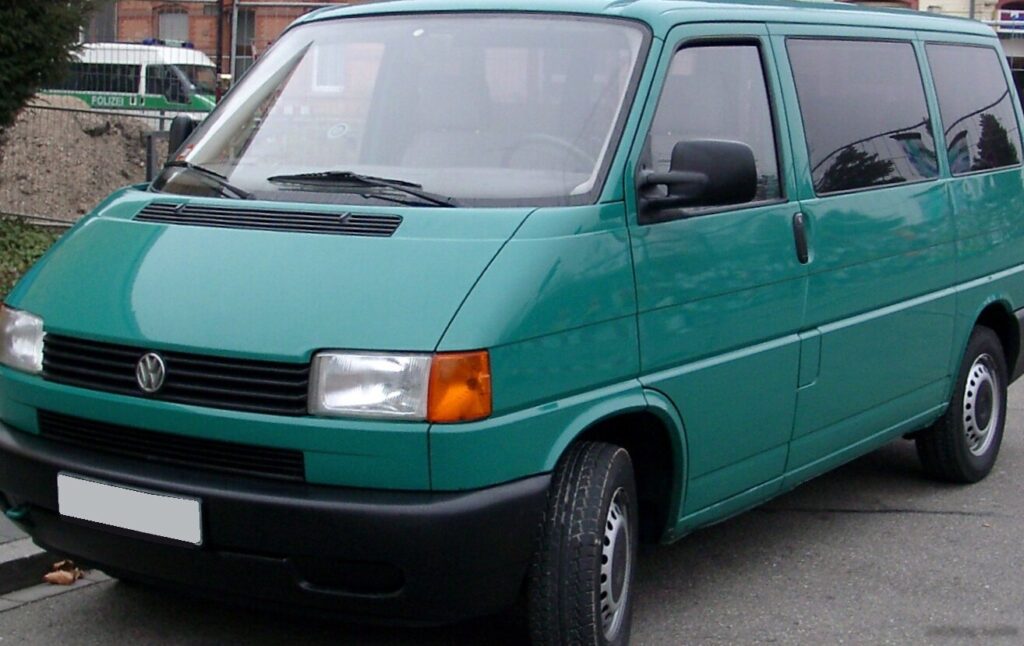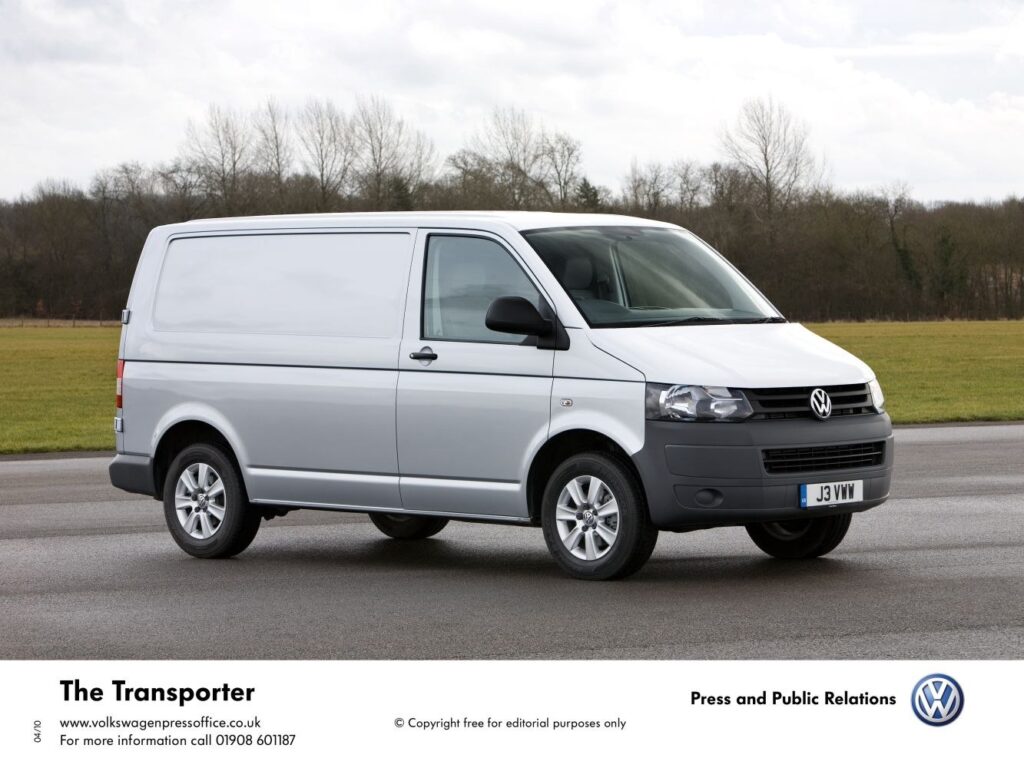
Volkswagen Transporter (T5, facelift 2009) Panel Van: A European Workhorse Defined
The Volkswagen Transporter, a name synonymous with versatility, durability, and practicality, represents a cornerstone of the light commercial vehicle segment globally, particularly in Europe. The fifth generation, known as the T5, received a significant facelift in 2009, ushering in a host of technological and aesthetic enhancements that solidified its position as a market leader. This article delves into the specifics of a particularly potent variant from this era: the Volkswagen Transporter (T5, facelift 2009) Panel Van 2.0 TDI (180 Hp) L1H2. While this specific panel van configuration was not primarily marketed in the United States, its influence and engineering prowess reflect Volkswagen’s global automotive expertise. In its primary European markets, the T5 facelift was celebrated for blending car-like driving dynamics with robust cargo-carrying capabilities, making it an indispensable tool for businesses and tradespeople alike. Produced from 2009 to 2015, this model continued the Transporter’s storied legacy, adapting to modern demands for efficiency and performance.
Engine & Performance: Powering the Volkswagen Transporter (T5, facelift 2009) Panel Van
At the heart of the Volkswagen Transporter (T5, facelift 2009) Panel Van 2.0 TDI (180 Hp) L1H2 lies a sophisticated 2.0-liter (1968 cm3 / 120.09 cu. in.) inline four-cylinder diesel engine, designated with the code EA189 / CFCA. This powertrain is a testament to Volkswagen’s commitment to efficient and powerful diesel technology. Generating a substantial 180 horsepower at 4000 rpm, it delivers impressive thrust for a commercial vehicle. More critically for a van designed to haul loads, the engine produces a robust 295.02 lb.-ft. (400 Nm) of torque, available across a broad and usable range from 1500 to 2000 rpm. This low-end torque is crucial for effortless acceleration, especially when the van is fully loaded, and for navigating urban environments or challenging terrain.
A key technological highlight of this engine is its BiTurbo aspiration system combined with an intercooler. This twin-turbo setup ensures strong power delivery across the entire rev range, mitigating turbo lag and providing a more responsive driving experience. The common rail direct fuel injection system further enhances efficiency and refinement, contributing to cleaner combustion and reduced noise levels. With a compression ratio of 16.5:1 and a DOHC valvetrain with four valves per cylinder, the engine is engineered for optimal performance and fuel economy.
Mated to a precise 6-speed manual transmission, the engine routes its power to the front wheels, a common and efficient drivetrain architecture for this class of vehicle. This setup offers a good balance of traction and maneuverability. Despite its commercial utility, the Transporter L1H2 variant demonstrates surprising agility, capable of accelerating from 0 to 60 mph in a respectable 9.5 seconds and reaching a maximum speed of 114.33 mph (184 km/h).
Fuel efficiency, a critical factor for commercial operators, is well managed. The NEDC combined fuel consumption figures range from 7.5-7.8 liters per 100 km, which translates to an impressive 31.4 – 30.2 US mpg. Urban consumption is rated at 24.8 – 24 US mpg, while extra-urban driving sees figures of 36.8 – 35.1 US mpg. These figures, coupled with an 80-liter (21.13 US gal) fuel tank, provide a substantial operating range, minimizing downtime for refueling. Furthermore, the engine complies with Euro 5 emission standards, incorporating a particulate filter to reduce harmful emissions, reflecting Volkswagen’s commitment to environmental responsibility even in its commercial offerings.
Design & Features: The Practicality of the Volkswagen Transporter (T5, facelift 2009) Panel Van
The Volkswagen Transporter (T5, facelift 2009) Panel Van 2.0 TDI (180 Hp) L1H2 embodies functional design tailored for demanding commercial use. As a panel van, its primary purpose is cargo transport, and the L1H2 designation signifies its ‘Long 1’ length and ‘High 2’ roof configuration. This translates to a total length of 192.6 inches (4892 mm) and a significant height of 85.67 inches (2176 mm), providing ample interior volume. The generous dimensions contribute to an impressive maximum trunk (boot) space of 6700 liters (236.61 cu. ft.), making it an ideal choice for carrying large quantities of goods or equipment.
The body style is a classic van, typically featuring 4 to 5 doors, including a large sliding side door and rear barn doors or a tailgate for easy loading and unloading. The cabin is designed for 2-3 occupants, with durable materials chosen to withstand the rigors of daily commercial use. The facelift introduced subtle but effective exterior updates, including revised headlights, grilles, and bumpers, aligning the T5 more closely with Volkswagen’s contemporary passenger car design language while maintaining its utilitarian aesthetic.
Underneath its practical exterior, the T5 facelift boasts a robust chassis designed for comfort and capability. The front suspension features an independent McPherson strut setup with coil springs and an anti-roll bar, while the rear employs an independent coil spring system with a transverse stabilizer and trailing arms. This sophisticated suspension ensures a comfortable ride even when unladen, and stable handling even with a full payload. Stopping power is provided by large ventilated disc brakes on both the front (340×32.5 mm) and rear (294×22 mm) axles, complemented by an Anti-lock Braking System (ABS) for enhanced safety and control in diverse driving conditions.
The hydraulic power steering system, with its rack and pinion setup, offers precise control and good feedback, essential for maneuvering a large van in tight urban spaces. The vehicle’s turning circle of 39.04 ft (11.9 m) is commendable for its size, further aiding maneuverability. Depending on the configuration, tire sizes range from 215/60 R17 to 255/45 R18, mounted on 7J x 17 or 8J x 18 wheel rims, providing excellent grip and stability. With a kerb weight ranging from 3899.98 to 4757.58 lbs (1769-2158 kg) and a maximum permissible weight of 6172.94 to 7054.79 lbs (2800-3200 kg), the Transporter offers a substantial maximum payload capacity of 2272.97 to 2297.22 lbs (1031-1042 kg). It also boasts impressive towing capabilities, rated for 5511.56 lbs (2500 kg) with brakes and 1653.47 lbs (750 kg) without.
Technical Specifications
| Category | Specification | US Equivalent |
|---|---|---|
| General Information | ||
| Brand | Volkswagen | |
| Model | Transporter | |
| Generation | Transporter (T5, facelift 2009) Panel Van | |
| Type (Engine) | 2.0 TDI (180 Hp) L1H2 | |
| Start of Production | 2009 year | |
| End of Production | 2015 year | |
| Powertrain Architecture | Internal Combustion engine | |
| Body Type | Van | |
| Seats | 2-3 | |
| Doors | 4-5 | |
| Performance Specs | ||
| Fuel consumption (urban, NEDC) | 9.5-9.8 l/100 km | 24.8 – 24 US mpg |
| Fuel consumption (extra urban, NEDC) | 6.4-6.7 l/100 km | 36.8 – 35.1 US mpg |
| Fuel consumption (combined, NEDC) | 7.5-7.8 l/100 km | 31.4 – 30.2 US mpg |
| CO2 emissions (NEDC) | 197-205 g/km | |
| Fuel Type | Diesel | |
| Acceleration 0 – 60 mph | 9.5 sec | |
| Maximum Speed | 184 km/h | 114.33 mph |
| Emission Standard | Euro 5 | |
| Weight-to-power ratio | 9.8 kg/Hp | |
| Weight-to-torque ratio | 4.4 kg/Nm | |
| Engine Specs | ||
| Power | 180 Hp @ 4000 rpm | |
| Power per liter | 91.5 Hp/l | |
| Torque | 400 Nm @ 1500-2000 rpm | 295.02 lb.-ft. @ 1500-2000 rpm |
| Engine Layout | Front, Transverse | |
| Engine Model/Code | EA189 / CFCA | |
| Engine Displacement | 1968 cm3 | 120.09 cu. in. |
| Number of Cylinders | 4 | |
| Engine Configuration | Inline | |
| Cylinder Bore | 81 mm | 3.19 in. |
| Piston Stroke | 95.5 mm | 3.76 in. |
| Compression Ratio | 16.5:1 | |
| Number of Valves per Cylinder | 4 | |
| Fuel Injection System | Diesel Commonrail | |
| Engine Aspiration | BiTurbo, Intercooler | |
| Valvetrain | DOHC | |
| Engine Oil Capacity | 7 l | 7.4 US qt |
| Coolant Capacity | 11 l | 11.62 US qt |
| Engine Systems | Particulate filter | |
| Space, Volume and Weights | ||
| Kerb Weight | 1769-2158 kg | 3899.98 – 4757.58 lbs. |
| Max. Weight (GVWR) | 2800-3200 kg | 6172.94 – 7054.79 lbs. |
| Max Load (Payload) | 1031-1042 kg | 2272.97 – 2297.22 lbs. |
| Trunk (boot) Space – Maximum | 6700 l | 236.61 cu. ft. |
| Fuel Tank Capacity | 80 l | 21.13 US gal |
| Permitted Trailer Load with Brakes (12%) | 2500 kg | 5511.56 lbs. |
| Permitted Trailer Load without Brakes | 750 kg | 1653.47 lbs. |
| Permitted Towbar Download | 100 kg | 220.46 lbs. |
| Dimensions | ||
| Length | 4892 mm | 192.6 in. |
| Width | 1904 mm | 74.96 in. |
| Width Including Mirrors | 2283 mm | 89.88 in. |
| Height | 2176 mm | 85.67 in. |
| Wheelbase | 3000 mm | 118.11 in. |
| Front Overhang | 896 mm | 35.28 in. |
| Rear Overhang | 996 mm | 39.21 in. |
| Ride Height (Ground Clearance) | 201 mm | 7.91 in. |
| Minimum Turning Circle (Turning Diameter) | 11.9 m | 39.04 ft. |
| Approach Angle | 21° | |
| Departure Angle | 17° | |
| Ramp-over (Brakeover) Angle | 14° | |
| Wading Depth | 300 mm | 11.81 in. |
| Drivetrain, Brakes and Suspension Specs | ||
| Drivetrain Architecture | The Internal combustion engine (ICE) drives the front wheels of the vehicle. | |
| Drive Wheel | Front-wheel drive | |
| Number of Gears and Type of Gearbox | 6 gears, manual transmission | |
| Front Suspension | Independent, type McPherson with coil spring and anti-roll bar | |
| Rear Suspension | Independent coil spring, Transverse stabilizer, Trailing arm | |
| Front Brakes | Ventilated discs, 340×32.5 mm | |
| Rear Brakes | Ventilated discs, 294×22 mm | |
| Assisting Systems | ABS (Anti-lock braking system) | |
| Steering Type | Steering rack and pinion | |
| Power Steering | Hydraulic Steering | |
| Tires Size | 215/60 R17; 235/55 R17; 255/45 R18 | |
| Wheel Rims Size | 7J x 17; 8J x 18 |
Legacy & Market Impact
The Volkswagen Transporter, particularly the T5 generation and its facelifted iteration, holds a formidable position in the global automotive landscape, especially in European and other international markets where robust commercial vehicles are essential. The Volkswagen Transporter (T5, facelift 2009) Panel Van 2.0 TDI (180 Hp) L1H2 exemplifies the qualities that have made the Transporter line a legend: unwavering reliability, exceptional durability, and unparalleled versatility.
In its primary markets, the T5 facelift was not just a vehicle; it was an integral part of countless businesses, from small independent contractors to large logistics companies. Its reputation for longevity and low running costs, especially with the efficient TDI diesel engines, made it a smart investment for commercial operators. The T5’s ability to seamlessly blend into urban delivery routes while also handling long-distance hauling with ease cemented its status as a go-to choice.
The Transporter faced stiff competition in the light commercial vehicle segment from formidable rivals such as the Mercedes-Benz Vito, Ford Transit Custom, Renault Trafic, and Opel Vivaro. However, the T5 consistently stood out thanks to its superior build quality, refined driving dynamics that often felt more car-like than van-like, and strong residual values. The powerful 2.0 TDI (180 Hp) engine variant, in particular, offered a compelling blend of performance and economy that many competitors struggled to match, especially when carrying heavy loads.
Beyond its commercial duties, the T5 platform also served as the basis for highly popular passenger variants like the Multivan and California camper van, further showcasing its adaptability. While the panel van variant discussed here focuses on pure utility, its underlying engineering shares the same DNA that made these passenger versions so successful. The T5 facelift represents a pivotal moment in the Transporter’s evolution, demonstrating Volkswagen’s ability to innovate and refine a beloved classic for the demands of the 21st century. Its legacy endures through its successor, the T