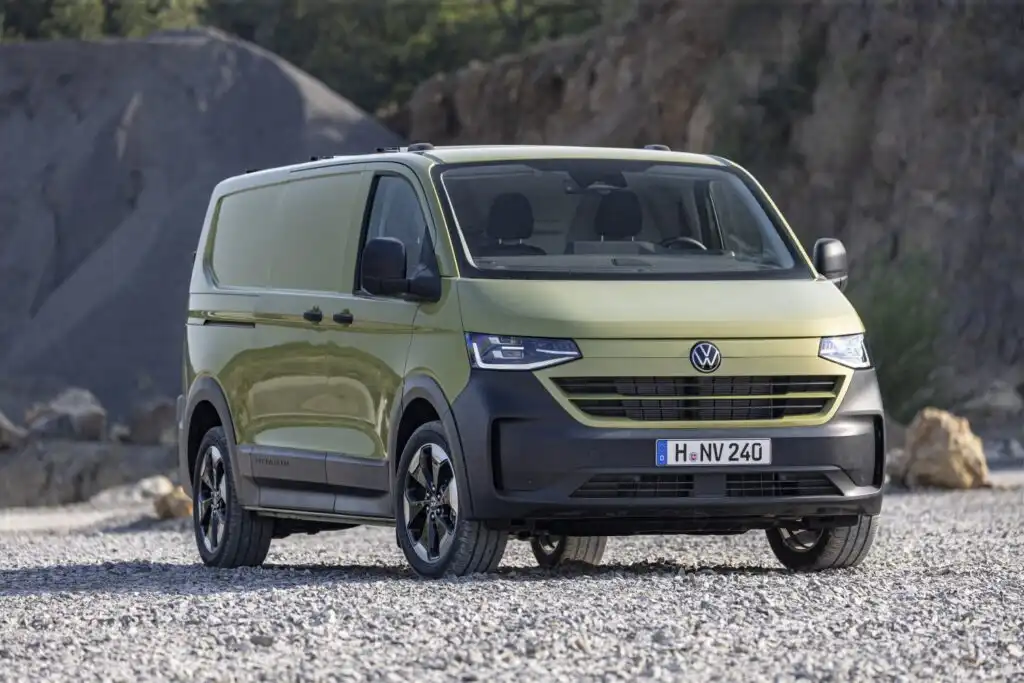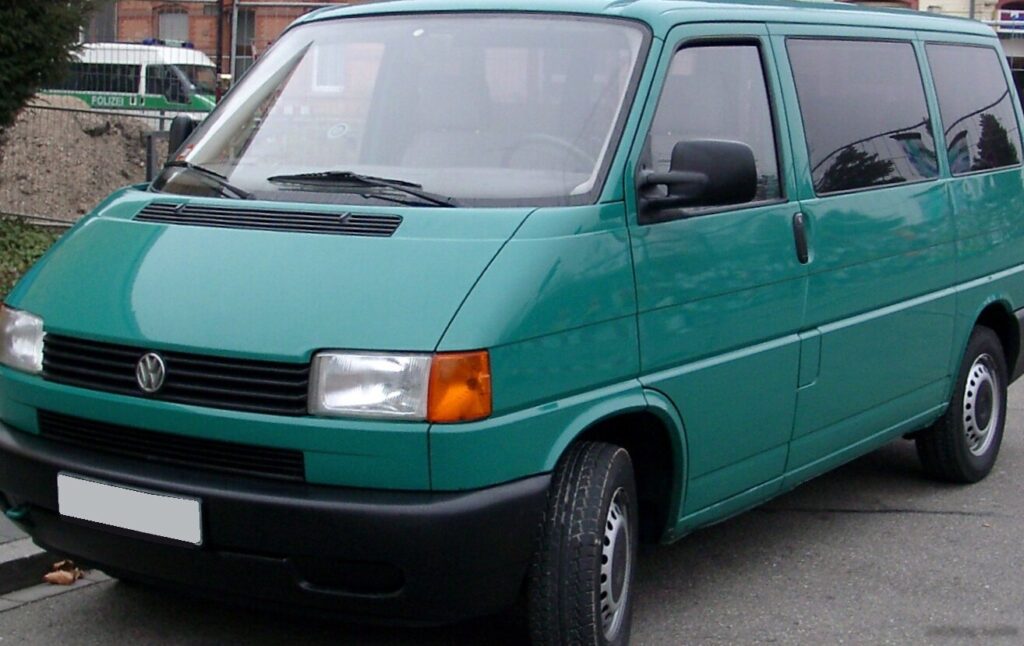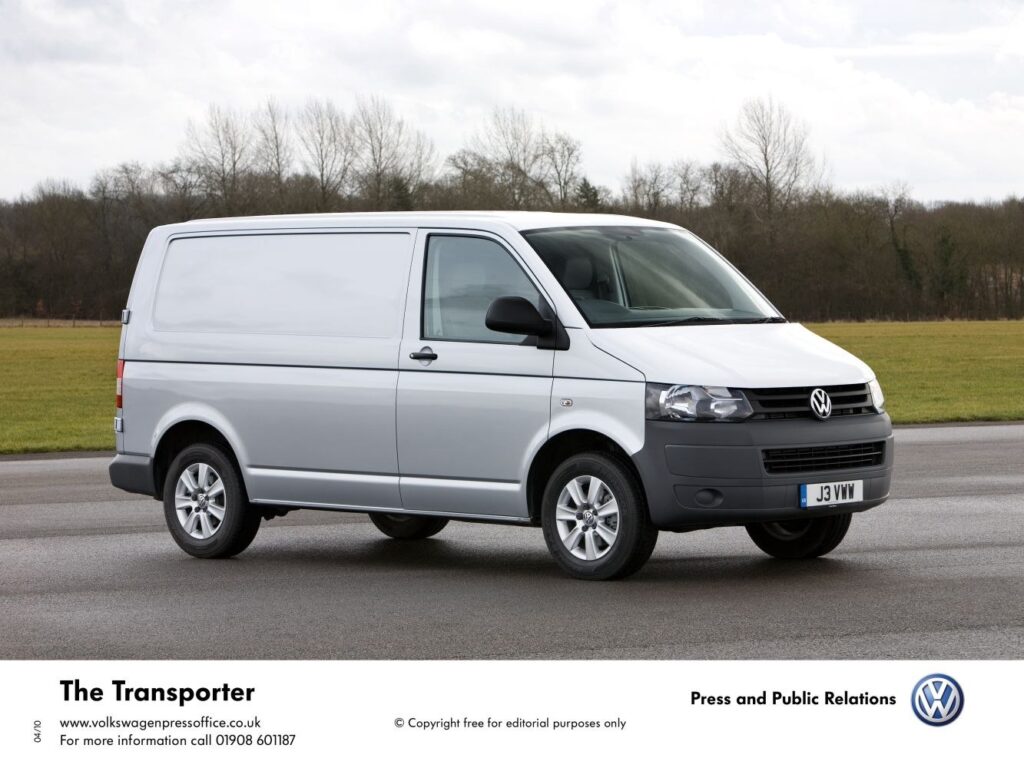
The Volkswagen Transporter (T5, facelift 2009) Panel Van: A European Workhorse
The Volkswagen Transporter, specifically the T5 generation that received a significant facelift in 2009, represents a pivotal model in the brand’s long-standing lineage of commercial vehicles. Known globally for its versatility, durability, and robust engineering, the Transporter has been a cornerstone of Volkswagen’s light commercial vehicle division for decades. The T5 generation, produced from 2003 to 2015, saw its mid-cycle refresh in 2009, bringing updated aesthetics, improved powertrains, and enhanced technology. The particular variant, the Volkswagen Transporter (T5, facelift 2009) Panel Van 2.0 TDI (180 Hp) L2H3, highlights a specific configuration tailored for heavy-duty commercial use: L2 denotes a long wheelbase, and H3 signifies a high roof, maximizing cargo capacity. While not a common sight in the United States market, where larger domestic vans like the Ford Transit (itself a European import) and Ram ProMaster dominate, the Transporter is an iconic and indispensable vehicle across Europe, Asia, and other international markets, serving a vast array of businesses and trades.
Evolution of the Volkswagen Transporter (T5, facelift 2009) Panel Van
The T5 generation Transporter succeeded the T4 in 2003, building upon its predecessor’s reputation for reliability and utility. The 2009 facelift, which continued production until 2015, introduced a range of improvements designed to keep the Transporter competitive in a demanding segment. Key updates included a redesigned front fascia with new headlights, grille, and bumper, aligning its appearance with Volkswagen’s contemporary passenger car lineup. More significantly, the facelift brought a new range of TDI (Turbocharged Direct Injection) diesel engines, which were more efficient and powerful, meeting stricter Euro 5 emission standards. The introduction of advanced features like a dual-clutch transmission (DSG) option and updated infotainment systems further modernized the vehicle. The Panel Van configuration, with its enclosed cargo area and minimal seating, remained central to its commercial appeal, offering practical solutions for businesses requiring substantial hauling capabilities.
Engine and Performance: Powering the Volkswagen Transporter (T5, facelift 2009) Panel Van
Under the hood, the Volkswagen Transporter (T5, facelift 2009) Panel Van 2.0 TDI (180 Hp) L2H3 variant featured a sophisticated 2.0-liter, four-cylinder, inline diesel engine. This particular powerplant, identified by the EA189 / CFCA engine code, was a marvel of diesel engineering for its time, incorporating a BiTurbo setup and an intercooler. The BiTurbo system, utilizing two turbochargers working in sequence, allowed for strong power delivery across a broad RPM range, mitigating turbo lag and ensuring robust performance whether navigating city streets or cruising on highways.
The engine produced a robust 180 horsepower at 4000 rpm, translating to an impressive 91.5 horsepower per liter. More critically for a commercial vehicle, it delivered a substantial 400 Nm (approximately 295.02 lb.-ft.) of torque, available in a wide band from 1500 to 2000 rpm. This low-end torque was crucial for hauling heavy loads and providing confident acceleration from a standstill. Power was sent to the front wheels via a six-speed manual transmission, offering precise control and optimizing fuel efficiency.
Despite its size and commercial purpose, the Transporter L2H3 with this engine delivered respectable performance figures. It could accelerate from 0 to 60 mph in a swift 9.8 seconds, or 0 to 100 km/h in 10.3 seconds, which was quite brisk for a panel van. The maximum speed reached 176 km/h (approximately 109.36 mph), more than adequate for its intended use. Fuel economy was also a strong point, with combined NEDC figures ranging from 7.8 to 8.1 liters per 100 km (approximately 29 to 30.2 US mpg). These efficiency figures, coupled with an 80-liter (21.13 US gallon) fuel tank, provided a significant operating range, reducing downtime for refueling. The engine was equipped with a particulate filter and met Euro 5 emission standards, reflecting Volkswagen’s commitment to reducing environmental impact in its commercial vehicle lineup.
Design and Features: Functionality Meets Form
The design of the Volkswagen Transporter (T5, facelift 2009) Panel Van was driven by practicality and durability, hallmarks of Volkswagen’s commercial vehicle philosophy. The L2H3 configuration specified a length of 5292 mm (208.35 inches), a width of 1904 mm (74.96 inches, or 2283 mm / 89.88 inches including mirrors), and a towering height of 2476 mm (97.48 inches). This substantial footprint, combined with a generous wheelbase of 3400 mm (133.86 inches), provided a stable platform for carrying heavy loads and contributed to its impressive cargo volume. The “Panel Van” designation means the rear side windows are replaced with body panels, offering security for cargo and a large surface area for business branding.
Inside, the Transporter Panel Van was designed with the working professional in mind. While seating was limited to 2-3 occupants, the cabin prioritized ergonomics and functionality. Hard-wearing materials were used throughout to withstand the rigors of daily commercial use. Storage compartments were strategically placed for documents, tools, and personal items. The L2H3 variant boasted an enormous maximum trunk (cargo) space of 9300 liters (328.43 cubic feet), making it suitable for transporting large volumes or irregularly shaped items. The maximum payload capacity ranged from 963 to 980 kg (2123.05 to 2160.53 lbs.), underscoring its capability as a serious work vehicle.
Safety features for the era included ventilated disc brakes on both the front (340×32.5 mm) and rear (294×22 mm) axles, coupled with an Anti-lock Braking System (ABS) for enhanced stopping power and control. The suspension system, featuring an independent McPherson strut setup with coil springs and an anti-roll bar at the front, and an independent coil spring with a transverse stabilizer and trailing arm at the rear, was engineered to handle varying loads while maintaining ride comfort and stability. Hydraulic power steering made maneuvering the large van easier, especially in urban environments, despite a minimum turning circle of 13.2 meters (43.31 feet).
Technical Specifications
| Category | Specification |
|---|---|
| Brand | Volkswagen |
| Model | Transporter |
| Generation | Transporter (T5, facelift 2009) Panel Van |
| Engine Type | 2.0 TDI (180 Hp) L2H3 |
| Production Years | 2009 – 2015 |
| Body Type | Van, 4-5 Doors, 2-3 Seats |
| Powertrain Architecture | Internal Combustion engine, Front-wheel drive |
| Performance | |
| Fuel Consumption – Urban (NEDC) | 9.5-9.8 l/100 km (24.8 – 24 US mpg) |
| Fuel Consumption – Extra Urban (NEDC) | 6.8-7.1 l/100 km (34.6 – 33.1 US mpg) |
| Fuel Consumption – Combined (NEDC) | 7.8-8.1 l/100 km (30.2 – 29 US mpg) |
| CO2 Emissions (NEDC) | 205-214 g/km |
| Fuel Type | Diesel |
| Acceleration 0-60 mph | 9.8 sec |
| Acceleration 0-100 km/h | 10.3 sec |
| Maximum Speed | 176 km/h (109.36 mph) |
| Emission Standard | Euro 5 |
| Weight-to-Power Ratio | 10.1 kg/Hp (98.9 Hp/tonne) |
| Weight-to-Torque Ratio | 4.6 kg/Nm (219.8 Nm/tonne) |
| Engine Specifications | |
| Power | 180 Hp @ 4000 rpm |
| Power per liter | 91.5 Hp/l |
| Torque | 400 Nm @ 1500-2000 rpm (295.02 lb.-ft.) |
| Engine Layout | Front, Transverse |
| Engine Model/Code | EA189 / CFCA |
| Engine Displacement | 1968 cm³ (2.0 L, 120.09 cu. in.) |
| Number of Cylinders | 4, Inline |
| Cylinder Bore | 81 mm (3.19 in.) |
| Piston Stroke | 95.5 mm (3.76 in.) |
| Compression Ratio | 16.5:1 |
| Valves per Cylinder | 4 |
| Fuel Injection System | Diesel Commonrail |
| Engine Aspiration | BiTurbo, Intercooler |
| Valvetrain | DOHC |
| Engine Oil Capacity | 7 L (7.4 US qt) |
| Coolant Capacity | 11 L (11.62 US qt) |
| Engine Systems | Particulate filter |
| Dimensions, Weights, and Capacities | |
| Kerb Weight | 1820-2237 kg (4012.41 – 4931.74 lbs.) |
| Max. Weight | 2800-3200 kg (6172.94 – 7054.79 lbs.) |
| Max Load | 963-980 kg (2123.05 – 2160.53 lbs.) |
| Trunk (Cargo) Space – Maximum | 9300 L (328.43 cu. ft.) |
| Fuel Tank Capacity | 80 L (21.13 US gal) |
| Permitted Trailer Load with Brakes (12%) | 2500 kg (5511.56 lbs.) |
| Permitted Trailer Load without Brakes | 750 kg (1653.47 lbs.) |
| Permitted Towbar Download | 100 kg (220.46 lbs.) |
| Length | 5292 mm (208.35 in.) |
| Width | 1904 mm (74.96 in.) |
| Width including mirrors | 2283 mm (89.88 in.) |
| Height | 2476 mm (97.48 in.) |
| Wheelbase | 3400 mm (133.86 in.) |
| Front Overhang | 896 mm (35.28 in.) |
| Rear Overhang | 996 mm (39.21 in.) |
| Ride Height (Ground Clearance) | 201 mm (7.91 in.) |
| Minimum Turning Circle | 13.2 m (43.31 ft.) |
| Approach Angle | 21° |
| Departure Angle | 17° |
| Ramp-over (Brakeover) Angle | 12° |
| Drivetrain, Brakes, and Suspension | |
| Drive Wheel | Front Wheel Drive |
| Gearbox | 6-speed manual transmission |
| Front Suspension | Independent, McPherson type with coil spring and anti-roll bar |
| Rear Suspension | Independent coil spring, Transverse stabilizer, Trailing arm |
| Front Brakes | Ventilated discs, 340×32.5 mm |
| Rear Brakes | Ventilated discs, 294×22 mm |
| Assisting Systems | ABS (Anti-lock braking system) |
| Steering Type | Steering rack and pinion |
| Power Steering | Hydraulic Steering |
| Tire Sizes | 215/60 R17; 235/55 R17; 255/45 R18 |
| Wheel Rim Sizes | 7J x 17; 8J x 18 |
Legacy and Market Impact in the European Commercial Vehicle Segment
The Volkswagen Transporter (T5, facelift 2009) Panel Van, particularly in its high-output 2.0 TDI (180 Hp) L2H3 configuration, solidified its position as a highly respected and sought-after commercial vehicle in its primary markets. Its reputation was built on a foundation of reliability, impressive load-carrying capabilities, and a car-like driving experience that was often lauded by professional drivers. The facelifted T5 further enhanced this reputation by introducing more efficient and powerful engines, alongside modernizing its interior and exterior.
In Europe, the Transporter faced stiff competition from other established players in the light commercial vehicle segment. Key rivals included the Ford Transit Custom, Mercedes-Benz Vito, Renault Trafic, and Opel Vivaro (Vauxhall Vivaro in the UK). What set the Transporter apart was its premium feel, robust build quality, and strong resale values, often perceived as a more refined and durable option compared to some of its competitors. Its broad range of configurations, from basic panel vans to luxurious Caravelle and California camper versions, also showcased its immense versatility, allowing Volkswagen to cater to a diverse customer base.
The T5 generation, and specifically the facelifted models with their advanced TDI engines, played a crucial role in maintaining Volkswagen’s dominance in the European van market. Its combination of power, efficiency, and sheer practicality made it an indispensable tool for countless small businesses, delivery services, and tradespeople. The L2H3 variant, with its maximum cargo volume, was particularly popular for those requiring significant space, offering a practical alternative to larger, less maneuverable trucks. The Transporter’s enduring legacy is not just in its sales figures but in its omnipresence on European roads, a testament to its design, engineering, and unwavering commitment to utility. Even after the introduction of the T6 generation in 2015, the T5 remains a highly valued used vehicle, reflecting its lasting impact and the trust it earned among its users.