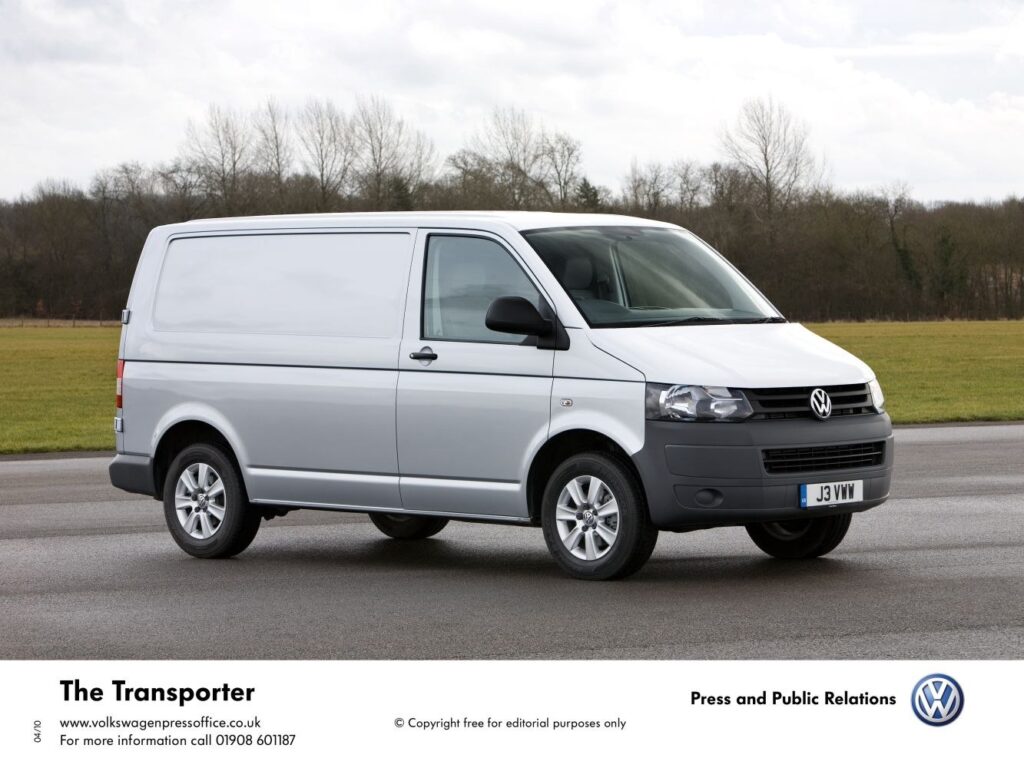
Introduction to the Volkswagen Transporter (T5, facelift 2009) Panel Van 2.0 TDI (84 Hp) L1H1
The Volkswagen Transporter, a name synonymous with versatility and reliability in the light commercial vehicle (LCV) segment, has a storied history dating back to the iconic Type 2 “Bus.” The T5 generation, introduced in 2003, continued this legacy, evolving into a sophisticated and highly capable workhorse. The specific model under review, the Volkswagen Transporter (T5, facelift 2009) Panel Van 2.0 TDI (84 Hp) L1H1, represents a crucial mid-cycle refresh that brought significant updates to an already robust platform. This particular variant, with its 2.0-liter TDI engine producing 84 horsepower, and its L1H1 designation (indicating a standard wheelbase and standard roof height), was engineered to serve as a practical and efficient solution for businesses across Europe and other international markets, where it solidified its position as a benchmark for commercial vans.
While the Transporter in its panel van configuration was not widely sold in the United States, its global impact and engineering prowess are undeniable. It embodies Volkswagen’s commitment to delivering durable, functional, and economically viable vehicles for a diverse range of professional applications. The 2009 facelift enhanced its visual appeal, improved its powertrain options, and refined its interior ergonomics, ensuring the T5 remained competitive in a demanding market segment from its production start in 2009 until its discontinuation in 2015.
The Evolution of the T5 Transporter and its 2009 Facelift
The T5 generation of the Volkswagen Transporter debuted in 2003, succeeding the T4 (EuroVan in North America). It represented a significant step forward in terms of design, technology, and driving dynamics, aiming to offer car-like comfort and handling within a commercial vehicle package. By 2009, Volkswagen introduced a comprehensive facelift to the T5 lineup, breathing new life into the popular van and addressing evolving market demands, particularly concerning emissions and fuel efficiency.
The 2009 facelift for the Volkswagen Transporter (T5, facelift 2009) Panel Van brought a host of exterior and interior revisions. Aesthetically, the front fascia received a modernized look, aligning with Volkswagen’s contemporary design language seen in its passenger car range. This included redesigned headlights, a more prominent grille, and updated bumpers, giving the Transporter a fresher and more assertive presence. Inside, the cabin saw improvements in material quality, new instrumentation, and enhanced infotainment options, all designed to make the working environment more comfortable and intuitive for drivers who spend countless hours behind the wheel. Critically, the facelift also introduced a new range of engines, including the more efficient and refined 2.0-liter TDI units, which were central to meeting stricter Euro 5 emission standards. This focus on efficiency and lower emissions was a key selling point in a market increasingly concerned with environmental impact and running costs.
Powertrain: The 2.0 TDI Engine and Performance
At the heart of the Volkswagen Transporter (T5, facelift 2009) Panel Van 2.0 TDI (84 Hp) L1H1 lies a robust and efficient 2.0-liter TDI (Turbocharged Direct Injection) inline-four diesel engine. Coded EA189 / CAAA, this powerplant was part of Volkswagen’s new generation of diesel engines, designed for improved fuel economy and reduced emissions, complying with the Euro 5 standard. While 84 horsepower (Hp) at 3500 rpm might appear modest on paper, the true strength of this engine for a commercial vehicle lies in its torque delivery. It produces a substantial 220 Newton-meters (162.26 lb.-ft.) of torque across a broad and usable rev range, specifically from 1250 to 2500 rpm. This low-end torque is crucial for a panel van, enabling effortless hauling of heavy loads, confident acceleration from a standstill, and relaxed cruising without constantly shifting gears.
Power is transferred to the front wheels via a durable 5-speed manual transmission, a common and reliable choice for commercial vehicles of this era. The front-wheel-drive architecture, combined with the transverse engine layout, optimizes interior space and contributes to predictable handling characteristics. Despite its commercial focus, the 2.0 TDI offers commendable fuel economy figures for its class. The combined NEDC cycle rated it between 7.2-7.5 liters per 100 kilometers, translating to an impressive 32.7 – 31.4 US miles per gallon. This efficiency was a significant factor in its appeal to businesses looking to minimize operational costs. Acceleration from 0 to 60 mph is achieved in approximately 18.7 seconds, with a top speed of 90.72 mph (146 km/h). While not built for speed, these figures are entirely adequate for urban deliveries and highway travel, emphasizing utility over outright performance. The engine also features modern amenities like a turbocharger with an intercooler, common rail fuel injection, DOHC valvetrain, and a particulate filter, all contributing to its efficiency and cleaner operation.
Design, Utility, and Features
The Volkswagen Transporter (T5, facelift 2009) Panel Van 2.0 TDI (84 Hp) L1H1 is fundamentally a purpose-built commercial vehicle, and its design reflects this unwavering focus on utility. As an L1H1 variant, it features the standard wheelbase and standard roof height, offering a balance between maneuverability in urban environments and substantial cargo capacity. The body style is a classic van, typically configured with 4 to 5 doors, providing easy access to the cargo area. The cabin is designed to accommodate 2 to 3 occupants, with a focus on durability and practicality.
Measuring 192.6 inches (4892 mm) in length, 74.96 inches (1904 mm) in width (89.88 inches or 2283 mm including mirrors), and 78.35 inches (1990 mm) in height, the Transporter L1H1 is compact enough for city driving yet spacious enough for serious hauling. Its 118.11-inch (3000 mm) wheelbase contributes to a stable ride. The cargo area is the centerpiece of the panel van, boasting a maximum trunk space of 5800 liters (204.83 cubic feet). This cavernous volume, coupled with a maximum payload capacity of 1977.55 – 2012.82 lbs. (897-913 kg), makes it an ideal choice for tradespeople, delivery services, and various other commercial applications.
Practical features extend to its robust construction and thoughtful details. The vehicle’s substantial kerb weight of 3719.2 – 4636.32 lbs. (1687-2103 kg) underscores its sturdy build. The 21.13 US gallon (80 liter) fuel tank provides an excellent range, reducing the frequency of refueling stops, which is a significant advantage for businesses. Other utility-focused features include a maximum roof load of 220.46 lbs. (100 kg), and impressive towing capabilities: 4850.17 lbs. (2200 kg) with brakes and 1653.47 lbs. (750 kg) without brakes. The ground clearance of 7.91 inches (201 mm) and respectable approach, departure, and ramp-over angles, along with a wading depth of 11.81 inches (300 mm), hint at its capability to handle varied terrains, from construction sites to unpaved roads.
Chassis, Suspension, and Braking
The underpinnings of the Volkswagen Transporter (T5) were engineered to provide a balance of comfort, stability, and durability, essential attributes for a vehicle designed to carry heavy loads and cover long distances. The front suspension features an independent McPherson strut setup with coil springs and an anti-roll bar, a common and effective design for light commercial vehicles that provides good road holding and absorbs road imperfections efficiently. At the rear, the T5 utilizes an independent coil spring suspension with a transverse stabilizer and trailing arms, a sophisticated arrangement that enhances ride comfort and load-carrying ability compared to simpler leaf spring setups often found in older commercial vans. This independent rear suspension contributes significantly to the Transporter’s car-like handling and stability, even when fully loaded.
Braking performance is handled by a robust system comprising ventilated discs on both the front (308×29.5 mm) and rear (294×22 mm) axles. This provides strong and consistent stopping power, crucial for a vehicle that frequently operates with varying loads. Standard assisting systems include ABS (Anti-lock Braking System), enhancing safety by preventing wheel lock-up during hard braking. Steering is managed by a hydraulic rack and pinion system, offering direct feedback and a solid feel, which is appreciated when maneuvering a larger vehicle. The turning circle of 39.04 feet (11.9 meters) is relatively tight for its size, aiding in urban maneuverability. The vehicle rides on 215/65 R16 tires mounted on 6.5J x 16 wheel rims, a practical choice that balances load capacity with ride comfort and tire availability.
Technical Specifications: Volkswagen Transporter (T5, facelift 2009) Panel Van 2.0 TDI (84 Hp) L1H1
| Category | Specification | US Equivalent |
|---|---|---|
General Information |
||
| Brand | Volkswagen | |
| Model | Transporter | |
| Generation | Transporter (T5, facelift 2009) Panel Van | |
| Type (Engine) | 2.0 TDI (84 Hp) L1H1 | |
| Start of Production | 2009 year | |
| End of Production | 2015 year | |
| Powertrain Architecture | Internal Combustion engine | |
| Body Type | Van | |
| Seats | 2-3 | |
| Doors | 4-5 | |
Performance Specifications |
||
| Fuel Consumption (Urban, NEDC) | 9.4-9.7 l/100 km | 25 – 24.2 US mpg |
| Fuel Consumption (Extra Urban, NEDC) | 6-6.3 l/100 km | 39.2 – 37.3 US mpg |
| Fuel Consumption (Combined, NEDC) | 7.2-7.5 l/100 km | 32.7 – 31.4 US mpg |
| CO2 Emissions (NEDC) | 190-198 g/km | |
| Fuel Type | Diesel | |
| Acceleration 0 – 60 mph | 18.7 sec | |
| Maximum Speed | 146 km/h | 90.72 mph |
| Emission Standard | Euro 5 | |
| Weight-to-Power Ratio | 20.1 kg/Hp | 44.31 lbs/Hp |
| Weight-to-Torque Ratio | 7.7 kg/Nm | 16.98 lbs/Nm |
Engine Specifications |
||
| Power | 84 Hp @ 3500 rpm | |
| Power per liter | 42.7 Hp/l | |
| Torque | 220 Nm @ 1250-2500 rpm | 162.26 lb.-ft. @ 1250-2500 rpm |
| Engine Layout | Front, Transverse | |
| Engine Model/Code | EA189 / CAAA | |
| Engine Displacement | 1968 cm3 | 120.09 cu. in. (2.0 L) |
| Number of Cylinders | 4 | |
| Engine Configuration | Inline | |
| Cylinder Bore | 81 mm | 3.19 in. |
| Piston Stroke | 95.5 mm | 3.76 in. |
| Compression Ratio | 16.5:1 | |
| Valves per Cylinder | 4 | |
| Fuel Injection System | Diesel Commonrail | |
| Engine Aspiration | Turbocharger, Intercooler | |
| Valvetrain | DOHC | |
| Engine Oil Capacity | 7 l | 7.4 US qt |
| Coolant Capacity | 11 l | 11.62 US qt |
| Engine Systems | Particulate filter | |
Space, Volume and Weights |
||
| Kerb Weight | 1687-2103 kg | 3719.2 – 4636.32 lbs. |
| Max. Weight | 2600-3000 kg | 5732.02 – 6613.87 lbs. |
| Max Load | 897-913 kg | 1977.55 – 2012.82 lbs. |
| Trunk (boot) space – maximum | 5800 l | 204.83 cu. ft. |
| Fuel Tank Capacity | 80 l | 21.13 US gal |
| Max. Roof Load | 100 kg | 220.46 lbs. |
| Permitted Trailer Load with Brakes (12%) | 2200 kg | 4850.17 lbs. |
| Permitted Trailer Load without Brakes | 750 kg | 1653.47 lbs. |
| Permitted Towbar Download | 100 kg | 220.46 lbs. |
Dimensions |
||
| Length | 4892 mm | 192.6 in. |
| Width | 1904 mm | 74.96 in. |
| Width Including Mirrors | 2283 mm | 89.88 in. |
| Height | 1990 mm | 78.35 in. |
| Wheelbase | 3000 mm | 118.11 in. |
| Front Overhang | 896 mm | 35.28 in. |
| Rear Overhang | 996 mm | 39.21 in. |
| Ride Height (Ground Clearance) | 201 mm | 7.91 in. |
| Minimum Turning Circle | 11.9 m | 39.04 ft. |
| Approach Angle | 21° | |
| Departure Angle | 17° | |
| Ramp-over (Brakeover) Angle | 14° | |
| Wading Depth | 300 mm | 11.81 in. |
Drivetrain, Brakes and Suspension Specifications |
||
| Drivetrain Architecture | Internal combustion engine (ICE) drives the front wheels. | |
| Drive Wheel | Front wheel drive | |
| Number of Gears and Gearbox Type | 5 gears, manual transmission | |
| Front Suspension | Independent, type McPherson with coil

| |