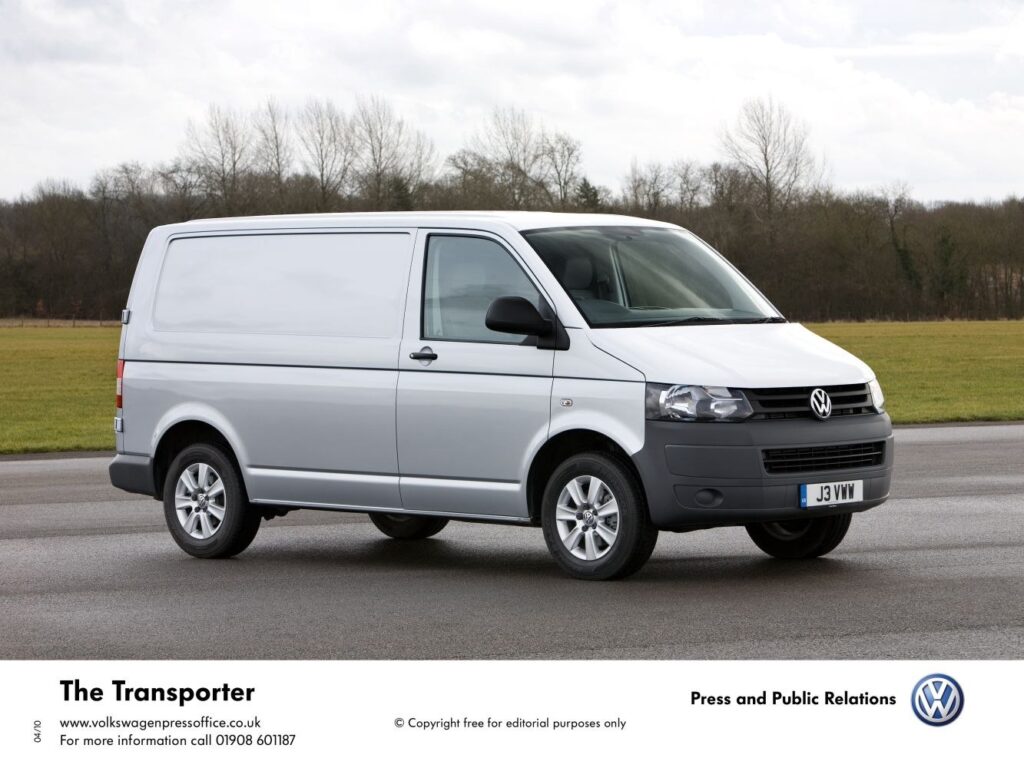
The Volkswagen Transporter (T5, facelift 2009) Panel Van 2.0 TDI (84 Hp) L2H2: A European Workhorse
The Volkswagen Transporter, a name synonymous with reliability and utility across generations, represents a cornerstone in the global light commercial vehicle market. The T5 generation, specifically its 2009 facelift model, continued this enduring legacy, solidifying its position as a versatile and robust workhorse. This detailed article focuses on the Volkswagen Transporter (T5, facelift 2009) Panel Van 2.0 TDI (84 Hp) L2H2 variant, a long-wheelbase, high-roof panel van equipped with a modest yet highly efficient diesel engine. While the Transporter series has had limited direct sales presence in the United States in its commercial van configuration, it is an iconic vehicle in Europe, Asia, and other international markets, celebrated for its practicality, durability, and a comfortable driving experience that often belies its commercial purpose. Produced from 2009 to 2015, this facelifted T5 model introduced a suite of refinements that kept it competitive in a demanding segment.
Engine and Performance of the Volkswagen Transporter (T5, facelift 2009) Panel Van
At the heart of the Volkswagen Transporter (T5, facelift 2009) Panel Van 2.0 TDI (84 Hp) L2H2 lies a 2.0-liter (1968 cm³, or approximately 120.09 cu. in.) inline four-cylinder diesel engine, designated with the model code EA189 / CAAA. This powertrain architecture features a front, transverse engine layout, driving the front wheels through a 5-speed manual transmission. Designed for efficiency and endurance rather than outright speed, this engine variant delivers 84 horsepower at 3500 rpm. Its strength, however, lies in its torque output: a robust 220 Nm (162.26 lb.-ft.) available across a broad and usable rev range from 1250 to 2500 rpm. This low-end torque is crucial for a commercial vehicle, enabling easy acceleration with heavy loads and confident driving in urban environments.
The 2.0 TDI engine employs a sophisticated Commonrail fuel injection system, paired with a turbocharger and intercooler, ensuring optimal fuel atomization and air charge density for efficient combustion. Its DOHC (Double Overhead Camshaft) valvetrain with four valves per cylinder further enhances breathing efficiency. With a compression ratio of 16.5:1, the engine is optimized for diesel fuel, adhering to the Euro 5 emission standard and featuring a particulate filter to reduce emissions. Fuel economy figures, measured under the NEDC cycle, underscore its efficiency: urban consumption ranges from 9.4-9.7 l/100 km (25 – 24.2 US mpg), extra-urban from 6-6.3 l/100 km (39.2 – 37.3 US mpg), and a combined average of 7.2-7.5 l/100 km (32.7 – 31.4 US mpg). CO2 emissions are rated between 190-198 g/km. Performance is adequate for its intended purpose, with a 0-60 mph acceleration time of 18.8 seconds and a top speed of 88.23 mph (142 km/h), highlighting its role as a reliable transport vehicle rather than a speed demon. The engine oil capacity is 7 liters (7.4 US quarts), and the coolant capacity is 11 liters (11.62 US quarts).
Design and Features
The Volkswagen Transporter (T5, facelift 2009) Panel Van 2.0 TDI (84 Hp) L2H2 is a purpose-built commercial van, prioritizing cargo capacity, durability, and practical design. The “L2H2” designation signifies a long wheelbase (L2) and a high roof (H2), maximizing internal volume for goods transport. With an overall length of 208.35 inches (5292 mm), a width of 74.96 inches (1904 mm) (89.88 inches or 2283 mm including mirrors), and a height of 85.67 inches (2176 mm), this variant offers substantial space. The wheelbase measures 133.86 inches (3400 mm), contributing to a stable ride, even under load.
The design is quintessentially Volkswagen: functional, understated, and robust. The facelift introduced subtle updates to the front fascia, including revised headlights, grille, and bumper, aligning its aesthetics with the contemporary Volkswagen passenger car lineup. Inside, the cabin is designed for functionality and durability, typically offering seating for 2-3 occupants. The primary focus is the cargo area, which boasts an impressive maximum volume of 7800 liters (275.45 cu. ft.). The generous dimensions and high roof make it suitable for transporting a wide array of goods, from tools and equipment to palletized cargo.
Underpinning the Transporter’s ride and handling is a well-engineered suspension system. The front features an independent McPherson strut setup with coil springs and an anti-roll bar, while the rear utilizes an independent coil spring system with a transverse stabilizer and trailing arms. This configuration provides a comfortable ride for a commercial vehicle and stable handling, even when fully laden. Braking is handled by ventilated discs at both the front (308×29.5 mm) and rear (294×22 mm), complemented by an Anti-lock Braking System (ABS) for enhanced safety. Steering is a hydraulic rack and pinion system, providing direct and predictable feedback. The vehicle rides on 215/65 R16 tires mounted on 6.5J x 16 wheel rims. Practical considerations for navigating diverse conditions are evident in its ground clearance of 7.91 inches (201 mm), an approach angle of 21°, a departure angle of 17°, and a ramp-over angle of 12°. Its minimum turning circle of 43.31 feet (13.2 m) is respectable for a vehicle of its size, aiding maneuverability in urban areas.
Technical Specifications: Volkswagen Transporter (T5, facelift 2009) Panel Van 2.0 TDI (84 Hp) L2H2
| Category | Specification |
|---|---|
| General Information | |
| Brand | Volkswagen |
| Model | Transporter (T5, facelift 2009) Panel Van |
| Engine Type | 2.0 TDI (84 Hp) L2H2 |
| Production Start | 2009 |
| Production End | 2015 |
| Body Type | Van |
| Seats | 2-3 |
| Doors | 4-5 |
| Performance Specifications | |
| Fuel Consumption (Urban, NEDC) | 9.4-9.7 l/100 km (25 – 24.2 US mpg) |
| Fuel Consumption (Extra Urban, NEDC) | 6-6.3 l/100 km (39.2 – 37.3 US mpg) |
| Fuel Consumption (Combined, NEDC) | 7.2-7.5 l/100 km (32.7 – 31.4 US mpg) |
| CO2 Emissions (NEDC) | 190-198 g/km |
| Fuel Type | Diesel |
| Acceleration 0-60 mph | 18.8 sec |
| Maximum Speed | 88.23 mph (142 km/h) |
| Emission Standard | Euro 5 |
| Weight-to-Power Ratio | 20.7 kg/Hp (48.3 Hp/tonne) |
| Weight-to-Torque Ratio | 7.9 kg/Nm (126.6 Nm/tonne) |
| Engine Specifications | |
| Power | 84 Hp @ 3500 rpm |
| Power per liter | 42.7 Hp/l |
| Torque | 220 Nm (162.26 lb.-ft.) @ 1250-2500 rpm |
| Engine Layout | Front, Transverse |
| Engine Model/Code | EA189 / CAAA |
| Engine Displacement | 1968 cm³ (120.09 cu. in.) |
| Number of Cylinders | 4 |
| Engine Configuration | Inline |
| Cylinder Bore | 81 mm (3.19 in.) |
| Piston Stroke | 95.5 mm (3.76 in.) |
| Compression Ratio | 16.5:1 |
| Valves per Cylinder | 4 |
| Fuel Injection System | Diesel Commonrail |
| Engine Aspiration | Turbocharger, Intercooler |
| Valvetrain | DOHC |
| Engine Oil Capacity | 7 l (7.4 US qt) |
| Coolant Capacity | 11 l (11.62 US qt) |
| Engine Systems | Particulate filter |
| Dimensions, Volume, and Weights | |
| Kerb Weight | 1738-2182 kg (3831.63 – 4810.49 lbs.) |
| Max. Weight (GVWR) | 2800-3000 kg (6172.94 – 6613.87 lbs.) |
| Max Load | 818-1062 kg (1803.38 – 2341.31 lbs.) |
| Trunk (Boot) Space – Maximum | 7800 l (275.45 cu. ft.) |
| Fuel Tank Capacity | 80 l (21.13 US gal) |
| Permitted Trailer Load with Brakes (12%) | 2200 kg (4850.17 lbs.) |
| Permitted Trailer Load without Brakes | 750 kg (1653.47 lbs.) |
| Permitted Towbar Download | 100 kg (220.46 lbs.) |
| Length | 5292 mm (208.35 in.) |
| Width | 1904 mm (74.96 in.) |
| Width including mirrors | 2283 mm (89.88 in.) |
| Height | 2176 mm (85.67 in.) |
| Wheelbase | 3400 mm (133.86 in.) |
| Front Overhang | 896 mm (35.28 in.) |
| Rear Overhang | 996 mm (39.21 in.) |
| Ride Height (Ground Clearance) | 201 mm (7.91 in.) |
| Minimum Turning Circle (Turning Diameter) | 13.2 m (43.31 ft.) |
| Approach Angle | 21° |
| Departure Angle | 17° |
| Ramp-over (Brakeover) Angle | 12° |
| Drivetrain, Brakes, and Suspension | |
| Drivetrain Architecture | Front-wheel drive, Internal Combustion Engine (ICE) |
| Drive Wheel | Front-wheel drive |
| Gearbox Type | 5 gears, Manual Transmission |
| Front Suspension | Independent, McPherson type with coil spring and anti-roll bar |
| Rear Suspension | Independent coil spring, Transverse stabilizer, Trailing arm |
| Front Brakes | Ventilated discs, 308×29.5 mm |
| Rear Brakes | Ventilated discs, 294×22 mm |
| Assisting Systems | ABS (Anti-lock Braking System) |
| Steering Type | Steering rack and pinion |
| Power Steering | Hydraulic Steering |
| Tire Size | 215/65 R16 |
| Wheel Rims Size | 6.5J x 16 |
Legacy and Market Impact of the Volkswagen Transporter (T5, facelift 2009) Panel Van
The Volkswagen Transporter series boasts a storied history, tracing its lineage back to the iconic Type 2 “Bus” of the 1950s. Each generation has built upon this heritage of versatility and reliability, and the T5, particularly its facelifted iteration from 2009, was no exception. This particular variant, the Volkswagen Transporter (T5, facelift 2009) Panel Van 2.0 TDI (84 Hp) L2H2, carved out a significant niche in the European and international light commercial vehicle markets.
In its primary markets, the T5 Transporter was not just a vehicle; it was an indispensable tool for countless businesses, from small independent contractors to large logistics companies. Its reputation for durability, relatively low running costs, and strong residual values made it a sound investment for commercial operators. The 2.0 TDI (84 Hp) engine, while not powerful, was specifically chosen for its exceptional fuel economy and robustness, crucial factors for businesses focused on operational efficiency. Its Euro 5 compliance also ensured it met increasingly stringent emission regulations across Europe, facilitating its widespread use.
The Transporter faced stiff competition in its segment from rivals such as the Ford Transit, Mercedes-Benz Vito, Renault Trafic, and Fiat Ducato. However, Volkswagen’s strong brand image, coupled with the T5’s well-regarded ergonomics, comfortable ride (for a van), and broad range of configurations (including passenger variants like the Multivan and California camper), allowed it to maintain a dominant position. The L2H2 panel van variant, with its expansive cargo area and respectable payload capacity (up to 2341.31 lbs or 1062 kg), was particularly popular among tradespeople and delivery services requiring maximum volume and practicality.
The T5 facelift marked a refinement in design and technology, ensuring the Transporter remained competitive until its successor, the T6, arrived in 2015. Its legacy is one of unwavering service, a testament to German engineering focused on utility and longevity. Even today, many T5s remain on the road, a clear indicator of their built-in resilience and the enduring appeal of the Volkswagen Transporter as a dependable and efficient commercial vehicle.