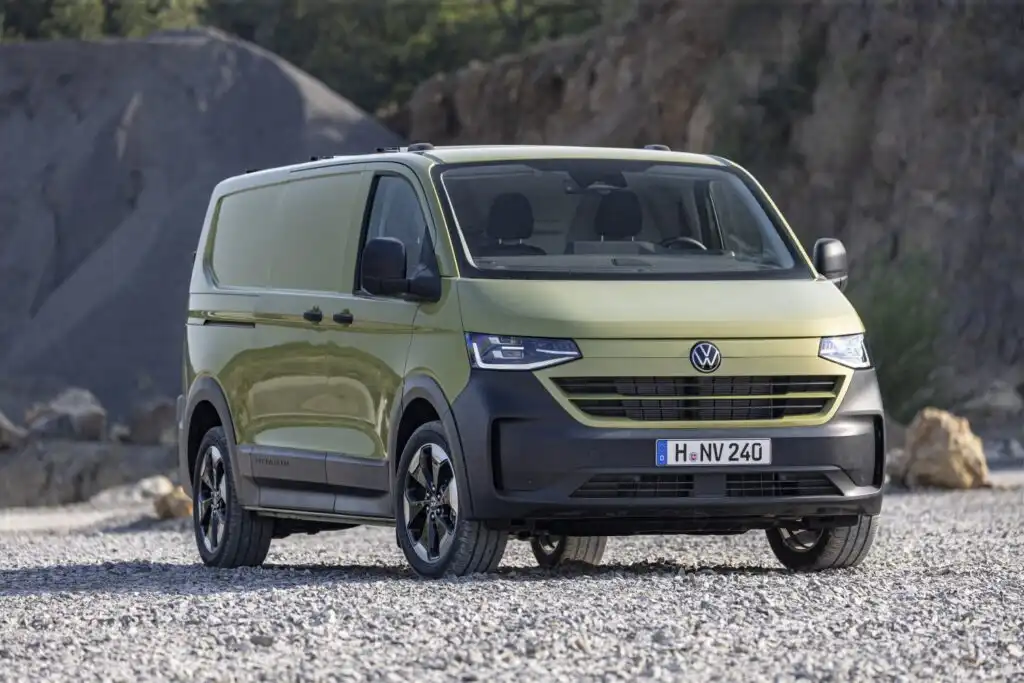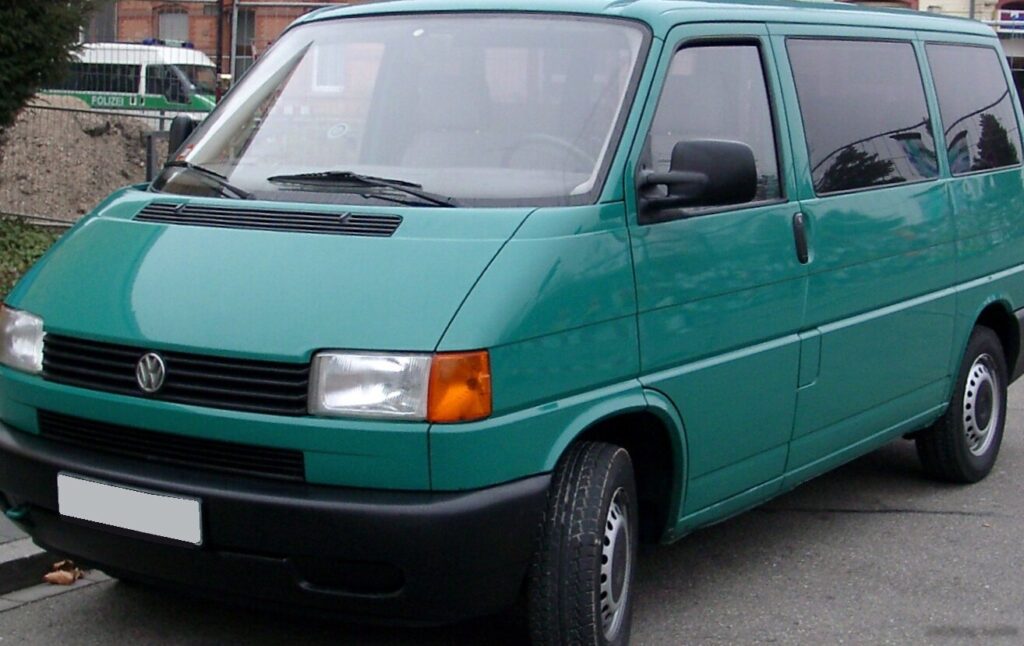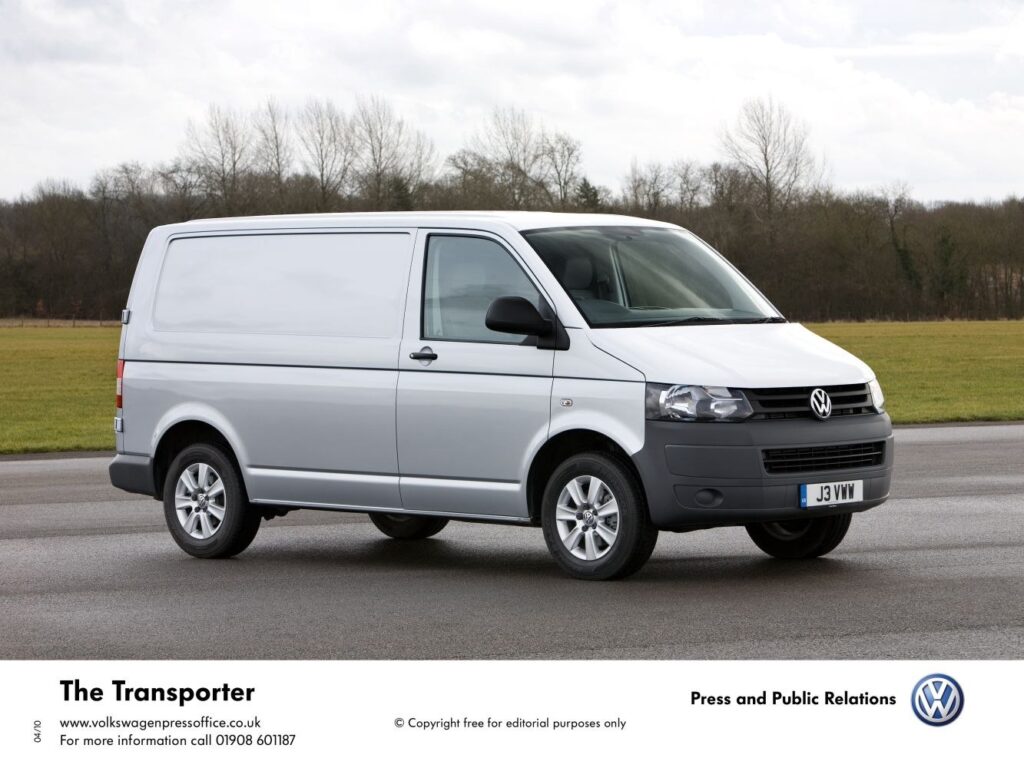
Volkswagen Transporter (T5, facelift 2009) Panel Van
The Volkswagen Transporter, an iconic nameplate in the light commercial vehicle segment, has a storied history tracing back to the original Type 2 “Bus.” The T5 generation, introduced in 2003, continued this legacy, and the subject of this review is the highly capable and efficient facelifted model from 2009. Specifically, we delve into the Volkswagen Transporter (T5, facelift 2009) Panel Van 2.0 TDI BMT (140 Hp) 4MOTION L2H1 variant, produced between 2012 and 2015. This particular configuration represents a robust and versatile offering, tailored for demanding commercial applications primarily across European and Asian markets, where its combination of cargo capacity, all-wheel-drive capability, and fuel efficiency made it a top choice. While not widely sold in the United States in this specific panel van form, the Transporter is recognized globally as a benchmark for reliability and utility in its class, embodying Volkswagen’s engineering prowess in commercial vehicles.
Engine and Performance of the Volkswagen Transporter (T5, facelift 2009) Panel Van
Under the hood, the Volkswagen Transporter (T5, facelift 2009) Panel Van 2.0 TDI BMT (140 Hp) 4MOTION L2H1 is powered by a sophisticated 2.0-liter TDI (Turbocharged Direct Injection) inline four-cylinder diesel engine. This powerplant, identified by the EA189 / CAAC code, is a testament to modern diesel technology, featuring a DOHC valvetrain, common rail fuel injection, a turbocharger, and an intercooler. It delivers a healthy 140 horsepower at 3500 rpm, providing ample power for hauling loads and navigating various terrains. More significantly for a commercial vehicle, it produces a substantial 250.77 lb.-ft. (340 Nm) of torque, available across a broad rev range from 1750 to 2500 rpm. This low-end torque is crucial for strong acceleration from a standstill, effortless overtaking, and maintaining speed even when fully loaded.
The “BMT” designation signifies BlueMotion Technology, Volkswagen’s suite of efficiency-enhancing features. For this Transporter, it includes a Start & Stop system to reduce fuel consumption and emissions in urban traffic, and a particulate filter to meet stringent Euro 5 emission standards. Despite its commercial nature, the Volkswagen Transporter (T5, facelift 2009) Panel Van offers respectable performance, accelerating from 0 to 60 mph in an estimated 12.8 seconds and achieving a top speed of 105.63 mph (170 km/h).
Fuel economy figures for this 4MOTION variant are impressive for a vehicle of its size and capability. The combined NEDC cycle rating shows 31.4 – 30.2 US mpg (7.5-7.8 l/100 km). Urban driving yields 24.8 – 24 US mpg (9.5-9.8 l/100 km), while extra-urban cruising can achieve 36.8 – 35.1 US mpg (6.4-6.7 l/100 km). These figures highlight the efficiency benefits of the TDI engine combined with BlueMotion Technology. Power is delivered to all four wheels via a 6-speed manual transmission and Volkswagen’s renowned 4MOTION all-wheel-drive system. This intelligent drivetrain architecture primarily drives the front wheels, engaging the rear wheels through an electrically or mechanically operated clutch only when additional traction is needed, optimizing both grip and fuel efficiency. This makes the L2H1 4MOTION an ideal choice for businesses operating in challenging weather conditions or requiring access to unpaved job sites.
Design and Features
The Volkswagen Transporter (T5, facelift 2009) Panel Van is designed first and foremost for utility and durability. The “L2H1” designation indicates a Long wheelbase (L2) and a Standard roof height (H1), providing a generous cargo volume while maintaining a manageable overall height for urban access. With a length of 208.35 inches (5292 mm) and a width of 74.96 inches (1904 mm), it commands a significant road presence, yet its 43.31 ft (13.2 m) turning circle allows for surprisingly good maneuverability in tight spaces. The body type is a classic panel van, offering excellent security and weather protection for its cargo.
Inside, the cabin is configured for 2-3 occupants, prioritizing functionality and robustness. The layout is ergonomically sound, designed for long hours on the road, with durable materials chosen to withstand the rigors of commercial use. While specific luxury features are not the focus, the T5 facelift brought a refreshed interior aesthetic and improved material quality over its predecessor.
Cargo capacity is a strong suit, with a maximum trunk space of 236.61 cubic feet (6700 liters), making it suitable for a wide array of goods and equipment. The maximum payload ranges from 1902.59 to 2440.52 lbs (863-1107 kg), depending on the specific configuration and gross vehicle weight, which can be up to 7054.79 lbs (3200 kg). The long wheelbase of 133.86 inches (3400 mm) contributes to both stability and interior volume. Safety features for the era include an Anti-lock Braking System (ABS) and ventilated disc brakes on both front (308×29.5 mm) and rear (294×22 mm) axles, ensuring confident stopping power even when heavily loaded. The independent suspension setup, featuring McPherson struts at the front and a coil spring trailing arm design at the rear, provides a comfortable ride and stable handling, a crucial aspect for driver comfort and cargo integrity.
Technical Specifications
| Category | Specification | US Equivalent |
|---|---|---|
| General Information | ||
| Brand | Volkswagen | |
| Model | Transporter | |
| Generation | Transporter (T5, facelift 2009) Panel Van | |
| Type (Engine) | 2.0 TDI BMT (140 Hp) 4MOTION L2H1 | |
| Start of production | 2012 year | |
| End of production | 2015 year | |
| Powertrain Architecture | Internal Combustion engine | |
| Body type | Van | |
| Seats | 2-3 | |
| Doors | 4-5 | |
| Performance Specs | ||
| Fuel consumption (urban NEDC) | 9.5-9.8 l/100 km | 24.8 – 24 US mpg |
| Fuel consumption (extra urban NEDC) | 6.4-6.7 l/100 km | 36.8 – 35.1 US mpg |
| Fuel consumption (combined NEDC) | 7.5-7.8 l/100 km | 31.4 – 30.2 US mpg |
| CO2 emissions (NEDC) | 198-206 g/km | |
| Fuel Type | Diesel | |
| Acceleration 0 – 60 mph | 12.8 sec | |
| Maximum speed | 170 km/h | 105.63 mph |
| Emission standard | Euro 5 | |
| Weight-to-power ratio | 13.5 kg/Hp | 74 Hp/tonne |
| Weight-to-torque ratio | 5.6 kg/Nm | 179.6 Nm/tonne |
| Engine Specs | ||
| Power | 140 Hp @ 3500 rpm | |
| Power per liter | 71.1 Hp/l | |
| Torque | 340 Nm @ 1750-2500 rpm | 250.77 lb.-ft. @ 1750-2500 rpm |
| Engine layout | Front, Transverse | |
| Engine Model/Code | EA189 / CAAC | |
| Engine displacement | 1968 cm3 | 120.09 cu. in. |
| Number of cylinders | 4 | |
| Engine configuration | Inline | |
| Cylinder Bore | 81 mm | 3.19 in. |
| Piston Stroke | 95.5 mm | 3.76 in. |
| Compression ratio | 16.5:1 | |
| Number of valves per cylinder | 4 | |
| Fuel injection system | Diesel Commonrail | |
| Engine aspiration | Turbocharger, Intercooler | |
| Valvetrain | DOHC | |
| Engine oil capacity | 7 l | 7.4 US qt |
| Coolant | 11 l | 11.62 US qt |
| Engine Systems | ||
| Start & Stop System | Yes | |
| Particulate filter | Yes | |
| Space, Volume and Weights | ||
| Kerb Weight | 1893-2337 kg | 4173.35 – 5152.2 lbs. |
| Max. weight | 3000-3200 kg | 6613.87 – 7054.79 lbs. |
| Max load | 863-1107 kg | 1902.59 – 2440.52 lbs. |
| Trunk (boot) space – maximum | 6700 l | 236.61 cu. ft. |
| Fuel tank capacity | 80 l | 21.13 US gal |
| Max. roof load | 100 kg | 220.46 lbs. |
| Permitted trailer load with brakes (12%) | 2500 kg | 5511.56 lbs. |
| Permitted trailer load without brakes | 750 kg | 1653.47 lbs. |
| Permitted towbar download | 100 kg | 220.46 lbs. |
| Dimensions | ||
| Length | 5292 mm | 208.35 in. |
| Width | 1904 mm | 74.96 in. |
| Width including mirrors | 2283 mm | 89.88 in. |
| Height | 1990 mm | 78.35 in. |
| Wheelbase | 3400 mm | 133.86 in. |
| Front overhang | 896 mm | 35.28 in. |
| Rear overhang | 996 mm | 39.21 in. |
| Ride height (ground clearance) | 201 mm | 7.91 in. |
| Minimum turning circle (turning diameter) | 13.2 m | 43.31 ft. |
| Approach angle | 21° | |
| Departure angle | 17° | |
| Ramp-over (brakeover) angle | 12° | |
| Drivetrain, Brakes and Suspension Specs | ||
| Drivetrain Architecture | The Internal combustion engine (ICE) drives the front wheels permanently, and the rear wheels are driven through an electrically or mechanically operated clutch if necessary. | |
| Drive wheel | All wheel drive (4×4) | |
| Number of gears and type of gearbox | 6 gears, manual transmission | |
| Front suspension | Independent, type McPherson with coil spring and anti-roll bar | |
| Rear suspension | Independent coil spring, Transverse stabilizer, Trailing arm | |
| Front brakes | Ventilated discs, 308×29.5 mm | |
| Rear brakes | Ventilated discs, 294×22 mm | |
| Assisting systems | ABS (Anti-lock braking system) | |
| Steering type | Steering rack and pinion | |
| Power steering | Hydraulic Steering | |
| Tires size | 215/65 R16 | |
| Wheel rims size | 6.5J x 16 | |
Legacy and Market Impact
The Volkswagen Transporter series has forged an indelible legacy in the commercial vehicle sector, and the T5 generation, particularly the facelifted 2009 model, continued to uphold this reputation for durability, versatility, and engineering excellence. The Volkswagen Transporter (T5, facelift 2009) Panel Van 2.0 TDI BMT (140 Hp) 4MOTION L2H1 carved out a significant niche in its primary markets, serving as a backbone for countless businesses, from small independent contractors to large logistics operations. Its combination of a powerful yet efficient diesel engine, the traction benefits of 4MOTION all-wheel drive, and a spacious, robust cargo area made it exceptionally well-suited for diverse commercial needs, including construction, delivery services, and mobile workshops.
In Europe, where the Transporter has always been a dominant force, it faced stiff competition from rivals such as the Mercedes-Benz Vito, Ford Transit Custom, Renault Trafic, and Opel Vivaro. However, the Transporter consistently differentiated itself through its perceived build quality, strong resale values, and the broad range of configurations available. The 4MOTION system, in particular, was a significant advantage over many front-wheel-drive or rear-wheel-drive competitors, offering superior grip and confidence in adverse conditions or on challenging terrain, thereby expanding its utility for businesses operating outside of urban centers.
Beyond its practical applications, the Transporter carries a strong emotional connection for many, stemming from its heritage as the spiritual successor to the legendary Type 2. While the T5 evolved into a far more modern and sophisticated vehicle, it retained the core ethos of being a reliable, adaptable, and hardworking companion. Its impact on the market was profound, setting benchmarks for efficiency, payload capacity, and driving dynamics within the commercial van segment. The longevity of these vehicles, often seen accumulating hundreds of thousands of miles, speaks volumes about their inherent quality and design. The T5 facelift, with its refined engines and improved features, solidified the Transporter’s position as a premium choice for businesses seeking a dependable and capable workhorse that could handle almost anything thrown its way.