Volkswagen Transporter (T5, facelift 2009) Panel Van: A European Workhorse Defined
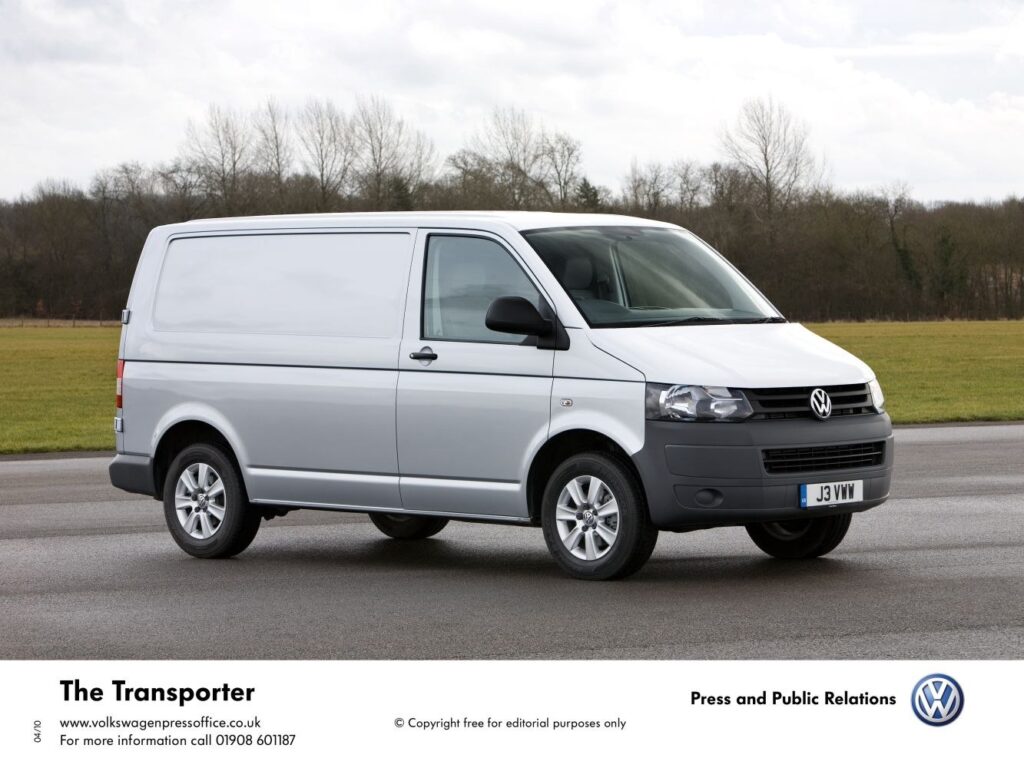
The Volkswagen Transporter holds an iconic status in the automotive world, representing a lineage of versatile commercial and passenger vans dating back to the 1950s. The T5 generation, introduced in 2003, continued this tradition, and its significant facelift in 2009 brought a host of updates to keep it competitive. This article focuses on a specific variant from the post-facelift era: the Volkswagen Transporter (T5, facelift 2009) Panel Van 2.0 TDI BMT (140 Hp) DSG L1H1, produced between 2012 and 2015. This particular model, with its efficient diesel engine, advanced automatic transmission, and practical L1H1 (short wheelbase, standard roof) configuration, was a cornerstone of the light commercial vehicle segment across Europe and other international markets, though not officially sold in the United States. It embodied Volkswagen’s commitment to reliability, efficiency, and adaptability for businesses and tradespeople.
Engine and Performance of the Volkswagen Transporter (T5, facelift 2009) Panel Van
Powering this iteration of the Volkswagen Transporter (T5, facelift 2009) Panel Van was a robust 2.0-liter (1968 cm3 or 120.09 cu. in.) inline four-cylinder TDI (Turbocharged Direct Injection) diesel engine. This unit was part of Volkswagen’s EA189 engine family, specifically coded as CAAC. Equipped with common rail direct fuel injection and a turbocharger with an intercooler, it produced a healthy 140 horsepower at 3500 rpm. More critically for a commercial vehicle, it delivered a substantial 250.77 lb.-ft. of torque, available across a broad and usable range from 1750 to 2500 rpm. This torque output was essential for hauling heavy loads and navigating urban environments with ease.
The “BMT” designation stands for BlueMotion Technology, Volkswagen’s suite of efficiency-enhancing features. For this Transporter, it included a Start & Stop system, which automatically shut off the engine when the vehicle was stationary and restarted it when the clutch was engaged (or brake released with an automatic transmission), significantly reducing fuel consumption and emissions in city driving. A particulate filter was also standard, ensuring compliance with Euro 5 emission standards.
Paired with this engine was a sophisticated 7-speed DSG (Direct-Shift Gearbox) automatic transmission. This dual-clutch unit offered smooth and rapid gear changes, contributing to both driving comfort and fuel efficiency. The powertrain architecture was front, transverse, driving the front wheels (Front-Wheel Drive). Performance figures included an acceleration from 0 to 60 mph in a respectable 11.9 seconds, with a top speed of 106.88 mph (172 km/h).
Fuel economy, a vital aspect for commercial users, was impressive for a vehicle of its size and capability. The combined NEDC cycle reported figures between 31.8 and 30.5 US mpg (7.4-7.7 l/100 km), with extra-urban consumption reaching 36.8 – 35.1 US mpg (6.4-6.7 l/100 km). These figures underscored the effectiveness of the BlueMotion Technology in reducing running costs and environmental impact.
Design and Features
As a Panel Van, the Volkswagen Transporter (T5, facelift 2009) Panel Van was designed first and foremost for utility. The L1H1 designation indicates a short wheelbase (118.11 inches or 3000 mm) and a standard roof height (78.35 inches or 1990 mm), offering a balance between maneuverability and cargo capacity. With an overall length of 192.6 inches (4892 mm) and a width of 74.96 inches (1904 mm), it was compact enough for urban deliveries yet spacious enough for substantial loads. The cargo volume was a generous 204.83 cubic feet (5800 liters), accessible through its 4-5 doors, typically featuring a large rear tailgate or barn doors and a sliding side door.
The exterior design of the facelifted T5 incorporated updated styling cues, including revised headlights, grille, and bumper, bringing it in line with Volkswagen’s contemporary passenger car aesthetic. Despite these cosmetic changes, its fundamental shape remained functional and robust. The interior was built for durability and practicality, typically seating 2 to 3 occupants, depending on the front seat configuration. Features focused on driver comfort and ergonomics for long working days.
Safety features for the era included an Anti-lock Braking System (ABS) and ventilated disc brakes on both the front (308×29.5 mm) and rear (294×22 mm) axles, providing strong stopping power even under load. The suspension system, featuring independent McPherson struts with coil springs and an anti-roll bar at the front, and independent coil springs with a transverse stabilizer and trailing arms at the rear, was engineered to handle varying loads while maintaining a comfortable and stable ride. Hydraulic power steering made maneuvering the van, especially in tight spaces, less strenuous. The turning circle of 39.04 feet (11.9 m) was commendable for a vehicle of its size.
Technical Specifications
| Category | Specification |
|---|---|
| General Information | |
| Brand | Volkswagen |
| Model | Transporter |
| Generation | Transporter (T5, facelift 2009) Panel Van |
| Engine Type | 2.0 TDI BMT (140 Hp) DSG L1H1 |
| Production Start | 2012 |
| Production End | 2015 |
| Powertrain Architecture | Internal Combustion Engine |
| Body Type | Van |
| Seats | 2-3 |
| Doors | 4-5 |
| Performance Specifications | |
| Fuel Consumption (Urban, NEDC) | 9.2-9.5 l/100 km (25.6 – 24.8 US mpg) |
| Fuel Consumption (Extra Urban, NEDC) | 6.4-6.7 l/100 km (36.8 – 35.1 US mpg) |
| Fuel Consumption (Combined, NEDC) | 7.4-7.7 l/100 km (31.8 – 30.5 US mpg) |
| CO2 Emissions (NEDC) | 195-203 g/km |
| Fuel Type | Diesel |
| Acceleration 0-60 mph | 11.9 seconds |
| Maximum Speed | 106.88 mph (172 km/h) |
| Emission Standard | Euro 5 |
| Weight-to-Power Ratio | 12.4 kg/Hp (80.7 Hp/tonne) |
| Weight-to-Torque Ratio | 5.1 kg/Nm (196.1 Nm/tonne) |
| Engine Specifications | |
| Power | 140 Hp @ 3500 rpm |
| Power per Liter | 71.1 Hp/l |
| Torque | 340 Nm (250.77 lb.-ft.) @ 1750-2500 rpm |
| Engine Layout | Front, Transverse |
| Engine Model/Code | EA189 / CAAC |
| Engine Displacement | 1968 cm3 (2.0 liters, 120.09 cu. in.) |
| Number of Cylinders | 4 |
| Engine Configuration | Inline |
| Cylinder Bore | 81 mm (3.19 in.) |
| Piston Stroke | 95.5 mm (3.76 in.) |
| Compression Ratio | 16.5:1 |
| Valves per Cylinder | 4 |
| Fuel Injection System | Diesel Commonrail |
| Engine Aspiration | Turbocharger, Intercooler |
| Valvetrain | DOHC |
| Engine Oil Capacity | 7 liters (7.4 US qt) |
| Coolant Capacity | 11 liters (11.62 US qt) |
| Engine Systems | Start & Stop System, Particulate filter |
| Dimensions, Volume, and Weights | |
| Curb Weight | 1734-2150 kg (3822.82 – 4739.94 lbs.) |
| Max. Weight (GVWR) | 2800-3200 kg (6172.94 – 7054.79 lbs.) |
| Max Load | 1050-1066 kg (2314.85 – 2350.13 lbs.) |
| Trunk (Cargo) Space – Maximum | 5800 liters (204.83 cu. ft.) |
| Fuel Tank Capacity | 80 liters (21.13 US gal) |
| Max. Roof Load | 100 kg (220.46 lbs.) |
| Permitted Trailer Load with Brakes (12%) | 2500 kg (5511.56 lbs.) |
| Permitted Trailer Load without Brakes | 750 kg (1653.47 lbs.) |
| Permitted Towbar Download | 100 kg (220.46 lbs.) |
| Length | 4892 mm (192.6 in.) |
| Width | 1904 mm (74.96 in.) |
| Width including mirrors | 2283 mm (89.88 in.) |
| Height | 1990 mm (78.35 in.) |
| Wheelbase | 3000 mm (118.11 in.) |
| Front Overhang | 896 mm (35.28 in.) |
| Rear Overhang | 996 mm (39.21 in.) |
| Ground Clearance | 201 mm (7.91 in.) |
| Minimum Turning Circle | 11.9 m (39.04 ft.) |
| Approach Angle | 21° |
| Departure Angle | 17° |
| Ramp-over (Brakeover) Angle | 14° |
| Wading Depth | 300 mm (11.81 in.) |
| Drivetrain, Brakes, and Suspension | |
| Drivetrain Architecture | Front-wheel drive (ICE drives front wheels) |
| Drive Wheel | Front-wheel drive |
| Gearbox Type | 7-speed automatic transmission (DSG) |
| Front Suspension | Independent, McPherson with coil spring and anti-roll bar |
| Rear Suspension | Independent coil spring, Transverse stabilizer, Trailing arm |
| Front Brakes | Ventilated discs, 308×29.5 mm |
| Rear Brakes | Ventilated discs, 294×22 mm |
| Assisting Systems | ABS (Anti-lock braking system) |
| Steering Type | Steering rack and pinion |
| Power Steering | Hydraulic Steering |
| Tires Size | 215/65 R16 |
| Wheel Rims Size | 6.5J x 16 |
Legacy and Market Impact
The Volkswagen Transporter series has cultivated a reputation for durability, reliability, and versatility over decades, and the T5 generation, particularly the facelifted model from 2009 onwards, continued this legacy. In its primary markets across Europe and other continents where it was sold, the Volkswagen Transporter (T5, facelift 2009) Panel Van was a highly respected and sought-after commercial vehicle. It competed fiercely with rivals such as the Ford Transit Custom, Mercedes-Benz Vito, Renault Trafic, and Opel Vivaro (Vauxhall Vivaro in the UK).
What set the Transporter apart was its car-like driving dynamics, robust build quality, and strong residual values. The introduction of BlueMotion Technology and the efficient 2.0 TDI engine, coupled with the smooth DSG transmission, significantly enhanced its appeal to businesses looking to optimize their operating costs. Its ability to serve a wide range of trades, from plumbers and electricians to delivery services, solidified its position as a true workhorse. The L1H1 configuration, while the most compact, offered ample cargo space for many applications, making it a practical choice for urban environments where maneuverability was key.
The T5 facelift generation, including this panel van variant, is remembered for its blend of practicality, efficiency, and driving refinement, bringing a level of sophistication previously uncommon in the commercial van segment. Its enduring popularity in the used vehicle market is a testament to its robust engineering and long-term reliability. While never officially imported to the United States in this panel van configuration, its influence on global commercial vehicle design and its continued presence on European roads underscore its historical significance as a benchmark for light commercial vehicles. The Transporter remains a cornerstone of Volkswagen’s commercial vehicle division, constantly evolving to meet the demands of modern businesses while retaining its core values of utility and dependability.