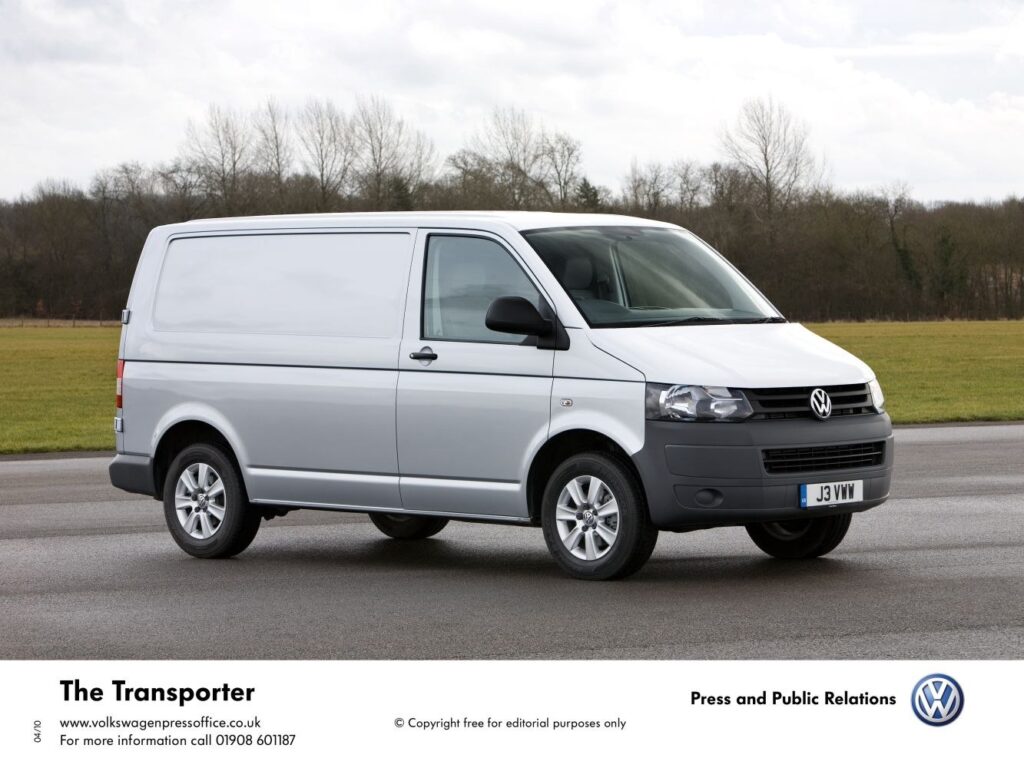
The Volkswagen Transporter (T5, facelift 2009) Panel Van: A European Workhorse
The Volkswagen Transporter, a name synonymous with versatility and reliability in the light commercial vehicle (LCV) segment, has a storied history spanning over seven decades. The fifth generation, known internally as the T5, continued this legacy, particularly after its significant facelift in 2009. This detailed article focuses on the specific variant: the Volkswagen Transporter (T5, facelift 2009) Panel Van 2.0 TDI BMT (140 Hp) DSG L1H2, a model produced between 2012 and 2015. While not directly sold in the United States market in this configuration, the Transporter is an iconic and indispensable vehicle across Europe and other international markets, serving as the backbone for countless businesses, tradespeople, and public services. It represents Volkswagen’s enduring commitment to practical, efficient, and durable transportation solutions.
The T5 generation introduced a range of advancements over its predecessors, and the 2009 facelift brought further refinements in styling, technology, and powertrain options. The Panel Van variant, in particular, is designed purely for cargo transport, prioritizing maximum load space, ease of access, and robust construction. The 2.0 TDI BMT (BlueMotion Technology) engine, coupled with the sophisticated DSG automatic transmission, highlighted Volkswagen’s push for improved fuel efficiency and reduced emissions, even in a commercial vehicle context. This specific L1H2 configuration denotes a standard wheelbase (L1) combined with a medium roof height (H2), offering a substantial cargo volume without compromising maneuverability.
Engine and Performance: The 2.0 TDI BMT Powerplant in the Volkswagen Transporter (T5, facelift 2009) Panel Van
At the heart of the Volkswagen Transporter (T5, facelift 2009) Panel Van 2.0 TDI BMT (140 Hp) DSG L1H2 lies a highly efficient and robust 2.0-liter TDI (Turbocharged Direct Injection) inline-four engine. This powertrain, designated with the EA189 / CAAC code, is a testament to Volkswagen’s engineering prowess in diesel technology. With a displacement of 1968 cubic centimeters (120.09 cubic inches), the engine produces a healthy 140 horsepower at 3500 rpm, translating to a power-per-liter ratio of 71.1 horsepower per liter. More critically for a commercial vehicle, it delivers a substantial 250.77 lb-ft of torque across a broad and usable rev range, specifically from 1750 to 2500 rpm. This ample torque is crucial for hauling heavy loads and providing confident acceleration, even when fully laden.
The engine’s layout is front, transverse, driving the front wheels, a common configuration for maximizing interior space and efficiency. It features a DOHC (Double Overhead Camshaft) valvetrain with 4 valves per cylinder, a common rail fuel injection system, and benefits from both a turbocharger and an intercooler to optimize power delivery and efficiency. With a compression ratio of 16.5:1, it is tuned for diesel fuel, adhering to the Euro 5 emission standard.
A key differentiator for this variant is the “BMT” (BlueMotion Technology) designation, which signifies a suite of efficiency-enhancing features. These include a Start & Stop System, which automatically shuts off the engine when the vehicle is stationary, and a particulate filter to reduce emissions. These technologies contribute to impressive fuel economy figures for a vehicle of its size and capability: a combined 31.8 – 30.5 US mpg (7.4-7.7 l/100 km). Urban consumption ranges from 25.6 – 24.8 US mpg, while extra-urban driving can achieve 36.8 – 35.1 US mpg.
Power is channeled through a sophisticated 7-speed DSG (Direct Shift Gearbox) automatic transmission. This dual-clutch system offers rapid and seamless gear changes, contributing to both fuel efficiency and a smooth driving experience. Despite its focus on utility, the Transporter can accelerate from 0 to 60 mph in a respectable 12 seconds, reaching a maximum speed of 103.15 mph (166 km/h), demonstrating its capability to keep pace with traffic on highways. The vehicle’s weight-to-power ratio stands at 12.4 kg/Hp (80.7 Hp/tonne), and its weight-to-torque ratio is 5.1 kg/Nm (196.1 Nm/tonne), underscoring its robust performance characteristics for commercial duties.
Design and Features: Practicality and Functionality
The design of the Volkswagen Transporter (T5, facelift 2009) Panel Van is driven by its primary purpose: efficient and reliable cargo transport. As a panel van, it features a fully enclosed rear cargo area, devoid of windows, providing security and maximum wall space for shelving or branding. The body type offers 4 to 5 doors, typically comprising two front doors for the driver and passenger, and either a large rear tailgate or barn doors, often supplemented by one or two sliding side doors for convenient loading and unloading in tight spaces. The cabin is configured for 2 to 3 occupants, reflecting its commercial utility.
This specific variant, designated L1H2, indicates a standard wheelbase combined with a medium-height roof. With an overall length of 192.6 inches (4892 mm), a width of 74.96 inches (1904 mm) (89.88 inches or 2283 mm including mirrors), and a height of 85.67 inches (2176 mm), it strikes a balance between significant cargo volume and urban maneuverability. The wheelbase measures 118.11 inches (3000 mm), contributing to a stable ride. The substantial cargo volume of 6700 liters (236.61 cubic feet) makes it highly capable for a wide range of commercial applications, from parcel delivery to trades services.
The Transporter’s robust construction is evident in its kerb weight, ranging from 3822.82 to 4739.94 lbs (1734-2150 kg), and a maximum gross weight of 6172.94 to 7054.79 lbs (2800-3200 kg). This allows for a maximum payload capacity of 2314.85 to 2350.13 lbs (1050-1066 kg). Furthermore, it boasts impressive towing capabilities, with a permitted trailer load of 5511.56 lbs (2500 kg) with brakes and 1653.47 lbs (750 kg) without brakes, along with a 220.46 lbs (100 kg) towbar download.
Underneath, the Transporter is engineered for durability and a comfortable ride. It features an independent McPherson strut front suspension with coil springs and an anti-roll bar, while the rear utilizes an independent coil spring system with a transverse stabilizer and trailing arms. This setup provides a good balance of load-carrying capability and driving dynamics. Braking is handled by ventilated discs both front (308×29.5 mm) and rear (294×22 mm), complemented by ABS (Anti-lock Braking System) for enhanced safety. The hydraulic power steering system, with a steering rack and pinion, offers precise control, and a minimum turning circle of 39.04 feet (11.9 m) aids in navigating urban environments. The vehicle rides on 215/65 R16 tires mounted on 6.5J x 16 wheel rims. With a ground clearance of 7.91 inches (201 mm) and a wading depth of 11.81 inches (300 mm), it is also capable of handling varied terrain, typical for a utility vehicle.
Technical Specifications
| Category | Specification | Metric / US Equivalent |
|---|---|---|
| General Information | ||
| Brand | Volkswagen | |
| Model | Transporter | |
| Generation | Transporter (T5, facelift 2009) Panel Van | |
| Type (Engine) | 2.0 TDI BMT (140 Hp) DSG L1H2 | |
| Start of production | 2012 year | |
| End of production | 2015 year | |
| Powertrain Architecture | Internal Combustion engine | |
| Body type | Van | |
| Seats | 2-3 | |
| Doors | 4-5 | |
| Performance Specs | ||
| Fuel consumption (economy) – urban (NEDC) | 9.2-9.5 l/100 km | 25.6 – 24.8 US mpg |
| Fuel consumption (economy) – extra urban (NEDC) | 6.4-6.7 l/100 km | 36.8 – 35.1 US mpg |
| Fuel consumption (economy) – combined (NEDC) | 7.4-7.7 l/100 km | 31.8 – 30.5 US mpg |
| CO2 emissions (NEDC) | 195-203 g/km | |
| Fuel Type | Diesel | |
| Acceleration 0 – 60 mph | 12 sec | |
| Maximum speed | 166 km/h | 103.15 mph |
| Emission standard | Euro 5 | |
| Weight-to-power ratio | 12.4 kg/Hp | 80.7 Hp/tonne |
| Weight-to-torque ratio | 5.1 kg/Nm | 196.1 Nm/tonne |
| Engine Specs | ||
| Power | 140 Hp @ 3500 rpm | |
| Power per liter | 71.1 Hp/l | |
| Torque | 340 Nm @ 1750-2500 rpm | 250.77 lb.-ft. @ 1750-2500 rpm |
| Engine layout | Front, Transverse | |
| Engine Model/Code | EA189 / CAAC | |
| Engine displacement | 1968 cm3 | 120.09 cu. in. |
| Number of cylinders | 4 | |
| Engine configuration | Inline | |
| Cylinder Bore | 81 mm | 3.19 in. |
| Piston Stroke | 95.5 mm | 3.76 in. |
| Compression ratio | 16.5:1 | |
| Number of valves per cylinder | 4 | |
| Fuel injection system | Diesel Commonrail | |
| Engine aspiration | Turbocharger, Intercooler | |
| Valvetrain | DOHC | |
| Engine oil capacity | 7 l | 7.4 US qt |
| Coolant | 11 l | 11.62 US qt |
| Engine systems | Start & Stop System, Particulate filter | |
| Space, Volume and Weights | ||
| Kerb Weight | 1734-2150 kg | 3822.82 – 4739.94 lbs. |
| Max. weight | 2800-3200 kg | 6172.94 – 7054.79 lbs. |
| Max load | 1050-1066 kg | 2314.85 – 2350.13 lbs. |
| Trunk (boot) space – maximum | 6700 l | 236.61 cu. ft. |
| Fuel tank capacity | 80 l | 21.13 US gal |
| Permitted trailer load with brakes (12%) | 2500 kg | 5511.56 lbs. |
| Permitted trailer load without brakes | 750 kg | 1653.47 lbs. |
| Permitted towbar download | 100 kg | 220.46 lbs. |
| Dimensions | ||
| Length | 4892 mm | 192.6 in. |
| Width | 1904 mm | 74.96 in. |
| Width including mirrors | 2283 mm | 89.88 in. |
| Height | 2176 mm | 85.67 in. |
| Wheelbase | 3000 mm | 118.11 in. |
| Front overhang | 896 mm | 35.28 in. |
| Rear overhang | 996 mm | 39.21 in. |
| Ride height (ground clearance) | 201 mm | 7.91 in. |
| Minimum turning circle (turning diameter) | 11.9 m | 39.04 ft. |
| Approach angle | 21° | |
| Departure angle | 17° | |
| Ramp-over (brakeover) angle | 14° | |
| Wading depth | 300 mm | 11.81 in. |
| Drivetrain, Brakes and Suspension Specs | ||
| Drivetrain Architecture | The Internal combustion engine (ICE) drives the front wheels of the vehicle. | |
| Drive wheel | Front wheel drive | |
| Number of gears and type of gearbox | 7 gears, automatic transmission DSG | |
| Front suspension | Independent, type McPherson with coil spring and anti-roll bar | |
| Rear suspension | Independent coil spring, Transverse stabilizer, Trailing arm | |
| Front brakes | Ventilated discs, 308×29.5 mm | |
| Rear brakes | Ventilated discs, 294×22 mm | |
| Assisting systems | ABS (Anti-lock braking system) | |
| Steering type | Steering rack and pinion | |
| Power steering | Hydraulic Steering | |
| Tires size | 215/65 R16 | |
| Wheel rims size | 6.5J x 16 |
Legacy and Market Impact of the Volkswagen Transporter (T5, facelift 2009) Panel Van
The Volkswagen Transporter series boasts an unparalleled legacy in the automotive world, tracing its lineage back to the iconic Type 2, or “Bus,” first introduced in 1950. Each subsequent generation has built upon this foundation of utility, reliability, and versatility, adapting to evolving market demands and technological advancements. The T5 generation, and particularly the facelifted models from 2009 onwards, played a crucial role in continuing this tradition in the 21st century. While not a familiar sight on American roads in its commercial van guise, the Transporter (T5) was, and remains, a cornerstone of the European and global light commercial vehicle markets.
The Volkswagen Transporter (T5, facelift 2009) Panel Van 2.0 TDI BMT (140 Hp) DSG L1H2, produced between 2012 and 2015, cemented Volkswagen’s position as a leader in the segment. Its success can be attributed to several key factors. Firstly, its reputation for robust build quality and durability meant that these vans could endure the rigorous demands of daily commercial use, often operating in challenging urban environments or on long-haul routes. This inherent reliability translated into lower running costs and reduced downtime for businesses, making it an attractive proposition for fleet managers and independent tradespeople alike.