Introduction
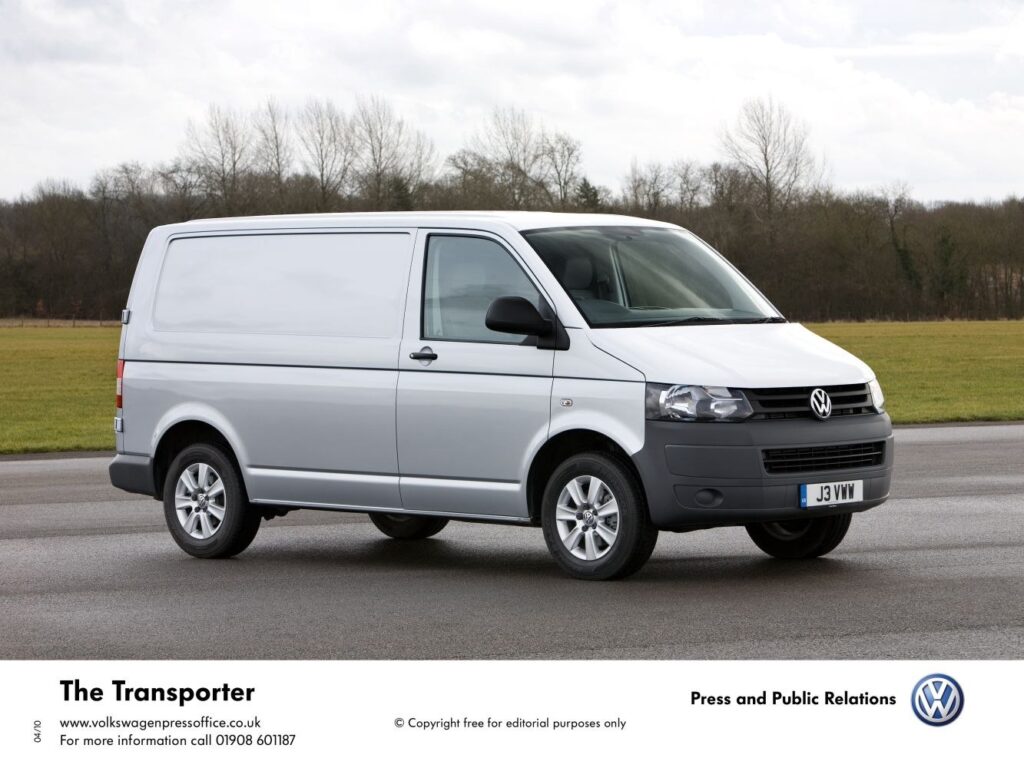
The Volkswagen Transporter series holds an iconic status in the realm of commercial vehicles, revered globally for its durability, versatility, and practicality. The T5 generation, introduced in 2003, continued this legacy, and its facelifted iteration, produced from 2009 to 2015, brought significant enhancements in technology, efficiency, and refinement. This detailed article focuses on a specific variant from this period: the Volkswagen Transporter (T5, facelift 2009) Panel Van 2.0 TDI BMT (140 Hp) DSG L2H3, manufactured between 2012 and 2015. While the Transporter has a rich heritage, this particular panel van configuration, especially with its diesel powertrain and specific dimensions, was primarily a workhorse for European and other international markets, not typically offered for sale in the United States. It represented a modern, efficient, and robust solution for businesses requiring substantial cargo capacity combined with car-like driving dynamics.
The T5 facelift, often referred to as the T5.1, introduced a fresh exterior design, updated interior, and crucially, a new range of more efficient engines, including the 2.0-liter TDI unit discussed here. The “BMT” designation signifies Volkswagen’s BlueMotion Technology, a suite of features aimed at optimizing fuel economy and reducing emissions. The “DSG” refers to the advanced Direct-Shift Gearbox, offering smooth and rapid automatic gear changes. Finally, “L2H3” denotes the vehicle’s specific body dimensions: L2 for a long wheelbase and H3 for a high roof, maximizing its cargo volume for professional applications. This combination made the Transporter an indispensable tool for countless enterprises, from logistics and construction to mobile workshops and tradespeople, solidifying its position as a segment leader in its primary markets.
The Volkswagen Transporter (T5, facelift 2009) Panel Van: Power and Utility
Engine and Performance
At the heart of the Volkswagen Transporter (T5, facelift 2009) Panel Van 2.0 TDI BMT (140 Hp) DSG L2H3 lies a sophisticated 2.0-liter (1968 cm³) inline four-cylinder TDI (Turbocharged Direct Injection) diesel engine, internally designated as EA189 / CAAC. This powerplant was a cornerstone of Volkswagen’s commitment to efficiency and performance in its commercial vehicle range. Generating a robust 140 horsepower at 3500 revolutions per minute, it provided ample power for moving substantial loads without feeling strained. More significantly for a commercial vehicle, the engine delivered a formidable 250.77 lb.-ft. of torque, available across a broad and usable rev range from 1750 to 2500 rpm. This low-end torque was crucial for effortless acceleration, climbing gradients, and managing heavy payloads, ensuring the van remained responsive even when fully loaded.
The engine’s design featured a DOHC (Double Overhead Camshaft) valvetrain with four valves per cylinder, a common rail fuel injection system for precise fuel delivery, and a turbocharger with an intercooler to maximize power and efficiency. With a compression ratio of 16.5:1, it was optimized for diesel operation. The inclusion of BlueMotion Technology (BMT) meant this Transporter benefited from features like a Start & Stop system and a particulate filter, which contributed to its Euro 5 emission standard compliance. These technologies were vital for meeting stringent European environmental regulations and reducing running costs.
Power was transmitted to the front wheels via a 7-speed DSG automatic transmission. This advanced gearbox, known for its rapid and seamless shifts, offered both convenience in urban traffic and efficiency on the open road. Performance figures for this heavy-duty panel van were respectable, with an acceleration from 0 to 60 mph achieved in approximately 12.4 seconds, and a top speed of around 99.42 mph (160 km/h). Fuel economy, a critical factor for commercial operators, was impressive for a vehicle of its size and capability. The combined NEDC cycle rating stood at 30.5 – 29.4 US mpg, with extra-urban figures reaching 34.1 – 32.7 US mpg, demonstrating the efficacy of the TDI engine and BlueMotion Technology in reducing fuel consumption and CO2 emissions (203-211 g/km).
Design and Features
The Volkswagen Transporter (T5, facelift 2009) Panel Van 2.0 TDI BMT (140 Hp) DSG L2H3 was designed from the ground up to be a highly functional and durable commercial vehicle. Its body type was a panel van, characterized by its enclosed cargo area, typically without rear side windows, prioritizing utility and security. This specific variant featured the L2H3 configuration, meaning a long wheelbase (133.86 inches or 3400 mm) and a high roof (97.48 inches or 2476 mm). These dimensions translated into an enormous cargo volume, peaking at an impressive 328.43 cubic feet (9300 liters), making it suitable for transporting large and bulky items, or for extensive racking and shelving systems for tools and equipment.
The exterior design of the T5 facelift brought a more modern and cohesive look, aligning it with Volkswagen’s passenger car lineup of the era. A redesigned front fascia, including new headlights and a grille, gave it a refreshed appearance. The practical aspects, however, remained paramount. With 4-5 doors (including the rear cargo access, which could be a tailgate or barn doors) and seating for 2-3 occupants, the cabin was focused on functionality for the driver and crew.
Underneath, the Transporter featured an independent McPherson strut front suspension with coil springs and an anti-roll bar, paired with an independent coil spring rear suspension with a transverse stabilizer and trailing arms. This setup provided a comfortable ride for a commercial vehicle and stable handling, even when heavily loaded. Braking was handled by ventilated discs both front (308×29.5 mm) and rear (294×22 mm), complemented by an Anti-lock Braking System (ABS) for enhanced safety. The hydraulic power steering, with a rack and pinion system, offered precise control and a manageable turning circle of 43.31 feet (13.2 meters), crucial for navigating tight urban environments. The vehicle rode on 215/65 R16 tires mounted on 6.5J x 16 steel wheels, chosen for their robustness and load-carrying capability.
With a substantial maximum payload of 2140.69 – 2237.69 lbs. (971-1015 kg) and a maximum permissible gross weight of 6172.94 – 7054.79 lbs. (2800-3200 kg), this Transporter was engineered for demanding commercial use. It also boasted impressive towing capabilities, rated for a permitted trailer load with brakes of 5511.56 lbs. (2500 kg), further cementing its utility as a versatile work vehicle.
Technical Specifications
| Category | Specification |
|---|---|
| General Information | |
| Brand | Volkswagen |
| Model | Transporter (T5, facelift 2009) Panel Van |
| Engine Type | 2.0 TDI BMT (140 Hp) DSG L2H3 |
| Production Years | 2012 – 2015 |
| Body Type | Van |
| Seats | 2-3 |
| Doors | 4-5 |
| Performance Specifications | |
| Fuel Type | Diesel |
| Fuel Consumption (Urban) | 25.6 – 24.8 US mpg (9.2-9.5 l/100 km) |
| Fuel Consumption (Extra Urban) | 34.1 – 32.7 US mpg (6.9-7.2 l/100 km) |
| Fuel Consumption (Combined) | 30.5 – 29.4 US mpg (7.7-8 l/100 km) |
| CO2 Emissions (NEDC) | 203-211 g/km |
| Acceleration 0-60 mph | 12.4 seconds |
| Maximum Speed | 99.42 mph (160 km/h) |
| Emission Standard | Euro 5 |
| Weight-to-Power Ratio | 12.8 kg/Hp |
| Weight-to-Torque Ratio | 5.3 kg/Nm |
| Engine Specifications | |
| Power | 140 Hp @ 3500 rpm |
| Torque | 250.77 lb.-ft. @ 1750-2500 rpm (340 Nm) |
| Engine Layout | Front, Transverse |
| Engine Model/Code | EA189 / CAAC |
| Engine Displacement | 2.0 Liters (1968 cm³ / 120.09 cu. in.) |
| Number of Cylinders | 4, Inline |
| Cylinder Bore | 3.19 in. (81 mm) |
| Piston Stroke | 3.76 in. (95.5 mm) |
| Compression Ratio | 16.5:1 |
| Valves per Cylinder | 4 |
| Fuel Injection System | Diesel Commonrail |
| Engine Aspiration | Turbocharger, Intercooler |
| Valvetrain | DOHC |
| Engine Oil Capacity | 7.4 US qt (7 l) |
| Coolant Capacity | 11.62 US qt (11 l) |
| Engine Systems | Start & Stop System, Particulate filter |
| Dimensions, Volume, & Weights | |
| Kerb Weight | 3935.25 – 4914.1 lbs. (1785-2229 kg) |
| Max. Weight | 6172.94 – 7054.79 lbs. (2800-3200 kg) |
| Max Load | 2140.69 – 2237.69 lbs. (971-1015 kg) |
| Trunk (Boot) Space – Maximum | 328.43 cu. ft. (9300 l) |
| Fuel Tank Capacity | 21.13 US gal (80 l) |
| Permitted Trailer Load with Brakes (12%) | 5511.56 lbs. (2500 kg) |
| Permitted Trailer Load without Brakes | 1653.47 lbs. (750 kg) |
| Permitted Towbar Download | 220.46 lbs. (100 kg) |
| Length | 208.35 in. (5292 mm) |
| Width | 74.96 in. (1904 mm) |
| Width Including Mirrors | 89.88 in. (2283 mm) |
| Height | 97.48 in. (2476 mm) |
| Wheelbase | 133.86 in. (3400 mm) |
| Front Overhang | 35.28 in. (896 mm) |
| Rear Overhang | 39.21 in. (996 mm) |
| Ride Height (Ground Clearance) | 7.91 in. (201 mm) |
| Minimum Turning Circle (Diameter) | 43.31 ft. (13.2 m) |
| Approach Angle | 21° |
| Departure Angle | 17° |
| Ramp-over (Brakeover) Angle | 12° |
| Drivetrain, Brakes, & Suspension | |
| Drivetrain Architecture | Front-wheel drive, Internal Combustion Engine |
| Drive Wheel | Front-wheel drive |
| Gearbox | 7 gears, Automatic (DSG) |
| Front Suspension | Independent, McPherson with coil spring and anti-roll bar |
| Rear Suspension | Independent coil spring, Transverse stabilizer, Trailing arm |
| Front Brakes | Ventilated discs, 308×29.5 mm |
| Rear Brakes | Ventilated discs, 294×22 mm |
| Assisting Systems | ABS (Anti-lock Braking System) |
| Steering Type | Steering rack and pinion |
| Power Steering | Hydraulic Steering |
| Tire Size | 215/65 R16 |
| Wheel Rims Size | 6.5J x 16 |
Legacy and Market Impact
The Volkswagen Transporter, particularly the T5 generation and its facelifted variant, carved out an indelible legacy in the global commercial vehicle market. For decades, the Transporter series has been synonymous with reliability, robustness, and a pragmatic approach to utility. This Volkswagen Transporter (T5, facelift 2009) Panel Van 2.0 TDI BMT (140 Hp) DSG L2H3, produced between 2012 and 2015, perfectly embodied these qualities, serving as a benchmark in its segment across Europe, Asia, Australia, and other regions where it was sold. Its absence from the mainstream US market, where larger, often gasoline-powered, full-size vans traditionally dominated, did not diminish its global significance. Instead, it highlighted the differing market demands and regulatory environments between continents.
In its primary markets, the Transporter T5 faced stiff competition from rivals such as the Ford Transit Custom, Mercedes-Benz Vito, Renault Trafic, and Opel Vivaro. What set the T5 apart was its blend of car-like driving dynamics, superior build quality, and a diverse range of configurations. The 2.0 TDI BMT engine, coupled with the DSG transmission, offered a level of refinement and fuel efficiency that many competitors struggled to match, especially in a vehicle designed for heavy, continuous use. The BlueMotion Technology was a forward-thinking move, positioning the Transporter as an environmentally conscious choice for fleet operators concerned with both emissions and operating costs.
The L2H3 variant, with its long wheelbase and high roof, was particularly impactful for businesses requiring maximum cargo volume without sacrificing maneuverability. Its ability to swallow up to 328.43 cubic feet of goods made it an ideal choice for courier services, tradespeople, and mobile service providers. The robust chassis, capable of handling a significant payload and substantial towing weight, underscored its credibility as a true workhorse. Furthermore, the Transporter’s strong residual values and extensive dealer network contributed to its appeal as a sound long-term investment for commercial entities.
Historically, the Transporter lineage, from the iconic T1 “Bus” to the modern T5, represents an evolutionary journey of adapting to changing commercial needs while retaining a core identity of practicality and reliability. The T5 facelift, with its technological advancements like the common rail TDI engine and DSG gearbox, played a crucial role in modernizing the commercial van segment. It demonstrated that a utilitarian vehicle could also be efficient, comfortable, and pleasant to drive. Its impact is still seen today in the continued success of its successor, the T6, which builds upon the solid foundation laid by models like the 2012-2015 Transporter T5 L2H3. The legacy of this particular model is one of quiet competence, serving as the backbone for countless businesses and a testament to Volkswagen’s engineering prowess in the demanding world of light commercial vehicles.