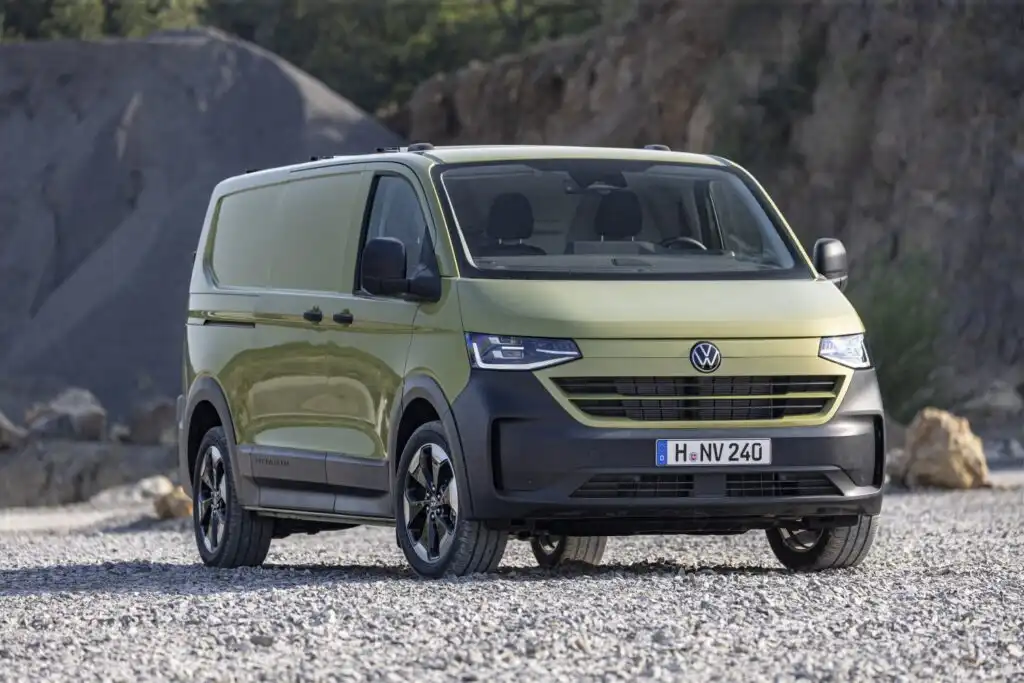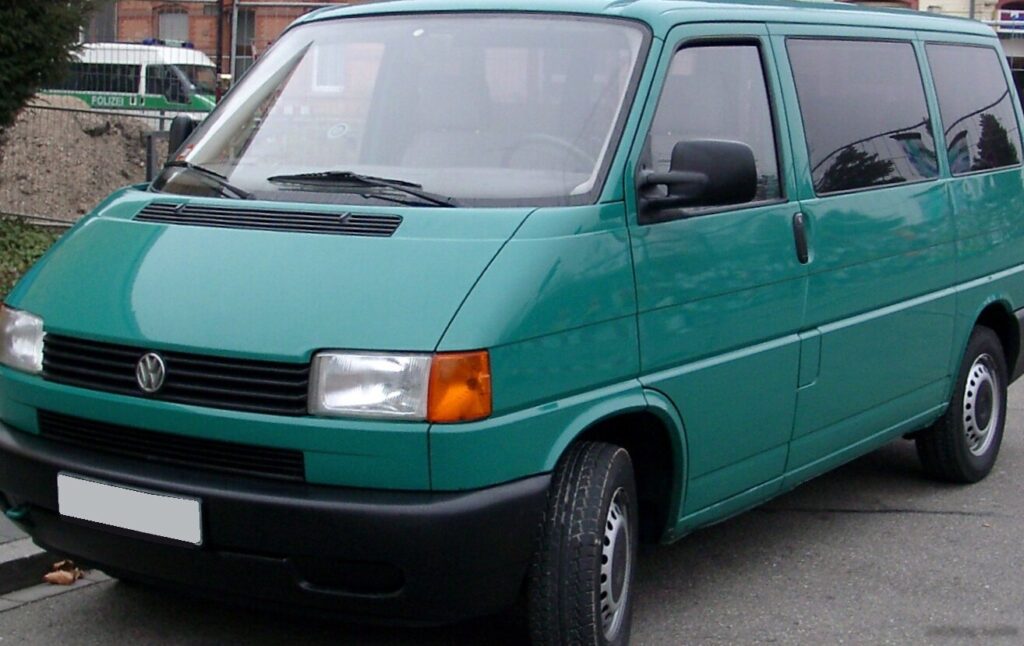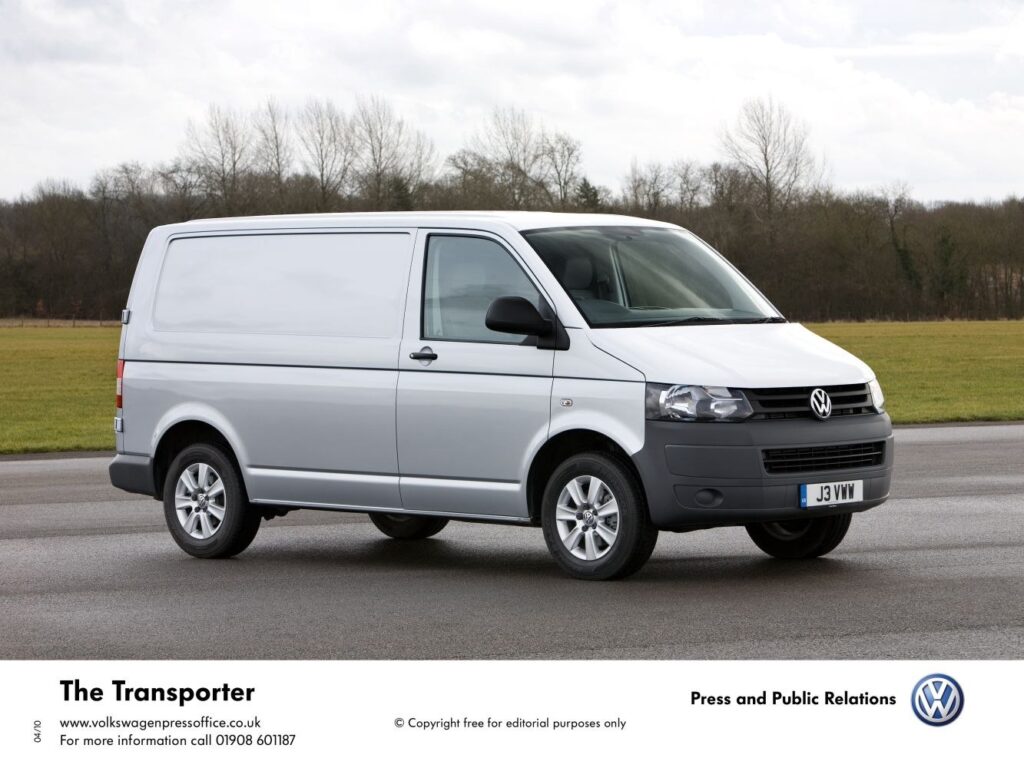
Volkswagen Transporter (T5, Facelift 2009) Panel Van 2.0 TDI BMT (140 Hp) L2H2
The Volkswagen Transporter (T5, facelift 2009) Panel Van represents a significant iteration of Volkswagen’s venerable light commercial vehicle (LCV) line, renowned globally for its versatility, durability, and efficiency. Introduced as a facelift to the fifth-generation (T5) Transporter, this particular variant, produced between 2012 and 2015, cemented its position as a workhorse across Europe and other international markets. While not officially sold in the United States, the Transporter lineage holds an almost legendary status worldwide, tracing its roots back to the iconic Type 2 “Bus.” This specific model, the 2.0 TDI BMT (BlueMotion Technology) L2H2, combined a potent yet fuel-efficient diesel powertrain with a long wheelbase and high roof configuration, making it an indispensable tool for businesses requiring substantial cargo capacity and robust performance.
The T5 generation, launched in 2003, built upon the success of its predecessors by offering improved ergonomics, enhanced safety features, and a more car-like driving experience. The 2009 facelift brought a modernized exterior design, updated interior, and, crucially, a new range of more efficient engines, including the 2.0-liter TDI unit featured here. The “BlueMotion Technology” designation highlighted Volkswagen’s commitment to environmental responsibility, integrating features like a Start & Stop system and a particulate filter to reduce fuel consumption and emissions. This blend of practicality, economy, and Volkswagen’s renowned engineering made the Volkswagen Transporter (T5, facelift 2009) Panel Van a benchmark in the highly competitive European commercial van segment.
Engine & Performance of the Volkswagen Transporter (T5, Facelift 2009) Panel Van
At the heart of this particular Volkswagen Transporter (T5, facelift 2009) Panel Van variant is a sophisticated 2.0-liter (1968 cm³, 120.09 cu. in.) inline four-cylinder TDI (Turbocharged Direct Injection) diesel engine, designated EA189 / CAAC. This powerplant was engineered to deliver an optimal balance of power, torque, and fuel efficiency, crucial attributes for a commercial vehicle. It produces a robust 140 horsepower at 3500 rpm, translating to a power-per-liter rating of 71.1 hp/l. More importantly for a cargo van, the engine generates a substantial 340 Nm (250.77 lb.-ft.) of torque, available across a wide and usable band from 1750 to 2500 rpm. This broad torque curve ensures excellent pulling power, even when the vehicle is fully loaded, allowing for confident acceleration and effortless highway cruising.
The engine’s advanced design incorporates a DOHC (Double Overhead Camshaft) valvetrain with four valves per cylinder, a common rail fuel injection system, and forced induction via a turbocharger with an intercooler. This setup optimizes combustion efficiency and power delivery. With a compression ratio of 16.5:1, the engine is designed for diesel’s inherent efficiency. The inclusion of BlueMotion Technology features, such as a Start & Stop system and a particulate filter, significantly contributed to its environmental credentials, helping it meet the Euro 5 emission standard.
Paired with a slick-shifting six-speed manual transmission, the 2.0 TDI BMT engine propels the Transporter from 0 to 60 mph in a respectable 11.7 seconds, with a maximum speed of 103.77 mph (167 km/h). These figures demonstrate that despite its commercial utility, the Transporter is capable of keeping pace with passenger car traffic. Fuel economy was a strong selling point for this model, with combined consumption rated at an impressive 6.9-7.2 l/100 km, translating to approximately 34.1 – 32.7 US mpg. Even in urban settings, it achieved 26.7 – 25.8 US mpg, and on the highway, it could reach 40.6 – 38.6 US mpg, making it a cost-effective choice for businesses operating extensively on the road. The large 80-liter (21.13 US gal) fuel tank further extended its range between fill-ups, minimizing downtime.
Design & Features: The L2H2 Configuration
The Volkswagen Transporter (T5, facelift 2009) Panel Van is a purpose-built commercial vehicle, and its design reflects a deep understanding of business needs. This specific model features the L2H2 configuration, which denotes a Long Wheelbase (L2) and a High Roof (H2). With an overall length of 208.35 inches (5292 mm), a width of 74.96 inches (1904 mm, or 89.88 inches including mirrors), and a commanding height of 85.67 inches (2176 mm), the L2H2 offers an expansive cargo area. The wheelbase stretches to 133.86 inches (3400 mm), providing stability and maximizing interior volume.
The panel van body type, characterized by windowless sides and rear, prioritizes security and cargo space. The maximum trunk (boot) space is a cavernous 7800 liters (275.45 cu. ft.), allowing for the transport of substantial goods, equipment, or tools. The interior is designed for functionality, typically offering 2 to 3 seats, focusing on driver comfort and utility. The cabin, while rugged, incorporates ergonomic controls and storage solutions essential for daily commercial operations.
In terms of features, the T5 facelift brought a refreshed aesthetic with updated headlights, grille, and bumper designs, aligning it with Volkswagen’s contemporary passenger car styling cues while maintaining its utilitarian appeal. Safety was addressed with standard features like ABS (Anti-lock Braking System), complemented by a robust braking system employing ventilated discs (308×29.5 mm front, 294×22 mm rear). The suspension system, featuring an independent McPherson type with coil springs and an anti-roll bar at the front, and an independent coil spring, transverse stabilizer, and trailing arm setup at the rear, provided a comfortable ride and stable handling, even under load. The hydraulic power steering, combined with a relatively tight minimum turning circle of 43.31 feet (13.2 m), made maneuvering this large van surprisingly manageable in urban environments. The vehicle’s ground clearance of 7.91 inches (201 mm) and approach/departure angles of 21° and 17° respectively, offered decent capability for navigating varied job site conditions.
Technical Specifications
| Category | Specification |
|---|---|
| General Information | |
| Brand | Volkswagen |
| Model | Transporter (T5, facelift 2009) Panel Van |
| Type (Engine) | 2.0 TDI BMT (140 Hp) L2H2 |
| Production Start | 2012 year |
| Production End | 2015 year |
| Body Type | Van |
| Seats | 2-3 |
| Doors | 4-5 |
| Powertrain Architecture | Internal Combustion Engine (Front Wheel Drive) |
| Performance Specs | |
| Power | 140 Hp @ 3500 rpm |
| Power per liter | 71.1 Hp/l |
| Torque | 340 Nm (250.77 lb.-ft.) @ 1750-2500 rpm |
| Acceleration 0-60 mph | 11.7 sec |
| Maximum Speed | 167 km/h (103.77 mph) |
| Fuel Type | Diesel |
| Fuel Economy – Urban (NEDC) | 8.8-9.1 l/100 km (26.7 – 25.8 US mpg) |
| Fuel Economy – Extra Urban (NEDC) | 5.8-6.1 l/100 km (40.6 – 38.6 US mpg) |
| Fuel Economy – Combined (NEDC) | 6.9-7.2 l/100 km (34.1 – 32.7 US mpg) |
| CO2 Emissions (NEDC) | 182-189 g/km |
| Emission Standard | Euro 5 |
| Weight-to-power ratio | 12.7 kg/Hp (79 Hp/tonne) |
| Weight-to-torque ratio | 5.2 kg/Nm (191.8 Nm/tonne) |
| Engine Specs | |
| Engine Model/Code | EA189 / CAAC |
| Engine Displacement | 1968 cm³ (120.09 cu. in.) |
| Number of Cylinders | 4 |
| Engine Configuration | Inline |
| Engine Layout | Front, Transverse |
| Cylinder Bore | 81 mm (3.19 in.) |
| Piston Stroke | 95.5 mm (3.76 in.) |
| Compression Ratio | 16.5:1 |
| Valves per Cylinder | 4 |
| Fuel Injection System | Diesel Commonrail |
| Engine Aspiration | Turbocharger, Intercooler |
| Valvetrain | DOHC |
| Engine Oil Capacity | 7 l (7.4 US qt) |
| Engine Oil Specification | Not specified |
| Coolant Capacity | 11 l (11.62 US qt) |
| Engine Systems | Start & Stop System, Particulate filter |
| Space, Volume & Weights | |
| Kerb Weight | 1773-2217 kg (3908.8 – 4887.65 lbs.) |
| Max. Weight (GVWR) | 2800-3200 kg (6172.94 – 7054.79 lbs.) |
| Max Load | 983-1027 kg (2167.14 – 2264.15 lbs.) |
| Trunk (Boot) Space – Maximum | 7800 l (275.45 cu. ft.) |
| Fuel Tank Capacity | 80 l (21.13 US gal) |
| Permitted Trailer Load with Brakes (12%) | 2500 kg (5511.56 lbs.) |
| Permitted Trailer Load without Brakes | 750 kg (1653.47 lbs.) |
| Permitted Towbar Download | 100 kg (220.46 lbs.) |
| Dimensions | |
| Length | 5292 mm (208.35 in.) |
| Width | 1904 mm (74.96 in.) |
| Width Including Mirrors | 2283 mm (89.88 in.) |
| Height | 2176 mm (85.67 in.) |
| Wheelbase | 3400 mm (133.86 in.) |
| Front Overhang | 896 mm (35.28 in.) |
| Rear Overhang | 996 mm (39.21 in.) |
| Ride Height (Ground Clearance) | 201 mm (7.91 in.) |
| Minimum Turning Circle (Turning Diameter) | 13.2 m (43.31 ft.) |
| Approach Angle | 21° |
| Departure Angle | 17° |
| Ramp-over (Brakeover) Angle | 12° |
| Drivetrain, Brakes & Suspension Specs | |
| Drive Wheel | Front-wheel drive |
| Gearbox Type | 6 gears, manual transmission |
| Front Suspension | Independent, McPherson with coil spring and anti-roll bar |
| Rear Suspension | Independent coil spring, Transverse stabilizer, Trailing arm |
| Front Brakes | Ventilated discs, 308×29.5 mm |
| Rear Brakes | Ventilated discs, 294×22 mm |
| Assisting Systems | ABS (Anti-lock Braking System) |
| Steering Type | Steering rack and pinion |
| Power Steering | Hydraulic Steering |
| Tires Size | 215/65 R16 |
| Wheel Rims Size | 6.5J x 16 |
Legacy & Market Impact
The Volkswagen Transporter, and specifically the T5 generation facelift, holds a significant legacy in the global automotive landscape, particularly in Europe, where it has consistently been a top-seller in the light commercial vehicle segment. The Volkswagen Transporter (T5, facelift 2009) Panel Van continued this tradition, building on decades of reputation established by its predecessors, from the original Type 2 “Bus” to the T4, which revolutionized the segment with its front-engine, front-wheel-drive layout. The T5 facelift, produced from 2012 to 2015 for this specific variant, was crucial in maintaining Volkswagen’s competitive edge against formidable rivals.
In its primary markets, the Transporter T5 competed fiercely with other established players like the Ford Transit, Mercedes-Benz Vito, Renault Trafic, and Opel Vivaro (Vauxhall Vivaro in the UK). What set the Transporter apart was its blend of passenger car-like refinement, robust build quality, and strong residual values. Businesses appreciated its reliability and low running costs, especially with the efficient 2.0 TDI BlueMotion Technology engine, which delivered excellent fuel economy and met strict Euro 5 emissions standards. The L2H2 configuration offered impressive cargo volume and payload capacity, making it a versatile choice for a wide array of trades and services, from logistics and construction to mobile workshops.
Beyond its utilitarian role, the Transporter also enjoyed a cultural following, with its passenger variants (Multivan, Caravelle, California camper) being highly sought after. While this article focuses on the panel van, its robust underpinnings and refined driving dynamics contributed to the entire T5 family’s appeal. The T5 facelift’s updated styling and modern features kept it relevant in a rapidly evolving market, ensuring that Volkswagen remained a dominant force. Its impact lies in its unwavering commitment to functionality, efficiency, and durability, traits that have defined the Transporter series for generations. The T5, particularly in its efficient 2.0 TDI BMT L2H2 panel van form, is remembered as a dependable and economically sound choice for businesses across Europe, cementing its place as an icon of commercial transport.